
Enhances counting skills Addition & Subtraction Worksheets for Ages 6-7
4 filtered results
Difficulty Level
Grade
Age
-
From - To
Subject
Activity
Standards
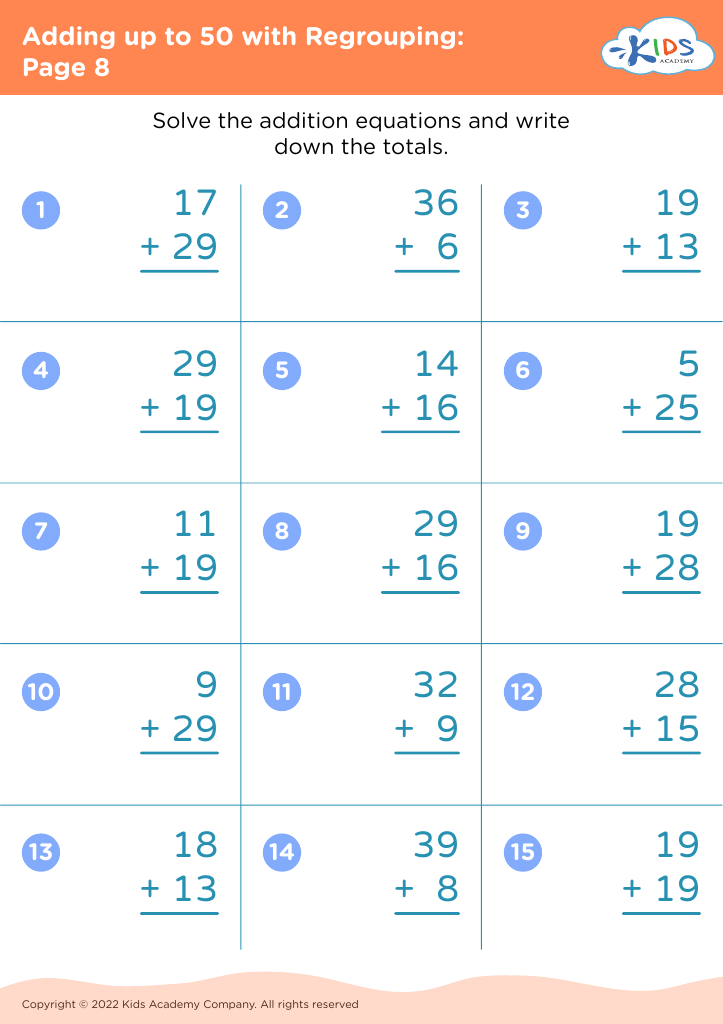
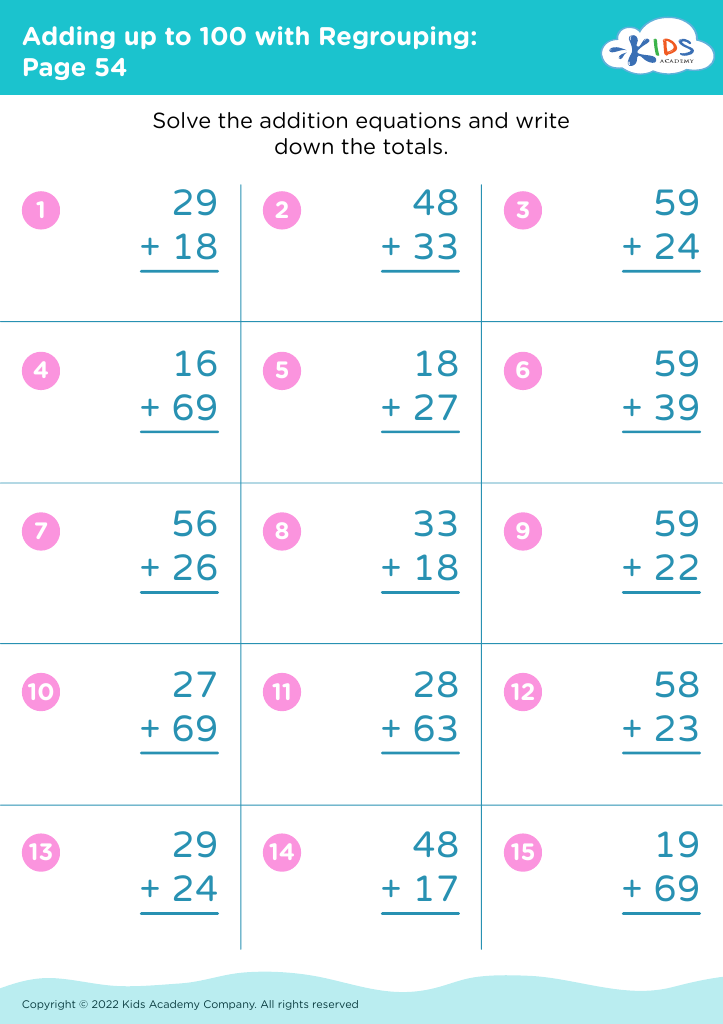
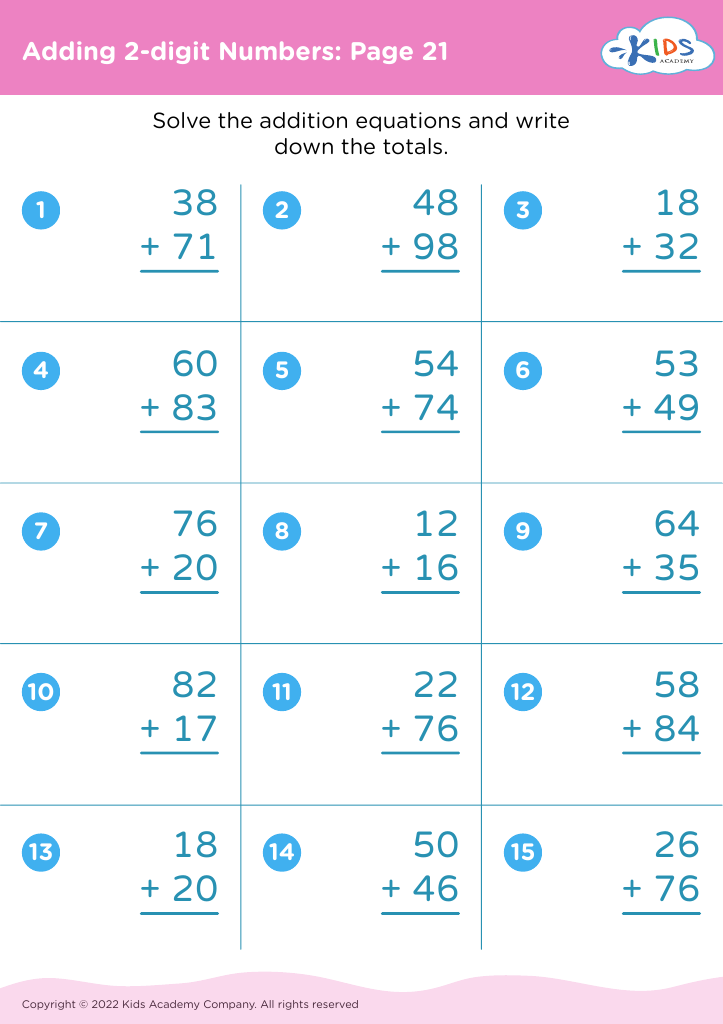
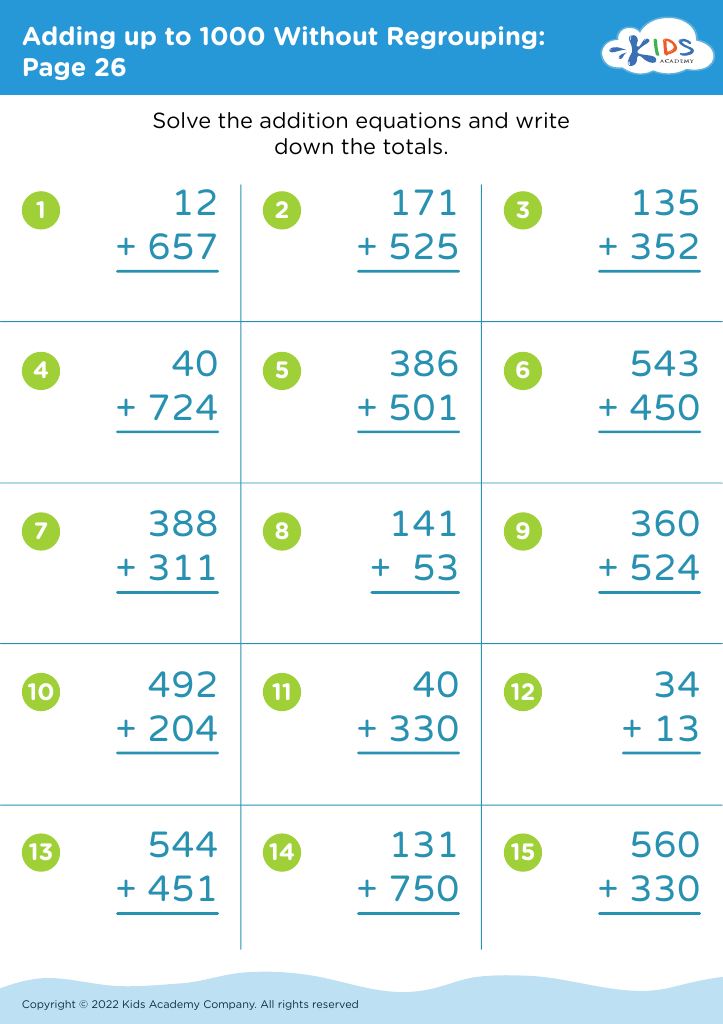
Boost your child's mathematical abilities with our expertly crafted Addition & Subtraction Worksheets for Ages 6-7. Designed to enhance counting skills, these worksheets provide engaging and age-appropriate exercises that make learning fun and effective. With a mix of visual aids and interactive problems, young learners can grasp fundamental math concepts while developing confidence in their skills. Perfect for classroom use or extra practice at home, our worksheets lay a strong foundation for future mathematical success. Empower your child with the tools they need to succeed by incorporating these essential resources into their learning routine.
Favorites
With answer key
Interactive
Join Kids Academy for Free
Who is primarily going to use this learning content?








Enhancing counting skills and understanding addition and subtraction for children ages 6-7 is crucial for cognitive development and future academic success. At this formative stage, children are building the foundation for all future math education. Mastering basic arithmetic not only helps in school but also in everyday life.
Counting skills are more than rote learning; they foster number sense, the ability to understand and flexibly manage numbers. This understanding is essential for solving more complex math problems as children progress. It enables them to approach problems logically and supports the development of critical thinking.
Addition and subtraction go beyond mere calculation. They introduce children to the concept of mathematical operations and their relationships. For example, understanding that subtraction is the inverse of addition helps children decipher word problems and develop strategies. Proficiency in these basic arithmetic operations enhances confidence and reduces math anxiety, encouraging a positive attitude toward learning.
Teachers and parents play a pivotal role in this learning phase by providing appropriate tools, encouragement, and practice opportunities. Combining hands-on activities, like counting objects or interactive games, with traditional methods enriches the learning experience. Thus, ensuring foundational skills in counting, addition, and subtraction paves the way for academic achievement and practical numeracy in lifelong contexts.








