Environmental awareness Addition & Subtraction Worksheets for Ages 6-7
3 filtered results
-
From - To
Discover our engaging Environmental Awareness Addition & Subtraction Worksheets designed for children ages 6-7. These colorful and interactive worksheets combine early math skills with vital lessons about protecting our planet. Each activity encourages young learners to solve addition and subtraction problems while exploring themes of recycling, conservation, and biodiversity. Perfect for classroom use or at-home learning, these worksheets foster a sense of environmental responsibility while enhancing mathematical understanding. Inspire your child to develop both their math proficiency and their commitment to the environment with our thoughtfully crafted materials that make learning fun and meaningful. Download and start making a difference today!
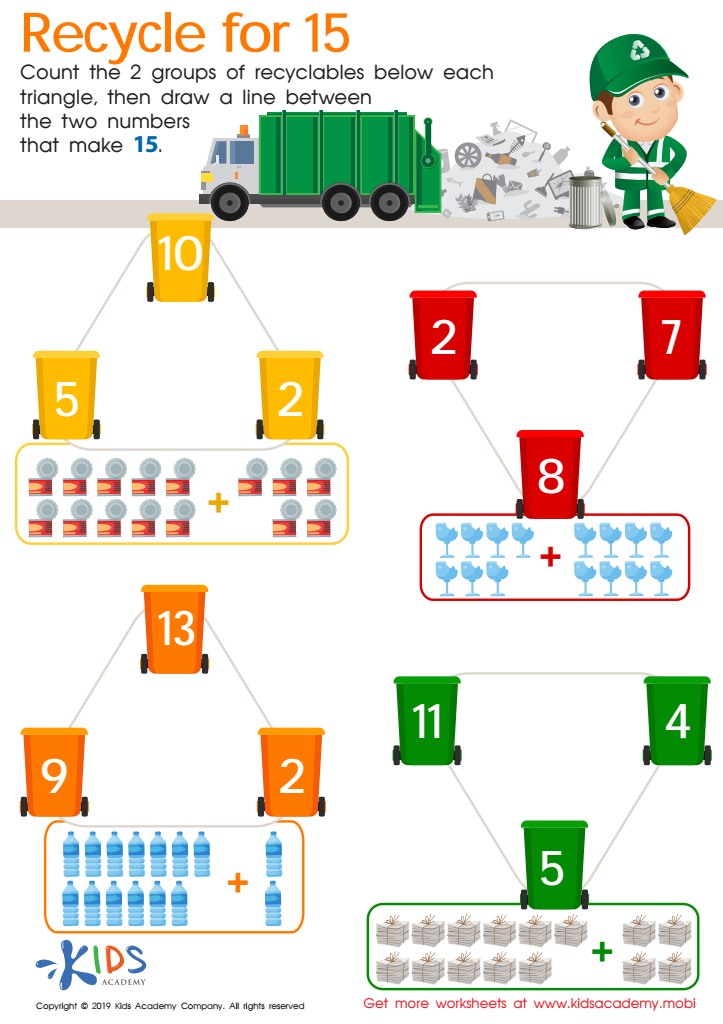
Recycle for 15 Worksheet
 Assign to My Students
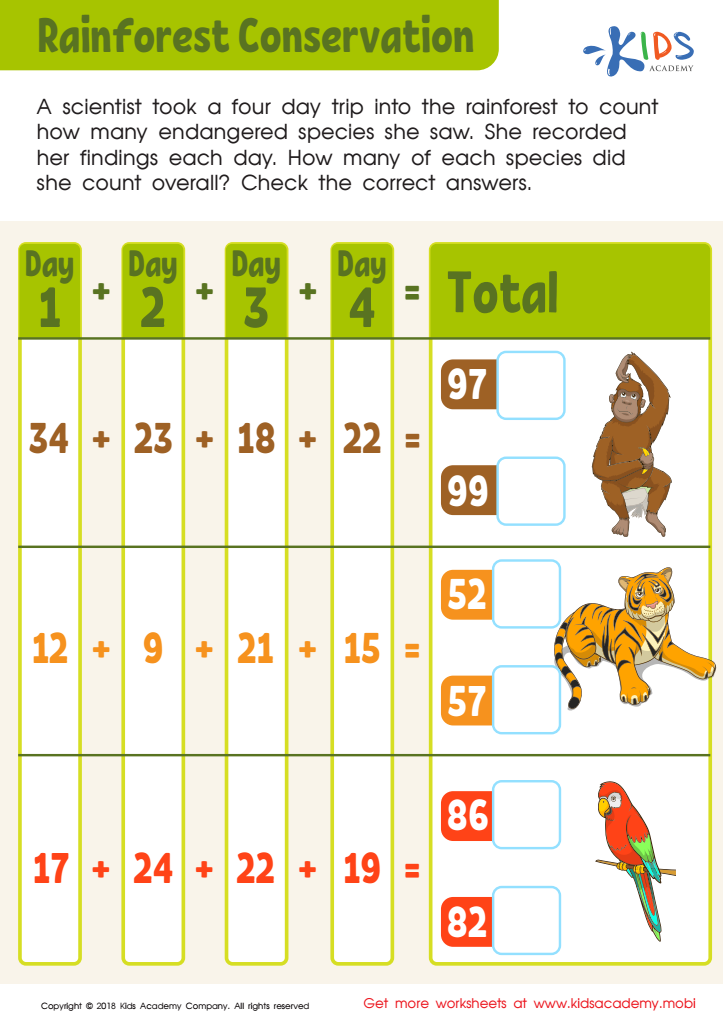
Rainforest Conservation Worksheet
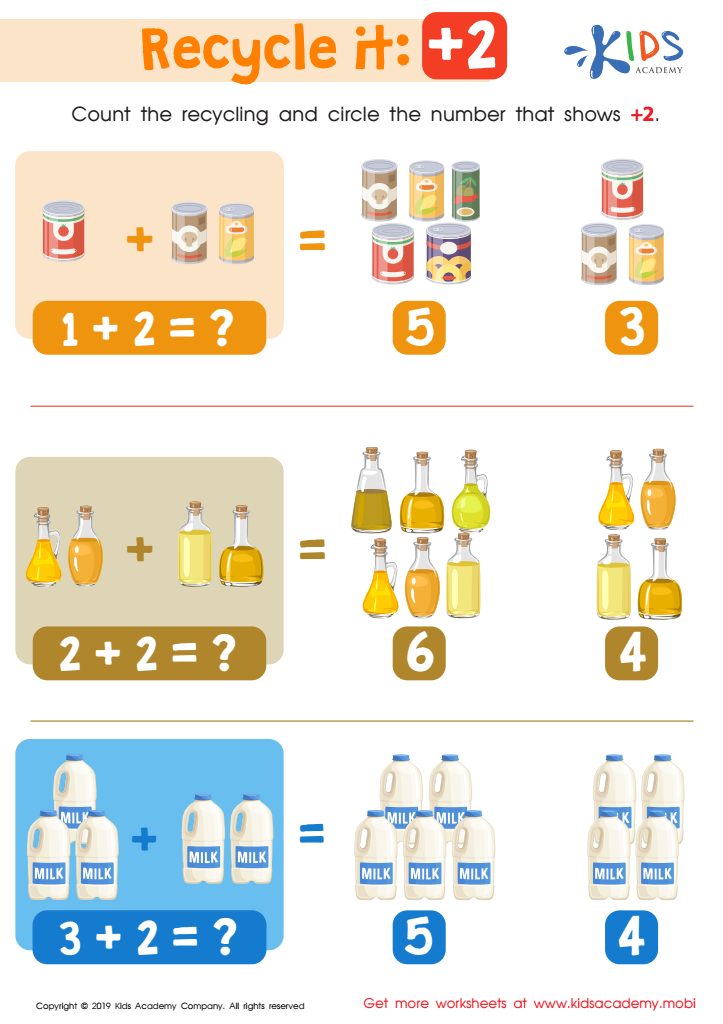
Recycle It: +2 Worksheet








Environmental awareness in conjunction with teaching addition and subtraction is essential for children aged 6-7 for several reasons. Firstly, it helps instill values of sustainability and responsibility. By integrating environmental concepts into math lessons, educators and parents can create real-world connections, making learning more meaningful. For example, when calculating the amount of recycled materials a class has collected, children not only practice math skills but also learn about recycling's importance.
Secondly, this approach fosters critical thinking. As children engage with real-life environmental challenges through mathematical problems—like determining how many trees need planting to offset carbon emissions—they will develop both analytical and problem-solving abilities.
Additionally, children in this age group are naturally curious about the world. Incorporating environmental awareness can captivate their interest, making them more engaged in their learning experience.
Moreover, modeling environmentally conscious behavior through educational activities encourages a generation that values and actively protects the environment. Overall, combining environmental awareness with foundational math skills like addition and subtraction enriches children’s education while promoting a sustainable future. This dual-focus helps build both cognitive and moral frameworks essential for impactful learning.








