Fraction representation Addition & Subtraction Worksheets for Ages 6-7
3 filtered results
-
From - To
Explore our engaging Fraction Representation Addition & Subtraction Worksheets, specifically designed for children ages 6-7. These worksheets help young learners develop vital math skills by visually representing fractions, making addition and subtraction accessible and fun. Each activity encourages understanding through colorful graphics and relatable real-life examples, fostering a solid foundation in mathematics. Whether at home or in the classroom, our worksheets provide ample practice to boost confidence and proficiency in fractions. Perfect for individualized learning or group activities, these resources ensure that children not only grasp key concepts but also enjoy the journey of learning math! Download and experience the joy of fractions today!
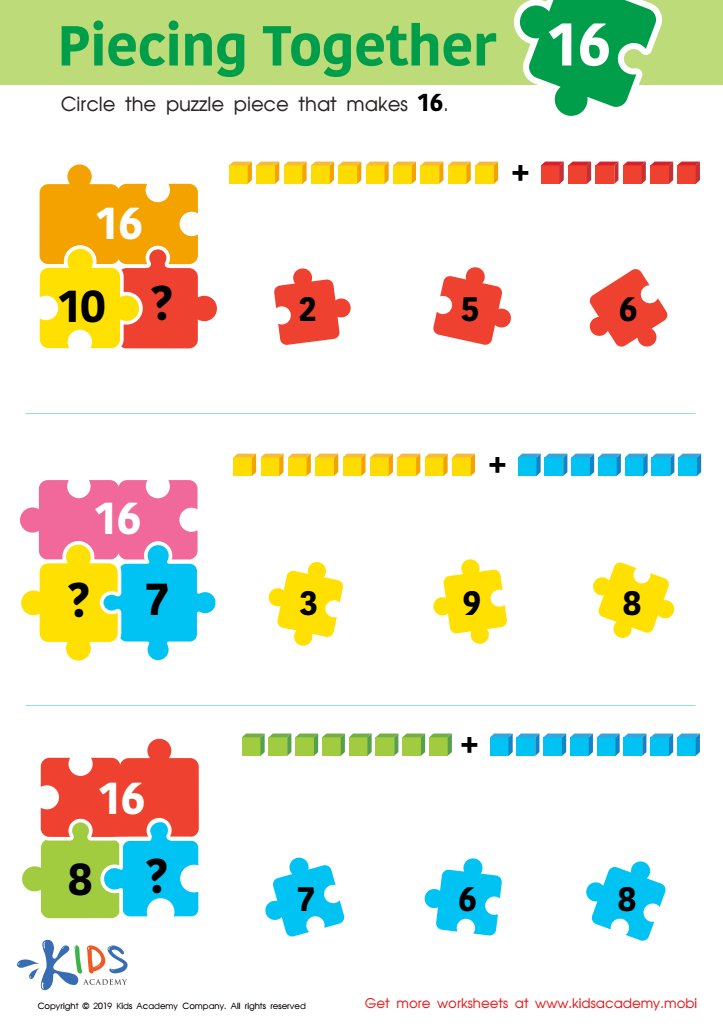
Piecing Together 16 Worksheet
 Assign to My Students
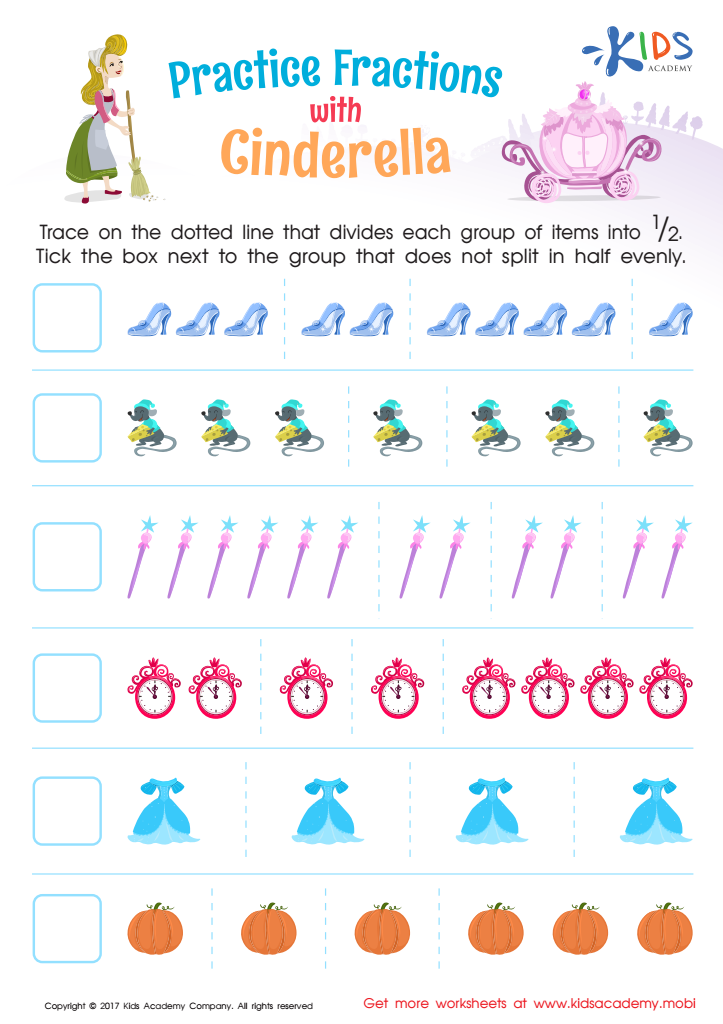
Fractions: Cinderella Printable








Understanding fraction representation, addition, and subtraction is crucial for children aged 6-7, as it lays the foundation for their mathematical development. At this stage, young learners transition from concrete to more abstract number concepts. Familiarizing them with fractions helps develop their number sense and reasoning skills, which are essential for future mathematical concepts.
When parents and teachers prioritize fraction instruction, it creates opportunities for children to explore relationships between numbers and visualize part-whole relationships. This understanding not only aids in grasping more complex topics like multiplication and division of fractions later but also enhances problem-solving skills across various contexts.
Additionally, familiarity with fraction concepts at an early age can instill confidence and a positive attitude toward mathematics. This confidence is vital as math anxiety can develop if children struggle with foundational topics. Teaching addition and subtraction of fractions can also engage students through real-life applications, such as cooking or sharing.
By actively engaging in this critical area of early mathematics, parents and teachers support holistic development, fostering a love for learning and empowering children with essential skills for academic success. Ultimately, solid fraction concepts will provide children with tools they can build on for years to come in their educational journey.








