
Improve counting Addition & Subtraction Worksheets for Ages 6-7
3 filtered results
Difficulty Level
Grade
Age
-
From - To
Subject
Activity
Standards
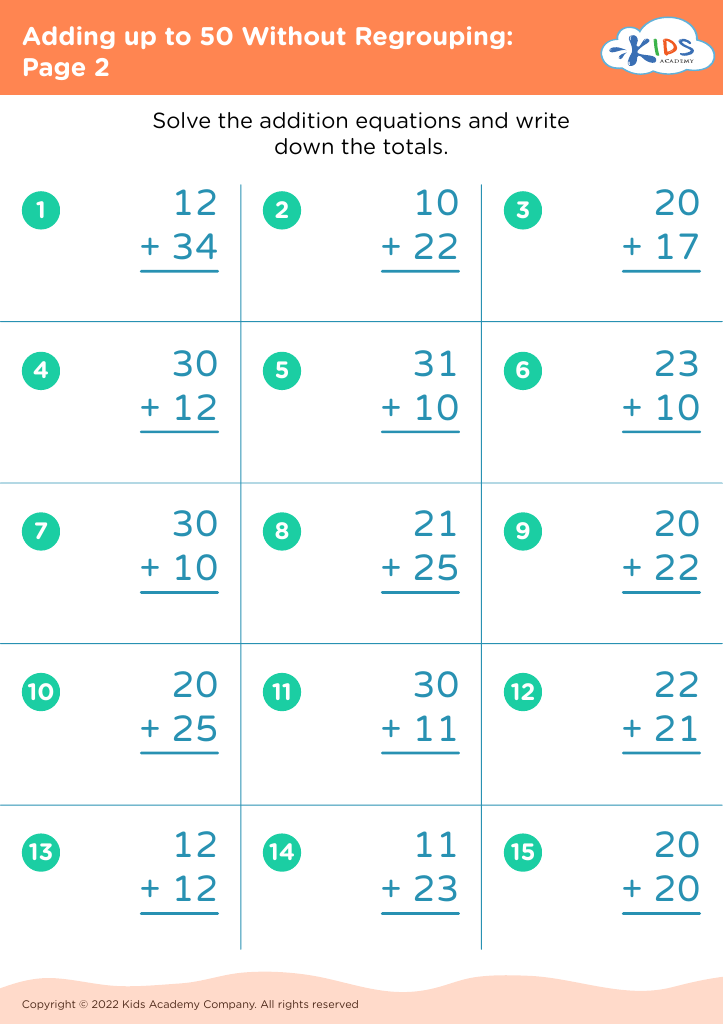
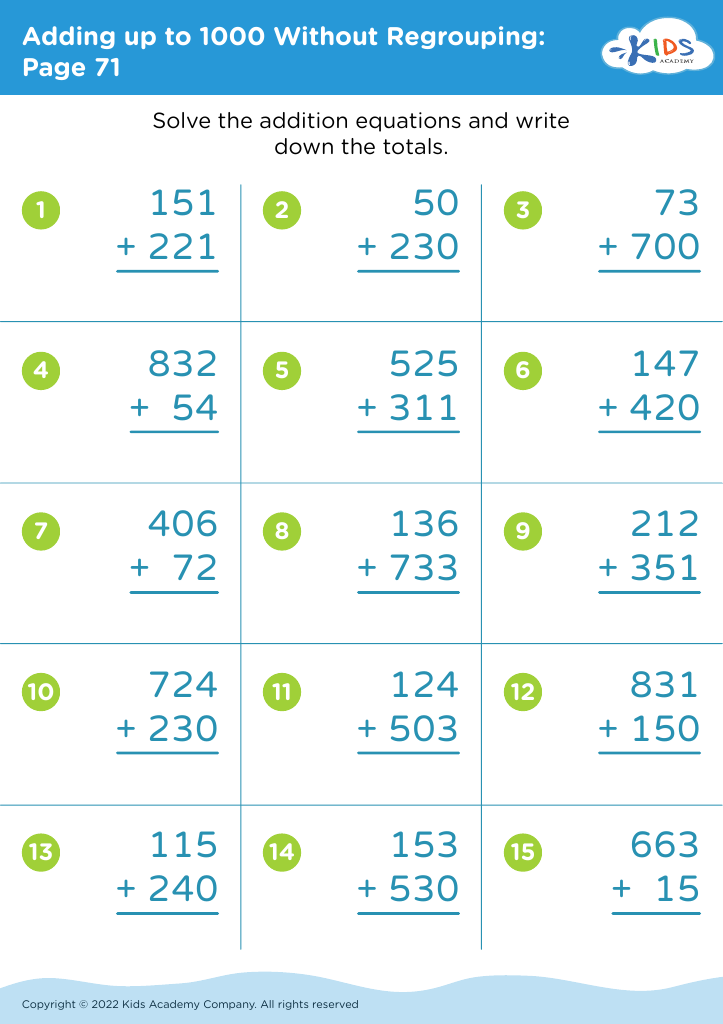
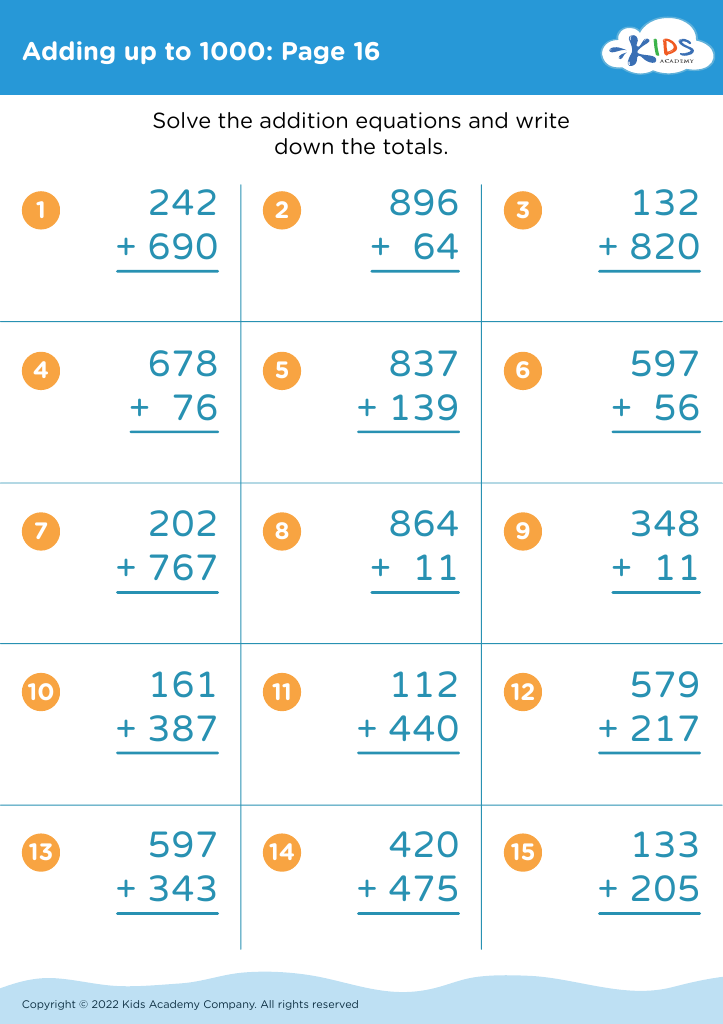
Enhance your child’s math skills with our "Improve Counting: Addition & Subtraction Worksheets for Ages 6-7". Specially designed for young learners, these engaging worksheets focus on foundational arithmetic concepts. Through a variety of fun, interactive exercises, children will effortlessly build their counting, addition, and subtraction abilities. Each worksheet offers colorful and relatable scenarios to keep kids motivated and supports their problem-solving development. Perfect for both classroom use and home practice, our resources help set a solid mathematical foundation. Join Kids Academy and make learning math an enjoyable experience for your child today.
Favorites
With answer key
Interactive
Join Kids Academy for Free
Who is primarily going to use this learning content?








Parents and teachers should prioritize improving counting, addition, and subtraction skills for children ages 6-7 because these foundational math concepts are crucial for their overall academic development and future success. At this age, children are in a critical stage of cognitive development where they are learning to understand and manipulate numbers. Proficiency in these basic operations not only builds confidence but also forms the bedrock for more complex mathematical concepts like multiplication, division, fractions, and problem-solving skills down the line.
Moreover, early mastery of counting, addition, and subtraction contributes to logical reasoning and analytical thinking. These skills are not just limited to math, but they also enhance a child's capability to approach problems methodically in various subjects including science and even reading. Daily life involves numbers, from understanding time and money to measuring ingredients in recipes. Therefore, being comfortable with basic arithmetic helps children navigate the world more effectively.
Additionally, developing strong math skills at an early age can foster a positive attitude towards learning and education. When children see progress in something manageable like math operations, they are more likely to enjoy learning and develop perseverance and resilience. Consequently, supporting children in mastering these skills equips them for academic achievement and practical, real-world competencies.








