Learn addition Addition & Subtraction Worksheets for Ages 6-7
3 filtered results
-
From - To
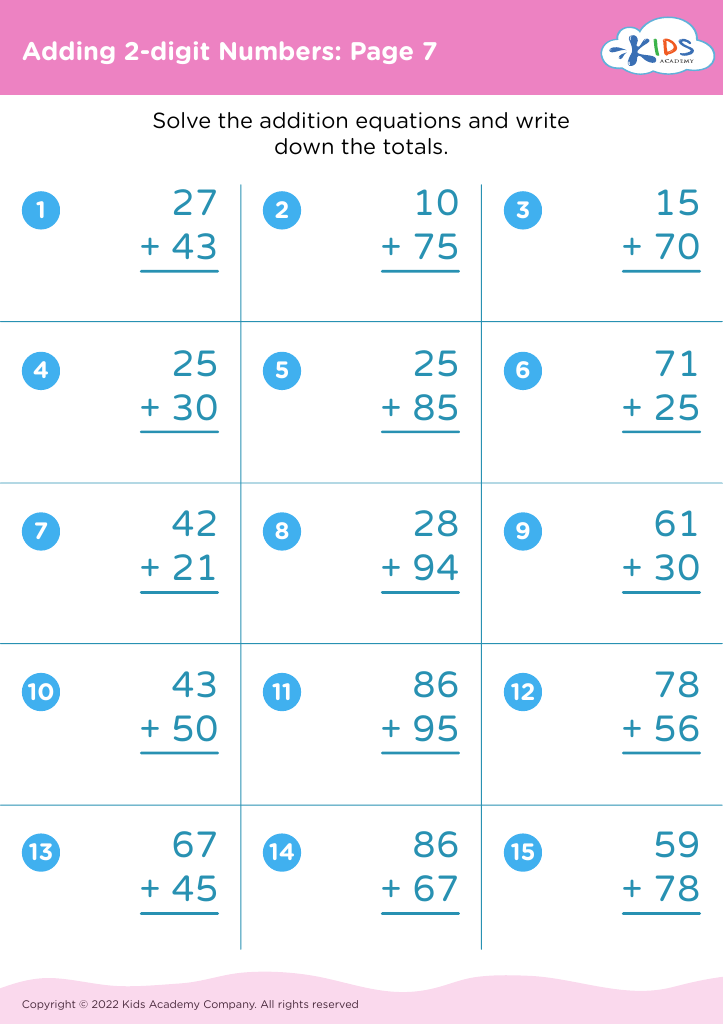
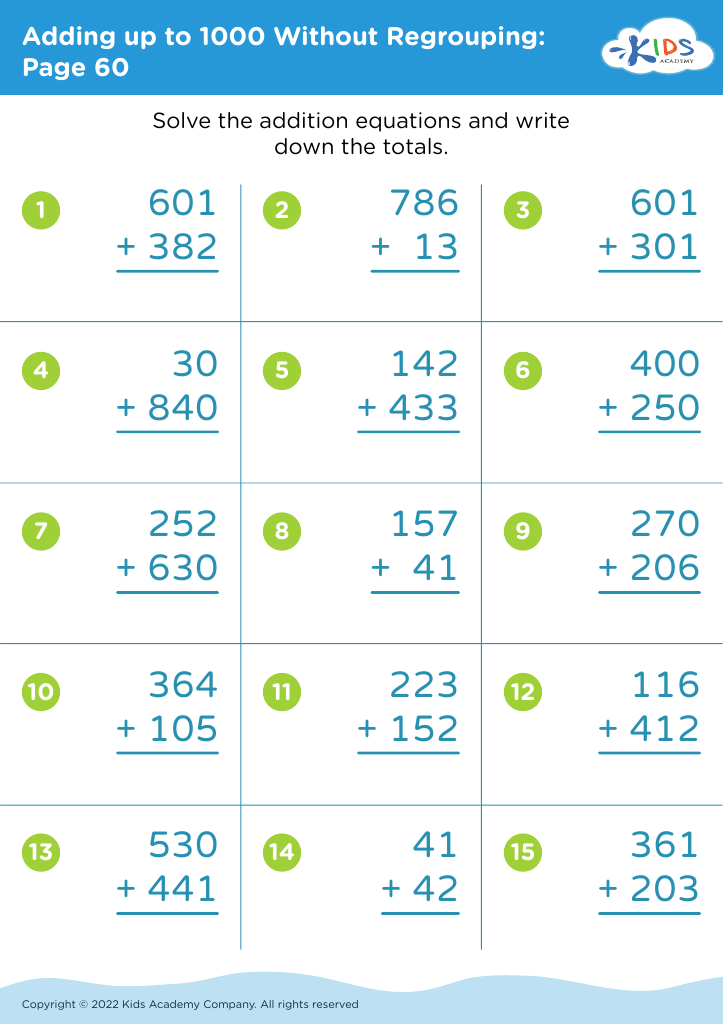
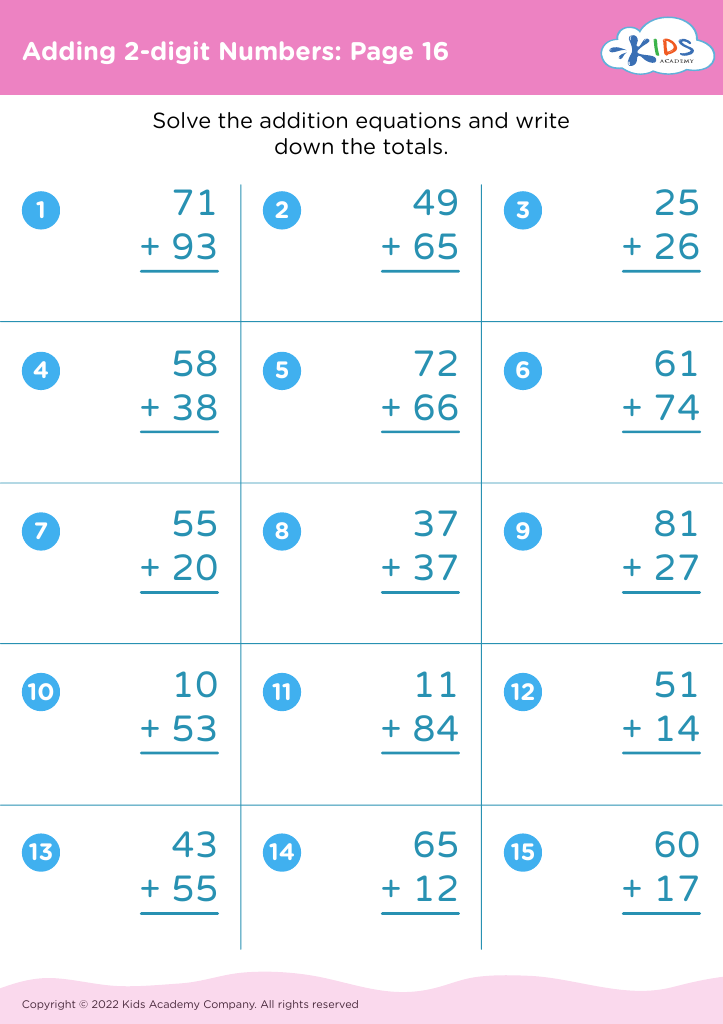
Make math fun and engaging for your child with our "Learn Addition & Subtraction Worksheets for Ages 6-7!" Tailored specifically for first graders, these printable worksheets provide a variety of activities that make learning addition and subtraction exciting and effective. Our worksheets incorporate bright visuals and interactive exercises that help build foundational math skills. With our expertly crafted content, children will grow more confident in their abilities, develop problem-solving skills, and enjoy their learning journey. Perfect for both home and classroom use, these free resources make conquering basic math fun and achievable. Boost your child's math progress today!








Parents and teachers play a critical role in the early development of a child's mathematical skills, including addition and subtraction, which are foundational concepts in math. For children aged 6-7, mastering these skills is essential for several reasons.
Firstly, these basic arithmetic abilities form the groundwork for more complex mathematical concepts they will encounter in the future, such as multiplication, division, and fractions. A strong understanding of addition and subtraction ensures that children are well-prepared and can build upon a solid mathematical foundation.
Secondly, learning these skills enhances a child's problem-solving abilities. Whether counting toys, splitting snacks, or figuring out change during activities, these skills influence everyday decision-making. This practical application fosters a natural curiosity and love for learning, laying the groundwork for lifelong learning habits.
Additionally, early success in math can boost a child's confidence. Positive experiences in learning arithmetic can translate into a more confident and enthusiastic approach toward other subjects and challenges, setting a positive academic attitude.
Lastly, improving arithmetic skills in early grades can also benefit children's cognitive development. These activities require logical thinking, attention to detail, and memory, all of which strengthen the brain's neural pathways.
Therefore, focusing on addition and subtraction for ages 6-7 is not merely about numbers; it's about cultivating mental agility, confidence, and lifelong problem-solving skills.








