Matching skills Addition & Subtraction Worksheets for Ages 6-7
3 filtered results
-
From - To
Enhance your child's math skills with our engaging Matching Skills Addition and Subtraction Worksheets, designed specifically for ages 6-7. These interactive worksheets help young learners build a strong foundation in math through fun exercises that combine addition and subtraction concepts with matching activities. Ideal for both classroom and home learning, our resources encourage critical thinking and reinforce problem-solving abilities. Watch as your child gains confidence in their math skills while enjoying a variety of formats and challenges. Join our community of happy learners today and support your child’s journey to math mastery with these valuable educational tools!
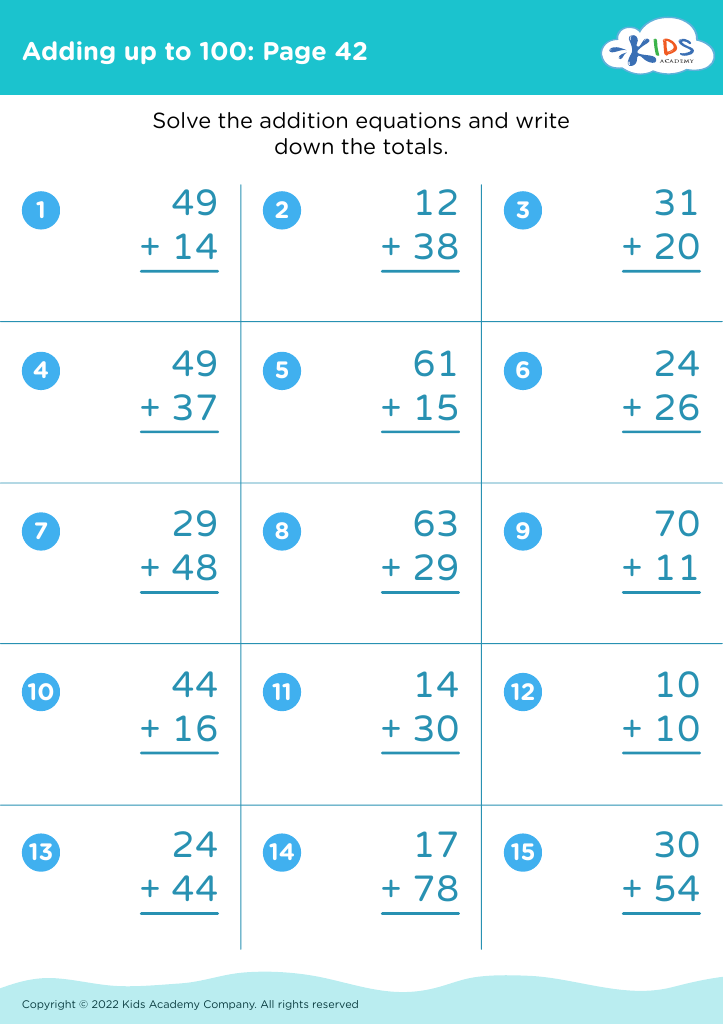
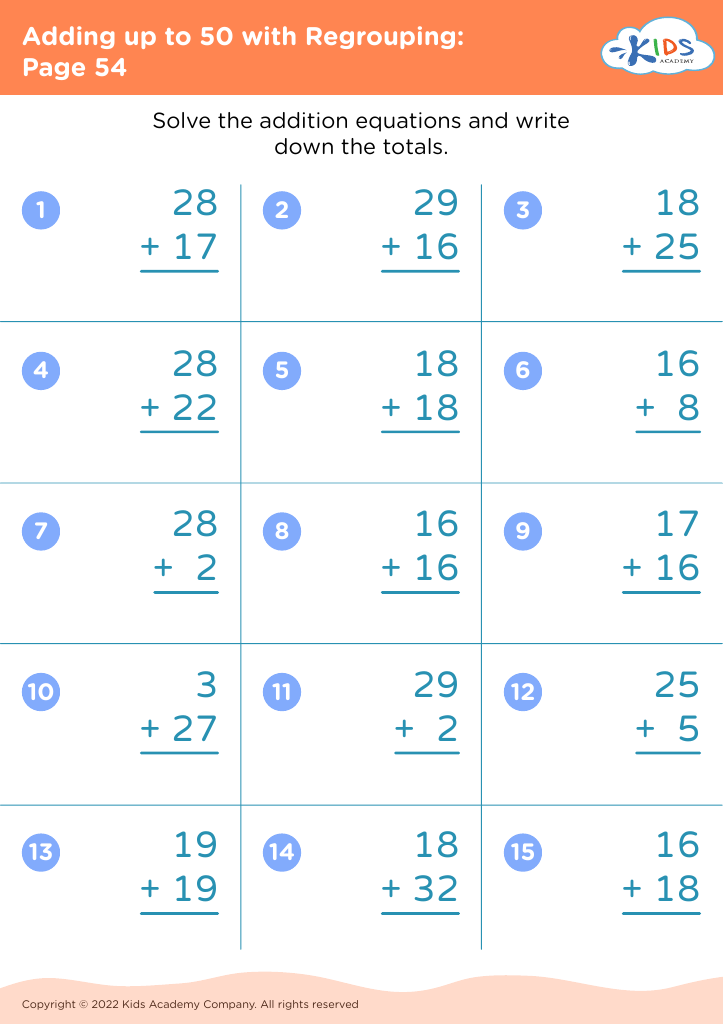
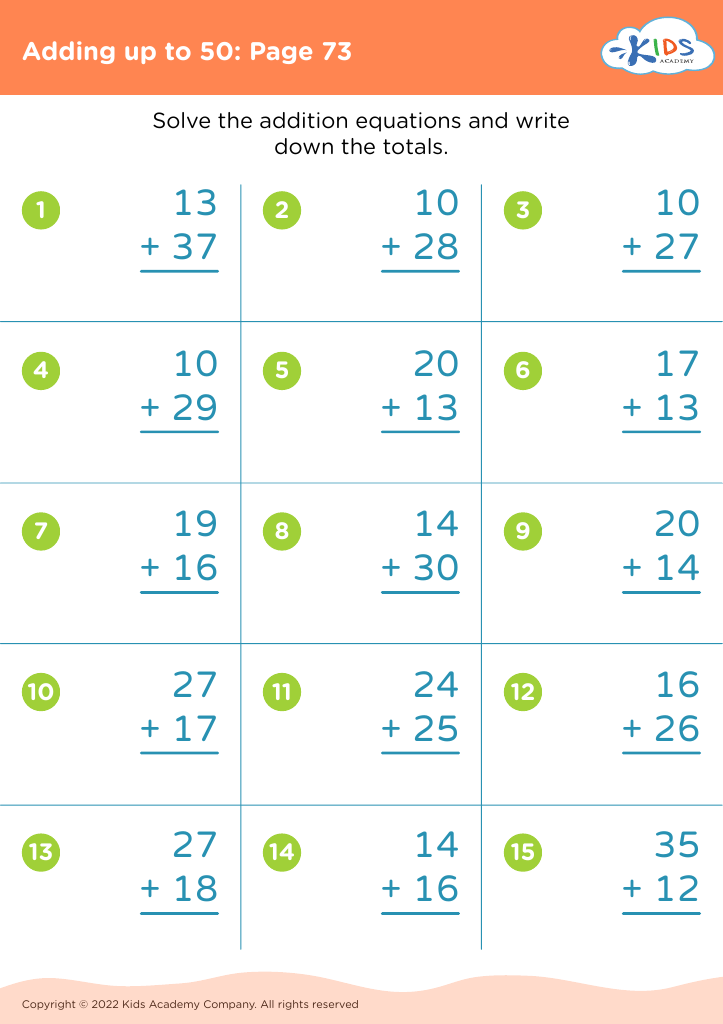








Parents and teachers should care about matching skills in addition and subtraction for ages 6-7 because these foundational skills are vital for a child's overall mathematical understanding and academic success. Mastery of basic math operations forms the bedrock for more complex mathematical concepts encountered later in education. When children practice matching skills, they develop number sense, which is understanding the relationships between numbers and the operations that govern them.
Additionally, these skills enhance cognitive development. Engaging in hands-on activities that involve matching problems with their correct answers fosters critical thinking and problem-solving abilities. This process not only sharpens computational skills but also builds confidence in students, encouraging them to tackle more challenging tasks.
Moreover, mastery of addition and subtraction at this age is essential for everyday life skills. Children begin to encounter real-world scenarios that require basic math, from shopping to sharing. Early proficiency prepares them to handle these situations with ease. Additionally, it equips them for standardized testing and supports their transition into later grade levels, where these skills will be expanded upon. In summary, focusing on matching skills in addition and subtraction is critical for fostering a love of learning and ensuring a strong math foundation.








