Filters

213 filtered results

Clear all filters
Favorites
With answer key
Interactive

213 filtered results

Difficulty Level

Grade


Check out this FREE Trial Lesson on Addition & Subtraction for age 6-7!

Adding with 1's

Favorites
With answer key
Interactive
  • 6-7
  • Number Recognition
  • Addition & Subtraction
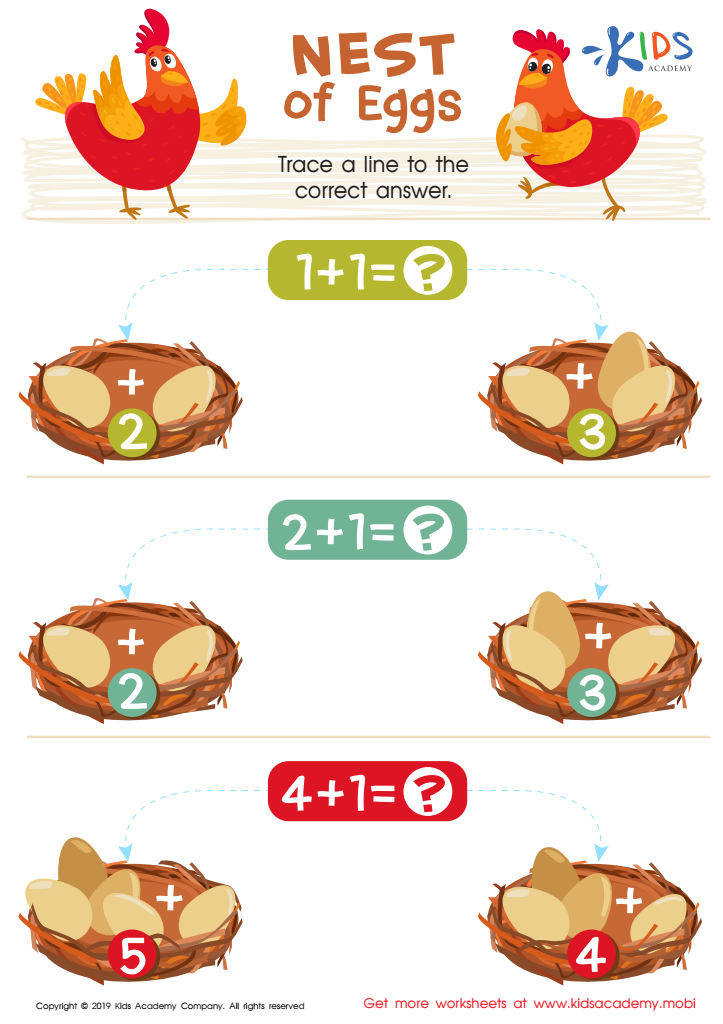
Nest of Eggs Worksheet

Nest of Eggs Worksheet

Help your kids learn math with this worksheet. First discuss the picture with them and then work through the three equations. Encourage them to trace the correct answer afterwards. With your assistance, they'll soon be able to confidently add numbers.
Nest of Eggs Worksheet
Worksheet
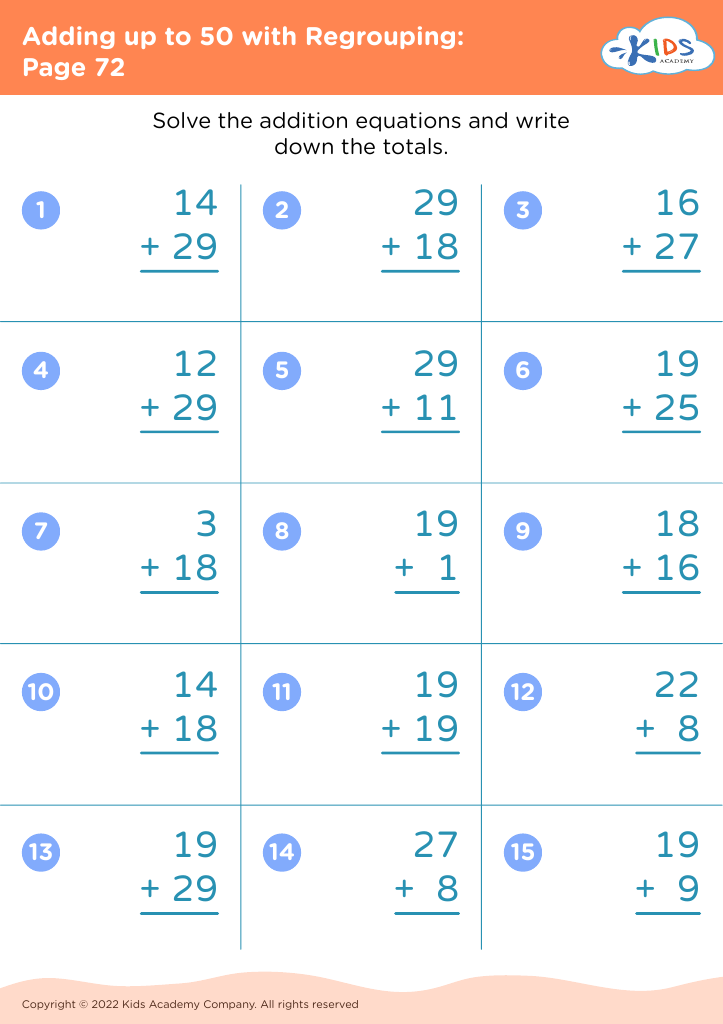
Adding up to 50 with Regrouping: Page 72
Worksheet
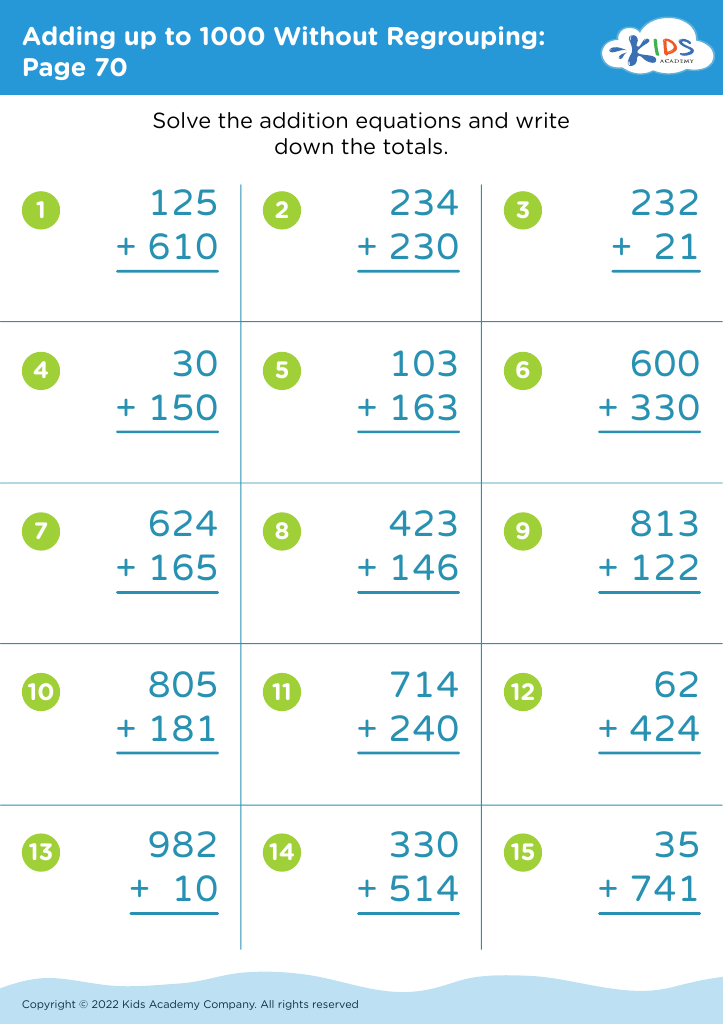
Adding up to 1000 Without Regrouping: Page 70
Worksheet
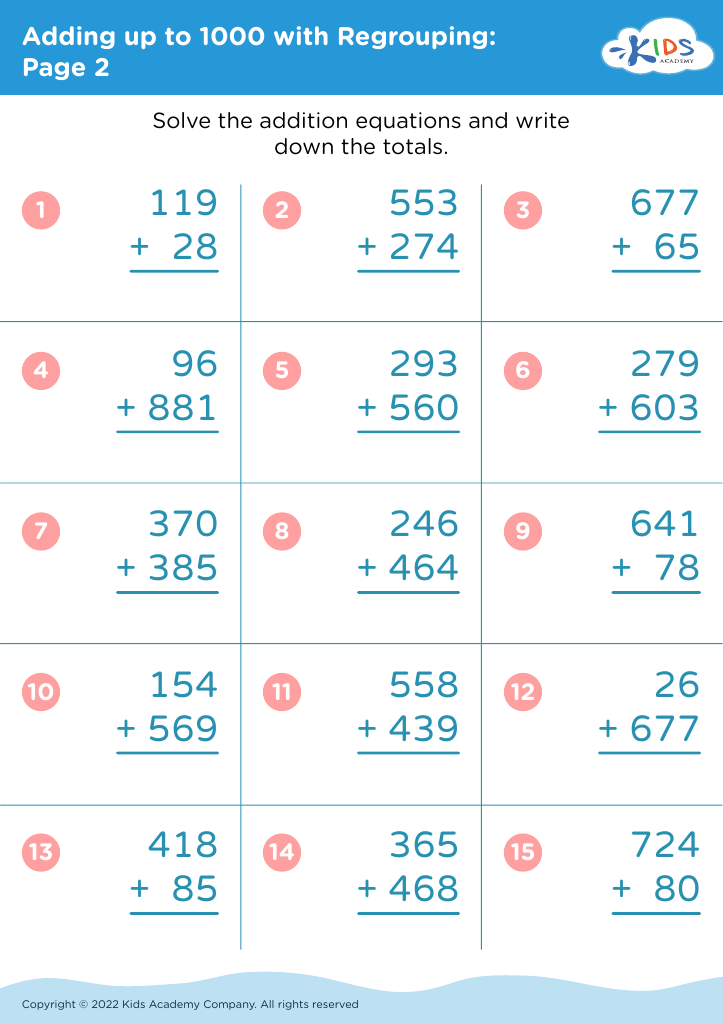
Adding up to 1000 with Regrouping: Page 2
Worksheet
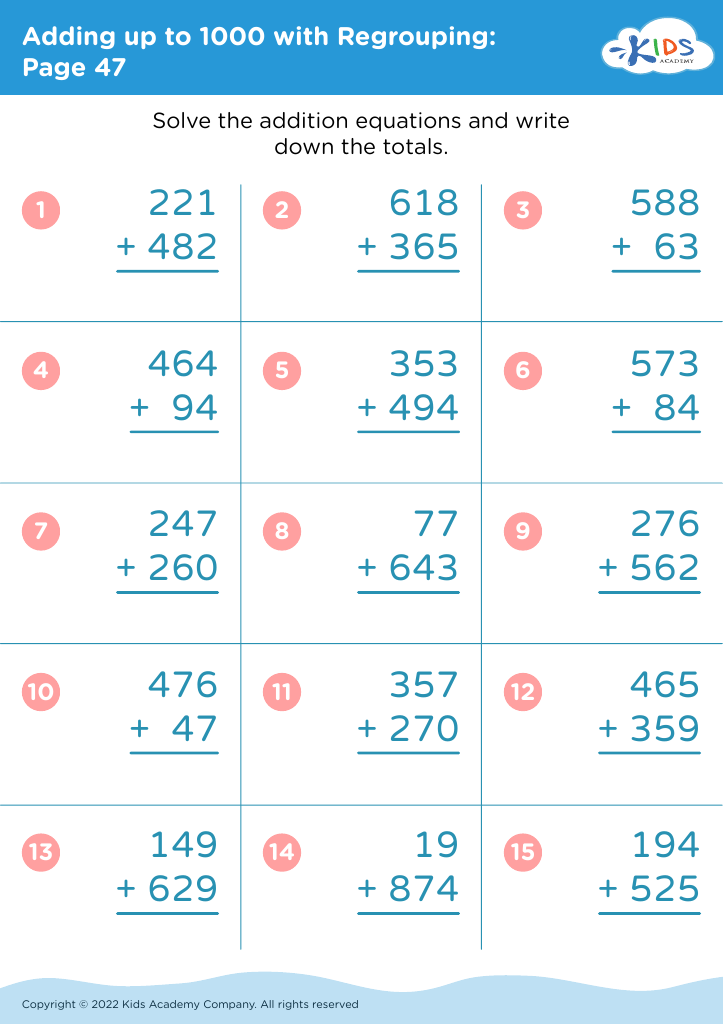
Adding up to 1000 with Regrouping: Page 47
Worksheet
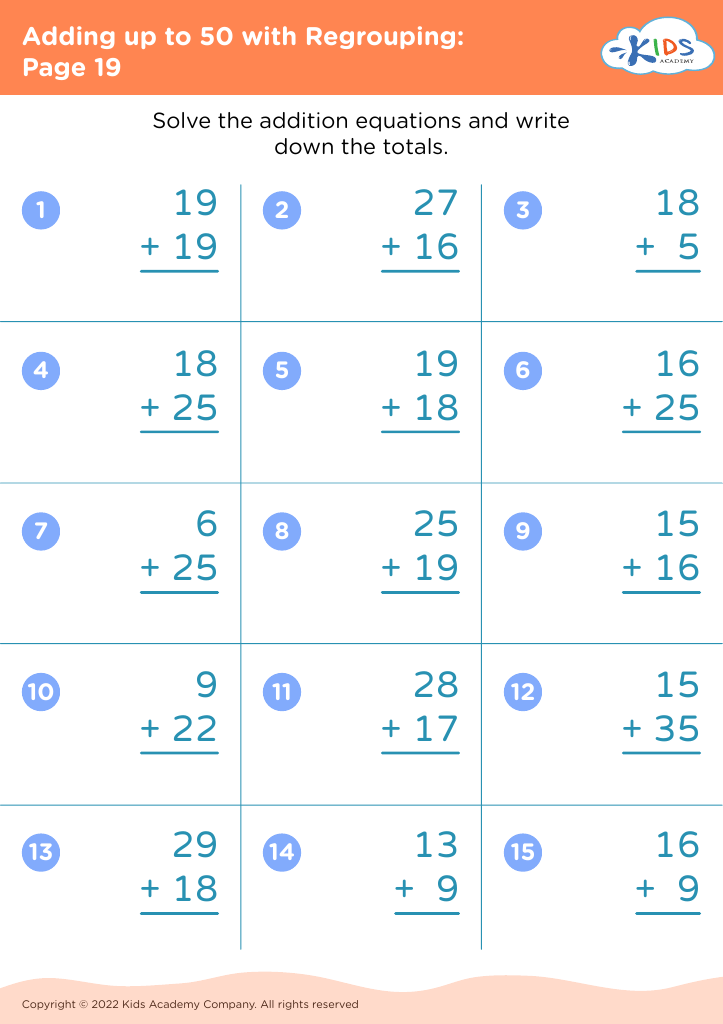
Adding up to 50 with Regrouping: Page 19
Worksheet
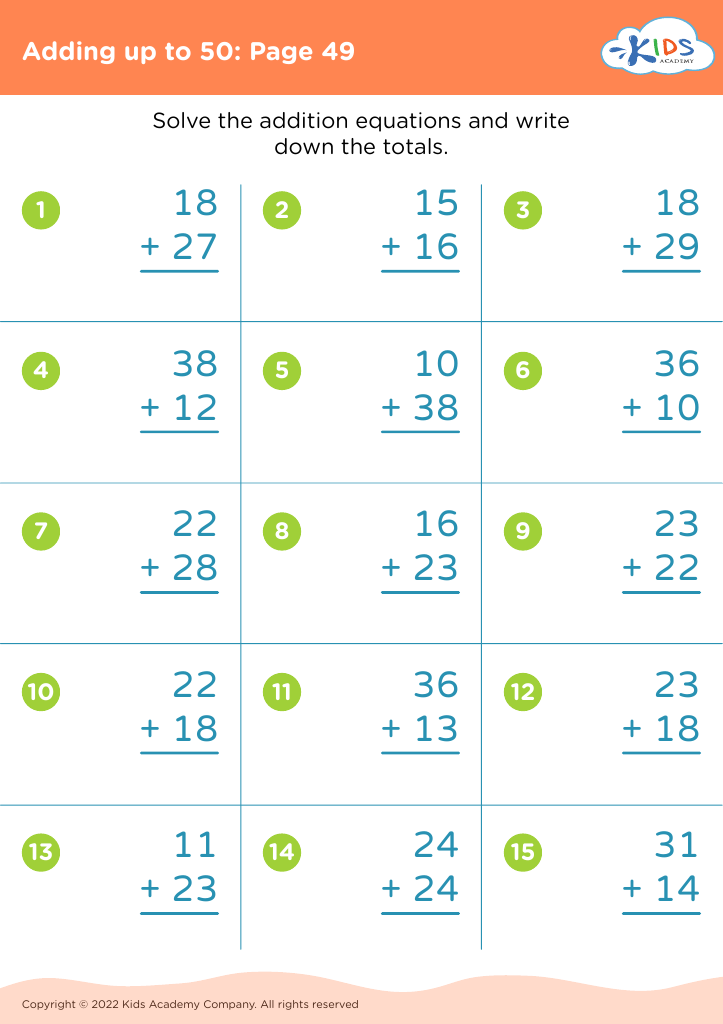
Adding up to 50: Page 49

Adding up to 50: Page 49

Adding up to 50: Page 49
Worksheet
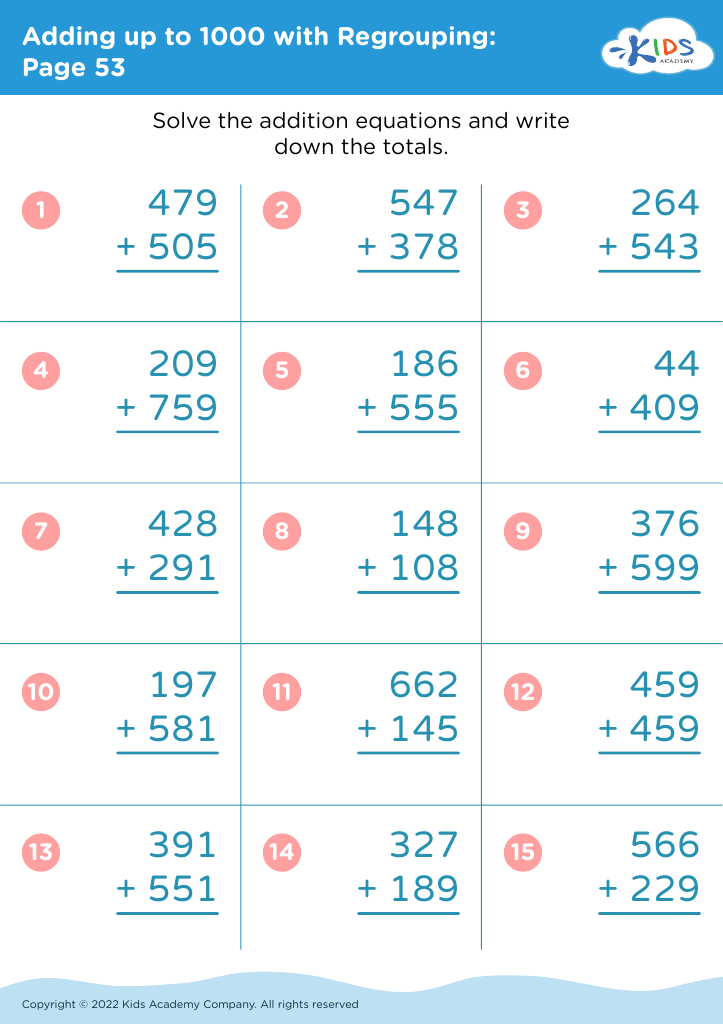
Adding up to 1000 with Regrouping: Page 53
Worksheet
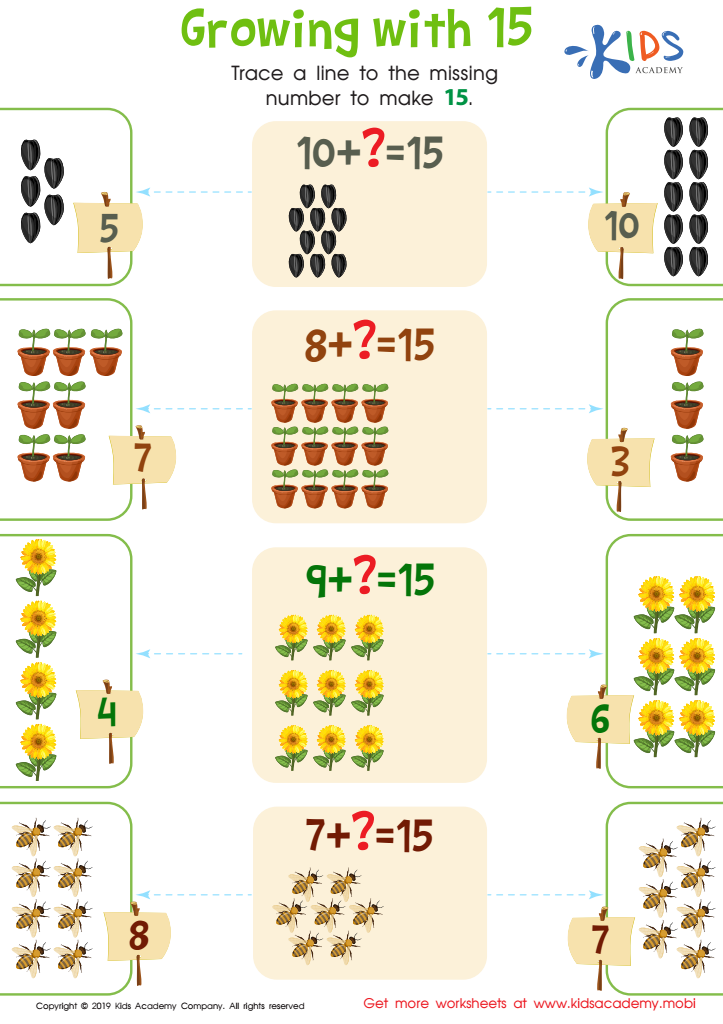
Growing with 15 Worksheet

Growing with 15 Worksheet

Remind your kids that adding different sets of numbers can give the same total (e.g. 2+3=5, 4+1=5). Test their understanding by asking them for more examples. Move onto the worksheet: count objects, then trace the line to the number making a total of 15.
Growing with 15 Worksheet
Worksheet
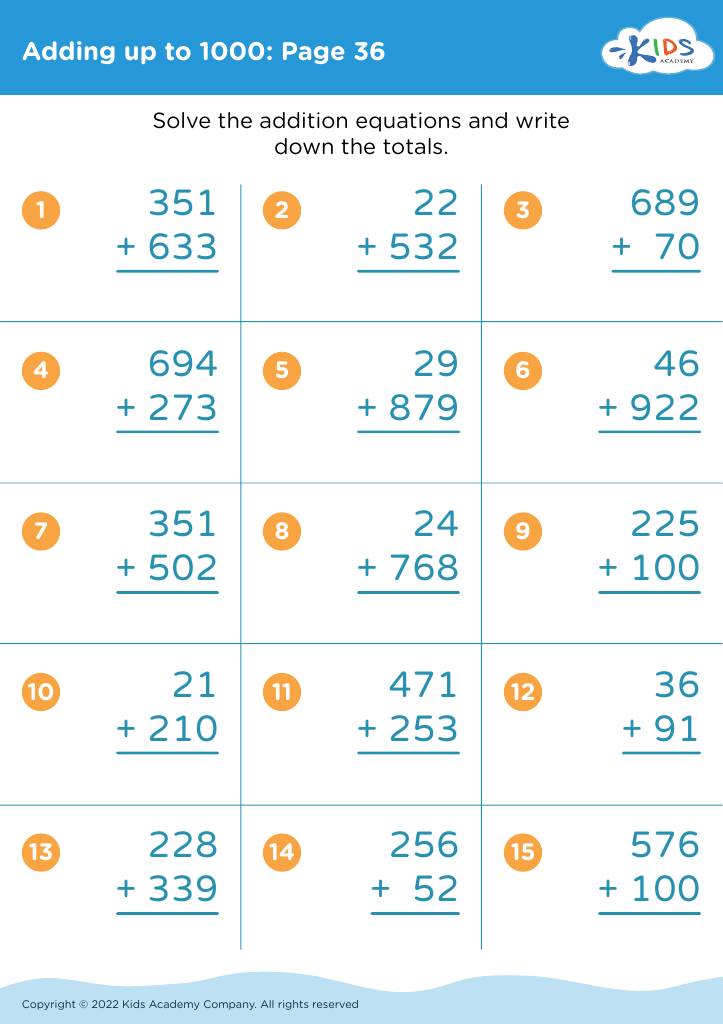
Adding up to 1000: Page 36

Adding up to 1000: Page 36

Adding up to 1000: Page 36
Worksheet
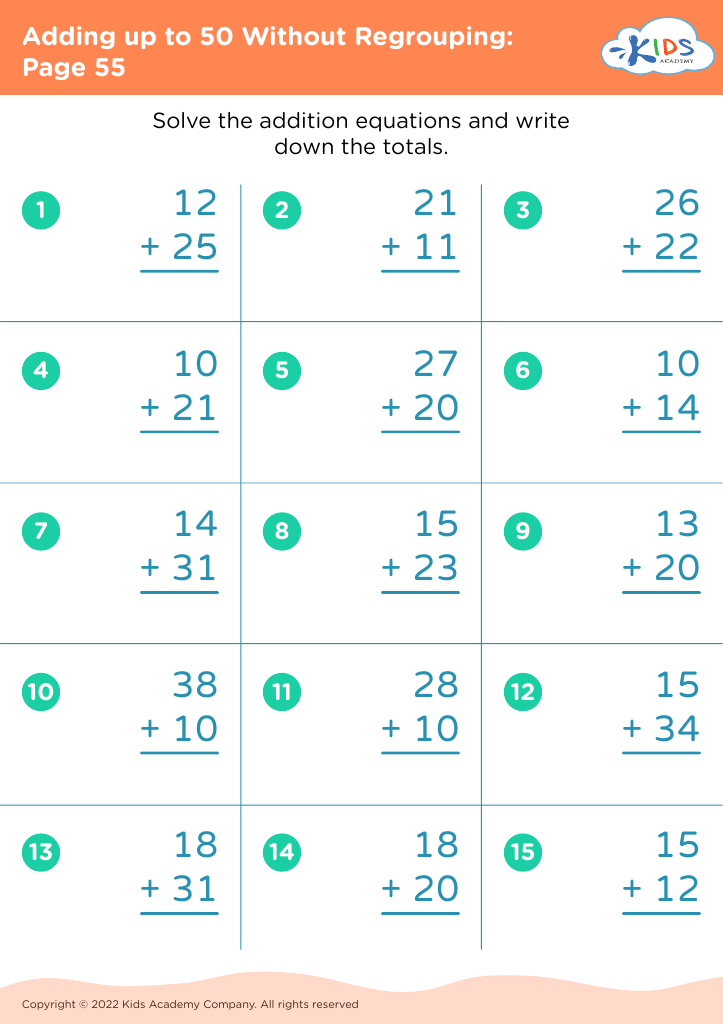
Adding up to 50 Without Regrouping: Page 55
Worksheet
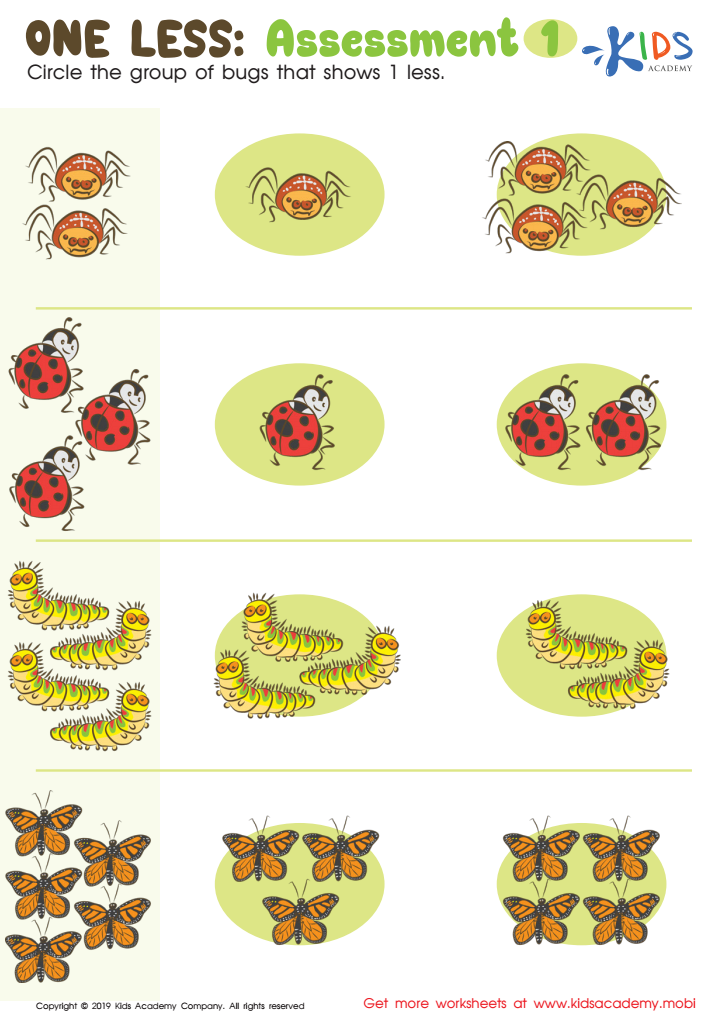
One Less: Assessment 1 Worksheet
One Less: Assessment 1 Worksheet
Help your kids with counting using this worksheet that has pictures of bugs! There are four different bugs and insects. Show them each one and ask them to count, then circle the group that has 1 less than the previous group. Don't worry if your kids don't like bugs - it's just a picture!
One Less: Assessment 1 Worksheet
Worksheet
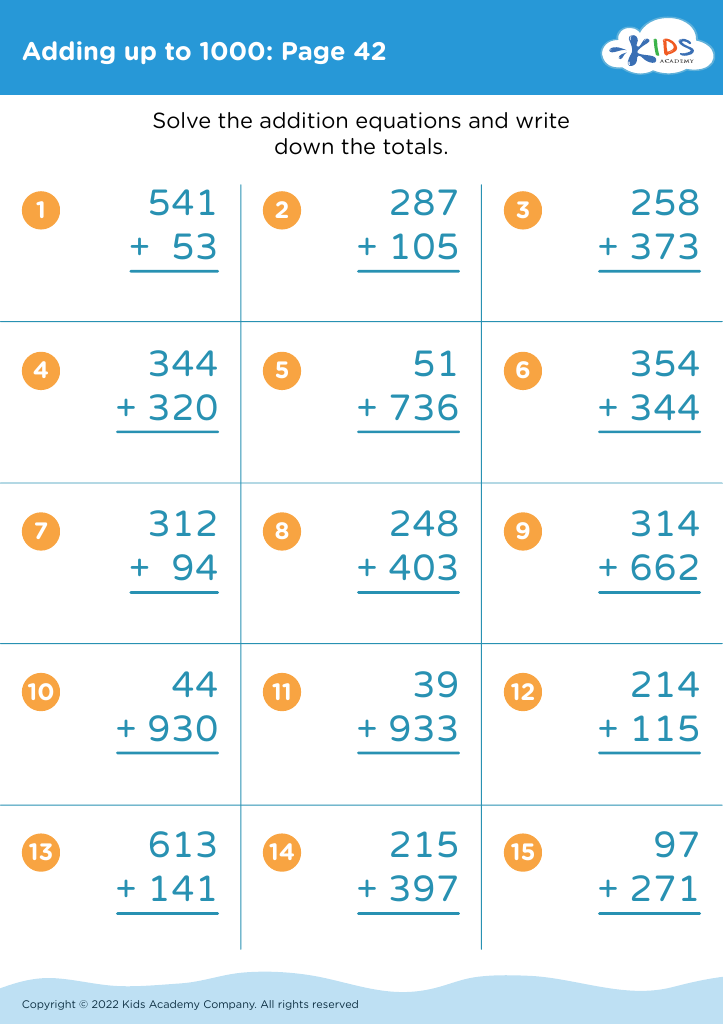
Adding up to 1000: Page 42

Adding up to 1000: Page 42

Adding up to 1000: Page 42
Worksheet
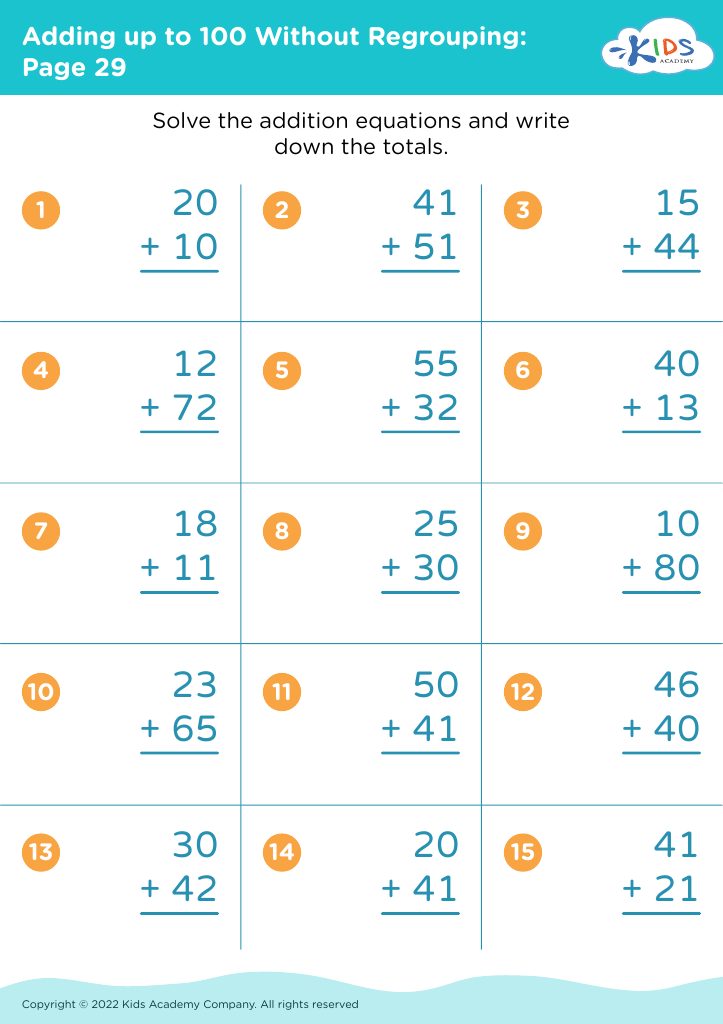
Adding up to 100 Without Regrouping: Page 29
Worksheet
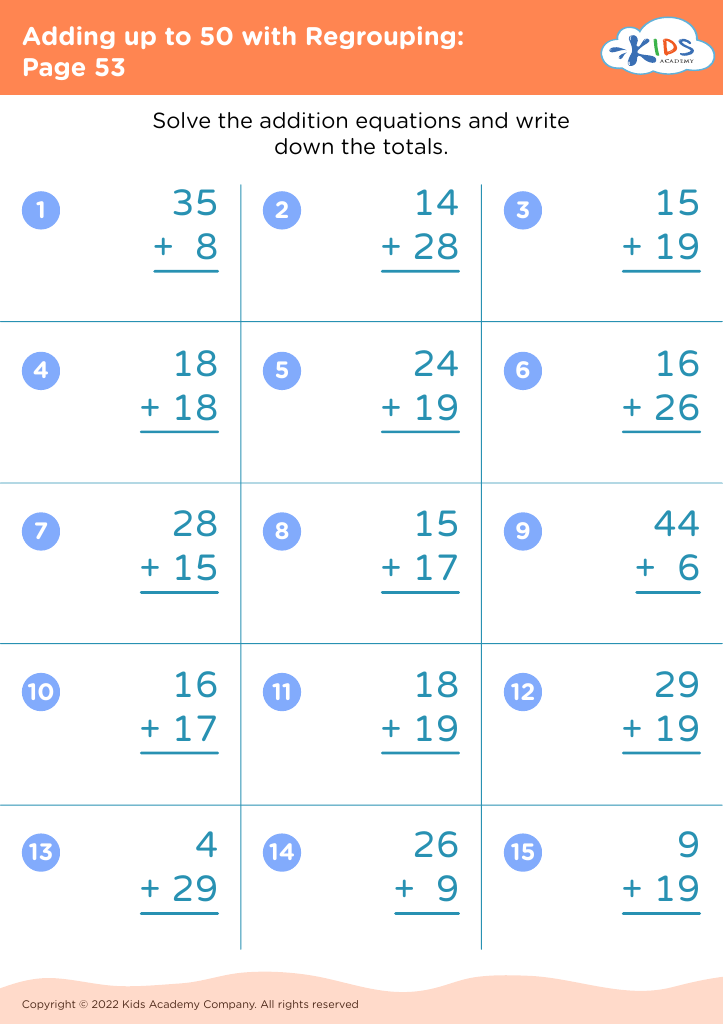
Adding up to 50 with Regrouping: Page 53
Worksheet
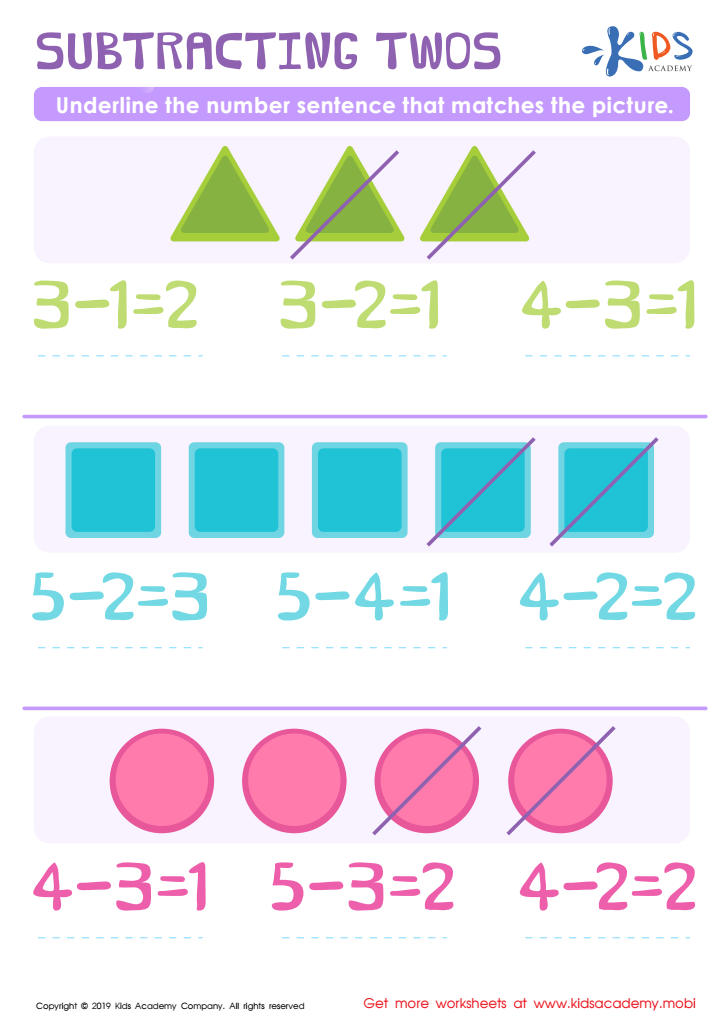
Subtracting Twos Worksheet
Subtracting Twos Worksheet

Help your children learn the basics of math with this worksheet. It has three number sentences they can match up with the pictures. Start by making math an enjoyable subject and help your kids underline the equation that matches up. This will give them a strong foundation to build on for the rest of their math journey.
Subtracting Twos Worksheet
Worksheet
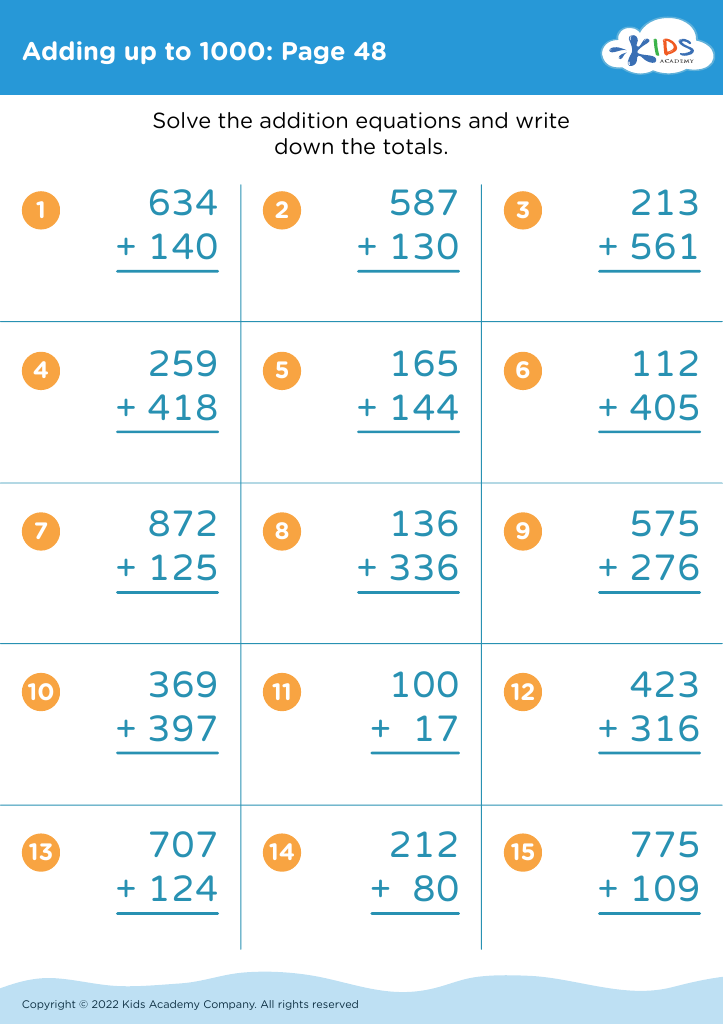
Adding up to 1000: Page 48

Adding up to 1000: Page 48

Adding up to 1000: Page 48
Worksheet
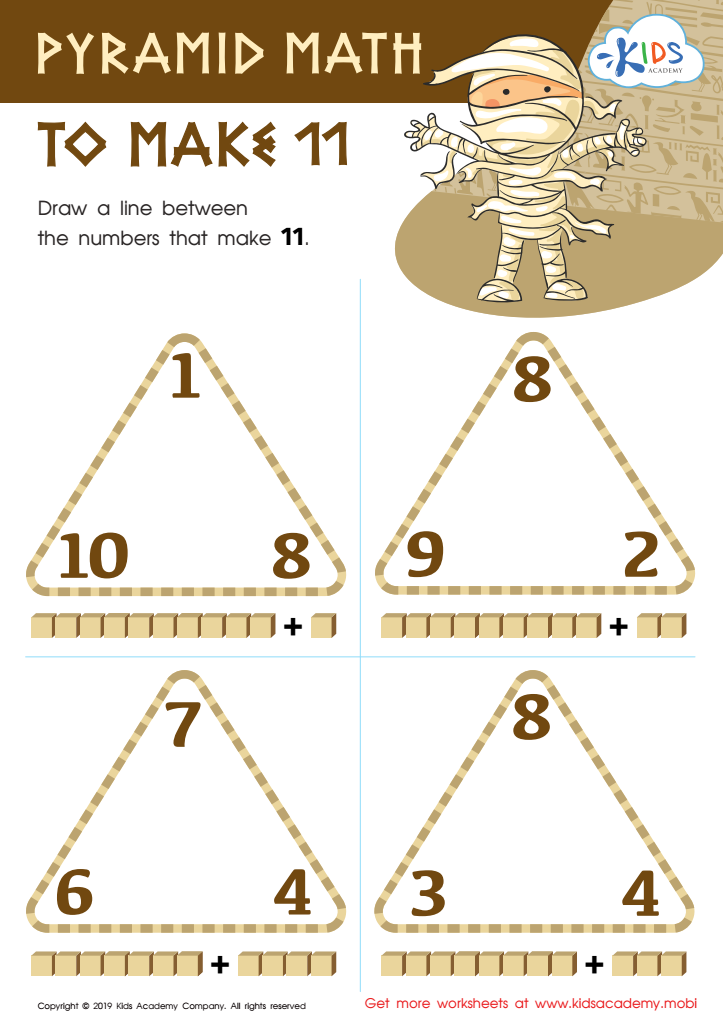
Pyramid Math to Make 11 Worksheet

Pyramid Math to Make 11 Worksheet

Have your kids look at the picture of the Egyptian pyramids and tell you what they see. Then, help them do simple math by adding up the numbers in the pyramids and connecting those that make 11. This worksheet is perfect for teaching your kids about history, mathematics, and problem-solving.
Pyramid Math to Make 11 Worksheet
Worksheet
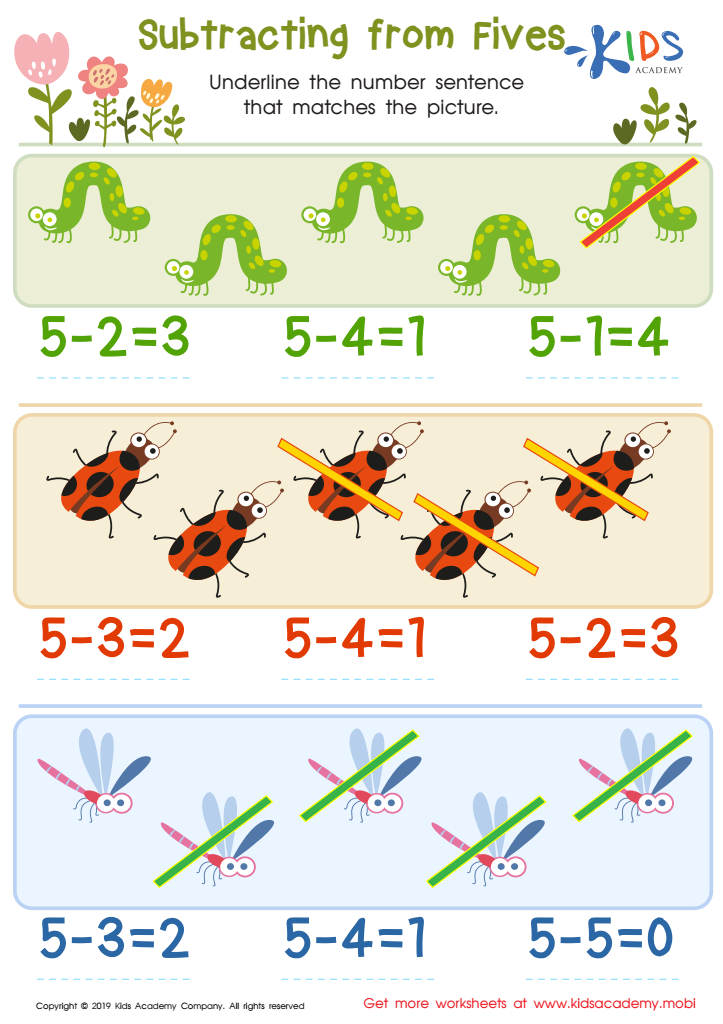
Subtracting From Fives Worksheet
Subtracting From Fives Worksheet

Help your kids practice subtraction with this fun worksheet! Have them identify the insects, then solve the equations and find the matching number sentence. It's a great way to give them an edge in math and enjoy doing it!
Subtracting From Fives Worksheet

Worksheet
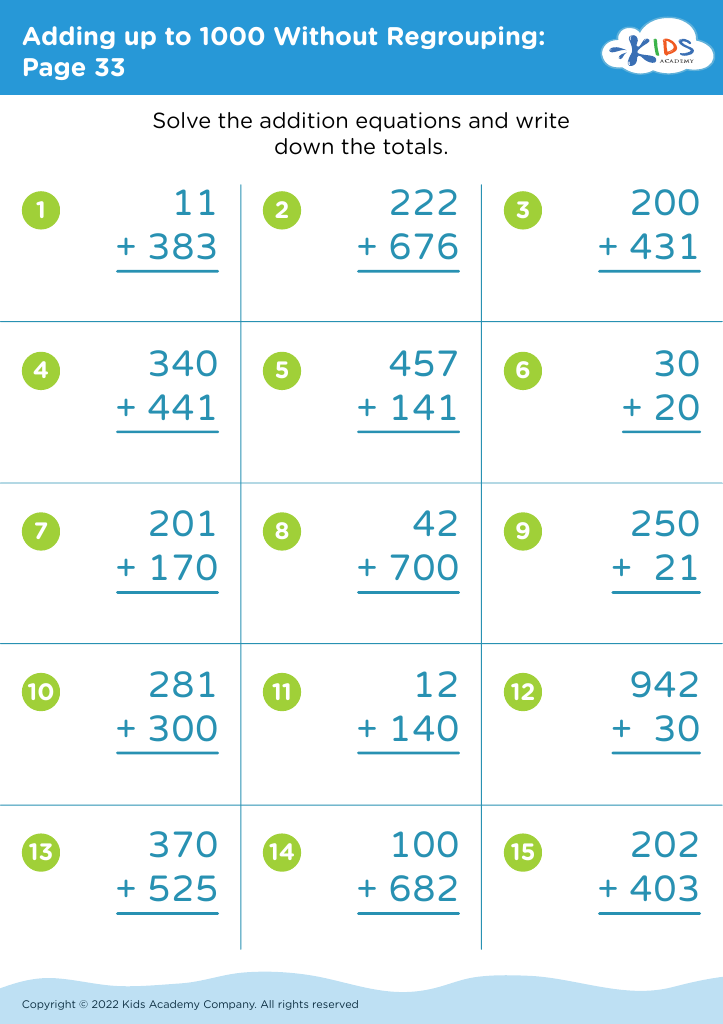
Adding up to 1000 Without Regrouping: Page 33
Worksheet
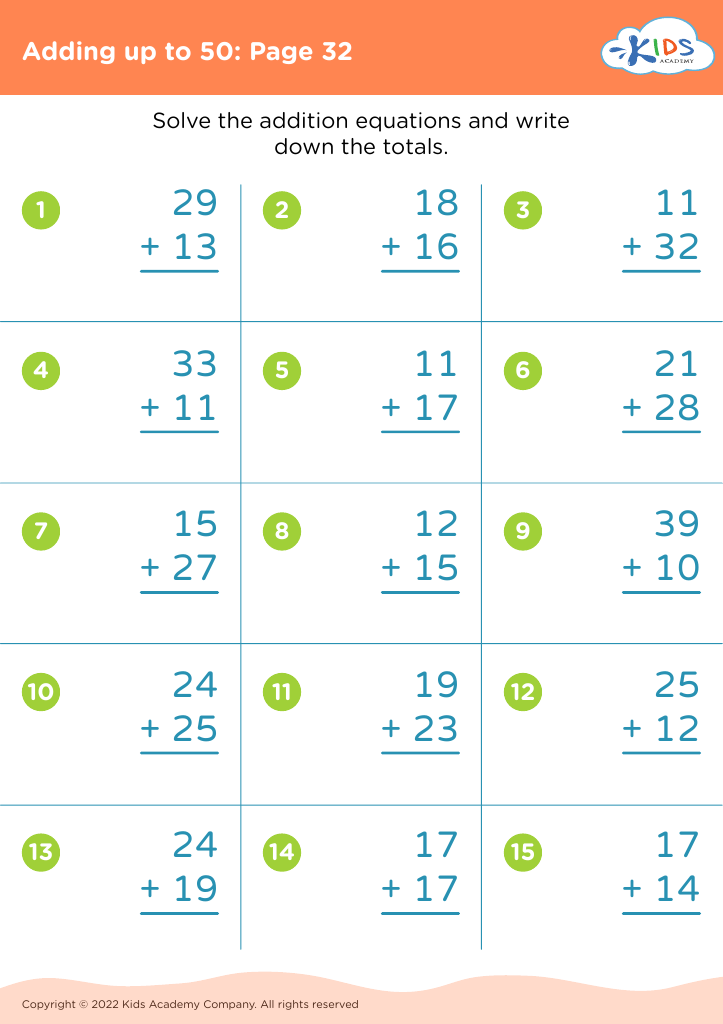
Adding up to 50: Page 32

Adding up to 50: Page 32

Adding up to 50: Page 32
Worksheet


... 8 9

Number recognition, addition, and subtraction are foundational skills for children aged 6-7, and their importance cannot be overstated. At this age, children transition from basic numeral recognition to applying these concepts in everyday situations, laying the groundwork for future mathematical understanding. Proficient number recognition enables kids to identify numbers quickly, which is vital for developing skills in addition and subtraction, essential operations for their academic journey.

These early mathematical skills affect children's confidence and engagement in learning. Children who struggle with number recognition or basic operations may develop anxiety towards math, hindering their willingness to participate in class. Additionally, a solid grasp of addition and subtraction is crucial as they progress to more complex topics, such as multiplication, division, and problem-solving.

Moreover, engaging parents and teachers in promoting these skills creates supportive learning environments that encourage practice and application. Activities like counting objects, playing math games, or incorporating math into daily routines make learning enjoyable and relevant. By prioritizing number recognition and basic operations, parents and teachers equip children with critical thinking and problem-solving skills, setting a strong foundation for their academic success and everyday life. This investment in their early years fosters a healthier attitude towards math and learning overall.