Practice writing numbers Addition & Subtraction Worksheets for Ages 6-7
6 filtered results
-
From - To
Welcome to our comprehensive collection of Addition and Subtraction Worksheets designed for children aged 6-7! Our engaging worksheets focus on enhancing number-writing skills while mastering basic arithmetic operations. Each worksheet is tailored to promote both understanding and confidence in addition and subtraction through fun activities. Kids will practice writing numbers, solving problems, and reinforcing essential math concepts in a playful yet educational environment. Perfect for home or classroom use, these worksheets provide the ideal resources for young learners to develop their math skills in an interactive way. Dive in and watch your child's math abilities flourish!
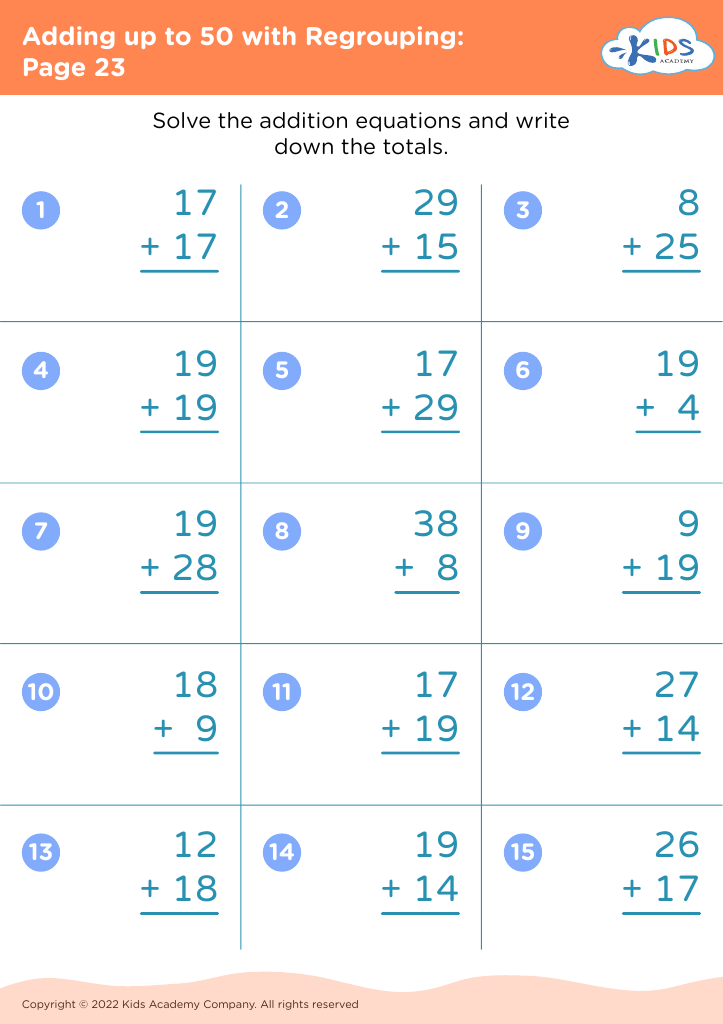
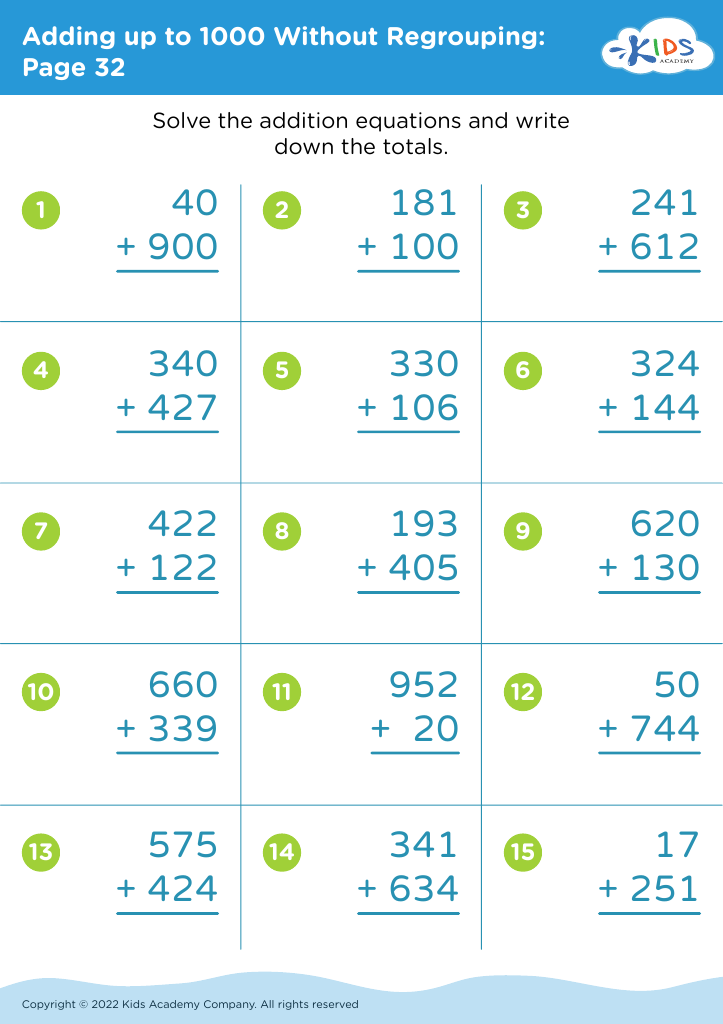
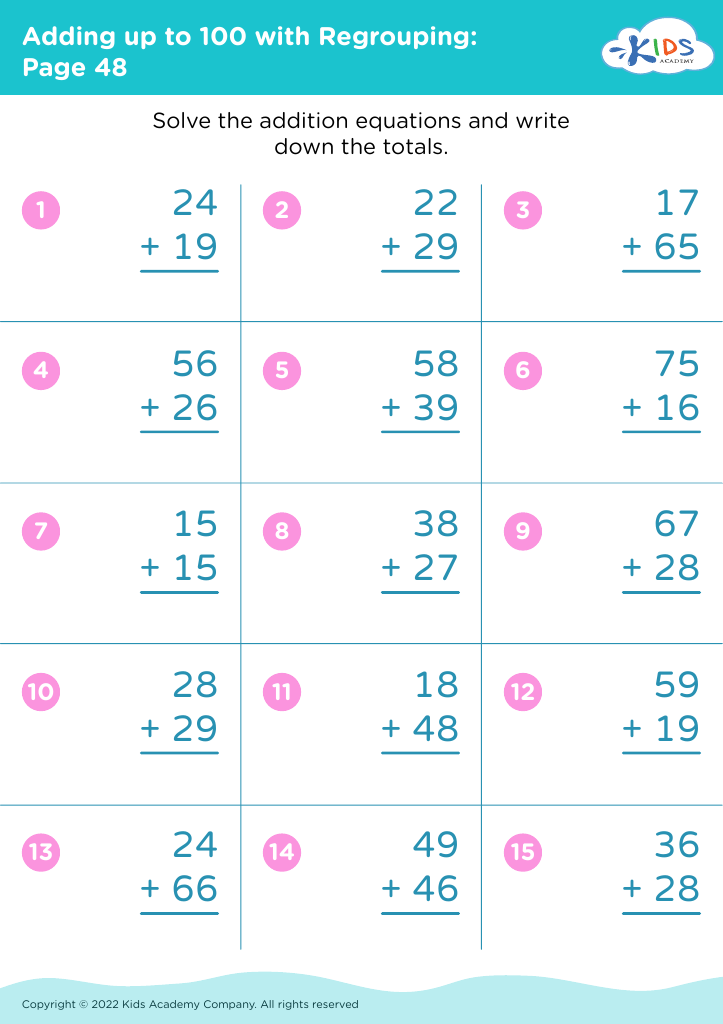
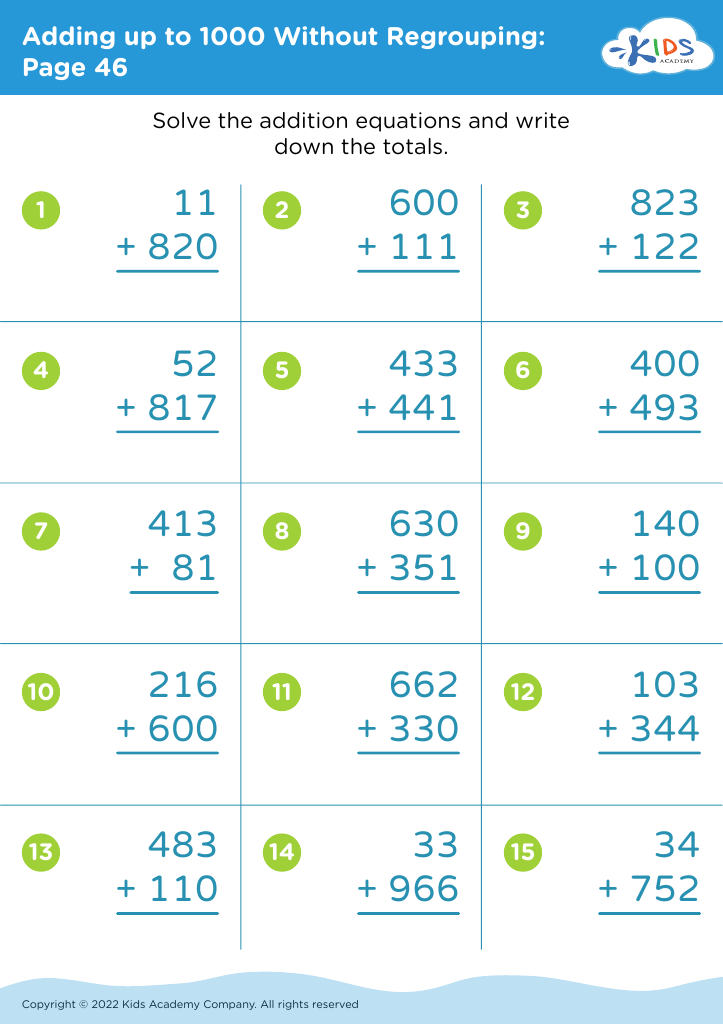
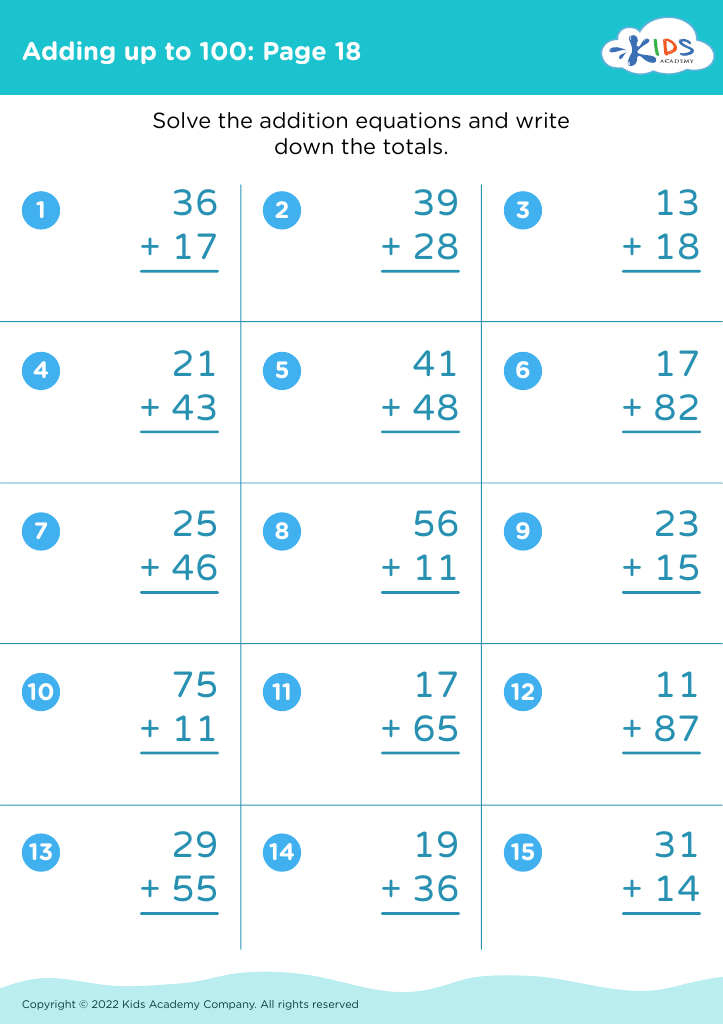
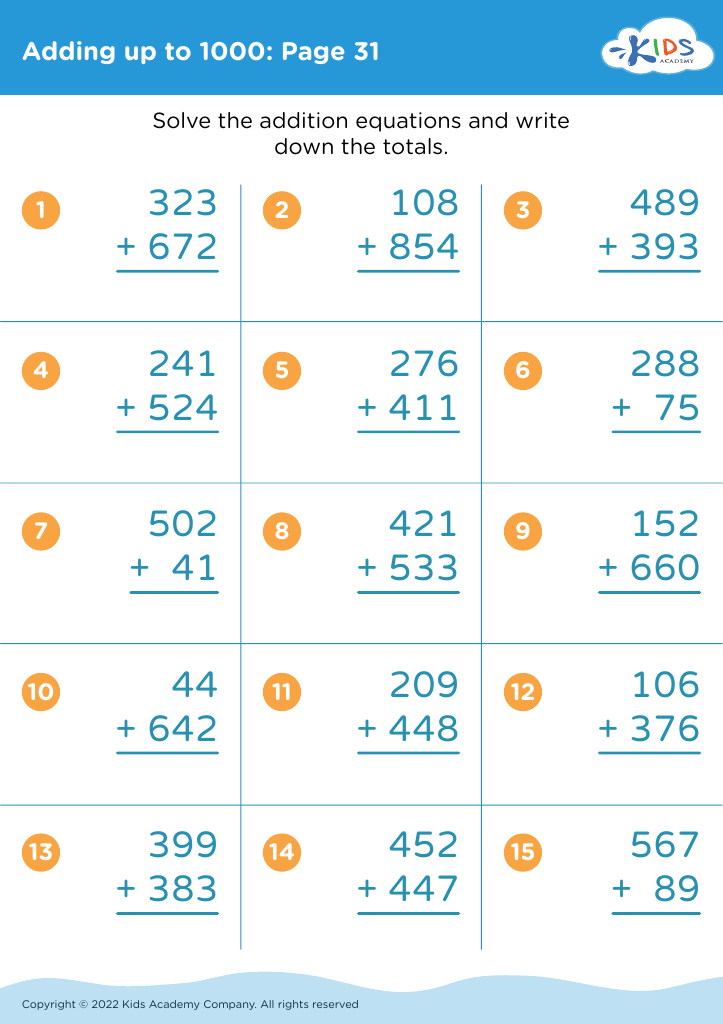








Parents and teachers play a crucial role in the early mathematical development of children aged 6-7, and practices such as writing numbers, addition, and subtraction are foundational skills that can significantly impact future learning. Mastering these basic concepts lays the groundwork for more complex math topics. Writing numbers reinforces numeral recognition and helps develop fine motor skills, which are essential for overall coordination.
Addition and subtraction are not merely rote skills; they foster problem-solving abilities and critical thinking. At this age, children begin to understand concepts such as quantities, relationships, and the idea of combining or separating groups. Engaging in these practices cultivates a positive attitude toward math, helping to build self-confidence and reduce anxiety surrounding the subject as they progress through their education.
In addition, regular exposure to these fundamental math skills enhances cognitive development. It encourages children to make connections between number operations, promotes logical reasoning, and aids memory retention. Establishing a strong foundation in math during these formative years not only ensures academic success but also equips children with essential life skills, such as budgeting and calculations, crucial for daily living and future educational pursuits. Therefore, active involvement of parents and teachers in this practice is vital for children's overall growth and confidence in math.








