Practicing addition Addition & Subtraction Worksheets for Ages 6-7
4 filtered results
-
From - To
Welcome to our Practicing Addition & Subtraction Worksheets for Ages 6-7! Designed for young learners, these engaging and interactive worksheets help children strengthen their addition skills through exciting activities. With colorful graphics and age-appropriate problems, kids will enjoy practicing basic math concepts like single-digit addition and simple word problems. Each worksheet promotes critical thinking and lays a solid foundation for future math success. Ideal for home or classroom use, our resource ensures that learning is fun and effective. Empower your child with the confidence and skills needed for math mastery. Explore our collection now and watch them thrive!
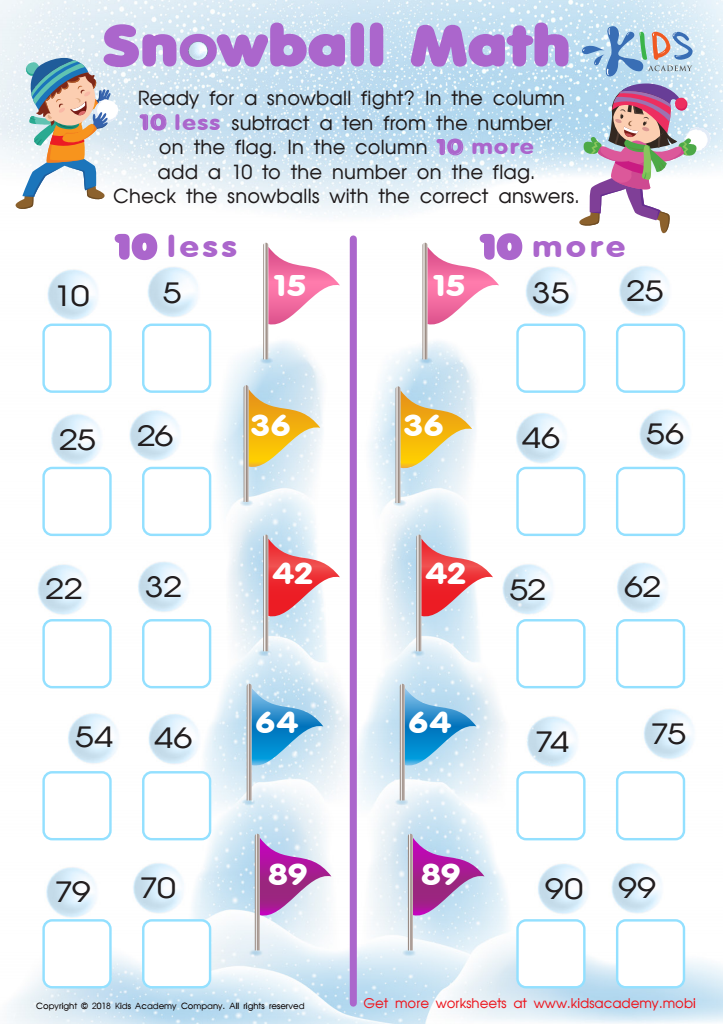
Snowball Math Worksheet
 Assign to My Students
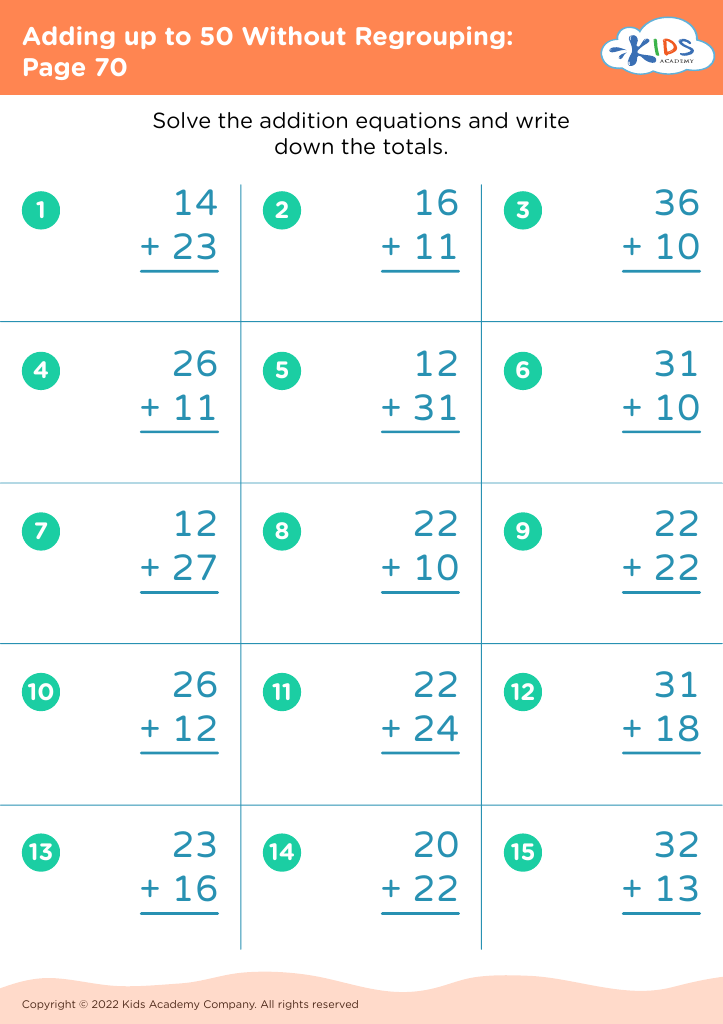
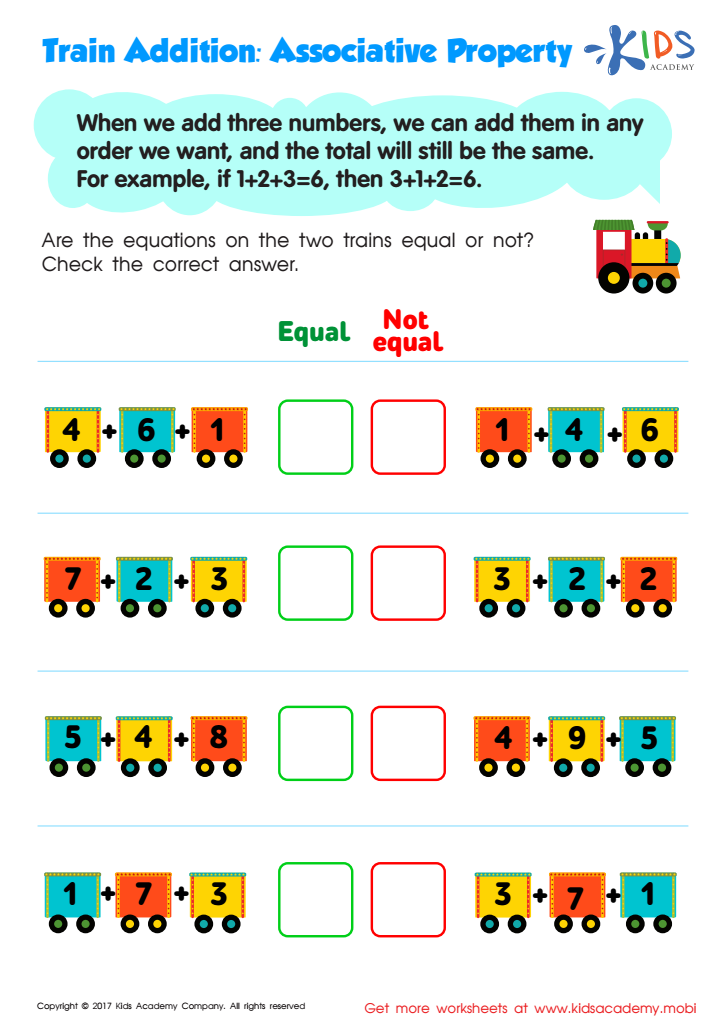
Train Addition: Associative Property Worksheet








Practicing addition and subtraction for children aged 6-7 is crucial for several reasons. At this developmental stage, children are transitioning from concrete understanding to more abstract concepts in mathematics. Mastering these fundamental skills not only lays the foundation for future mathematical learning but also enhances critical thinking and problem-solving abilities critical in other academic subjects.
When parents and teachers engage in regular addition and subtraction practice, they help to build confidence in children's math abilities. This confidence can significantly impact a child's attitude toward learning, influencing their willingness to engage with more complex mathematical concepts as they progress through their education.
Moreover, practicing these skills encourages cognitive development. Children learn to recognize patterns, understand relationships between numbers, and develop logical reasoning skills that are beneficial beyond math. Incorporating fun teaching methods, such as games or interactive activities, can make learning engaging and enjoyable.
Additionally, establishing a strong grasp of these operations supports daily life skills, enabling children to manage money and understand time, thereby empowering them as individuals. Overall, consistent practice of addition and subtraction fosters both academic success and essential life skills, making it a vital focus for parents and educators.








