
Real-life application Addition & Subtraction Worksheets for Ages 6-7
3 filtered results
Difficulty Level
Grade
Age
-
From - To
Subject
Activity
Standards
Discover our engaging "Real-life Application Addition & Subtraction Worksheets" designed for children aged 6-7. These worksheets provide practical math experiences that connect classroom learning to everyday situations. Young learners will practice essential addition and subtraction skills while solving real-world problems, enhancing their critical thinking and reasoning abilities. With fun, relatable scenarios, students will explore concepts such as budgeting, time management, and basic measurements. Perfect for use at home or in the classroom, our worksheets encourage children to apply their math knowledge in meaningful ways. Boost your child's confidence and math proficiency today with our exciting resources tailored for young minds!
Favorites
With answer key
Interactive
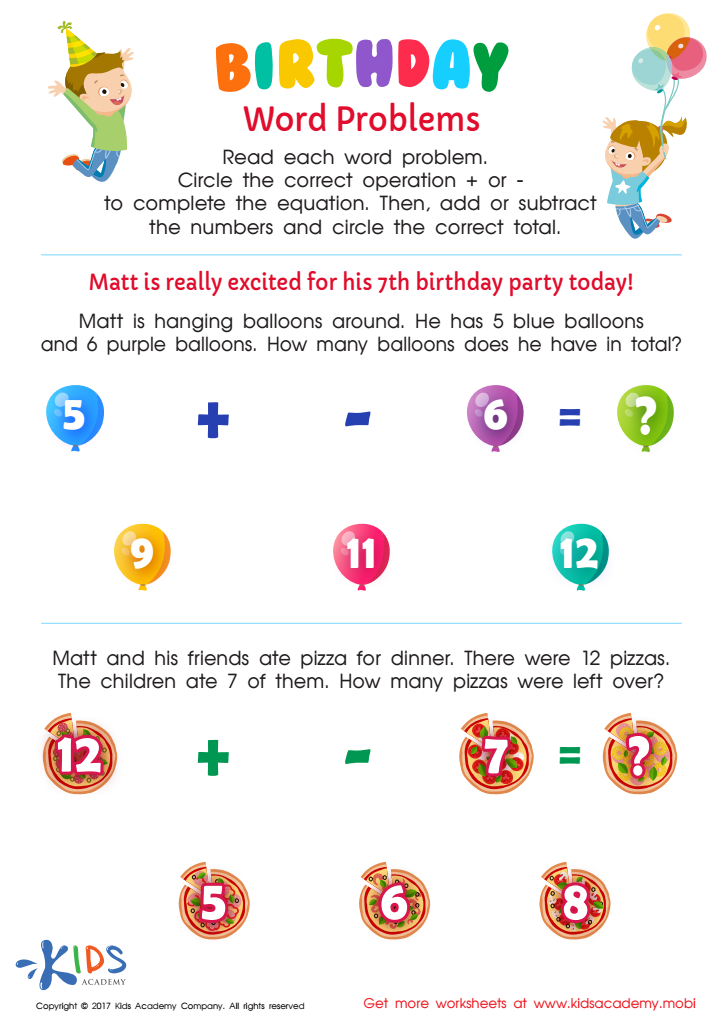
Birthday Word Problems Substraction Worksheet
This worksheet, Birthday Word Problems, is a great way to improve your child's math and literacy skills. It features tricky subtraction equations based on a birthday celebration - perfect for kids who love birthdays!
 Assign to My Students
Birthday Word Problems Substraction Worksheet
Worksheet
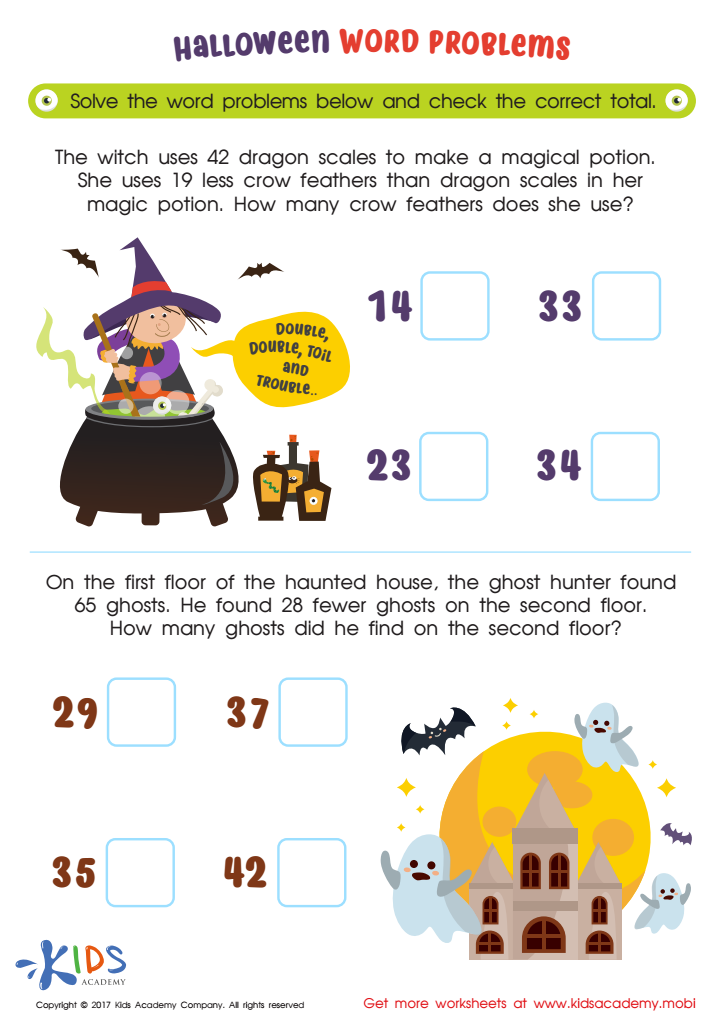
Halloween Word Problems Printable
Ghosts, witches, and other spooky characters make these problems exciting and interactive. Get ready to have some math fun!
Halloween Word Problems Printable
Worksheet
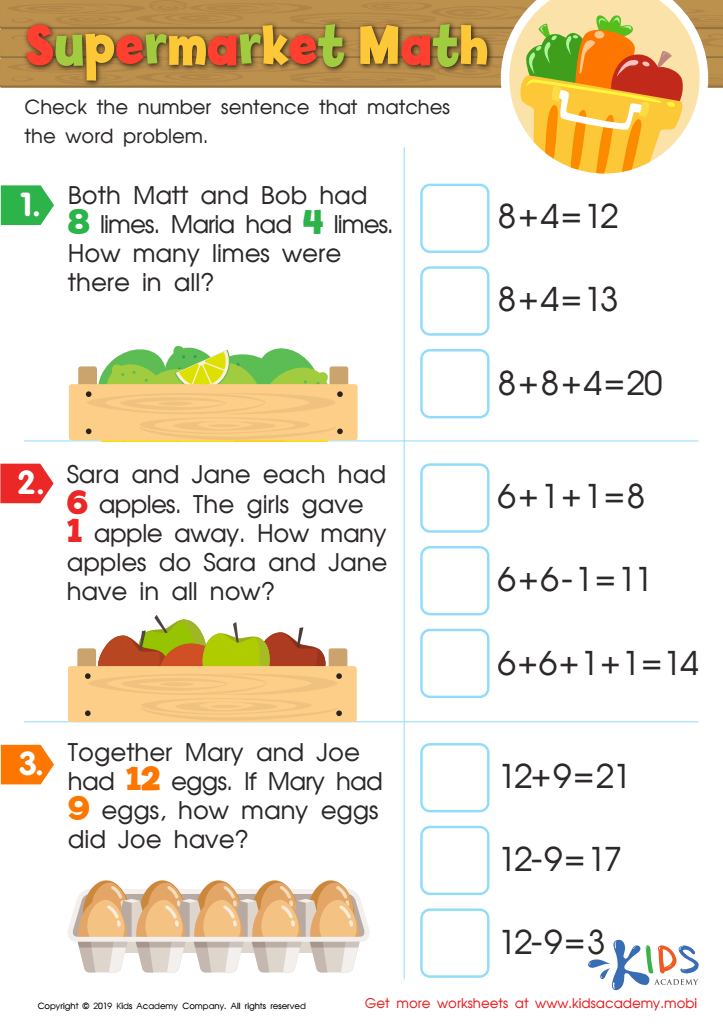
Supermarket Math Worksheet
Take your kids to the supermarket and ask what they're looking forward to buying. Help them solve the three questions in the worksheet by interpreting each one into an equation, then choose the right answer.
Supermarket Math Worksheet
Worksheet
Join Kids Academy for Free
Who is primarily going to use this learning content?








Parents and teachers should prioritize real-life applications of addition and subtraction for children aged 6 to 7 because these foundational skills are essential for everyday problem-solving and decision-making. At this age, children are naturally curious and eager to learn, making it the ideal time to connect mathematical concepts to real-world scenarios that they encounter daily.
Understanding how to add and subtract enables children to handle simple tasks such as counting money, measuring ingredients for a recipe, or even sorting toys. These experiences help solidify their mathematical understanding and promote critical thinking. When children see how math applies outside the classroom, they become more engaged and motivated to learn.
Moreover, practical applications foster deeper conceptual understanding. For instance, using toys or fruit to demonstrate addition or subtraction helps children visualize mathematical operations rather than just memorizing facts. This experiential learning builds confidence and lays the groundwork for more advanced math skills in the future.
Lastly, encouraging discussions around real-life math experiences promotes communication, language development, and a positive attitude toward learning. By emphasizing addition and subtraction through everyday experiences, parents and teachers can cultivate a lifelong appreciation for mathematics and empower children to navigate the world around them effectively.








