Shape identification Addition & Subtraction Worksheets for Ages 6-7
13 filtered results
-
From - To
Boost your child's math and geometry skills with our engaging Shape Identification Addition & Subtraction Worksheets designed specifically for ages 6-7. These printable worksheets combine essential arithmetic practice with geometry by using shapes to help kids solve addition and subtraction problems. Each activity reinforces shape recognition while developing problem-solving skills in a fun and interactive manner. Whether your child is just starting with basic arithmetic or looking to strengthen existing skills, these worksheets provide a solid foundation to a love for learning. Perfect for classroom or at-home practice, they make mastering math enjoyable and effective.
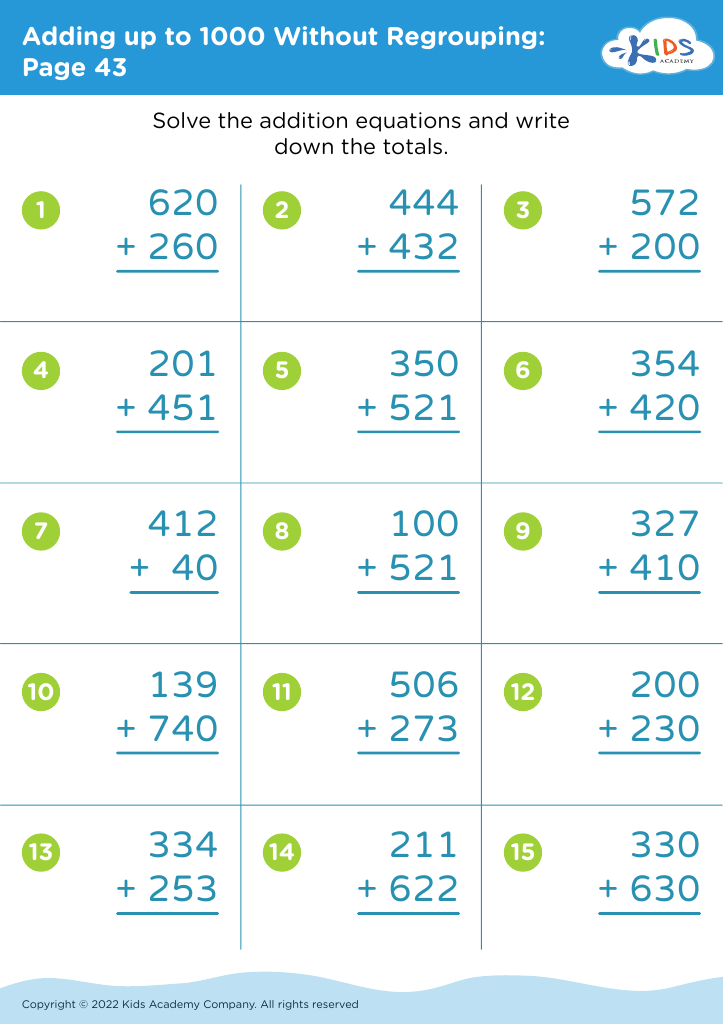








Parents and teachers should prioritize teaching shape identification and basic arithmetic—addition and subtraction—to children aged 6–7 because these skills are foundational for future academic success and everyday activities. Shape recognition enhances children's spatial awareness and geometry skills, crucial for understanding more complex mathematical concepts as they progress. Early mastery of shape identification also improves their ability to categorize and compare objects, which is essential for problem-solving and logical thinking.
Addition and subtraction are fundamental building blocks of mathematics. By understanding these operations, children develop critical thinking and analytical skills that are important not only in math but also in other subjects and practical scenarios like managing finances, measuring ingredients for recipes, or planning travel itineraries. Mastery of these basic math skills at an early age fosters confidence and a positive attitude towards learning, creating a strong foundation for tackling more advanced topics in the future.
Moreover, early engagement in these cognitive skills supports brain development, stimulating areas related to reasoning, memory, and processing speed. When parents and teachers emphasize these areas, they set children up for holistic developmental success, positioning them to reach their full academic potential and to confidently navigate the world around them.








