Visual interpretation Addition & Subtraction Worksheets for Ages 6-7
4 filtered results
-
From - To
Discover our engaging Visual Interpretation Addition & Subtraction Worksheets designed for children ages 6-7! These worksheets incorporate colorful visuals and relatable scenarios to help young learners grasp fundamental math concepts. By using images and visual aids, students can better understand the processes of addition and subtraction, making abstract ideas more concrete. Our thoughtfully designed activities promote critical thinking, allowing kids to visualize math problems and solutions effectively. Perfect for classroom use or at-home practice, these worksheets are not only educational but also fun! Start building a strong math foundation for your child while boosting their confidence in math today!
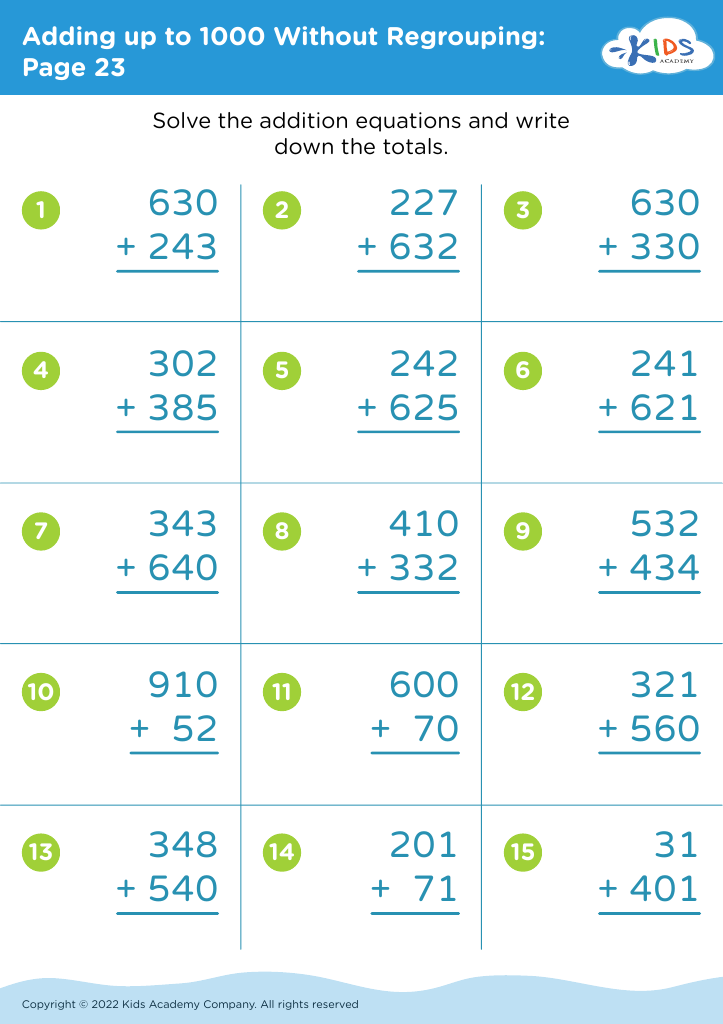
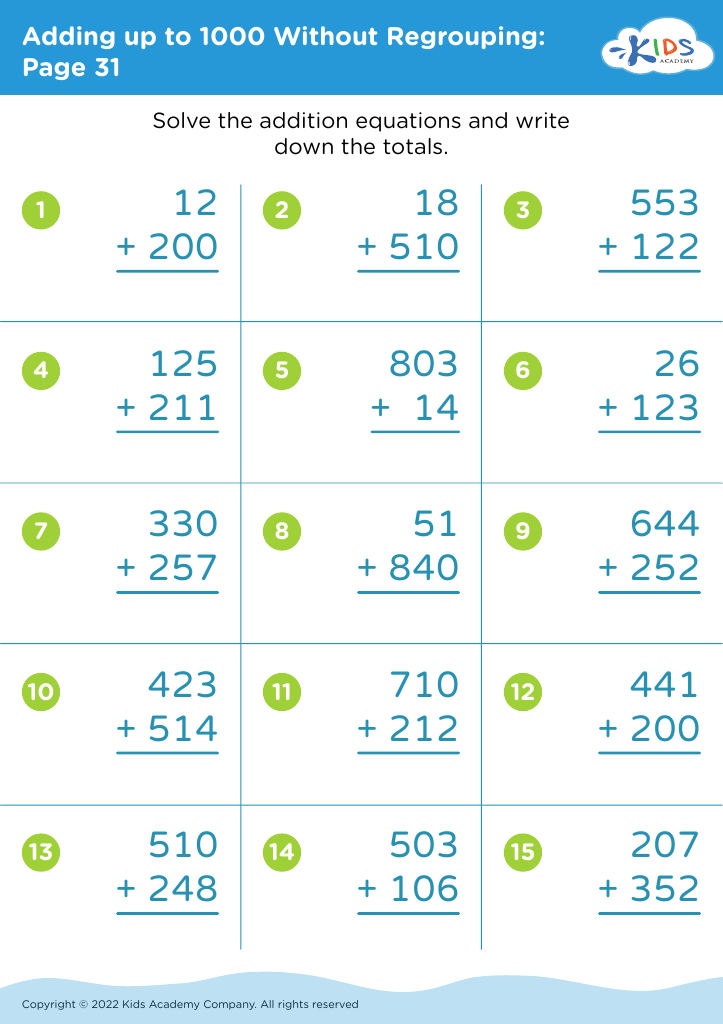
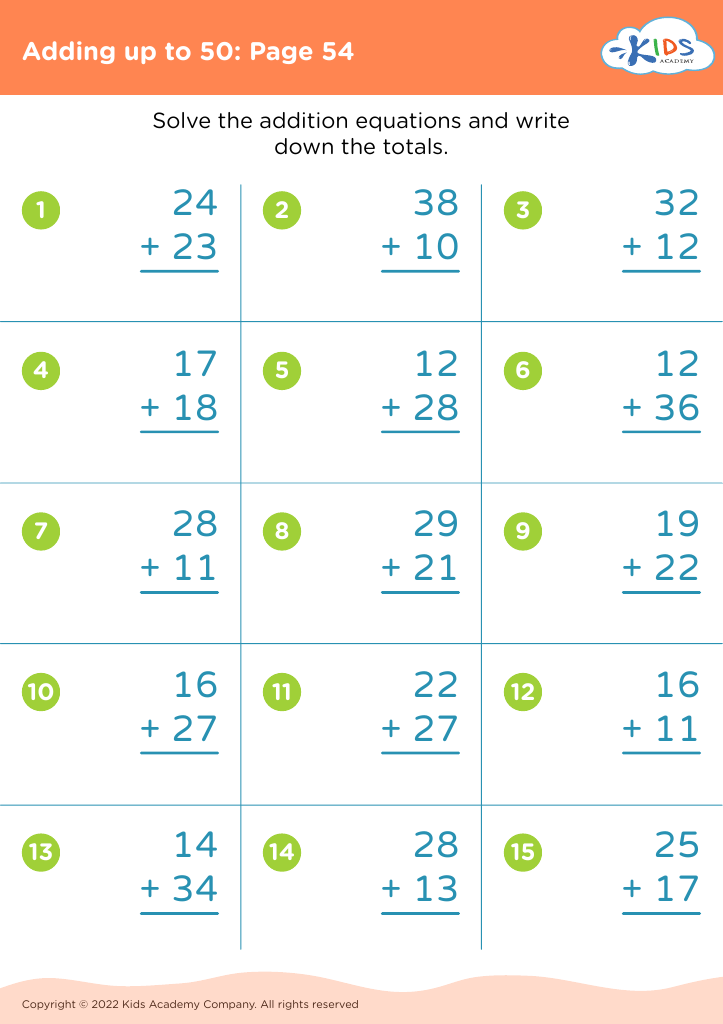
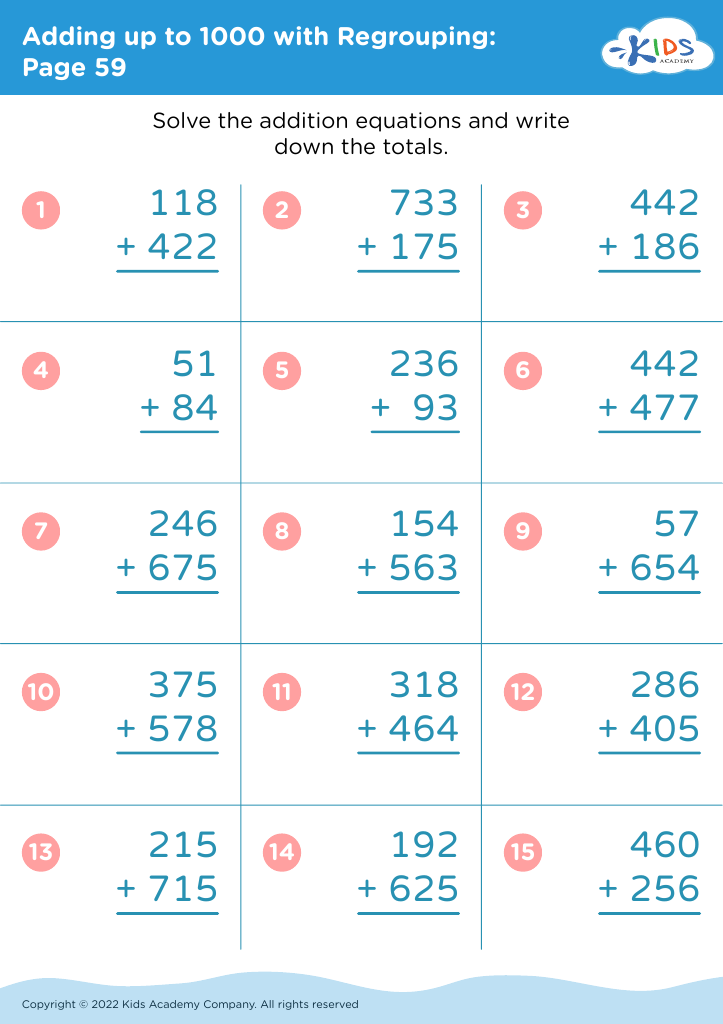








Visual interpretation of addition and subtraction is essential for children aged 6-7 as it lays the groundwork for mathematical understanding. At this stage, children are transitioning from concrete experiences with numbers to abstract reasoning. By using visual aids—like number lines, manipulatives, and pictorial representations—parents and teachers can help children grasp the concepts of addition and subtraction in a tangible way.
Visual aids simplify complex ideas, making abstract calculations more relatable. When children can visualize the operation—such as seeing three apples and adding two more—they develop a clearer understanding of the process involved. This enhances their ability to solve problems and reinforces the notion that math is not just memorization, but a way to understand the world around them.
Furthermore, interpreting visuals encourages critical thinking and reasoning skills. Children learn to discern patterns, make connections, and approach problems strategically. As parents and teachers foster these skills early on, they empower children to become confident learners, setting the stage for future mathematical success. By prioritizing visual interpretation in teaching addition and subtraction, adults can help children develop a solid foundation that is crucial for more complex math concepts later in their education.








