Filters

64 filtered results

Clear all filters
Favorites
With answer key
Interactive

64 filtered results

Difficulty Level

Grade


Check out this FREE Trial Lesson on Addition for age 6-7!

Add within 100 No regrouping

Favorites
With answer key
Interactive
  • 6-7
  • Addition Practice
  • Addition
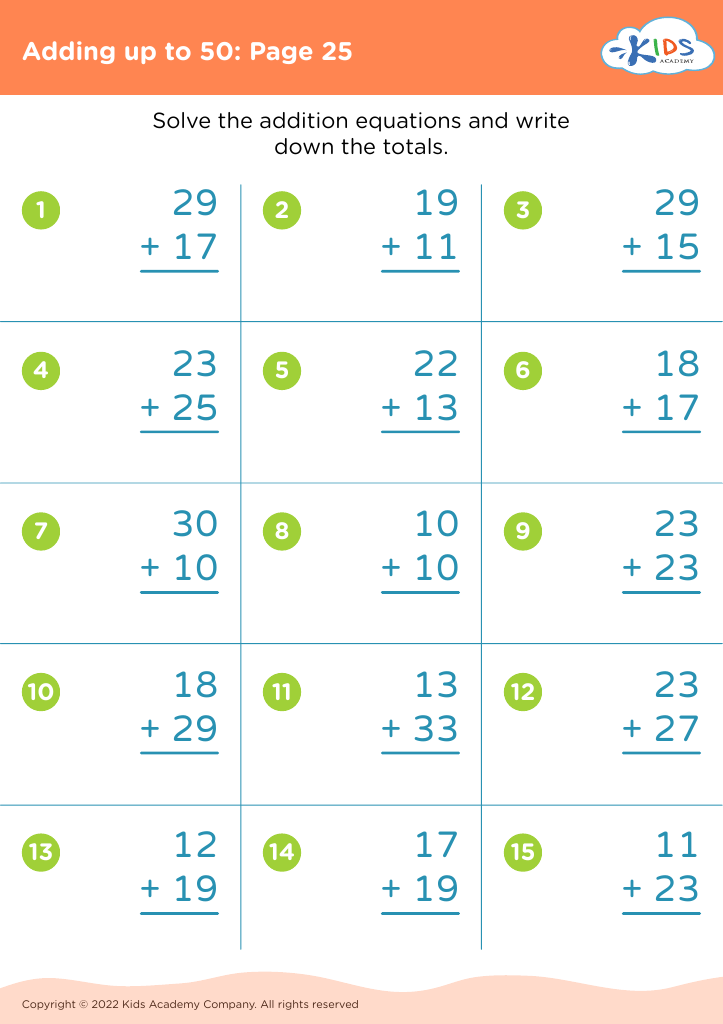
Adding up to 50: Page 25

Adding up to 50: Page 25

Adding up to 50: Page 25
Worksheet
Simple addition printable PDF worksheet

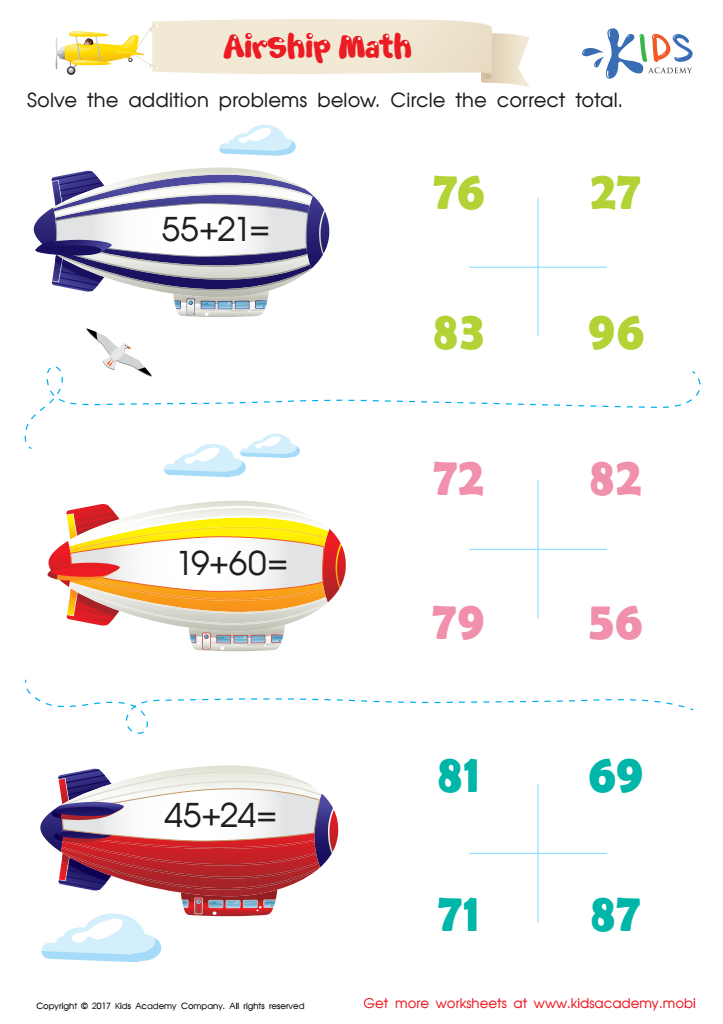
Airship Math Addition Printable

It features fun themes and engaging pictures to make solving problems fun and hassle-free. In only minutes, your child will practice and hone vital math skills!
Airship Math Addition Printable
Worksheet
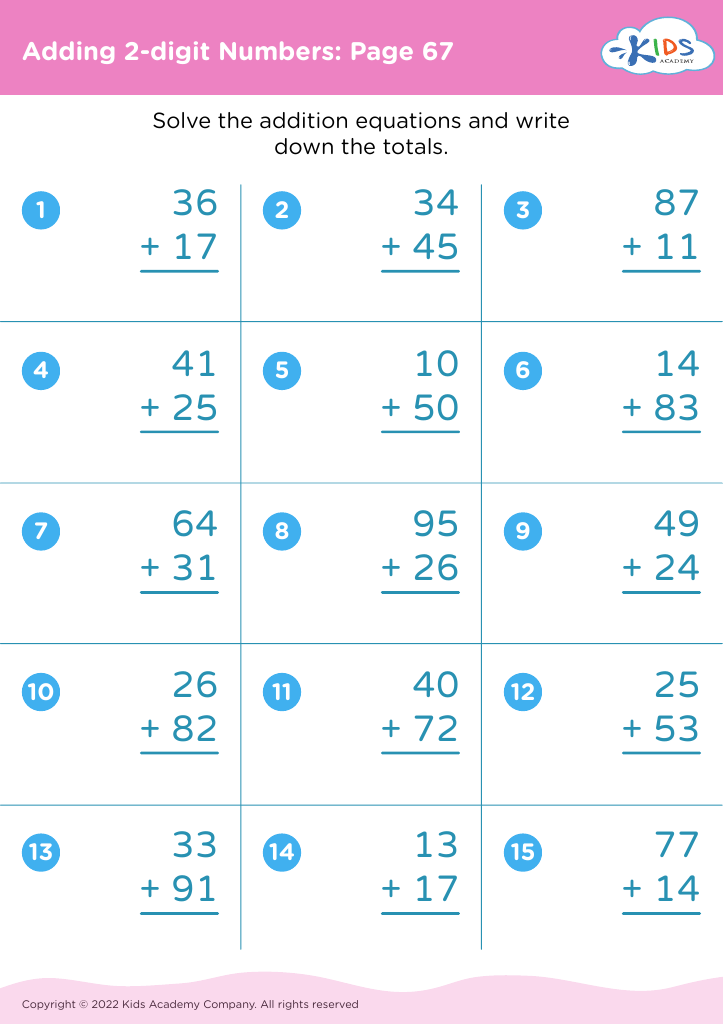
Adding 2-digit Numbers: Page 67

Adding 2-digit Numbers: Page 67

Adding 2-digit Numbers: Page 67
Worksheet
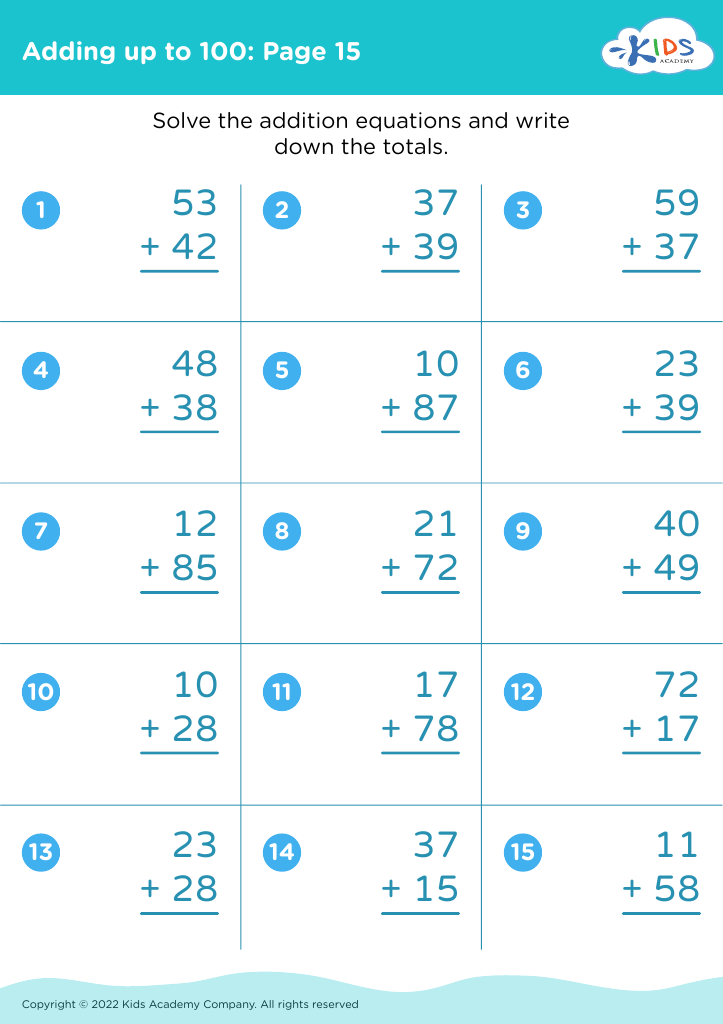
Adding up to 100: Page 15

Adding up to 100: Page 15

Adding up to 100: Page 15
Worksheet
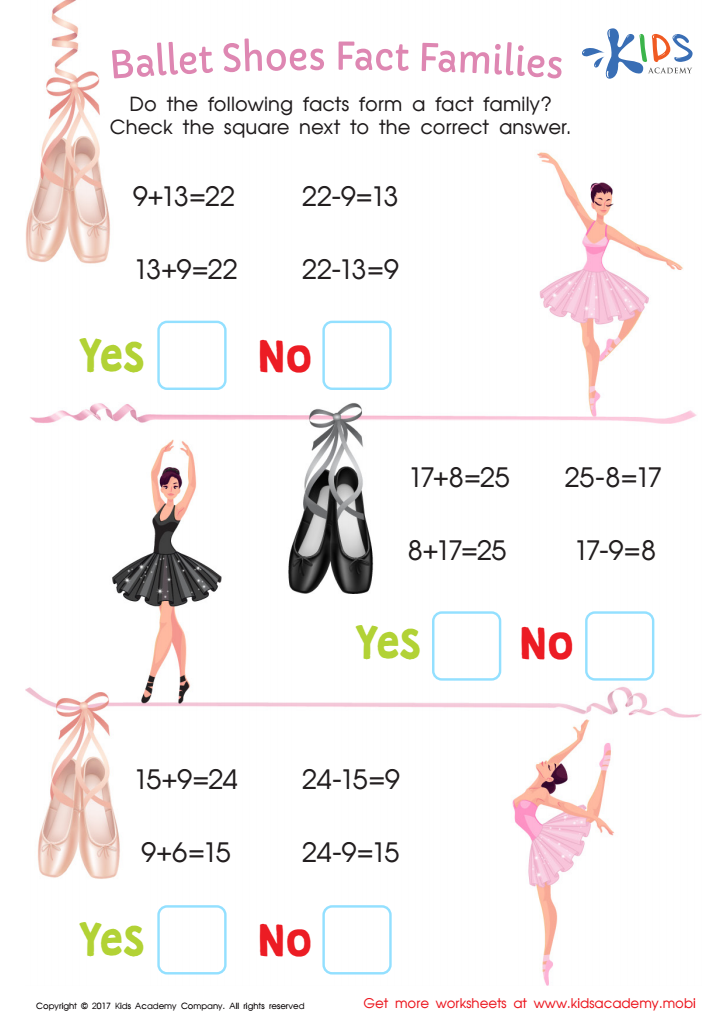
Ballet shoes fact families worksheet

Ballet Shoes Fact Family Printable
Have them observe the equations and determine which groupings are fact families for a delightful learning experience. It encourages critical thinking, showing how addition and subtraction are related.
Ballet Shoes Fact Family Printable
Worksheet
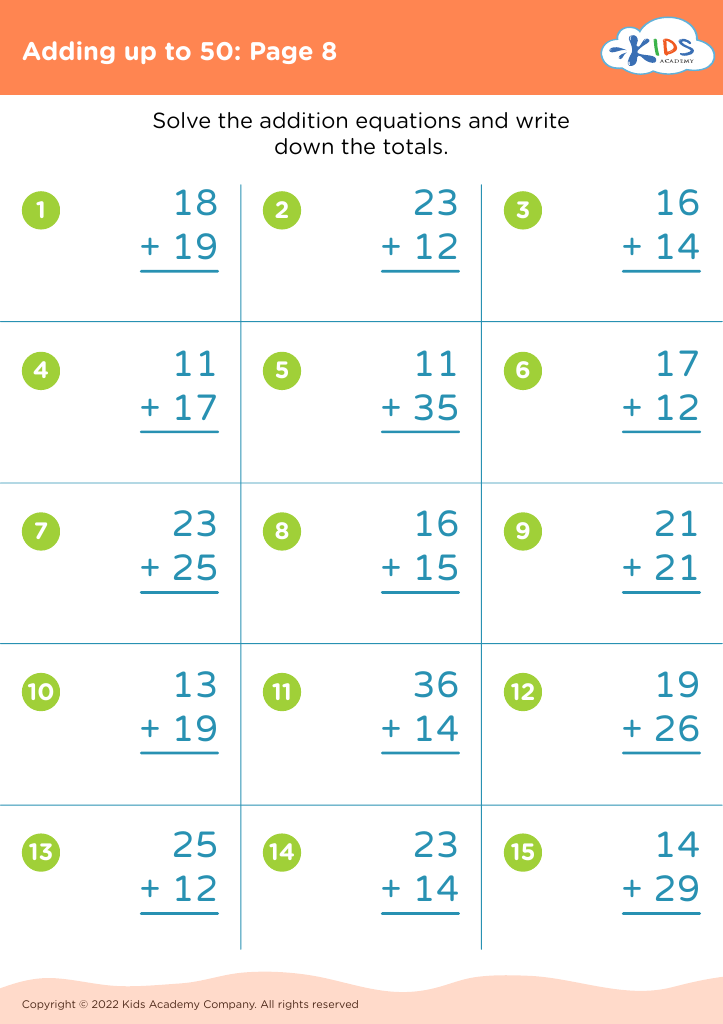
Adding up to 50: Page 8

Adding up to 50: Page 8

Adding up to 50: Page 8
Worksheet
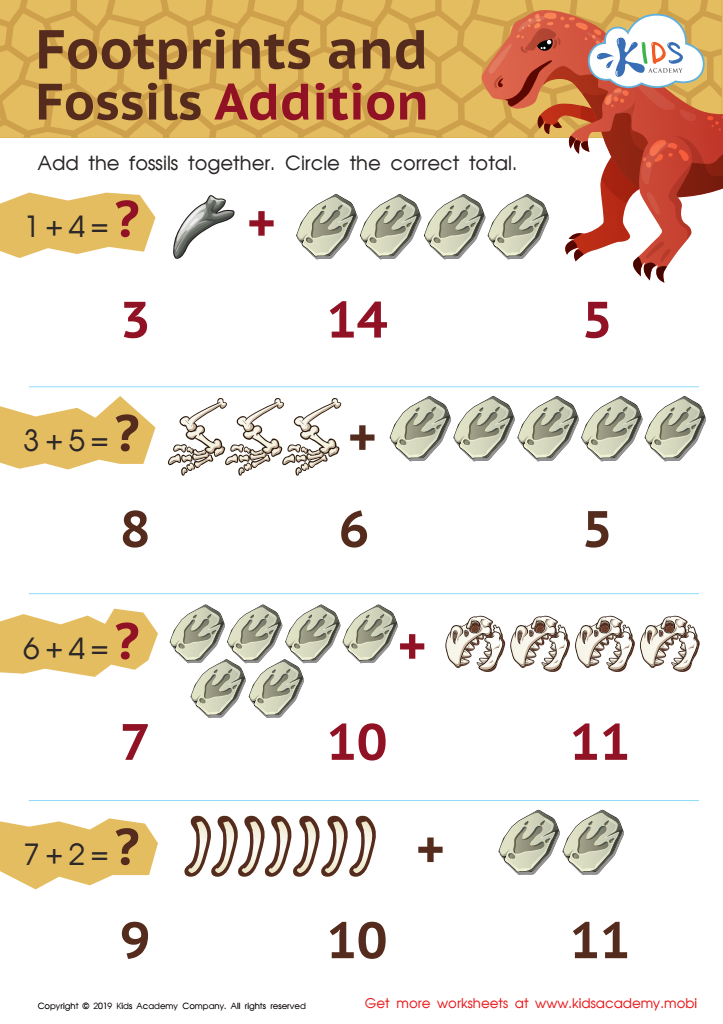
Footprints and Fossils Addition Worksheet
Footprints and Fossils Addition Worksheet
Show your students that addition and subtraction is easy with the right guidance and exercises. Use this worksheet to help them practice by adding fossils and circling the correct total of each equation. Your students will soon see that addition and subtraction is not so intimidating after all.
Footprints and Fossils Addition Worksheet
Worksheet
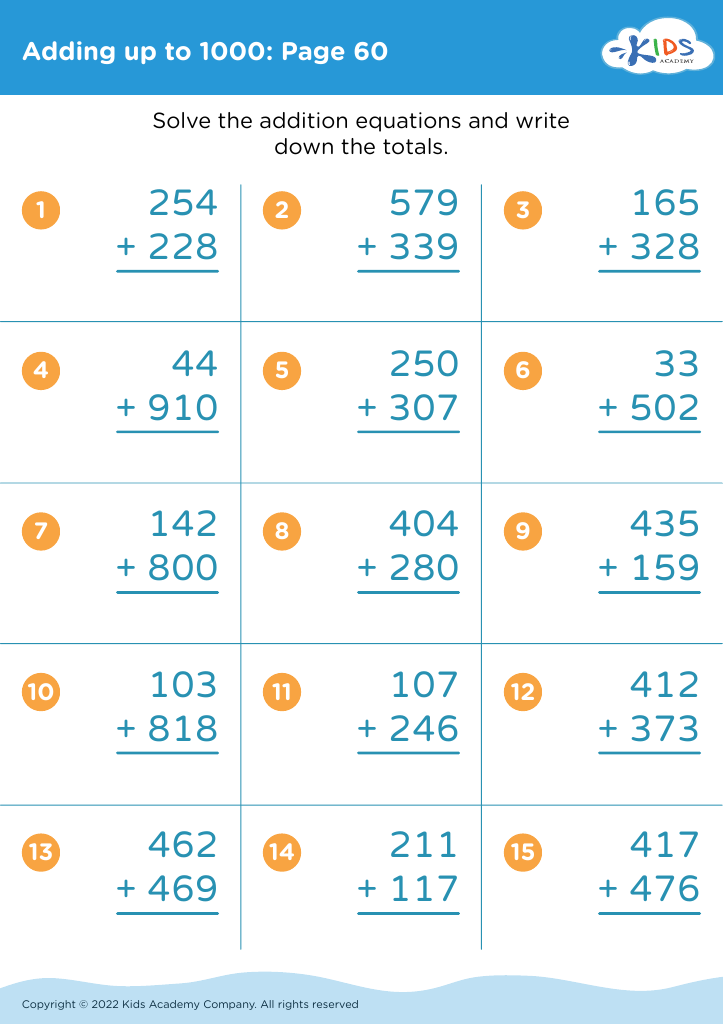
Adding up to 1000: Page 60

Adding up to 1000: Page 60

Adding up to 1000: Page 60
Worksheet
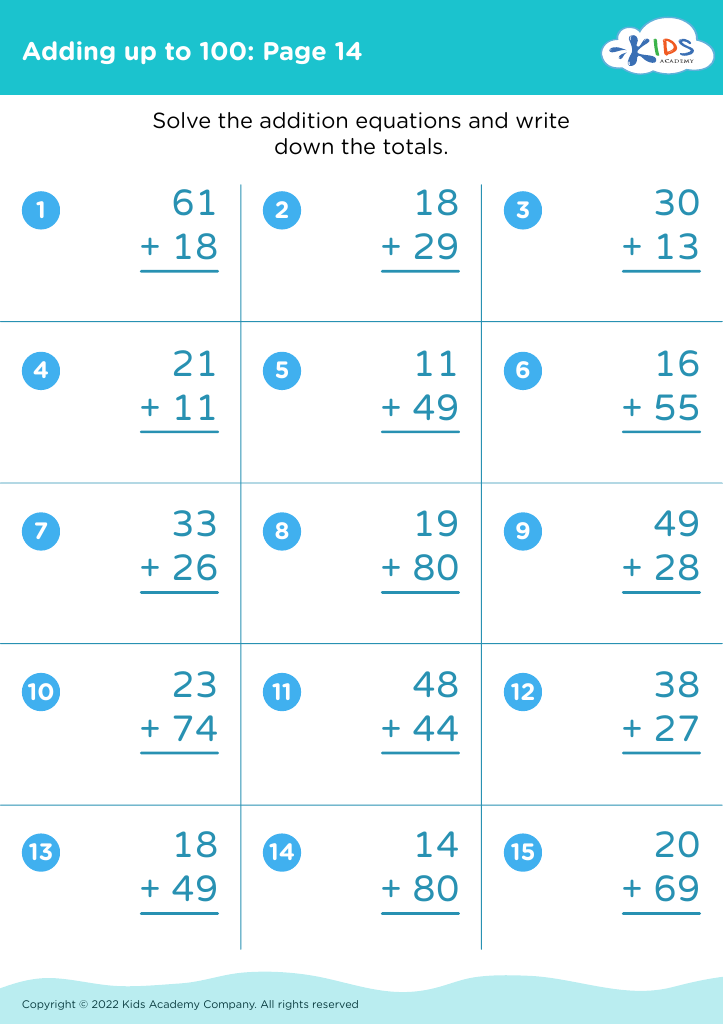
Adding up to 100: Page 14

Adding up to 100: Page 14

Adding up to 100: Page 14
Worksheet
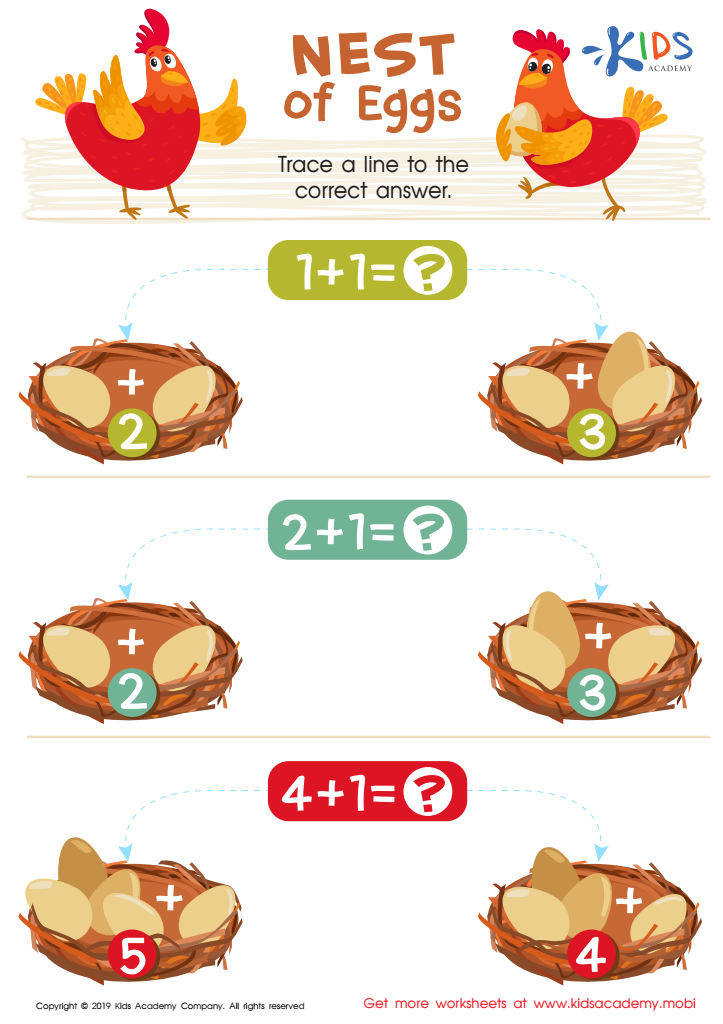
Nest of Eggs Worksheet
Nest of Eggs Worksheet
Help your kids learn math with this worksheet. First discuss the picture with them and then work through the three equations. Encourage them to trace the correct answer afterwards. With your assistance, they'll soon be able to confidently add numbers.
Nest of Eggs Worksheet

Worksheet
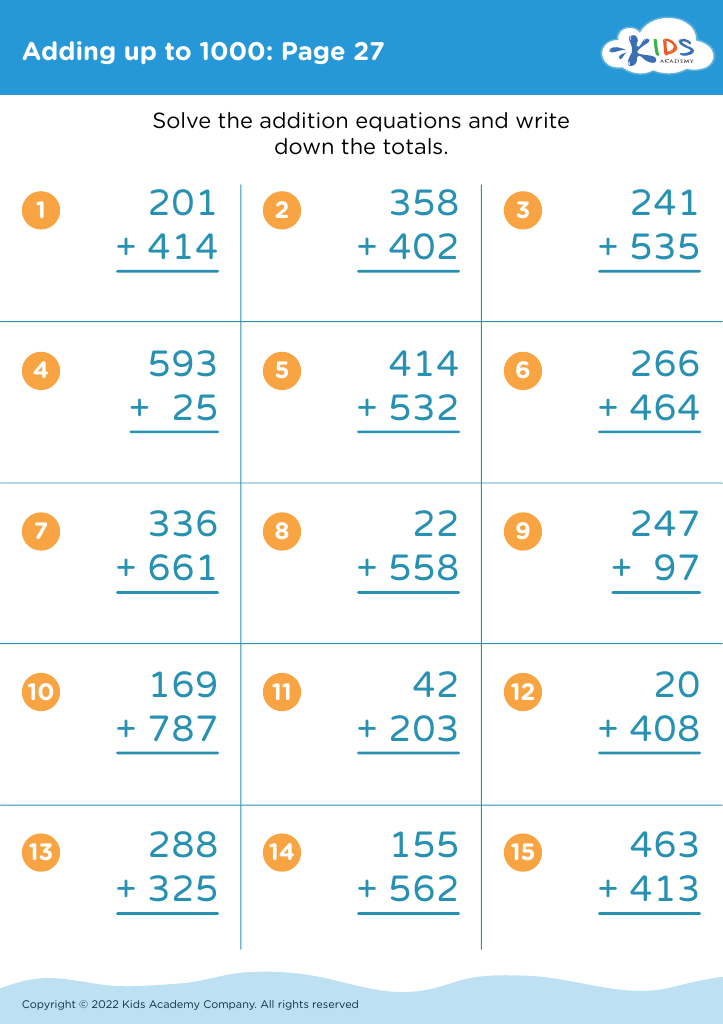
Adding up to 1000: Page 27

Adding up to 1000: Page 27

Adding up to 1000: Page 27
Worksheet
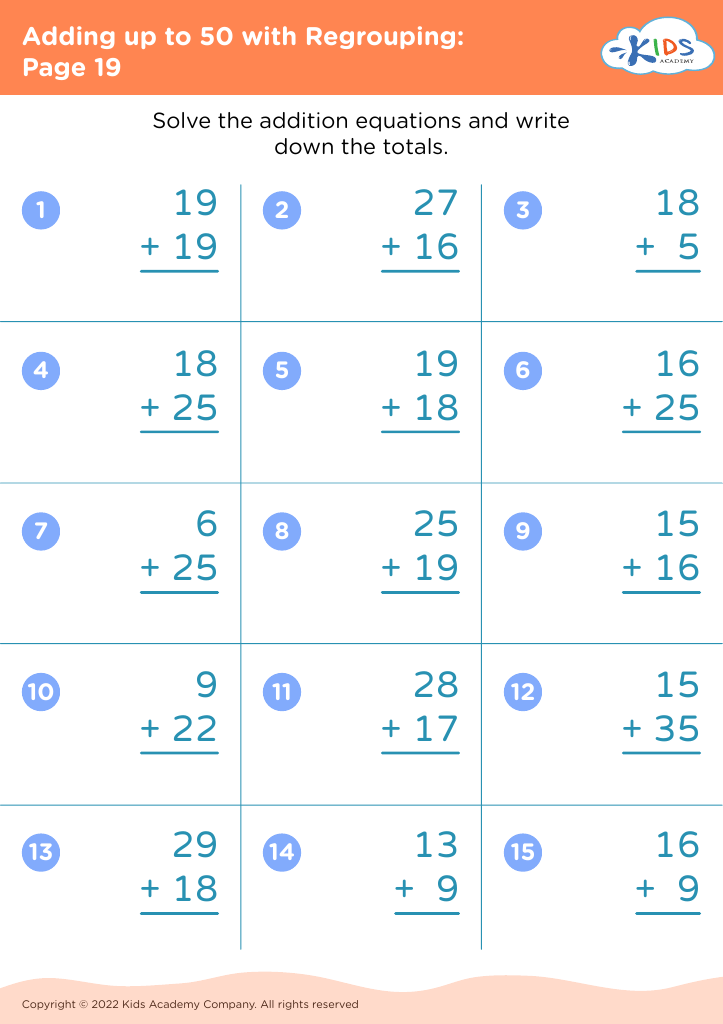
Adding up to 50 with Regrouping: Page 19
Worksheet
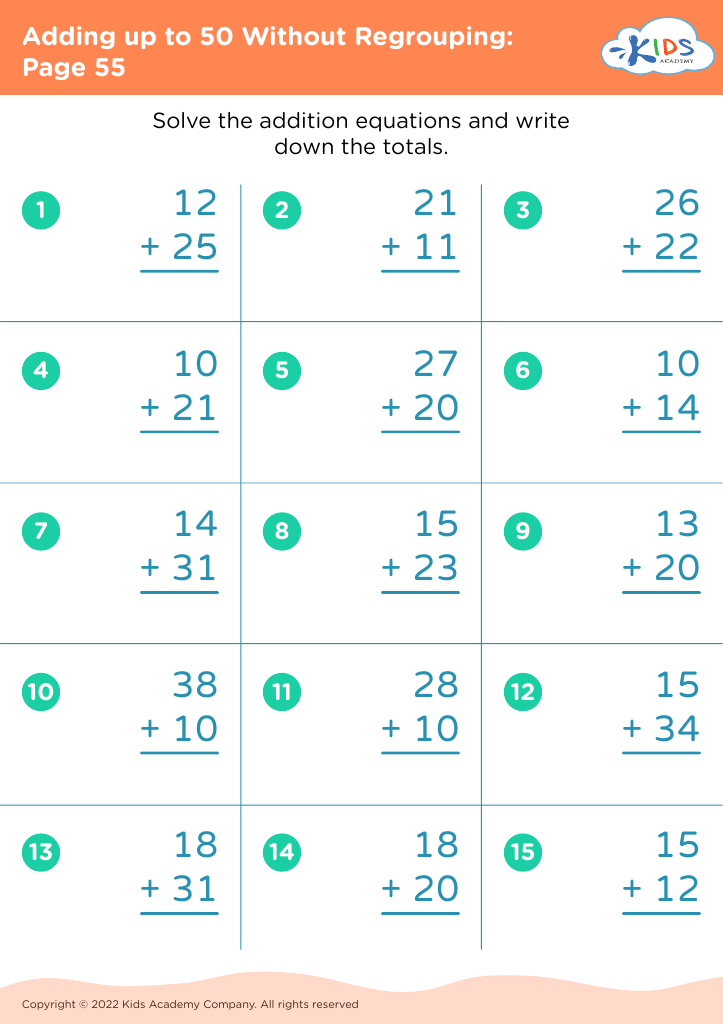
Adding up to 50 Without Regrouping: Page 55
Worksheet
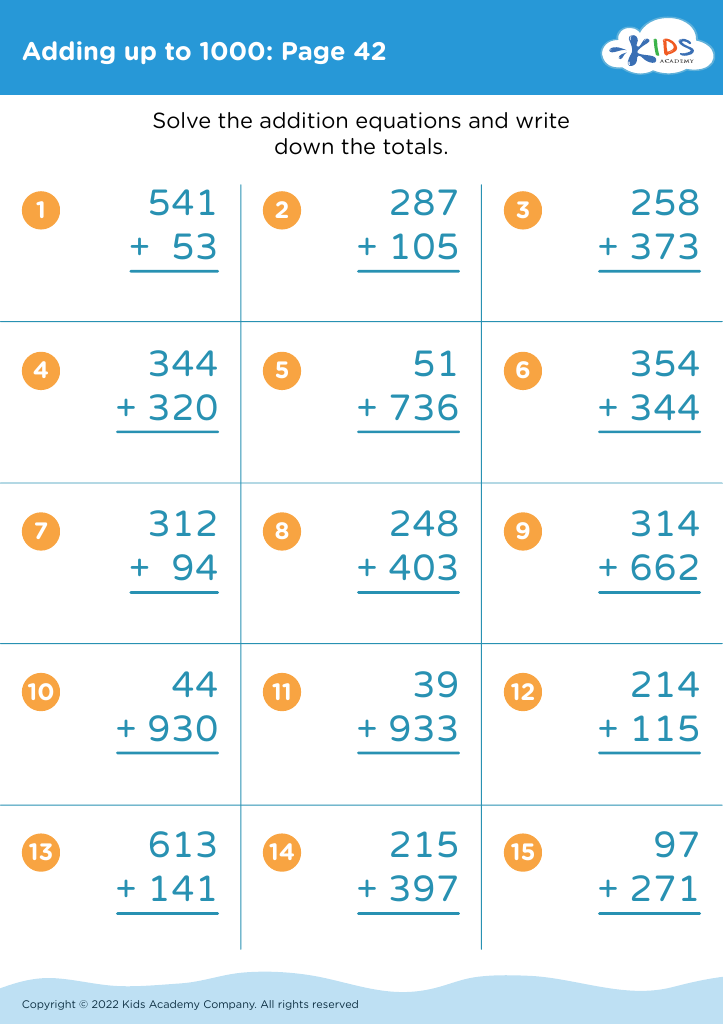
Adding up to 1000: Page 42

Adding up to 1000: Page 42

Adding up to 1000: Page 42
Worksheet
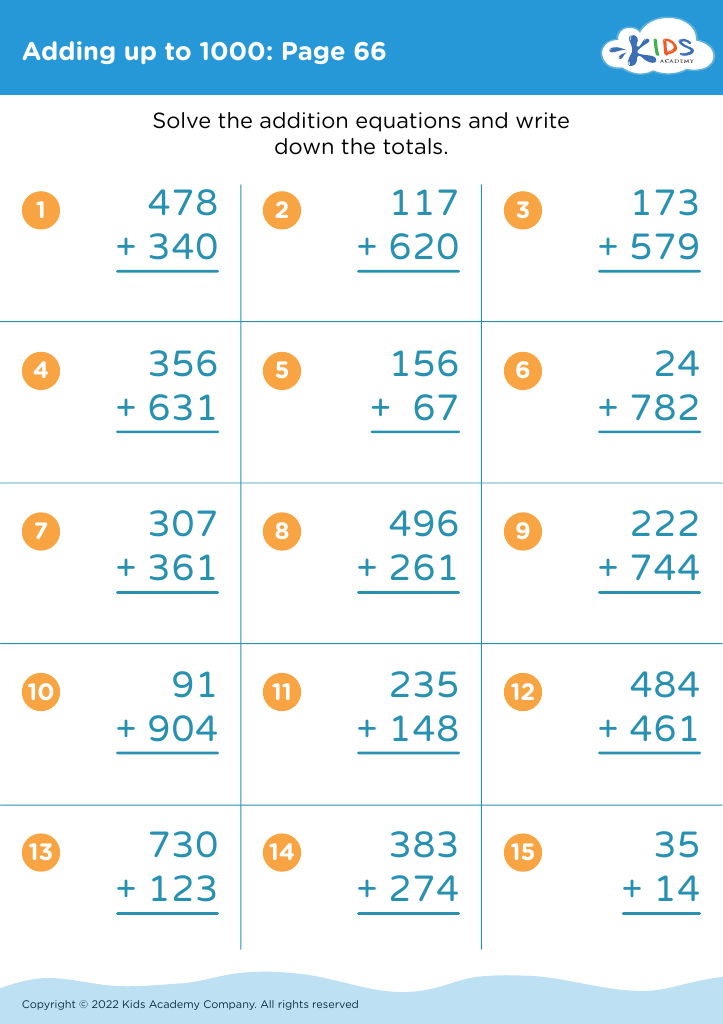
Adding up to 1000: Page 66

Adding up to 1000: Page 66

Adding up to 1000: Page 66
Worksheet
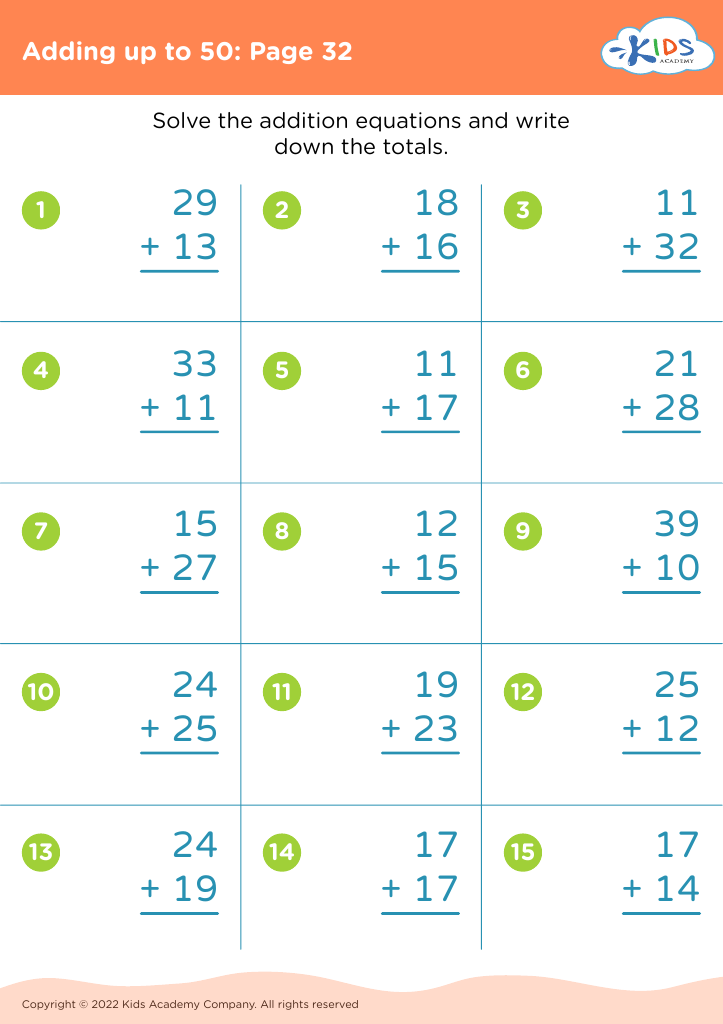
Adding up to 50: Page 32

Adding up to 50: Page 32

Adding up to 50: Page 32
Worksheet


... 2 3

Parents and teachers should prioritize addition practice for 6-7 year-olds because it's foundational for future mathematical success. At this age, children's brains are highly receptive to learning basic arithmetic concepts, which form the bedrock for more complex mathematical operations. Developing strong addition skills enhances their number sense, enabling them to understand computations and problem-solving more intuitively.

Moreover, engaging in regular addition practice helps children improve their cognitive abilities such as memory, attention to detail, and logical thinking. These skills are not just exclusive to math but are transferable to other academic areas and everyday decision-making.

Furthermore, a solid understanding of addition boosts children's confidence in their math abilities, fostering a positive attitude towards the subject and reducing math-related anxiety. This can cultivate a lifelong interest in math and enhance their academic performance.

Additionally, consistent practice prepares children for standardized tests, where such fundamental skills are routinely assessed. Both parents and teachers play crucial roles in providing supportive environments, resources, and encouragements. This ensures children constructively engage with addition exercises through interactive games or hands-on activities, making learning both effective and enjoyable. Thus, prioritizing addition practice during these formative years lays a critical foundation for holistic educational development and future academic achievements.