Addition skills Addition Worksheets for Ages 6-7 - Page 2
30 filtered results
-
From - To
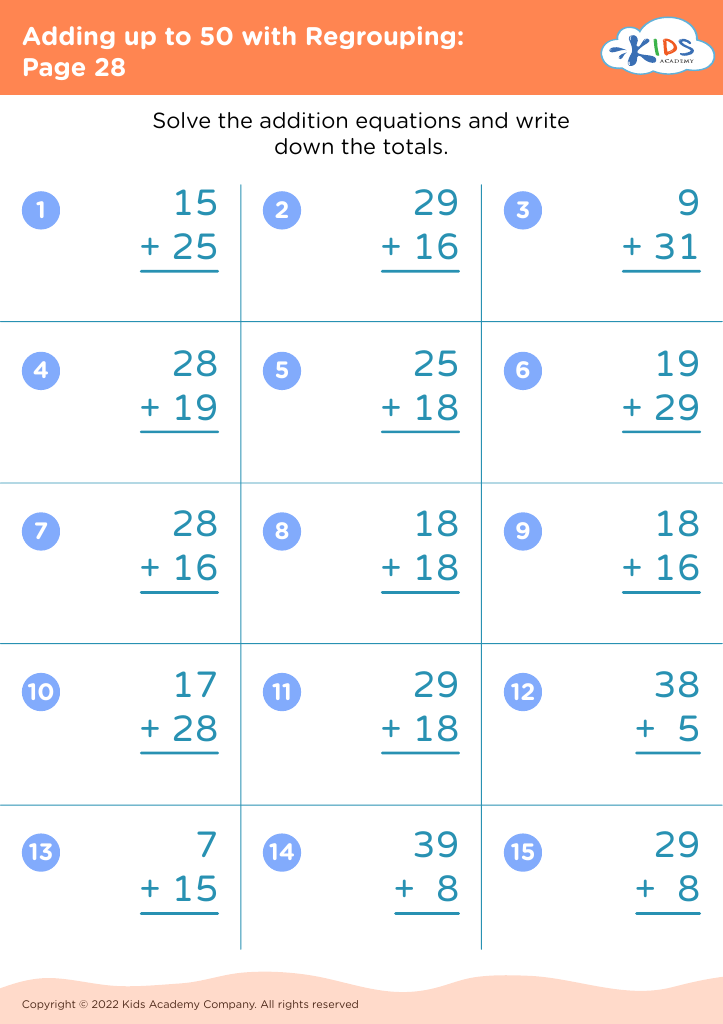
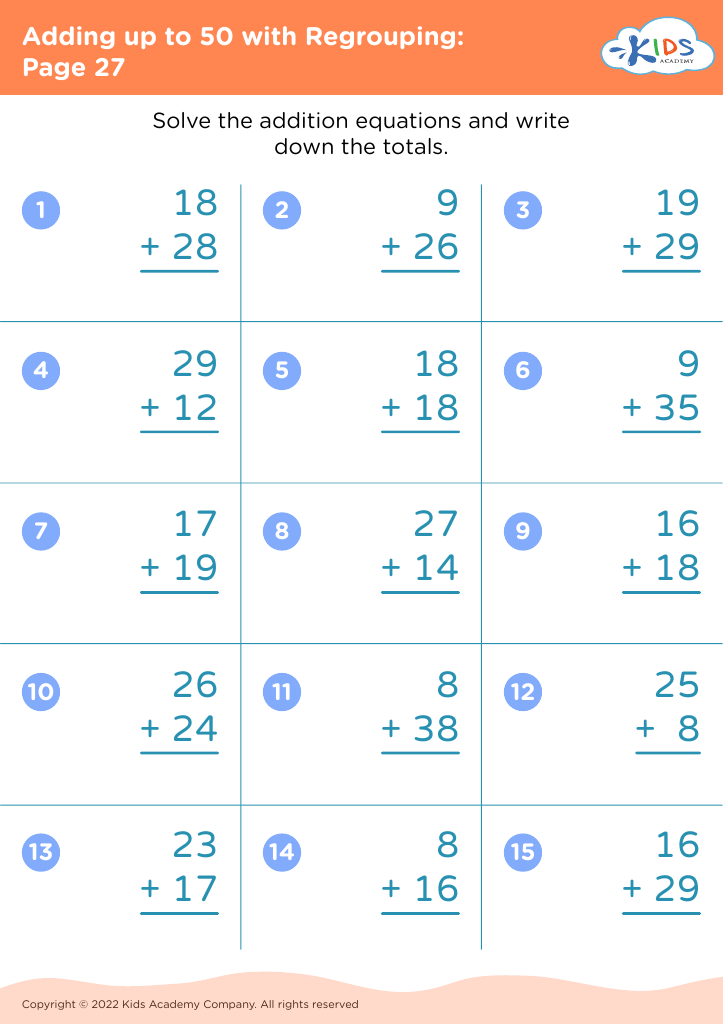
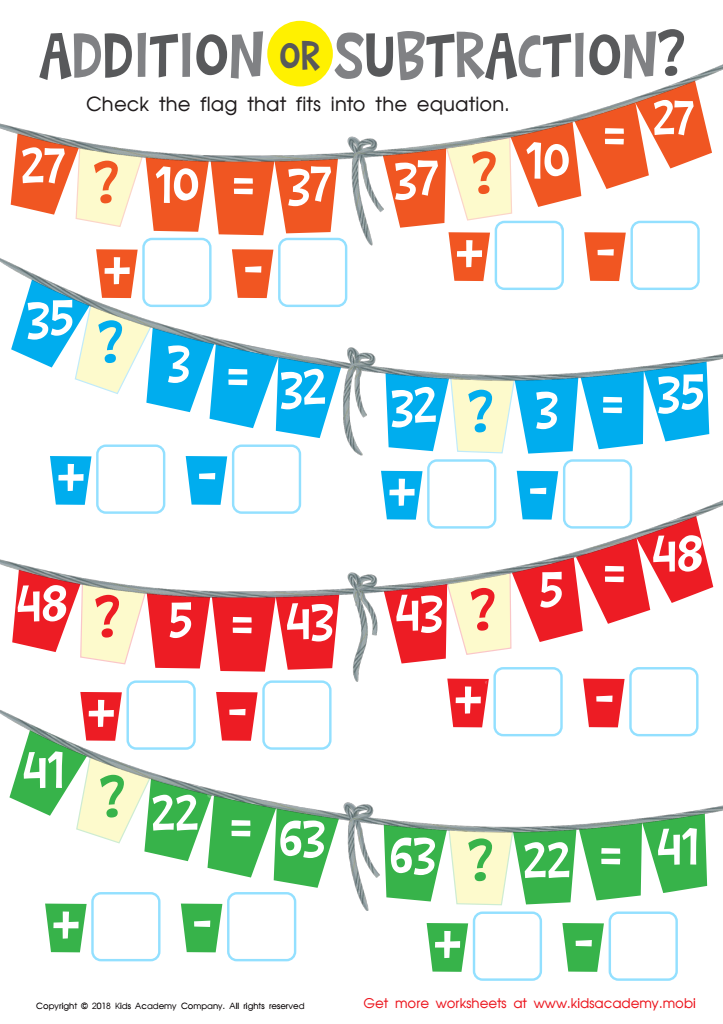
Addition or Subtraction? Worksheet
 Assign to My Students
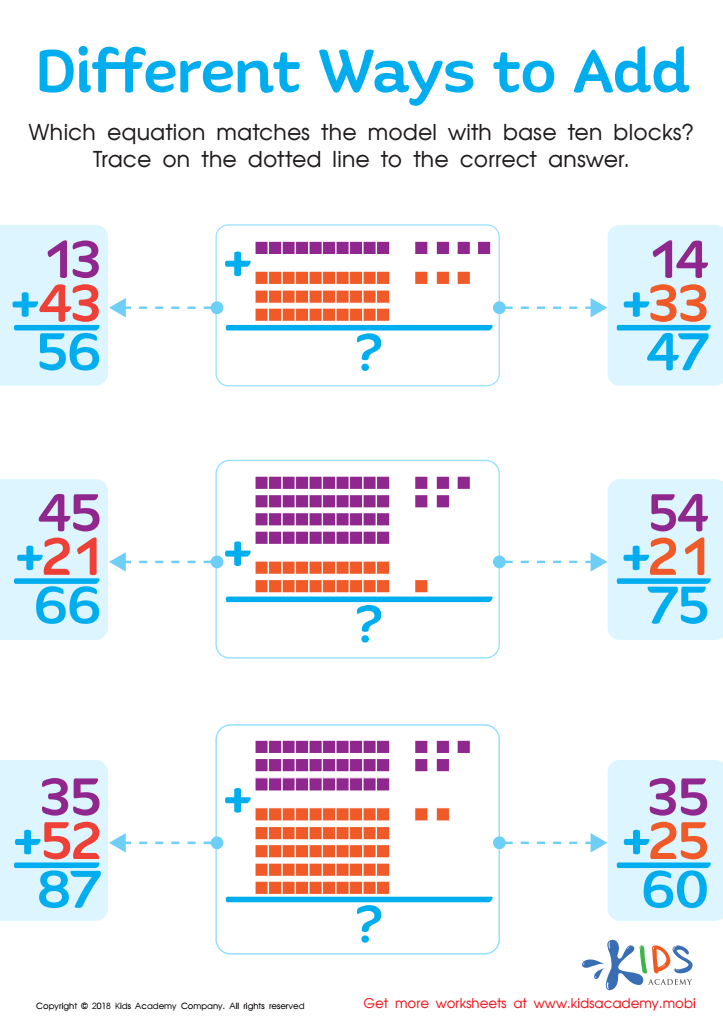
Different Ways to Add Worksheet
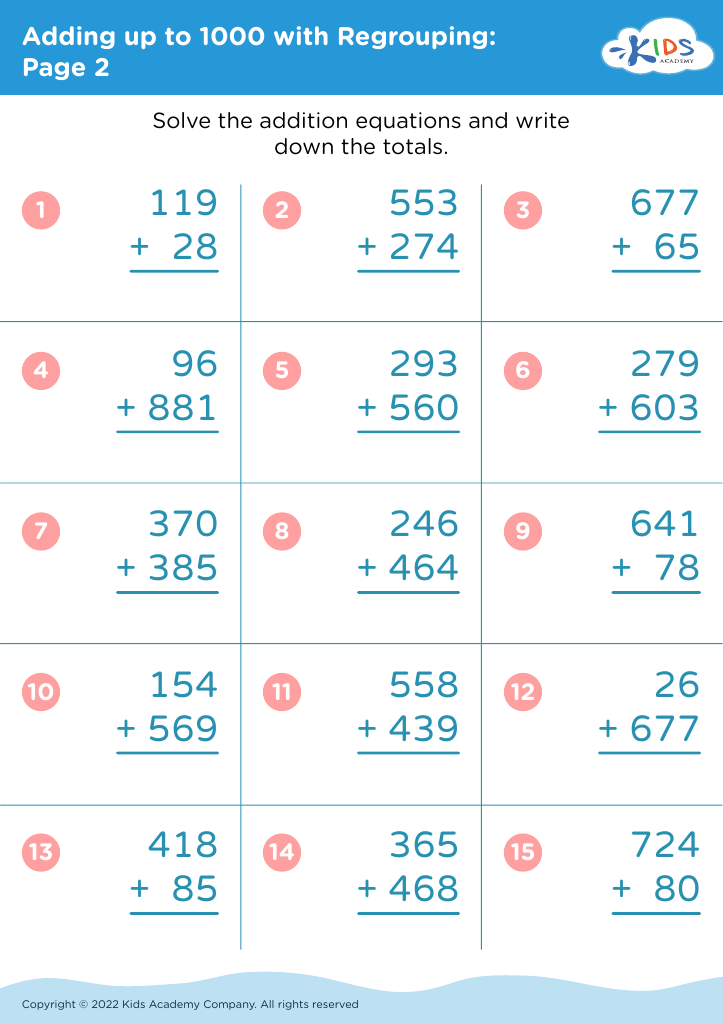
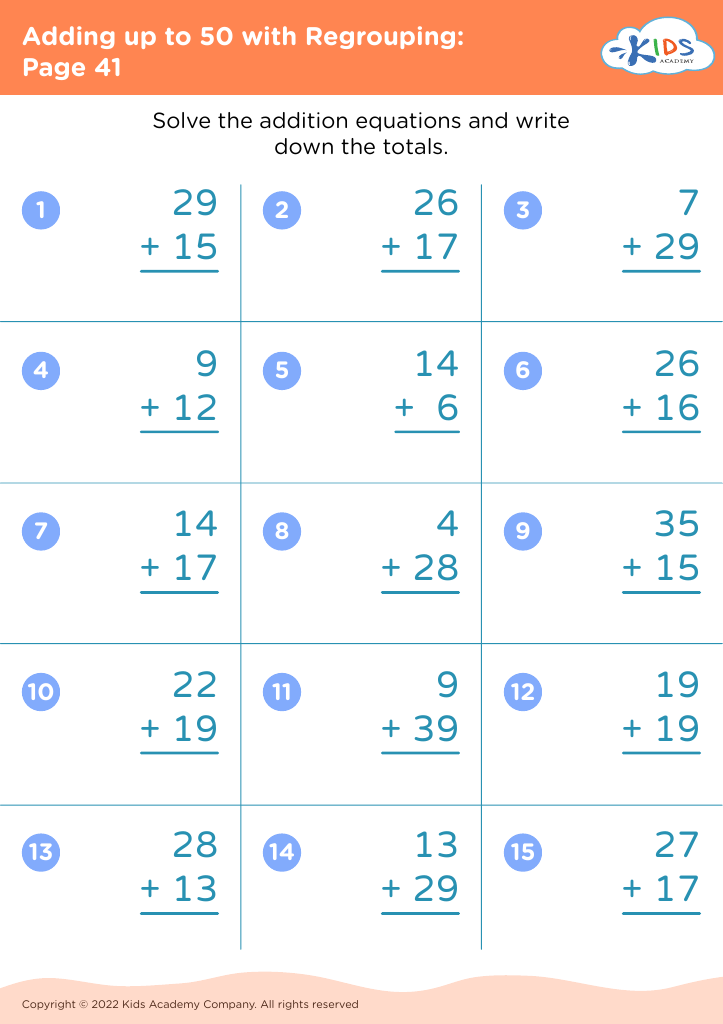








Parents and teachers should prioritize addition skills for children aged 6-7 as it lays a crucial foundation for overall mathematical understanding and critical thinking. At this developmental stage, children are beginning to grasp the concept of numerical relationships and operations. Strong addition skills boost confidence, making children more willing to engage with higher-level math concepts later on.
Additionally, learning to add prepares children for real-world situations, such as managing money, calculating time, or understanding measurements. Mastery of basic addition supports problem-solving skills that are essential not just in math, but in life. Enhanced addition abilities also leads to improved performance in school, which can foster a positive cycle of achievement and motivation.
Moreover, developing these skills at an early age aids in cognitive development. Children learn to process numbers, recognize patterns, and enhance their memory – all of which are significant in their overall learning experience.
Involving parents in this learning journey boosts their engagement and allows for reinforcement in everyday situations. Teachers can implement interactive methods to make learning enjoyable and impactful. Ultimately, fostering solid addition skills at this age is critical for nurturing a child's academic growth and self-esteem.








