Develop problem-solving skills Addition Worksheets for Ages 6-7
6 filtered results
-
From - To
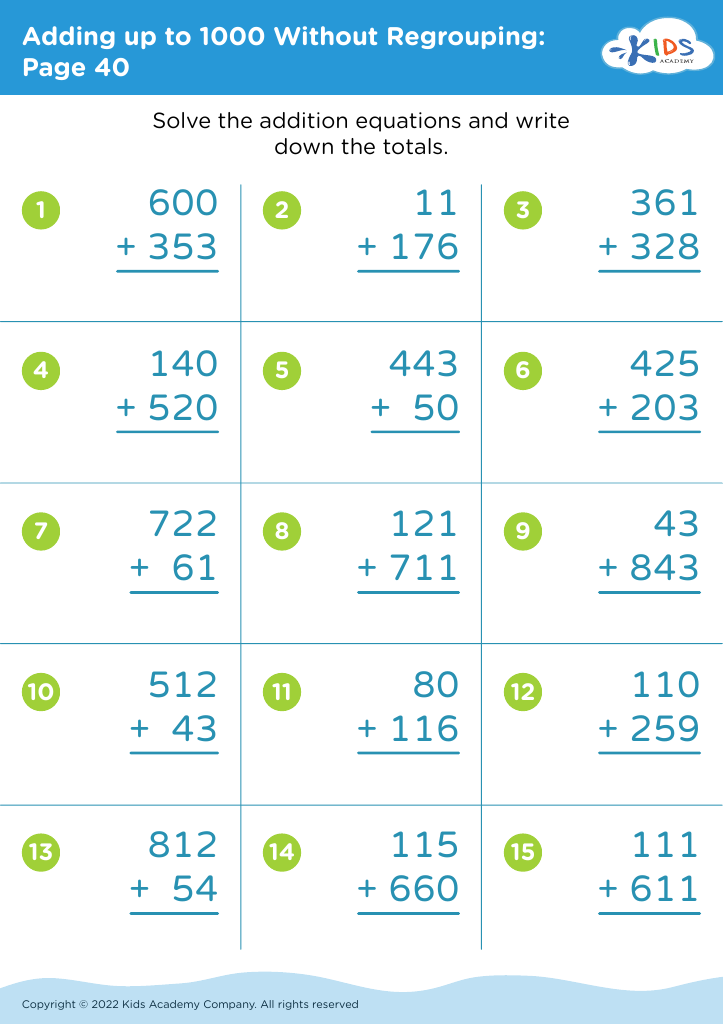
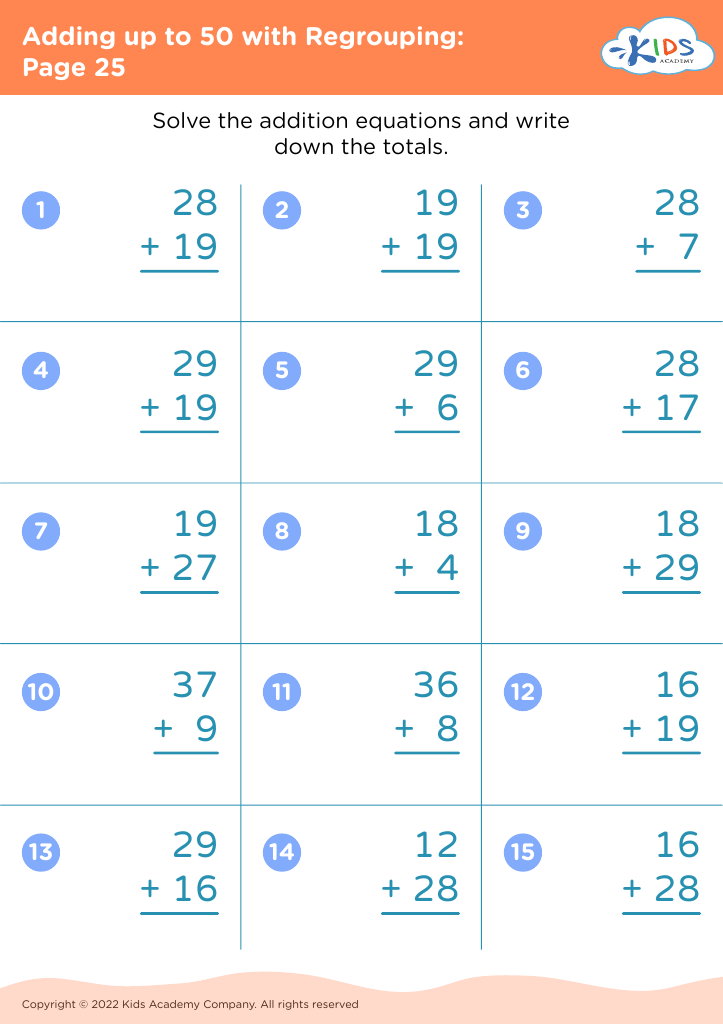
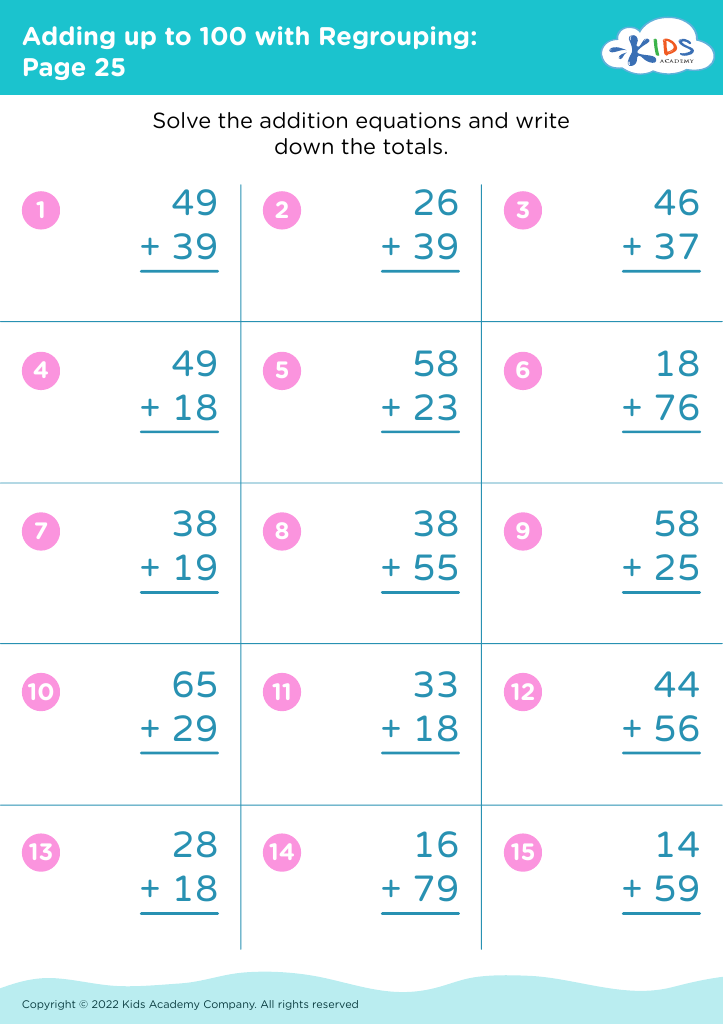
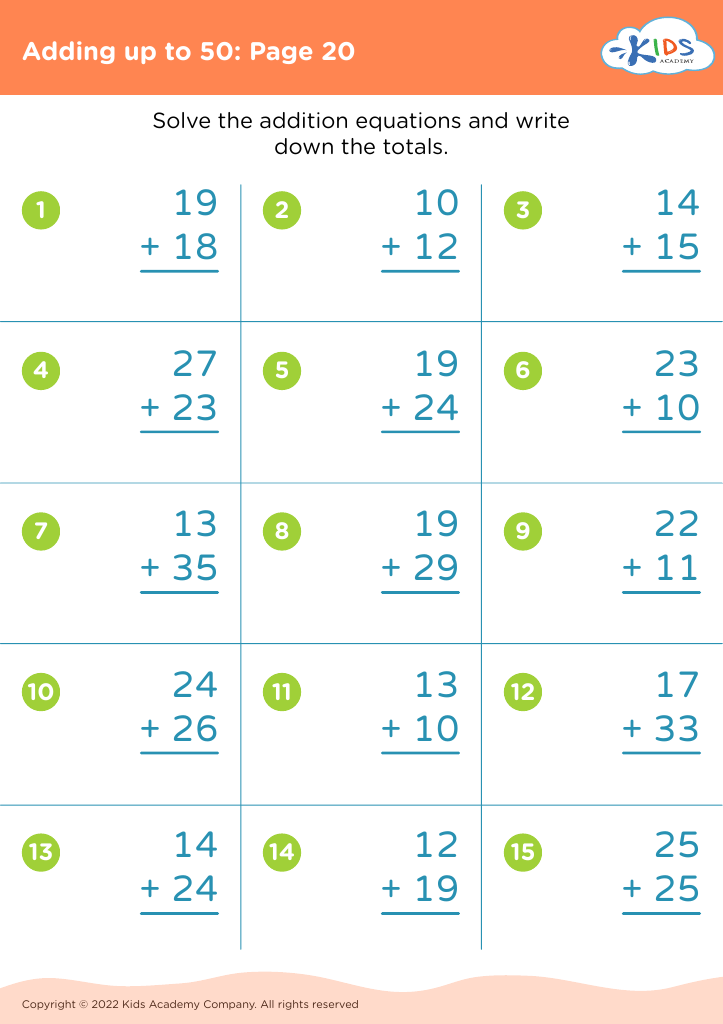
Discover our engaging "Develop Problem-Solving Skills Addition Worksheets" designed for children ages 6-7. These activities not only reinforce addition but also encourage critical thinking and analytical skills. Each worksheet features fun scenarios that require kids to use addition to solve real-life problems, promoting a deeper understanding of math concepts. With colorful illustrations and varying levels of difficulty, our worksheets cater to different learning styles and keep young learners motivated. Perfect for classroom use or at-home practice, these resources help children build a strong foundation in mathematics while enhancing their problem-solving abilities. Start fostering a love of math today!

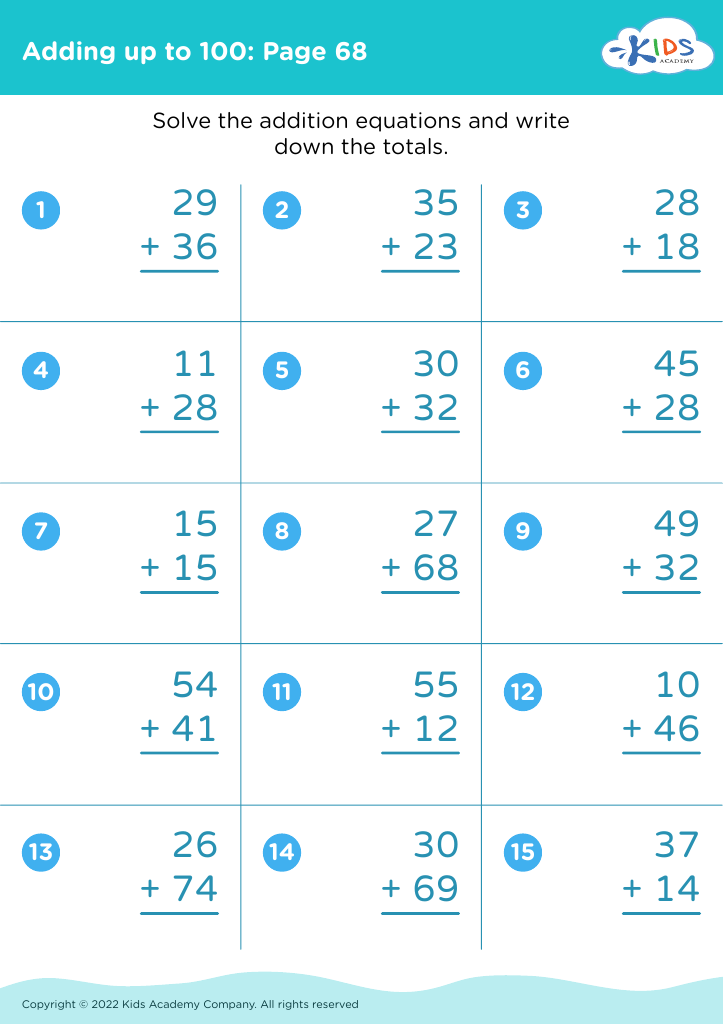








Developing problem-solving skills in children aged 6 to 7, particularly in the context of addition, is crucial for several reasons. Firstly, this age marks a foundational stage in mathematical comprehension where kids begin to grasp basic arithmetic concepts. Mastering addition through problem-solving fosters critical thinking, encouraging children to approach challenges systematically. It empowers them with strategies to break down complex problems into manageable steps, enhancing their overall cognitive development.
Additionally, problem-solving enhances a child’s ability to find relationships between numbers, which is vital for more advanced mathematical concepts they will encounter later on. Moreover, engaging in problem-solving activities increases confidence and resilience. When kids tackle math problems independently, they practice perseverance, learning that making mistakes is a part of the learning process.
For parents and teachers, nurturing these skills can lead to improved academic performance and a positive attitude towards math, which builds a lifelong appreciation for learning. Establishing strong problem-solving abilities at such an early age not only equips children with essential skills for future coursework but also prepares them to deal with everyday challenges, making them more adaptable and resourceful individuals. Investing time in fostering these skills pays dividends well beyond the classroom.








