Developing logical thinking Addition Worksheets for Ages 6-7
4 filtered results
-
From - To
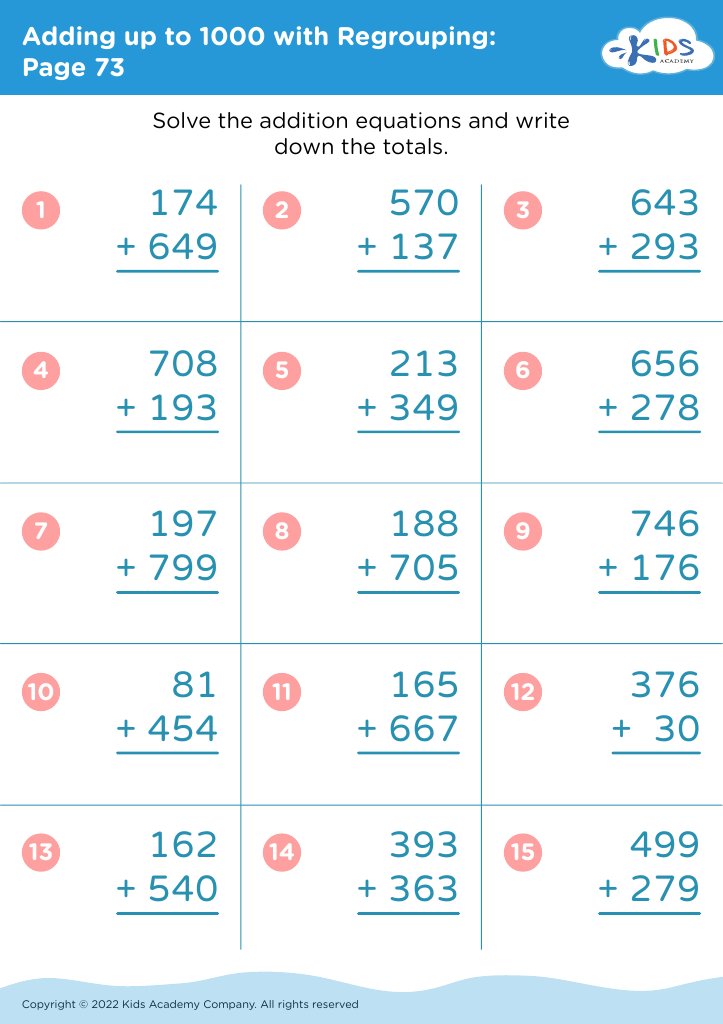
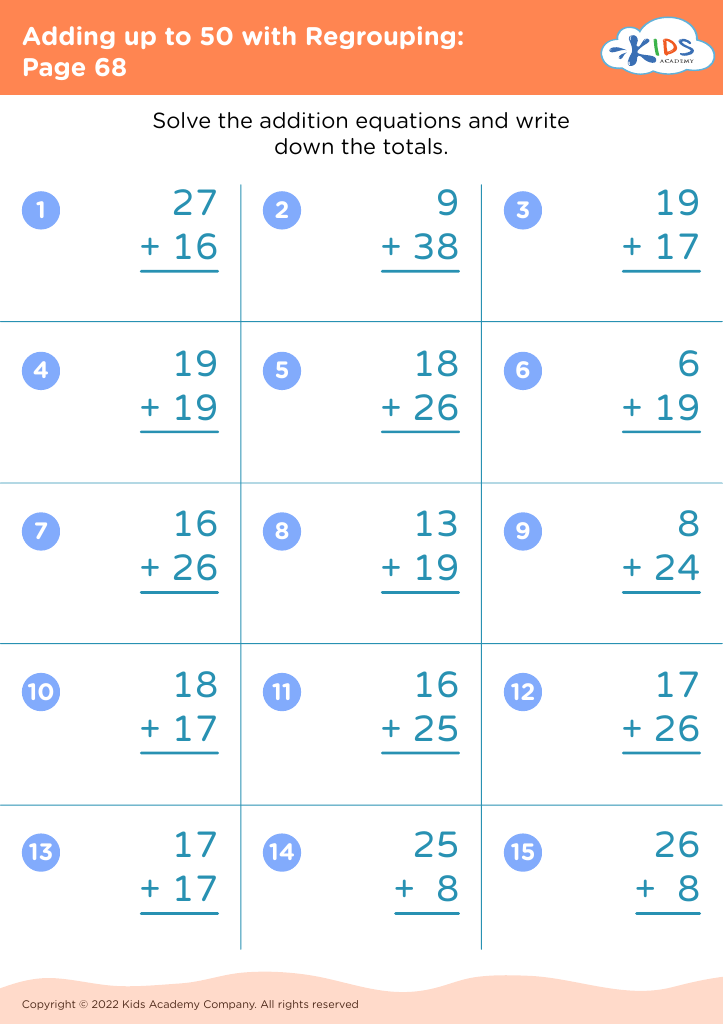
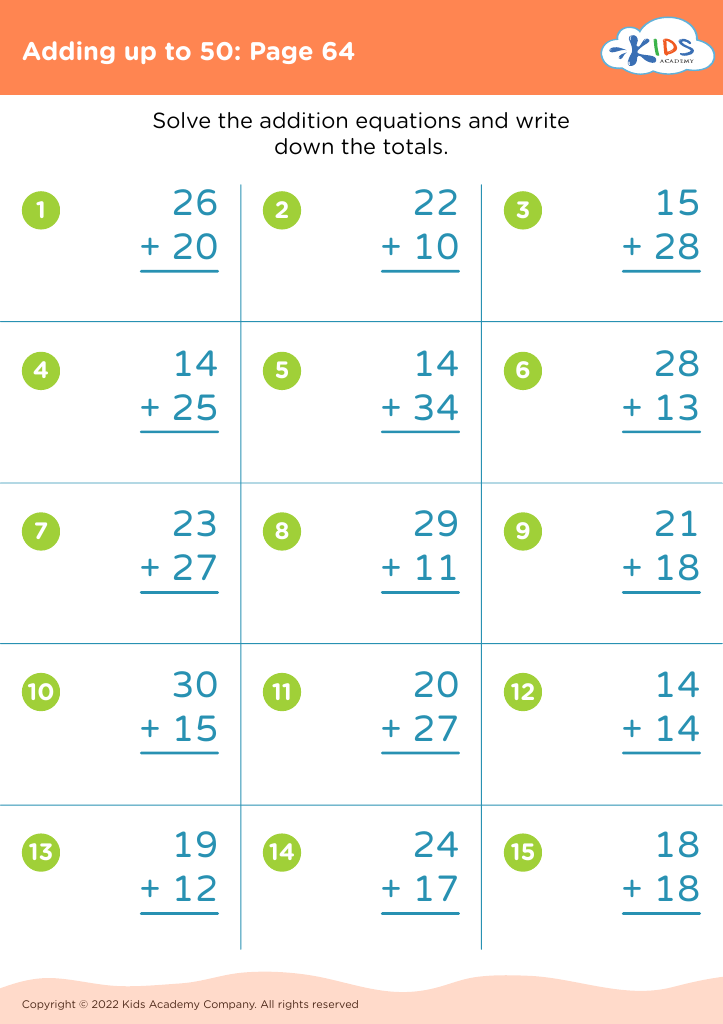
Discover our engaging "Developing Logical Thinking Addition Worksheets" designed specifically for children aged 6-7. These interactive worksheets are perfect for enhancing math skills while promoting critical thinking. Each activity encourages young learners to solve addition problems through puzzles and challenges, fostering logical reasoning and an early love for mathematics. Our resources are carefully crafted to align with educational standards, making learning both fun and effective. Ideal for classroom settings or at-home practice, these worksheets will help your child build a strong foundation in addition while exploring creative thinking and problem-solving techniques. Explore the joy of learning with our worksheets today!
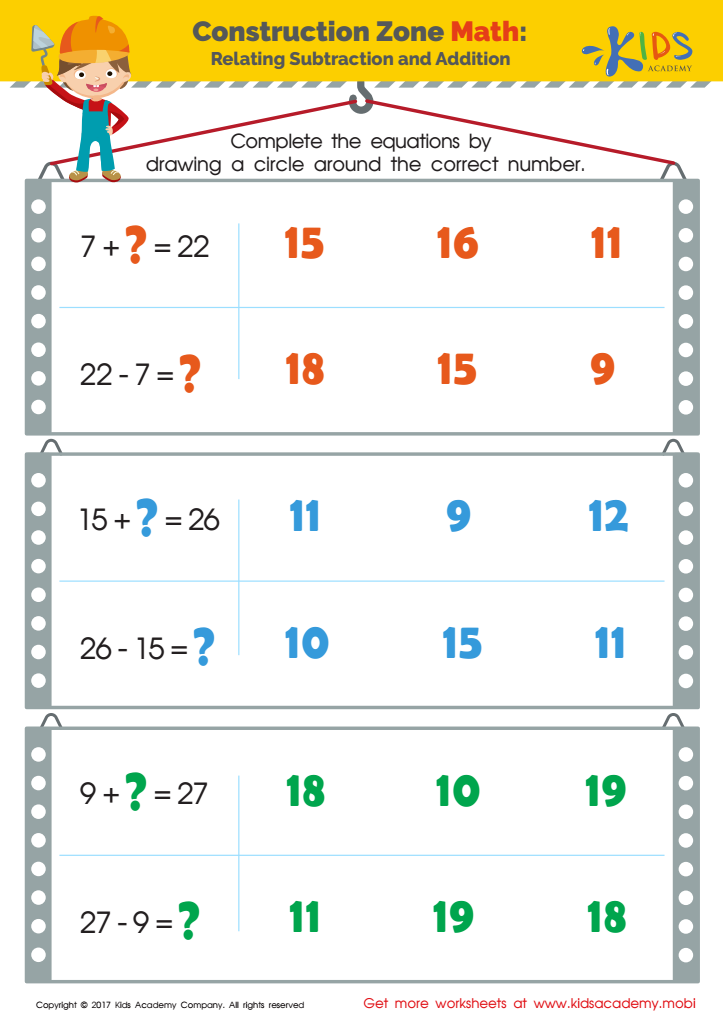
Related Addition and Subtraction Facts Worksheet
 Assign to My Students








Developing logical thinking in addition for children aged 6-7 is crucial for their overall cognitive development and lays a foundation for future mathematical understanding. At this age, children are typically starting to transition from rudimentary counting skills to more abstract concepts in mathematics, making it the perfect time to nurture logical reasoning.
Logical thinking helps children understand the relationships between numbers, facilitating problem-solving skills. For example, when children learn to add through different methods—like using manipulatives, visual aids, or mental math—they begin to see patterns, develop strategies, and gain confidence in their abilities. This not only enhances their arithmetic skills but also builds a framework for tackling more complex mathematical concepts in later years.
Furthermore, fostering logical thinking through addition encourages critical thinking skills that extend beyond mathematics. It teaches children to recognize patterns, make predictions, and draw conclusions based on evidence—a skill applicable in various areas of life, including science, reasoning, and decision-making. For parents and teachers, actively engaging children in logical addition promotes curiosity and a love for learning, essential components for academic success and lifelong skills development. Investing in strong foundational skills now pays dividends in a child’s future educational journey.








