Developing problem-solving skills Addition Worksheets for Ages 6-7
5 filtered results
-
From - To
Our "Developing Problem-Solving Skills: Addition Worksheets for Ages 6-7" are designed to make learning addition fun and engaging for young learners. Tailored for first graders, these printable worksheets enhance critical thinking and problem-solving skills through a variety of interactive exercises. Each worksheet focuses on addition concepts, helping children to improve their math skills while enjoying the learning process. Vibrant illustrations and exciting activities ensure that kids remain motivated and confident in their abilities. Foster your child's love for math and build a strong foundation in problem-solving with our expertly crafted addition worksheets. Perfect for both classroom and home use!
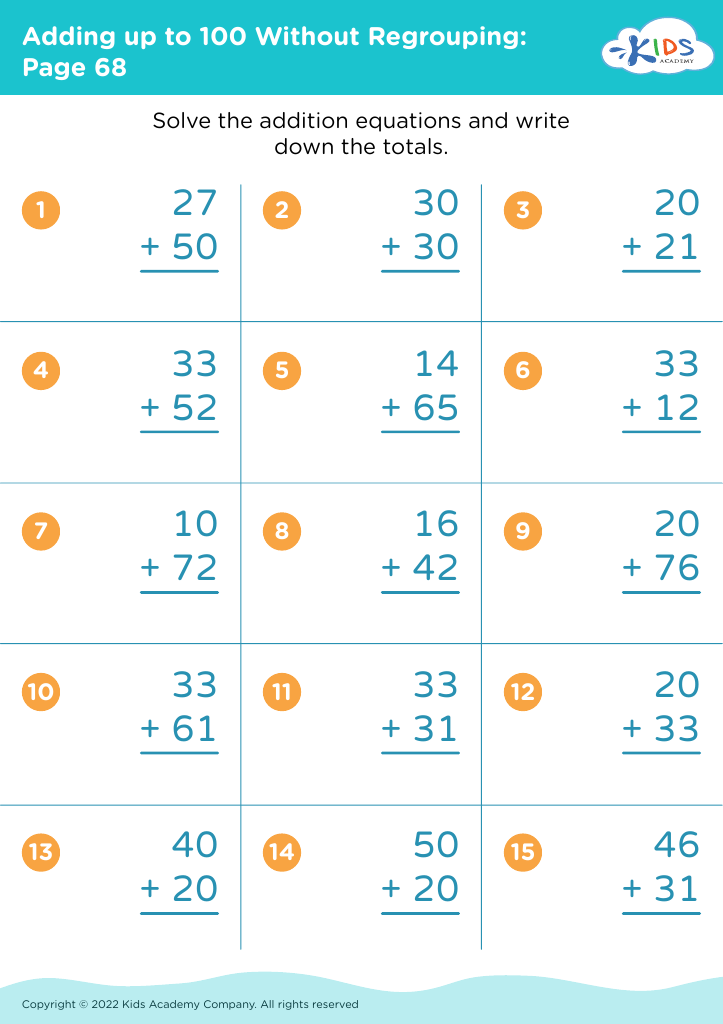
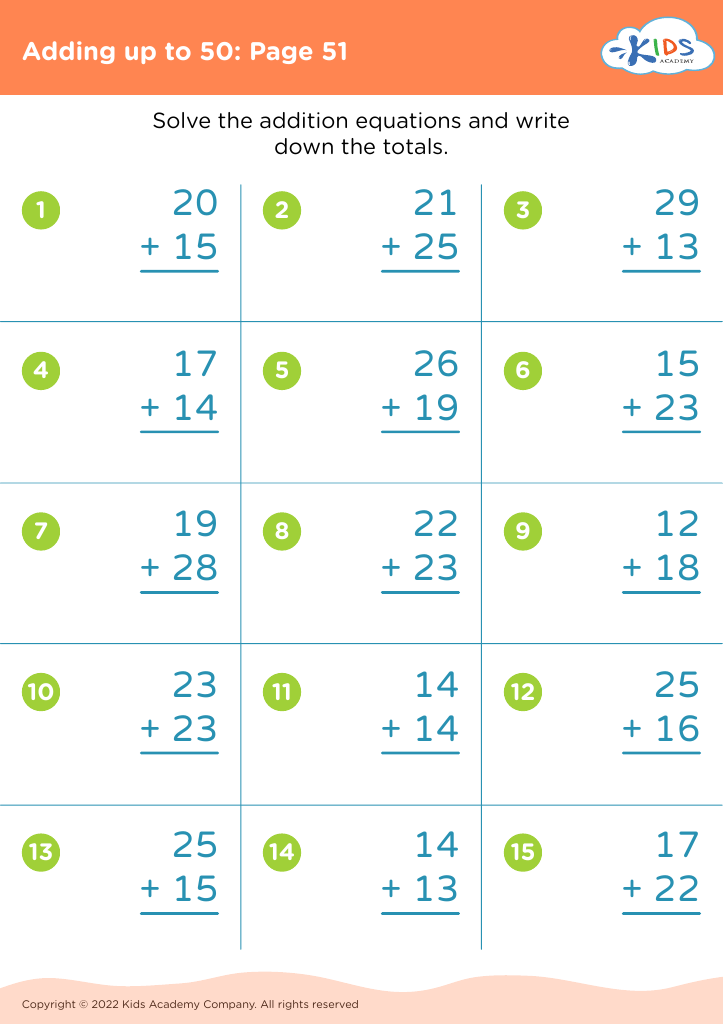
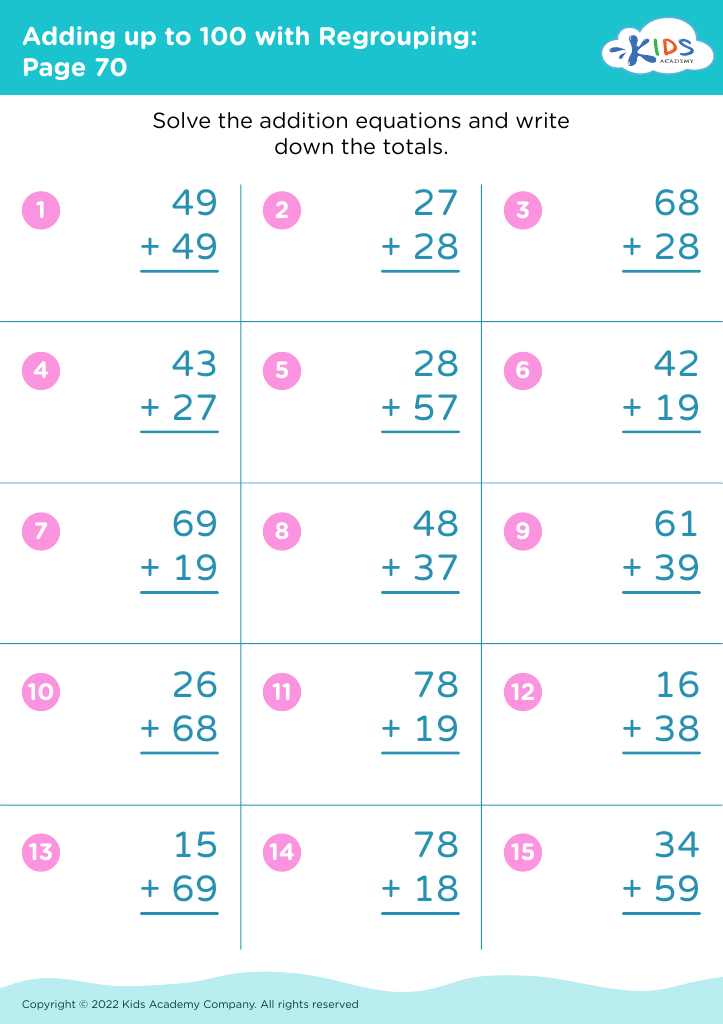
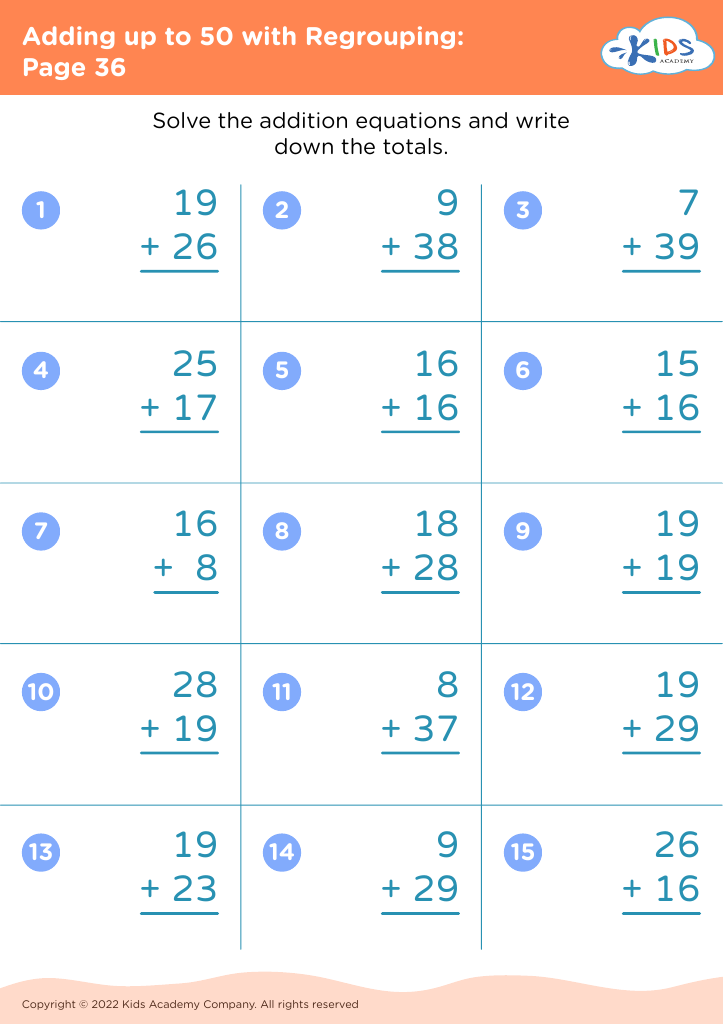
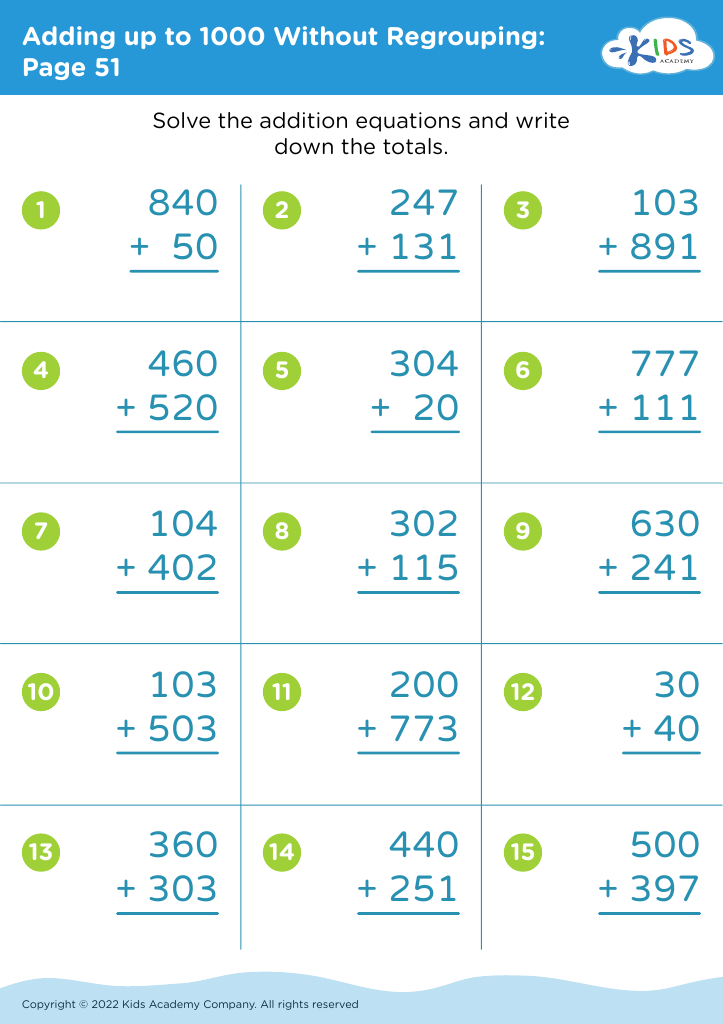








Developing problem-solving skills in addition for children aged 6-7 is crucial because it lays the foundation for their overall mathematical understanding and cognitive development. At this developmental stage, children are naturally curious and adaptable; fostering addition skills can help sharpen their critical thinking and logical reasoning.
Firstly, mastering basic addition can boost a child's confidence in handling math-related tasks, which contributes to a positive attitude towards learning. This enthusiasm for math may encourage persistence and resilience when faced with more challenging problems in the future.
Secondly, problem-solving in addition goes beyond mere number crunching; it involves understanding concepts, exploring patterns, and making connections. When children grasp these underlying principles, it enhances their ability to tackle real-life problems, not just mathematical ones.
Parents and teachers play a crucial role in this developmental process. Engaging children with entertaining and educational activities like puzzles, games, and practical exercises can make learning addition enjoyable. Such experiences stimulate cognitive processes and encourage an inquisitive mindset.
Lastly, investing time and energy in this foundational skill equips children with essential tools for future academic success. Early proficiency in addition can ease the transition into more complex arithmetic and fosters a lifelong love for learning.
In summary, prioritizing the development of problem-solving skills in addition for young children is key to nurturing well-rounded, capable, and confident learners.








