Enhance vocabulary skills Addition Worksheets for Ages 6-7
4 filtered results
-
From - To
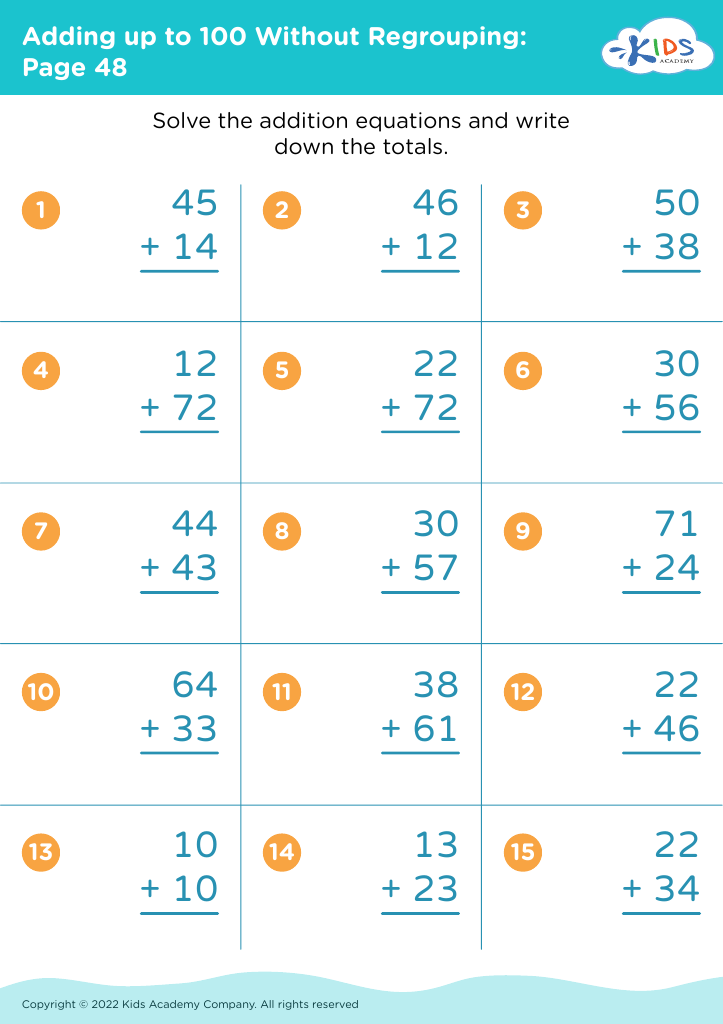
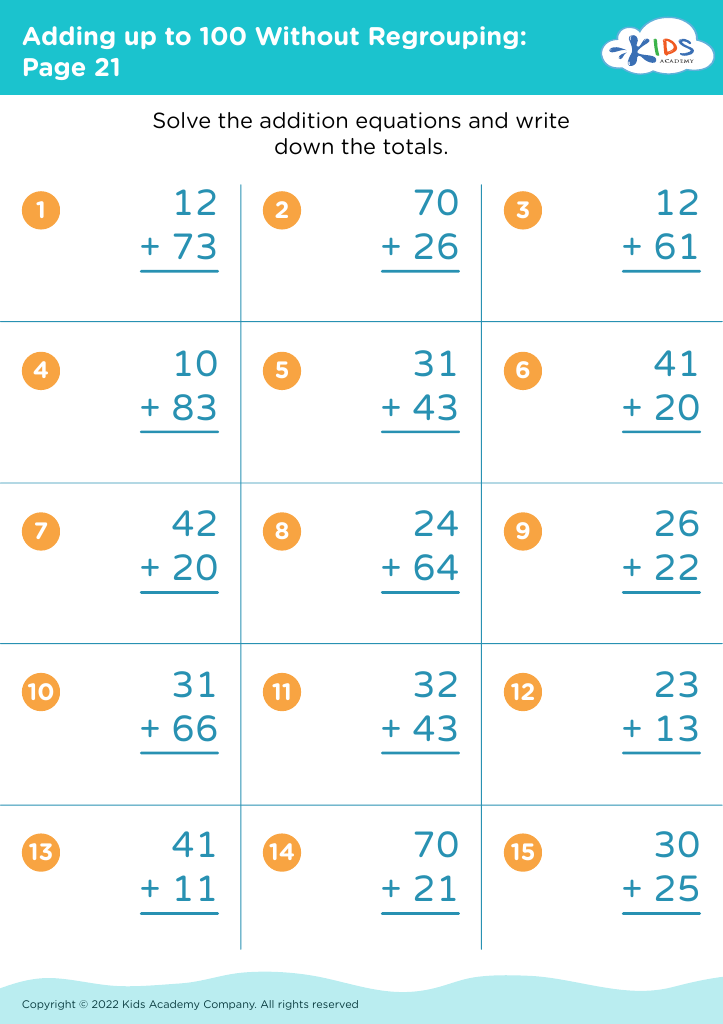
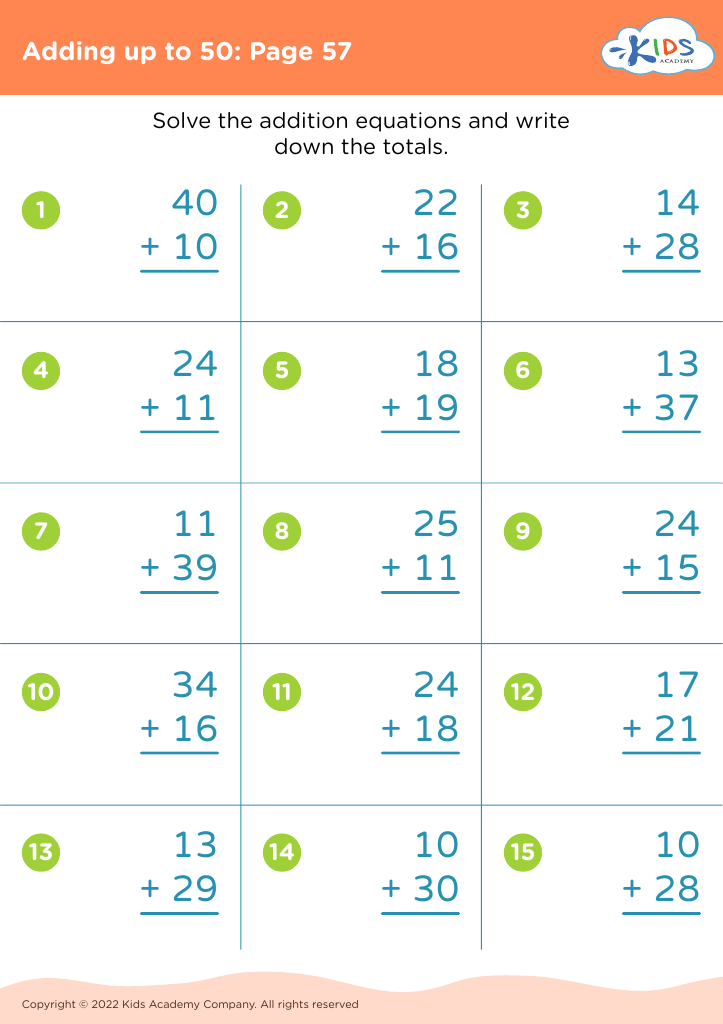
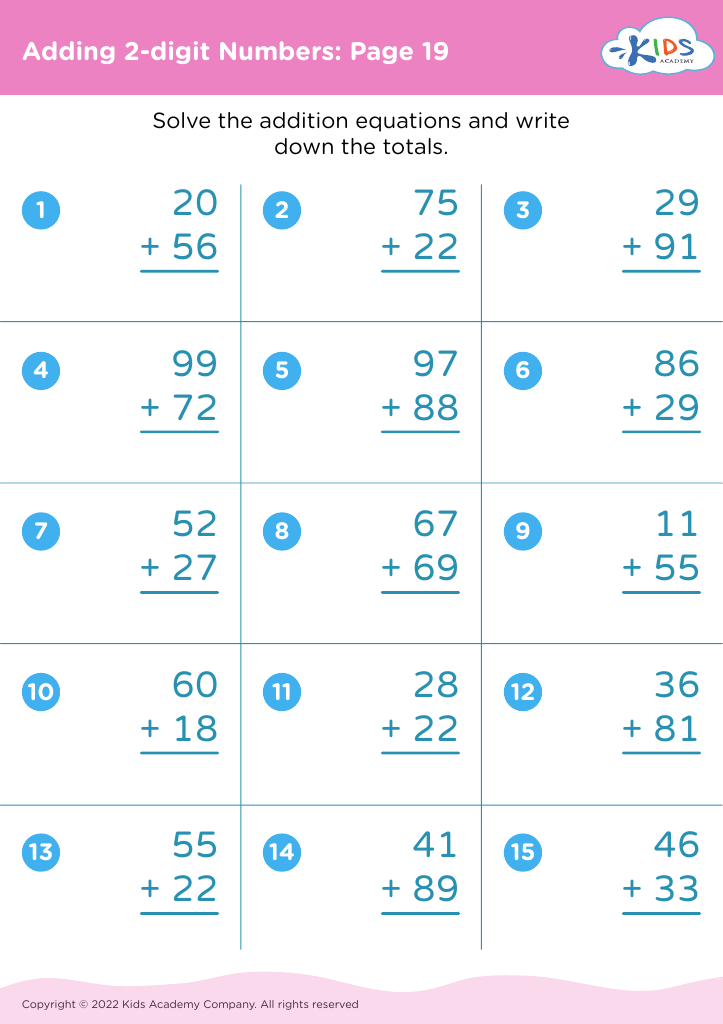
Boost your child's vocabulary and math skills simultaneously with our Enhance Vocabulary Skills Addition Worksheets for ages 6-7. These engaging worksheets feature a perfect blend of addition problems and word recognition activities designed to improve both arithmetic and language abilities. Each worksheet presents fun, colorful scenarios that stimulate young minds and build foundational skills. Suitable for classroom use or at-home practice, these worksheets offer an enjoyable way for kids to develop essential academic proficiencies. Watch your child’s confidence soar as they master new words and addition concepts, setting a strong groundwork for future learning.








Enhancing vocabulary skills in children ages 6-7 is crucial for several reasons. At this formative stage, children are exceptionally receptive to learning new words. A robust vocabulary forms the foundation for effective communication, both verbal and written. It empowers children to express their thoughts, emotions, and needs more precisely, fostering social development and reducing frustration that can stem from misunderstandings.
Moreover, a rich vocabulary is directly linked to reading comprehension, a critical aspect of academic success. Studies show that children with a broader vocabulary find it easier to comprehend texts, understand instructions, and engage in classroom discussions. This head start in literacy skills can set the stage for lifelong learning and academic achievement, as reading proficiency affects performance across all subjects, from science to social studies.
Additionally, expanding vocabulary at this age promotes cognitive development. It stimulates curiosity and encourages the mental flexibility needed for critical thinking. Exposure to new words also enhances memory and concentration, facilitating more effective learning experiences.
In a broader context, vocabulary development supports emotional and social well-being. Confident language use helps children build self-esteem, make friends, and navigate social situations more effectively. By investing in vocabulary enhancement, parents and teachers are providing children with essential tools for success, both in school and in life.








