
Enhancing creativity Addition Worksheets for Ages 6-7
4 filtered results
Difficulty Level
Grade
Age
-
From - To
Subject
Activity
Standards
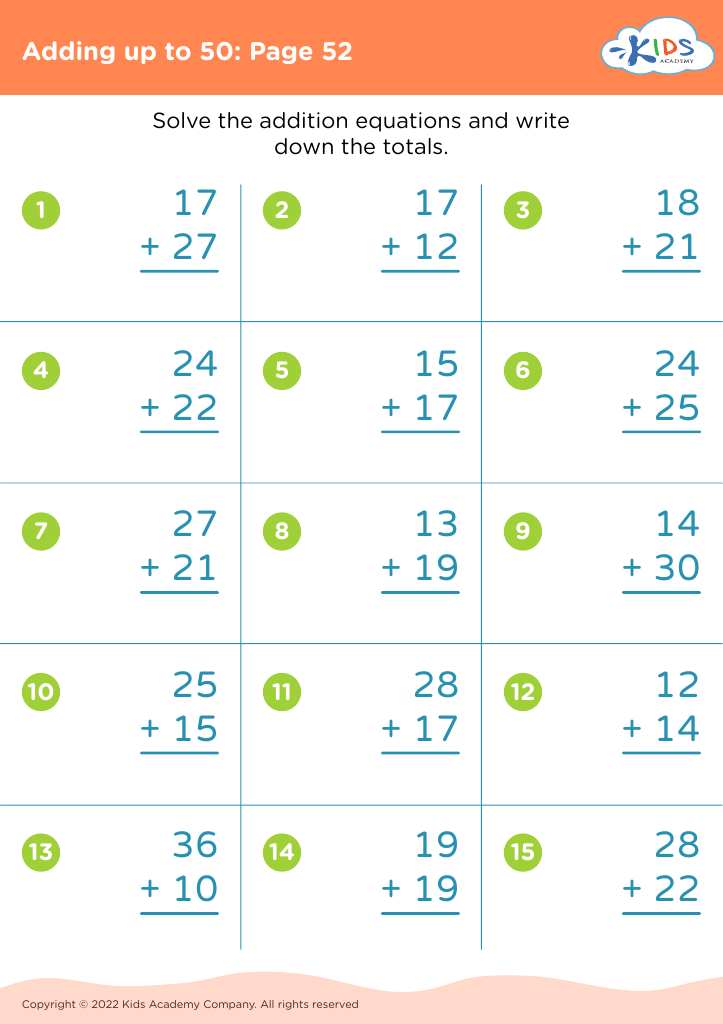
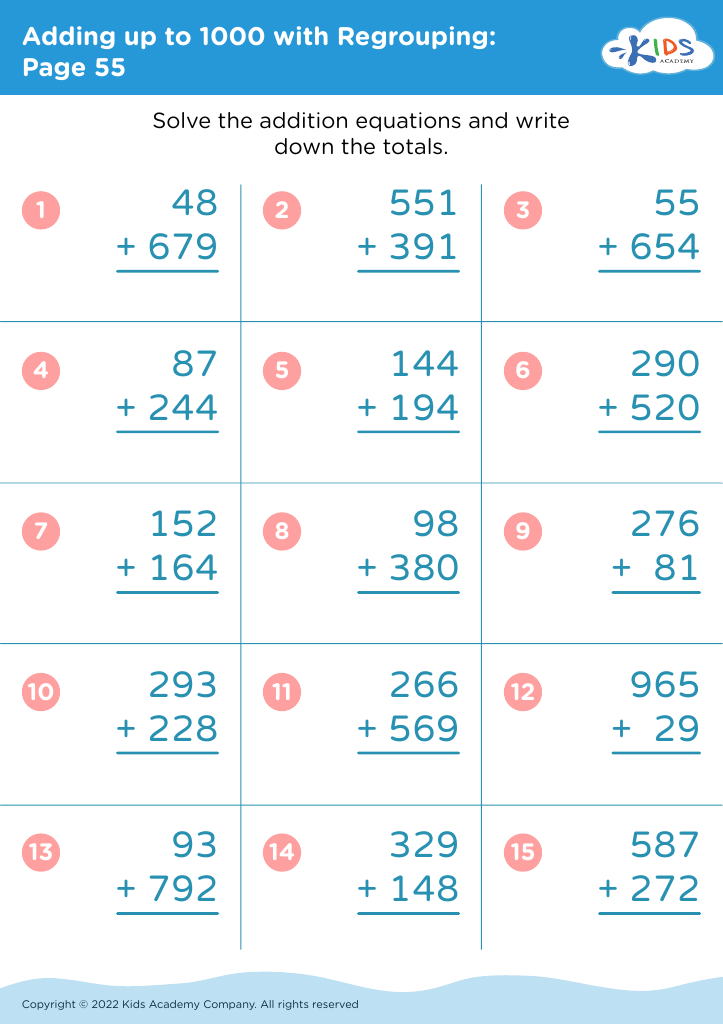
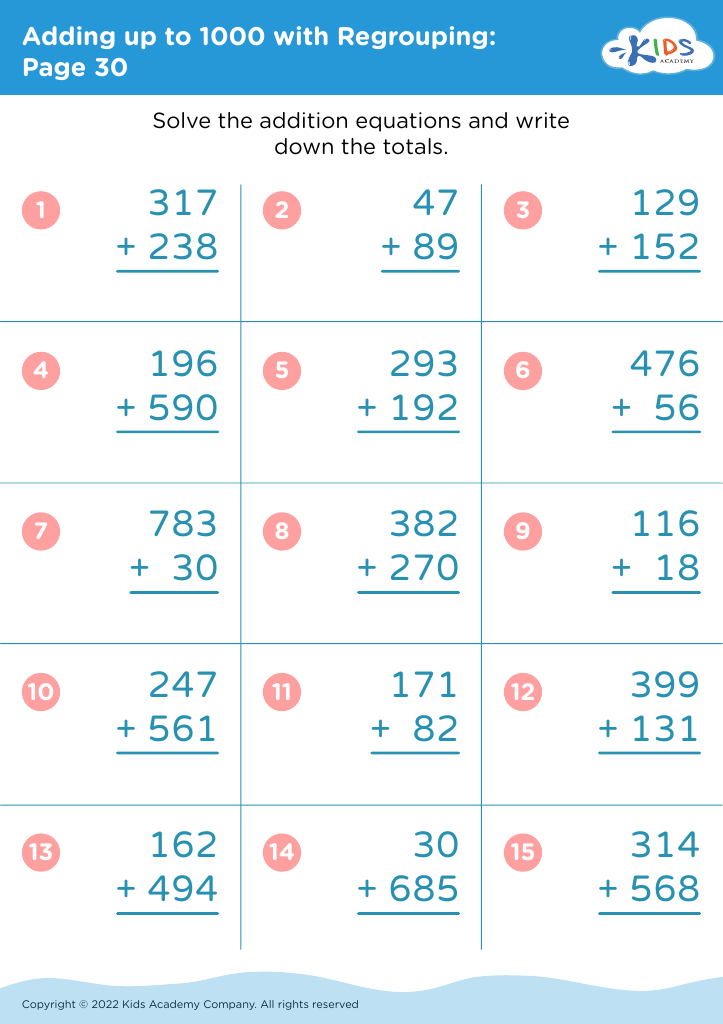
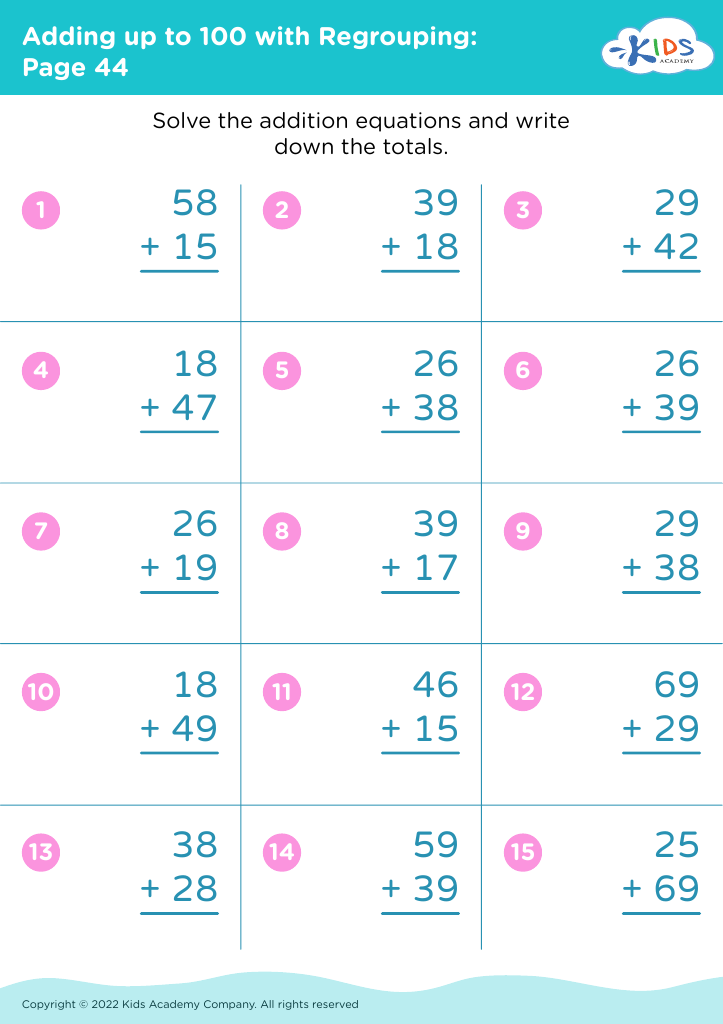
Introduce your child to a world of fun and learning with our "Enhancing Creativity Addition Worksheets for Ages 6-7." Designed to infuse excitement into math practice, these worksheets feature engaging activities that not only bolster addition skills but also stimulate artistic thinking. Each sheet presents unique, creative challenges that encourage young minds to explore numbers in imaginative ways. From colorful illustrations to playful puzzles, our expertly crafted resources ensure that learning addition is an enjoyable and enriching experience. Perfect for both classroom and at-home use, these enchanting worksheets support critical learning stages and inspire a love for math.
Favorites
With answer key
Interactive
Join Kids Academy for Free
Who is primarily going to use this learning content?








Enhancing creativity in children aged 6-7 is crucial as it plays a pivotal role in their overall development. During this stage, children are at a prime age for learning and cognitive growth, and creativity is a fundamental component of this process. Firstly, nurturing creativity encourages children to think outside the box and explore different solutions to problems, fostering critical thinking skills. This skill set is essential not just academically but also in real-life scenarios.
Moreover, creativity promotes emotional expression. When children engage in creative activities like drawing, storytelling, or imaginative play, they often express their thoughts and feelings, which can aid in emotional regulation and mental health. Creativity also enhances social skills as children collaborate on projects, negotiate roles in imaginative play, and communicate their ideas to others.
Academically, integrating creativity in subjects like mathematics or science makes learning more engaging and enjoyable, often leading to a deeper understanding and retention of information. For example, creative addition activities that involve stories or physical objects can make mathematical concepts more concrete and accessible.
In summary, fostering creativity in young children is not only about nurturing future artists; it’s about equipping them with the tools to solve problems, express themselves, and interact with the world in meaningful ways. Parents and teachers should prioritize creativity to cultivate well-rounded, capable, and confident individuals.








