Fine motor skills (writing) Addition Worksheets for Ages 6-7
6 filtered results
-
From - To
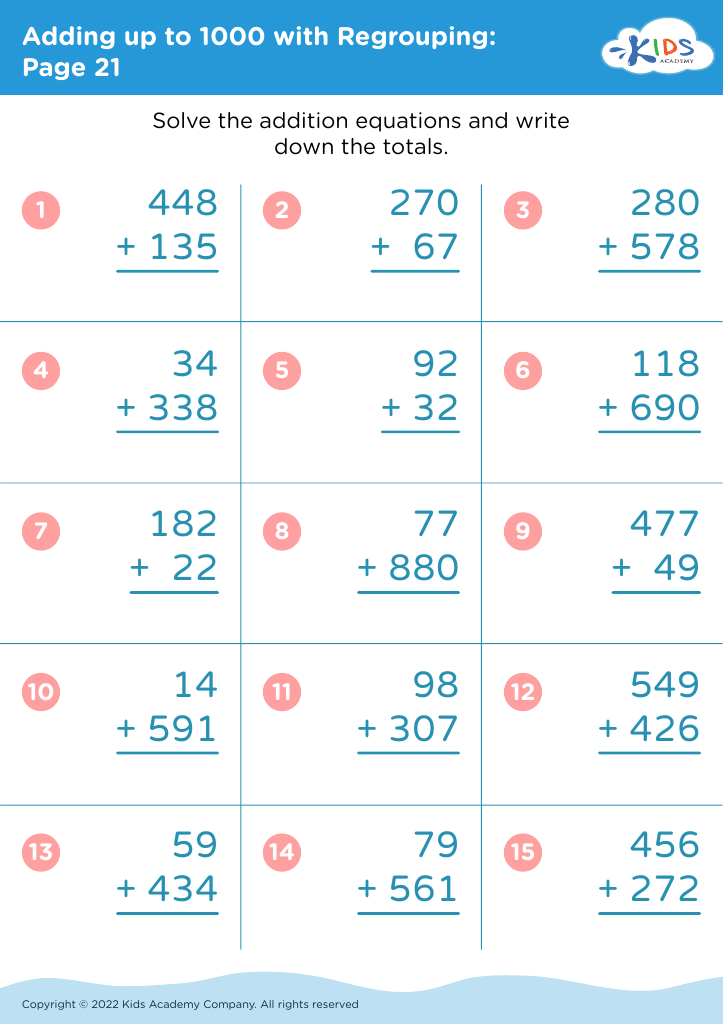
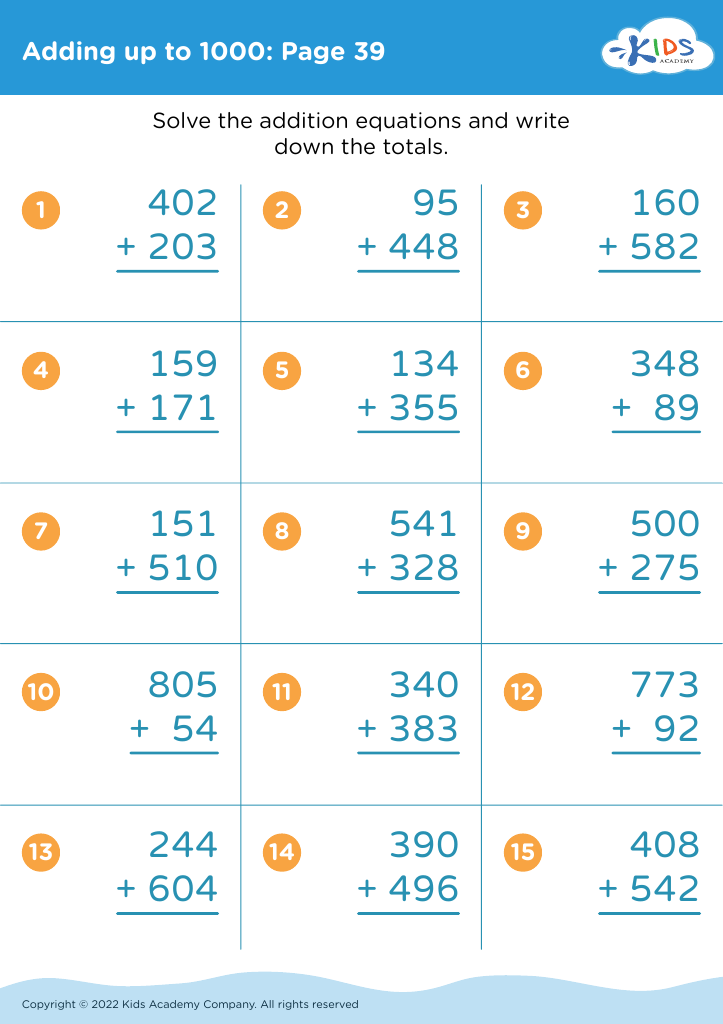
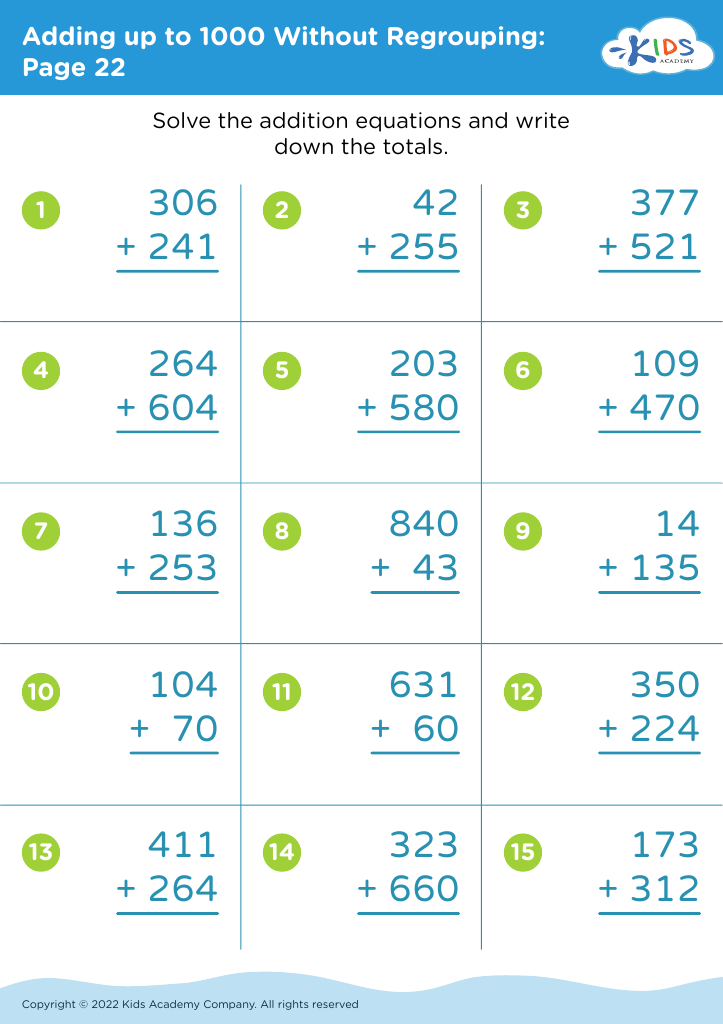
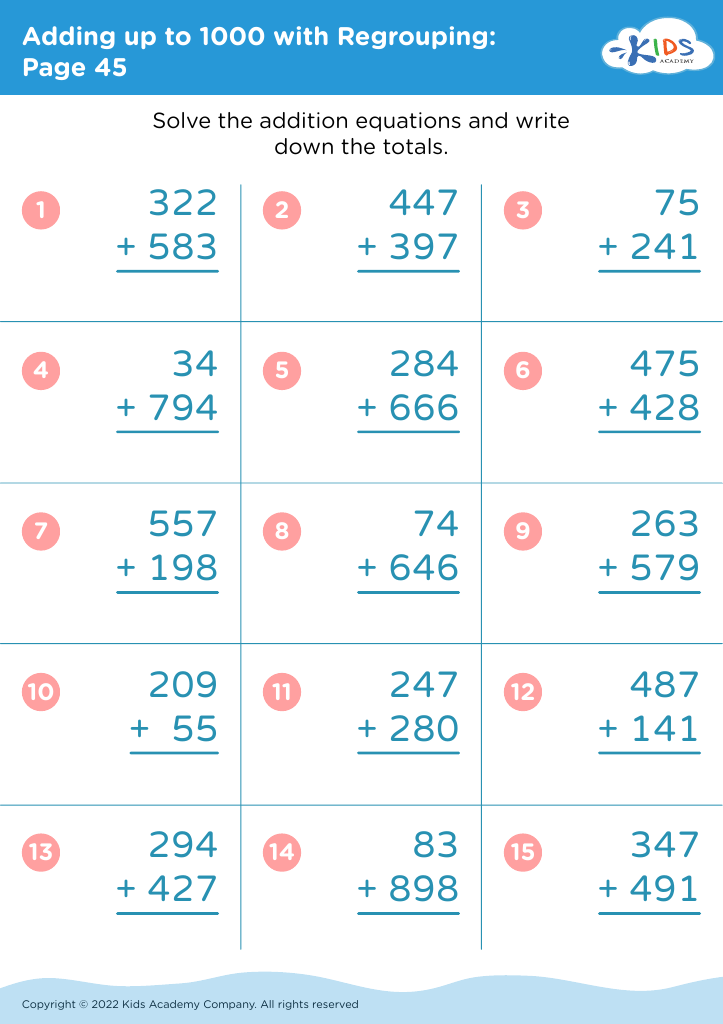
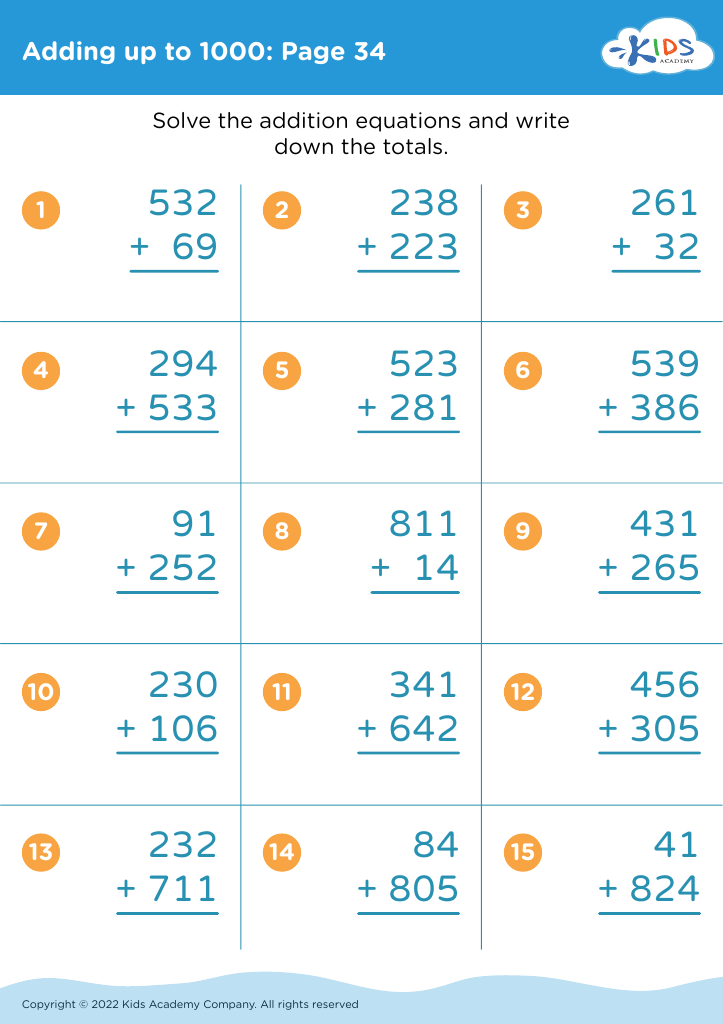
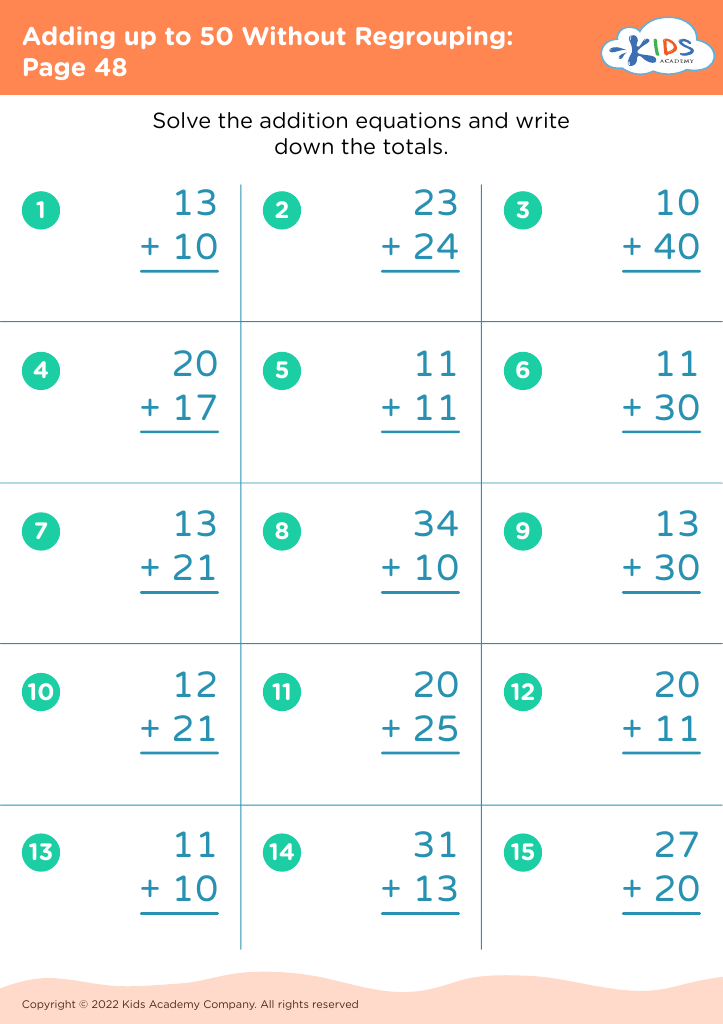
Enhance your child's fine motor skills and writing abilities with our engaging addition worksheets designed for ages 6-7! These printable worksheets offer a fun and educational way to practice addition while refining hand-eye coordination and control. Each activity is thoughtfully crafted to encourage young learners to trace numbers, write answers, and explore math concepts. Ideal for classroom use or at-home learning, our worksheets combine supportive practice with enjoyable challenges. Watch your child's confidence grow as they master addition and improve their writing skills. Explore our collection today and support your child's early learning journey!








Fine motor skills are crucial for children aged 6-7, particularly when it comes to writing and other academic tasks. At this developmental stage, kids are refining their ability to control hand movements, which forms the foundation for effective writing skills. Parents and teachers should care about this as fine motor proficiency significantly influences a child's academic performance, creativity, and confidence.
Well-developed fine motor skills help children hold writing instruments correctly, enabling smoother writing and better letter formation. Difficulties in this area can lead to frustration, impacting their willingness to engage in writing activities. Additionally, mastery of these skills fosters independence, allowing children to complete tasks such as tying shoelaces, using scissors, or managing daily routines with ease.
Moreover, strong fine motor skills contribute to cognitive development. For instance, writing aids in memory retention and understanding of concepts, as it encourages children to organize their thoughts. Through fine motor activities, such as drawing and crafting, children also express themselves creatively, building their confidence.
In short, fostering fine motor skills is essential for the holistic development of children, equipping them with the tools they need to thrive both academically and personally. When parents and teachers prioritize this area, they set the stage for success in school and beyond.








