Identifying equivalent fractions Addition Worksheets for Ages 6-7
7 filtered results
-
From - To
Help your 6-7 year olds master the foundational concepts of fractions with our engaging "Identifying Equivalent Fractions Addition Worksheets." These printable materials make learning fun, helping kids understand and identify equivalent fractions through addition exercises. Designed by educational experts, the worksheets use kid-friendly visuals and simple problems to enhance comprehension and build confidence. They cover basic fraction addition, making them perfect for early learners eager to bolster their math skills. Download now to provide your child with the tools they need to succeed in understanding fractions while enjoying a productive and enjoyable learning experience.
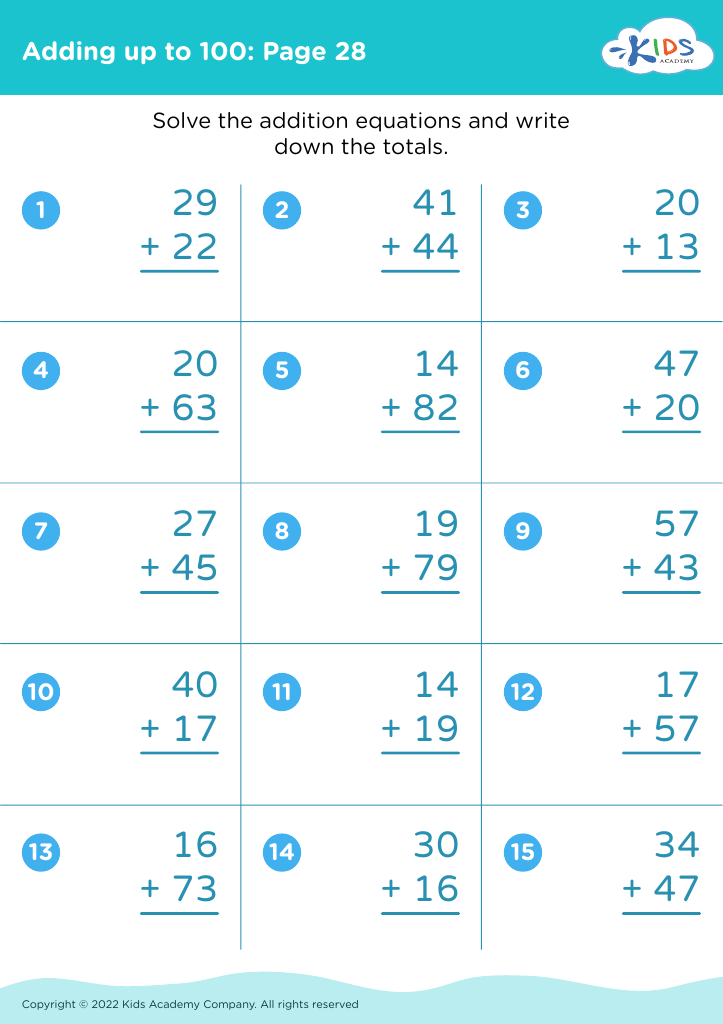
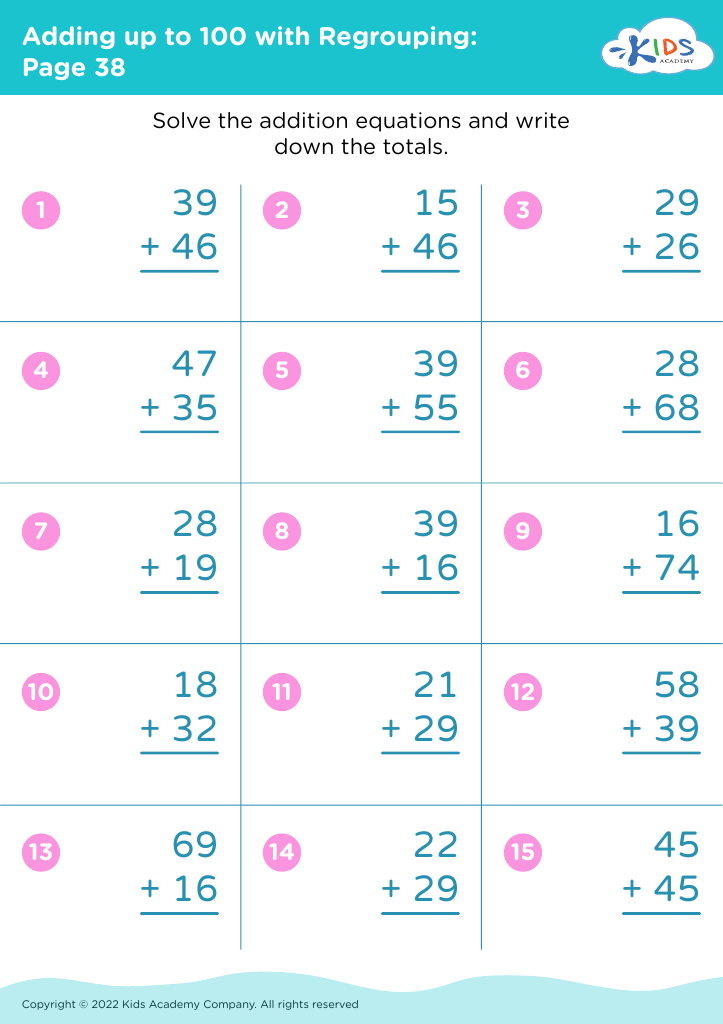
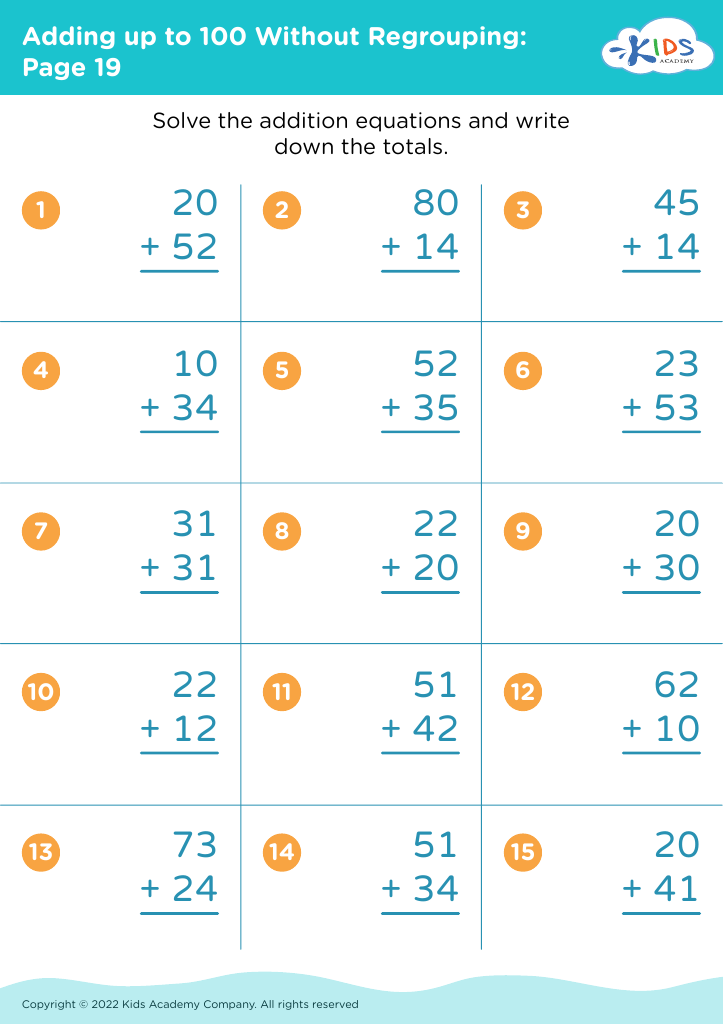
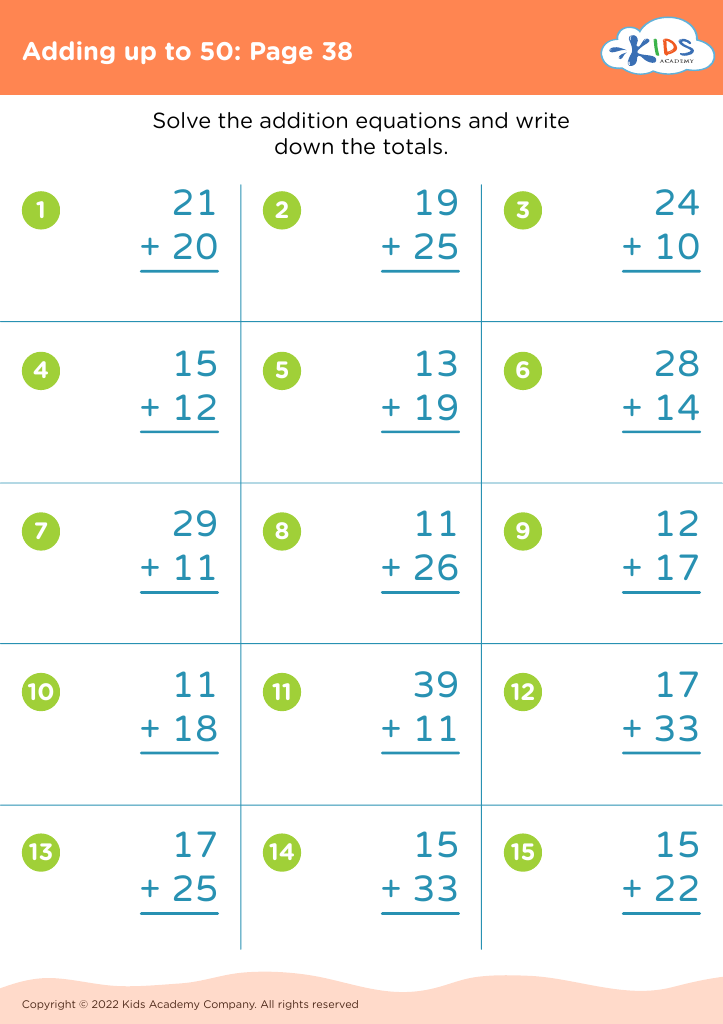
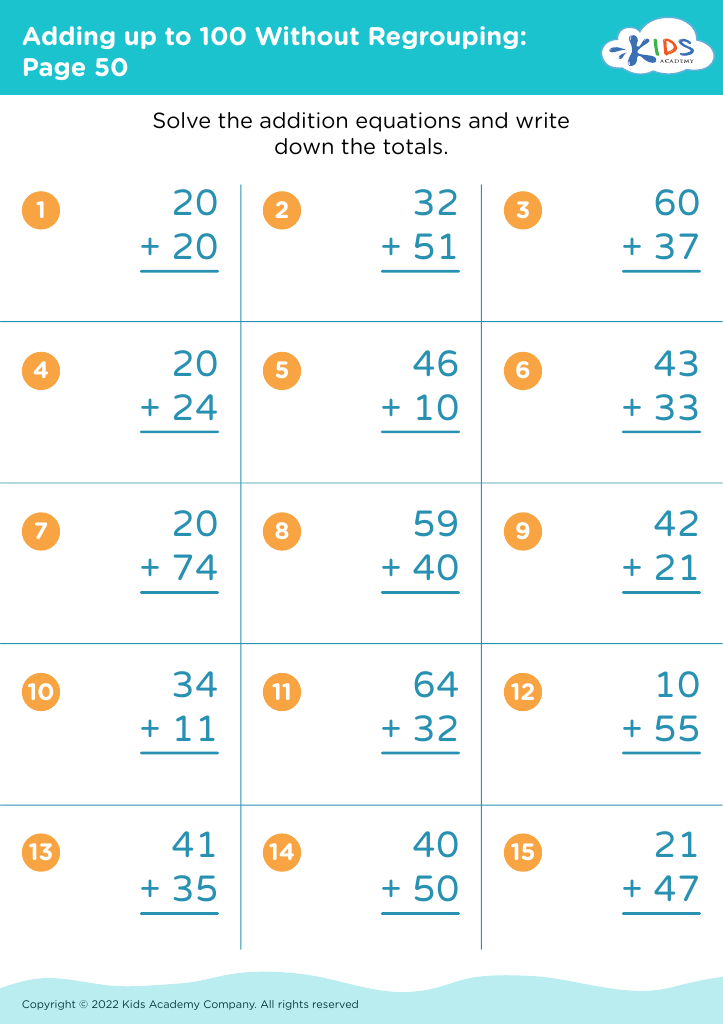
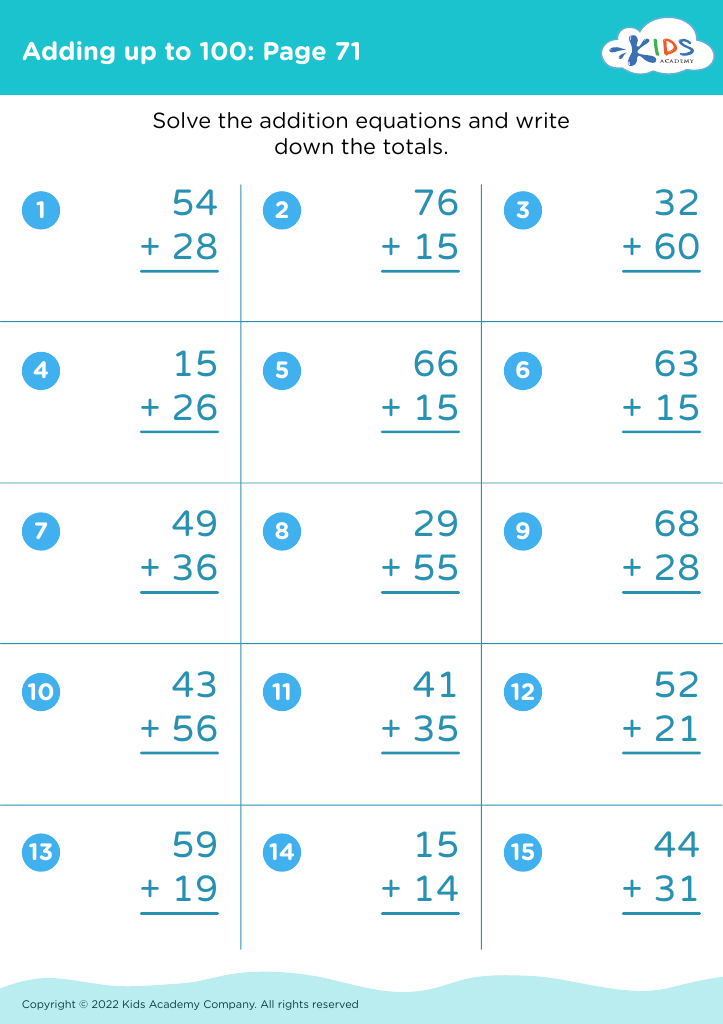
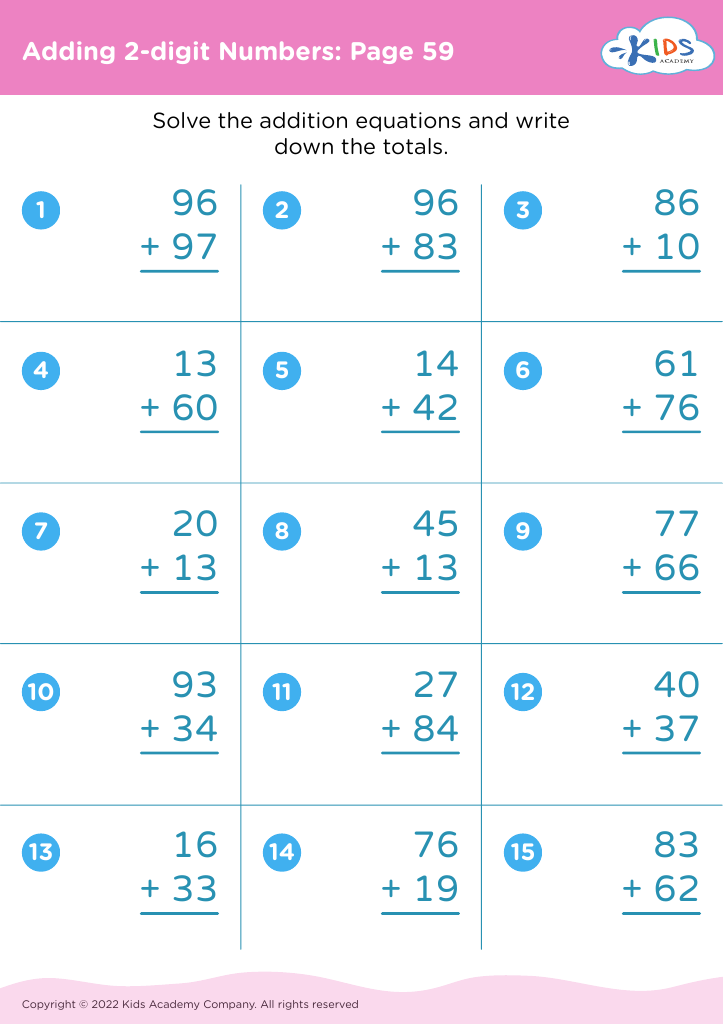





.jpg)


Understanding equivalent fractions is a fundamental concept in early mathematics that lays the groundwork for more advanced topics like comparing fractions, understanding proportions, and algebra. For children ages 6-7, mastering equivalent fractions can immensely boost their overall mathematical fluency and confidence.
First and foremost, identifying equivalent fractions helps develop a child’s sense of numbers and proportion. When children recognize that 1/2 is the same as 2/4 or 3/6, they begin to understand that fractions are simply different ways of expressing the same part of a whole. This comprehension enhances their number sense, critical for their future in not only mathematics but also in subjects that require logical thinking and precise measurements.
Moreover, an early grasp of this concept aids in the seamless addition and subtraction of fractions later in their education. If a student understands that 1/2 is equal to 2/4, adding 1/4 becomes more intuitive. This makes computations simpler and reduces the cognitive load, encouraging a more positive and less stressful experience with mathematics.
Teaching equivalent fractions also fosters problem-solving skills. It encourages students to see relationships and patterns, promoting analytical thinking—a skill pivotal not only in academics but in everyday life.
Ultimately, parents and teachers prioritizing this foundation will help create confident, capable, and mathematically literate learners who are better prepared for future academic achievements.








