
Mathematical thinking Addition Worksheets for Ages 6-7
3 filtered results
Difficulty Level
Grade
Age
-
From - To
Subject
Activity
Standards
Explore our engaging "Mathematical Thinking Addition Worksheets" designed specifically for children ages 6-7. These interactive resources enhance foundational math skills, helping young learners develop their understanding of addition through fun and relatable activities. Each worksheet encourages critical thinking and problem-solving, enabling kids to explore addition in a variety of contexts. Perfect for classroom use or at-home practice, these worksheets can reinforce concepts such as number patterns, basic equations, and real-world applications of addition. Foster a love for math and improve your child’s confidence with our thoughtfully crafted exercises that will stimulate their mathematical thinking while providing a solid groundwork for future learning.
Favorites
With answer key
Interactive
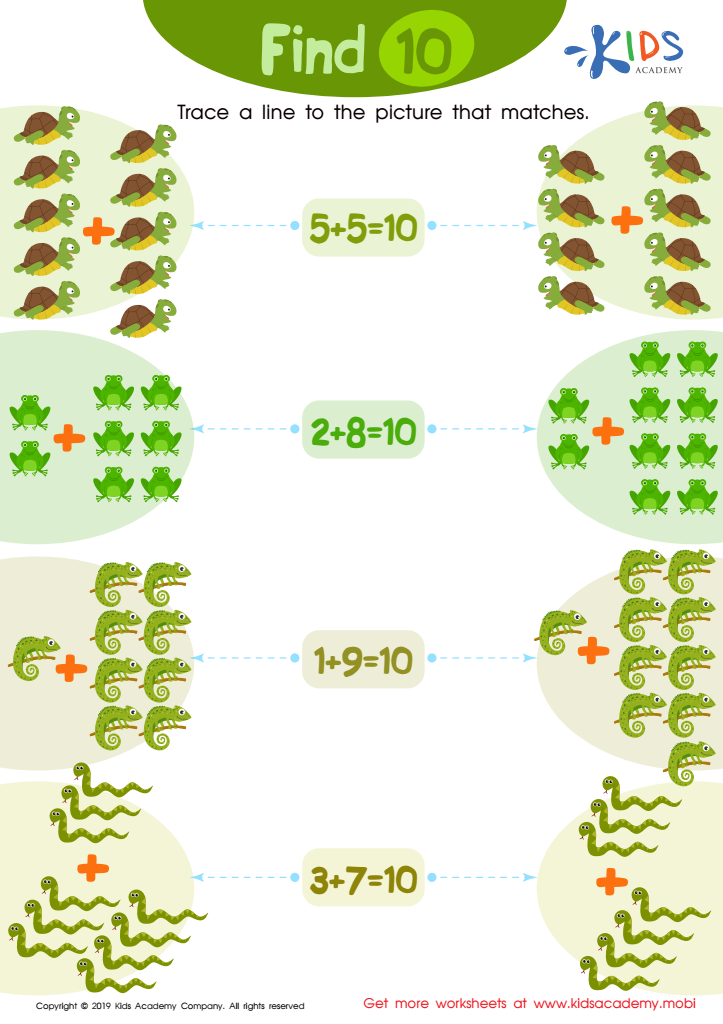
Find 10 Worksheet
Counting can be tricky, but your kids can master it with regular practice. Here's a fun activity to help: count the animals, then trace a line to the pictures that matches. With these tips, math will be an easy walk in the park.
 Assign to My Students
Find 10 Worksheet
Worksheet
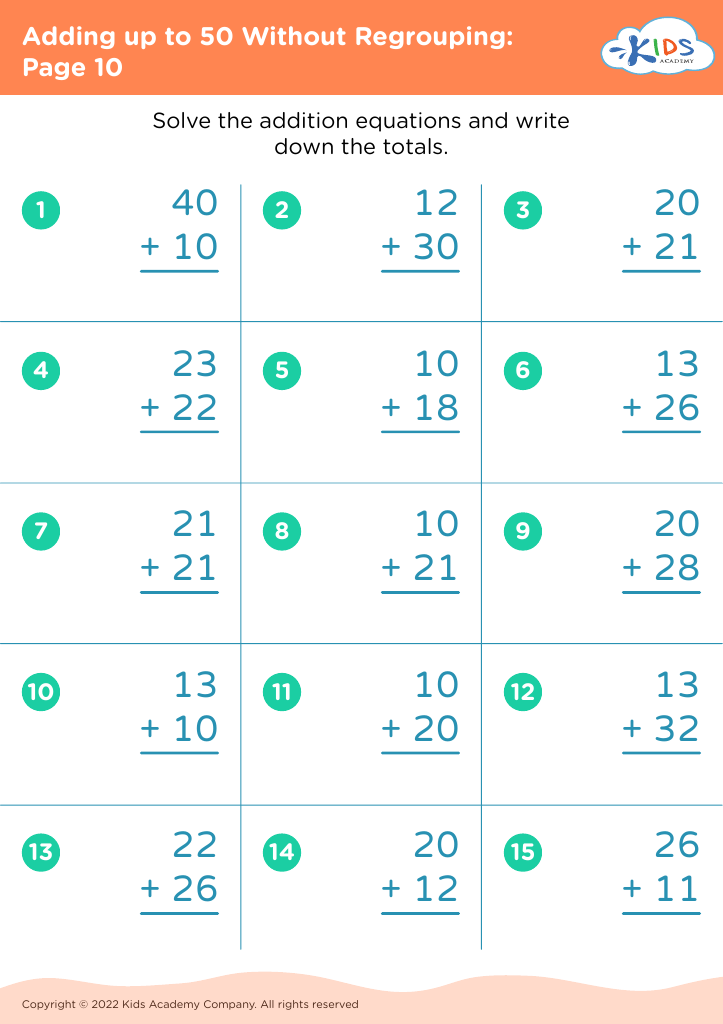
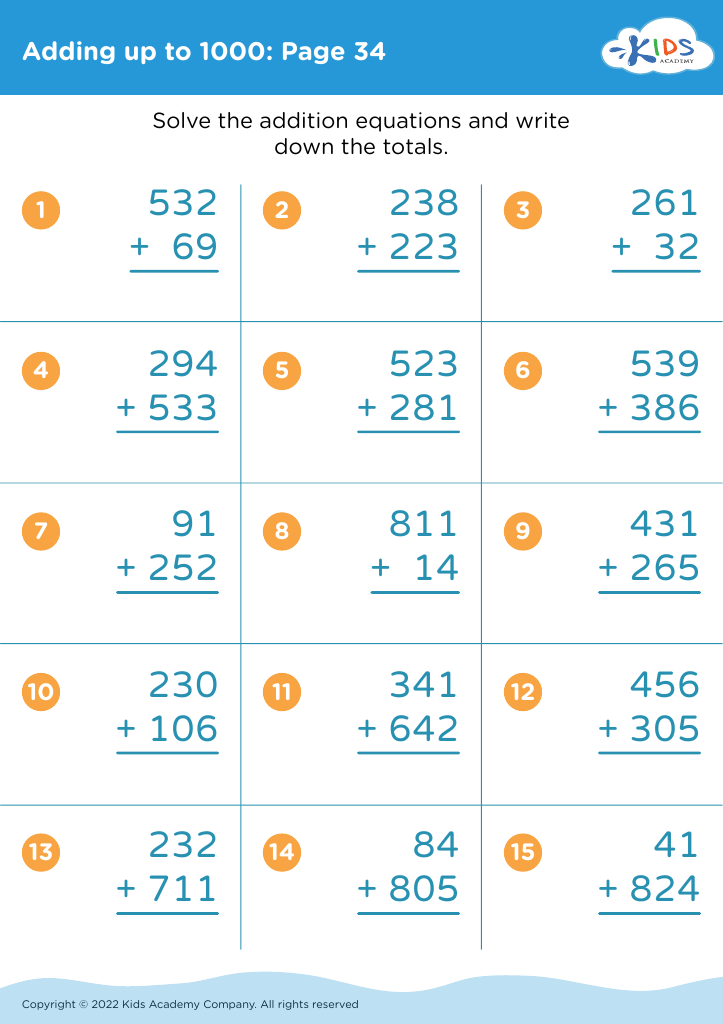
Join Kids Academy for Free
Who is primarily going to use this learning content?








Mathematical thinking, particularly in addition, plays a vital role in the cognitive development of children aged 6-7. This stage is crucial as it establishes foundational skills that will support a child's future learning in mathematics and other subjects. Parents and teachers should care about developing strong addition skills because this not only enhances numerical fluency but also cultivates critical thinking, problem-solving, and logical reasoning abilities.
At this age, children are beginning to grasp abstract concepts, and mastering addition helps solidify their understanding of numbers. Engaging in addition activities fosters a positive attitude towards math, encouraging children to be more confident and willing to tackle more complex challenges in later grades. Addition also serves as a gateway to understanding more complex mathematical operations such as subtraction, multiplication, and division.
Furthermore, learning addition through interactive games and activities can create a stimulating learning environment that aids social and emotional development. Collaborative problem-solving and peer interaction help build communication and teamwork skills. By prioritizing mathematical thinking in addition, parents and teachers can give children the essential tools they need for academic success and everyday decision-making, laying the groundwork for a lifetime of mathematical literacy and critical engagement with the world around them.








