Filters

157 filtered results

Clear all filters
Favorites
With answer key
Interactive

157 filtered results

Difficulty Level

Grade


Check out this FREE Trial Lesson on Addition for age 6-7!

Making 15

Favorites
With answer key
Interactive
  • 6-7
  • Number Recognition
  • Addition
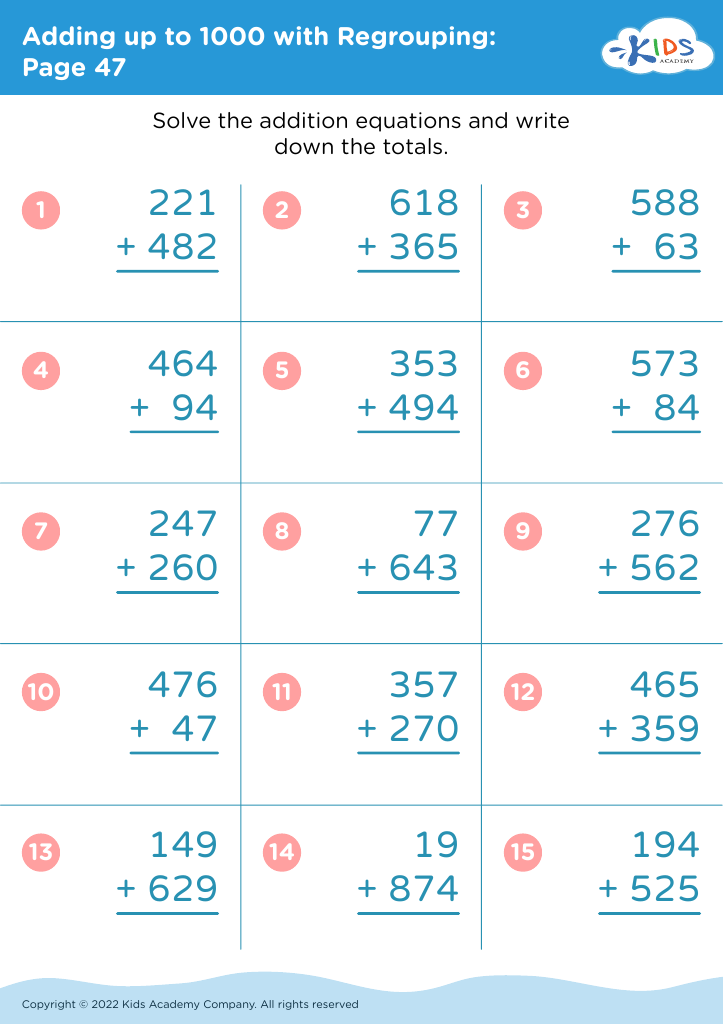
Adding up to 1000 with Regrouping: Page 47
Worksheet
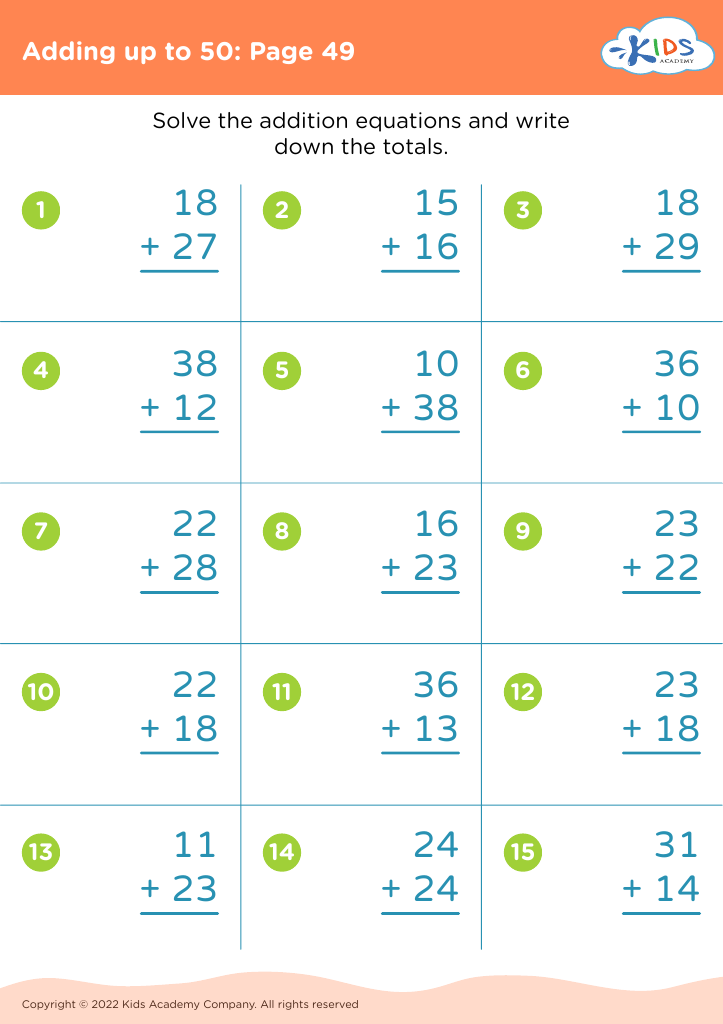
Adding up to 50: Page 49

Adding up to 50: Page 49

Adding up to 50: Page 49
Worksheet
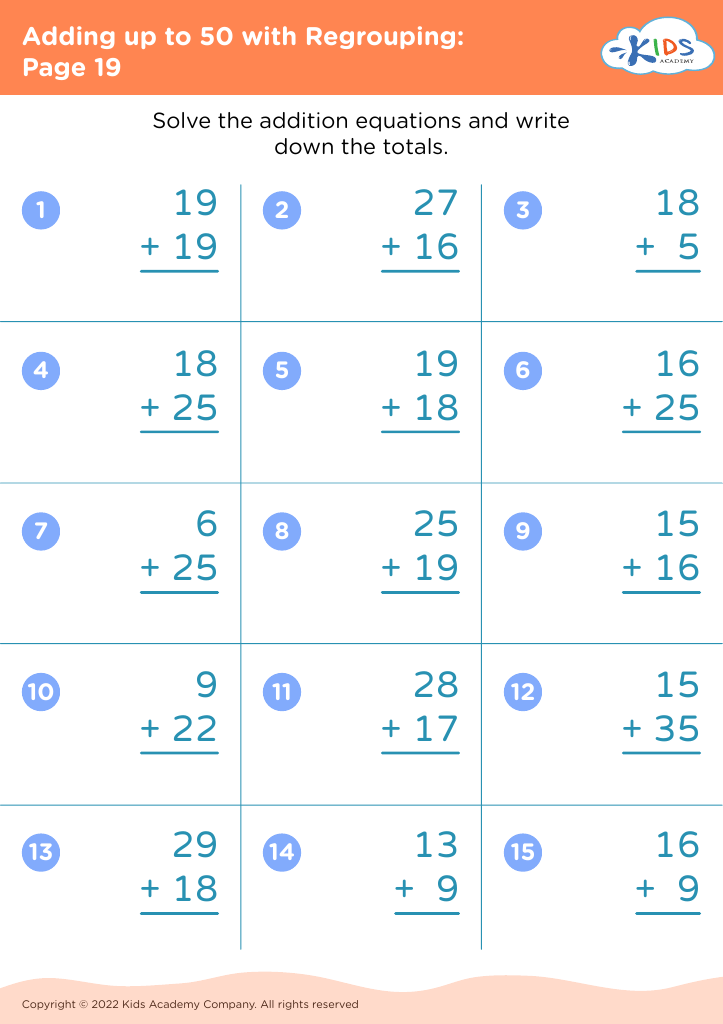
Adding up to 50 with Regrouping: Page 19
Worksheet
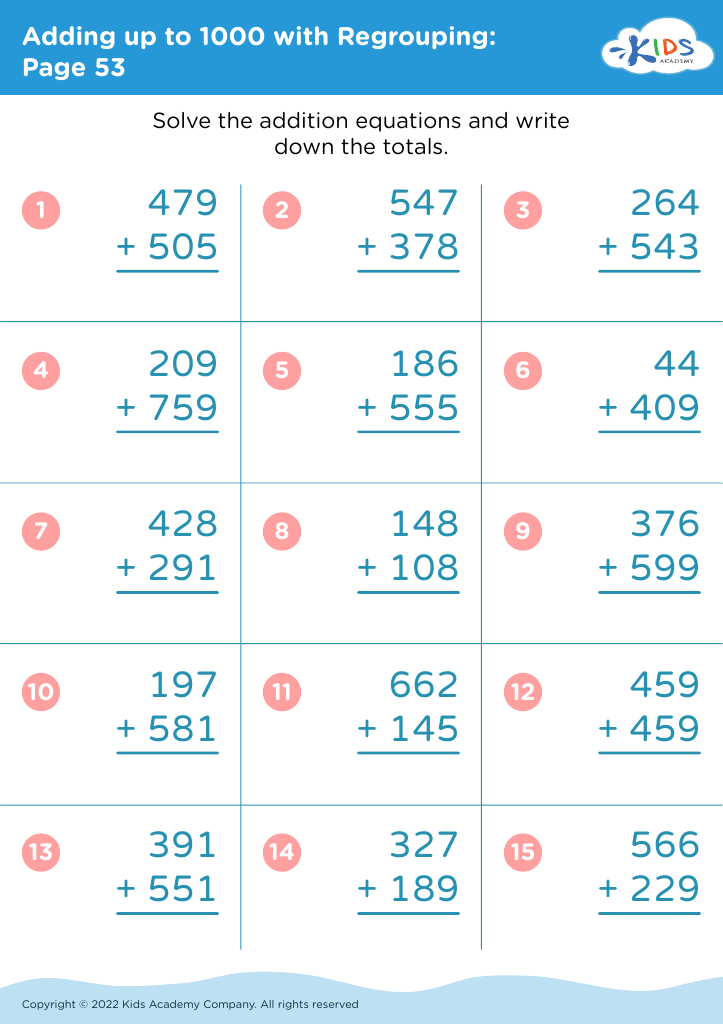
Adding up to 1000 with Regrouping: Page 53
Worksheet
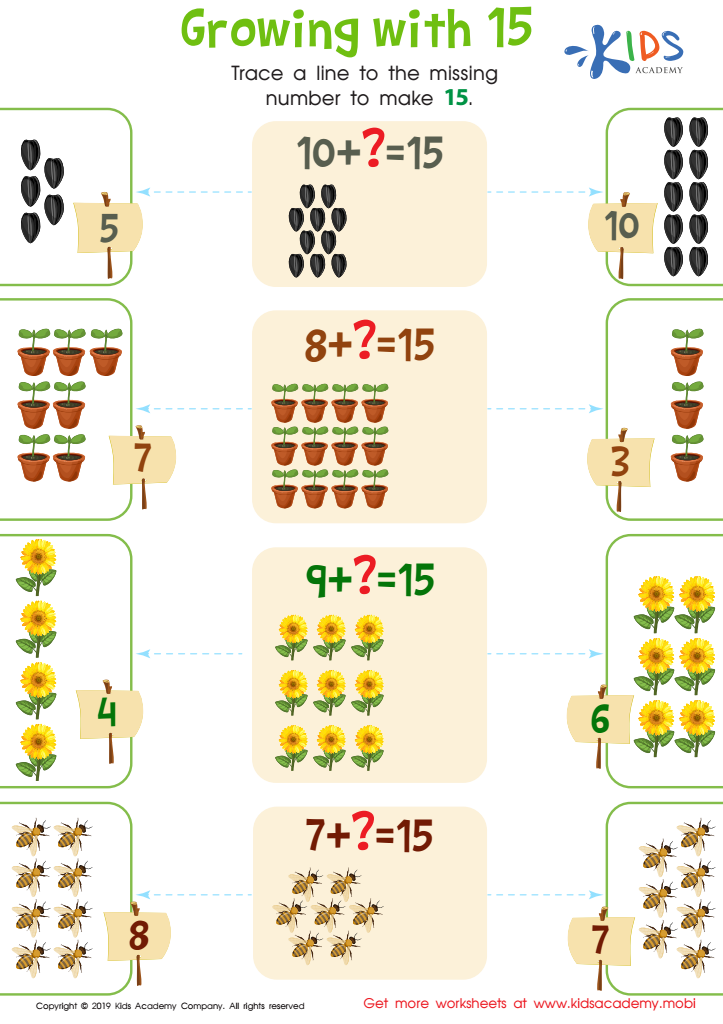
Growing with 15 Worksheet

Growing with 15 Worksheet

Remind your kids that adding different sets of numbers can give the same total (e.g. 2+3=5, 4+1=5). Test their understanding by asking them for more examples. Move onto the worksheet: count objects, then trace the line to the number making a total of 15.
Growing with 15 Worksheet
Worksheet
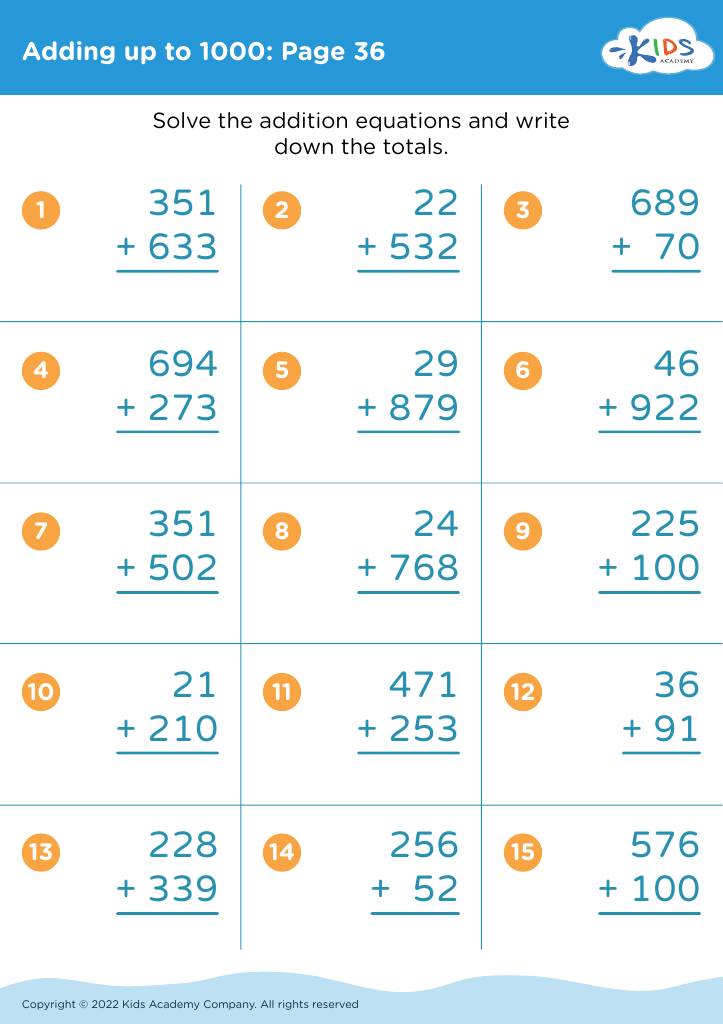
Adding up to 1000: Page 36

Adding up to 1000: Page 36

Adding up to 1000: Page 36
Worksheet
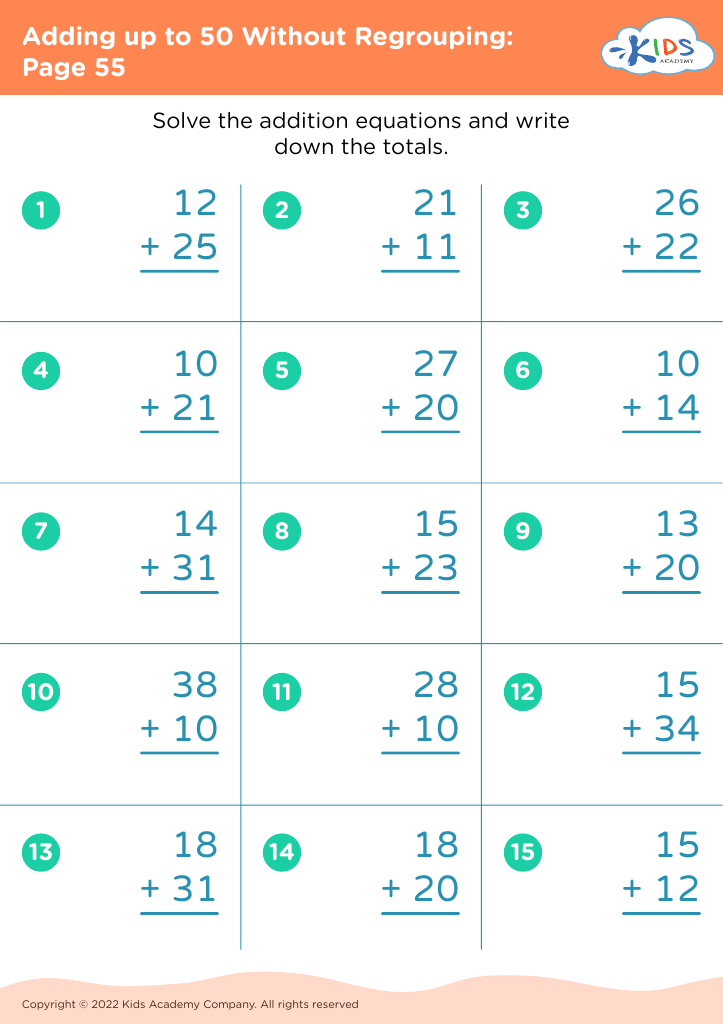
Adding up to 50 Without Regrouping: Page 55
Worksheet
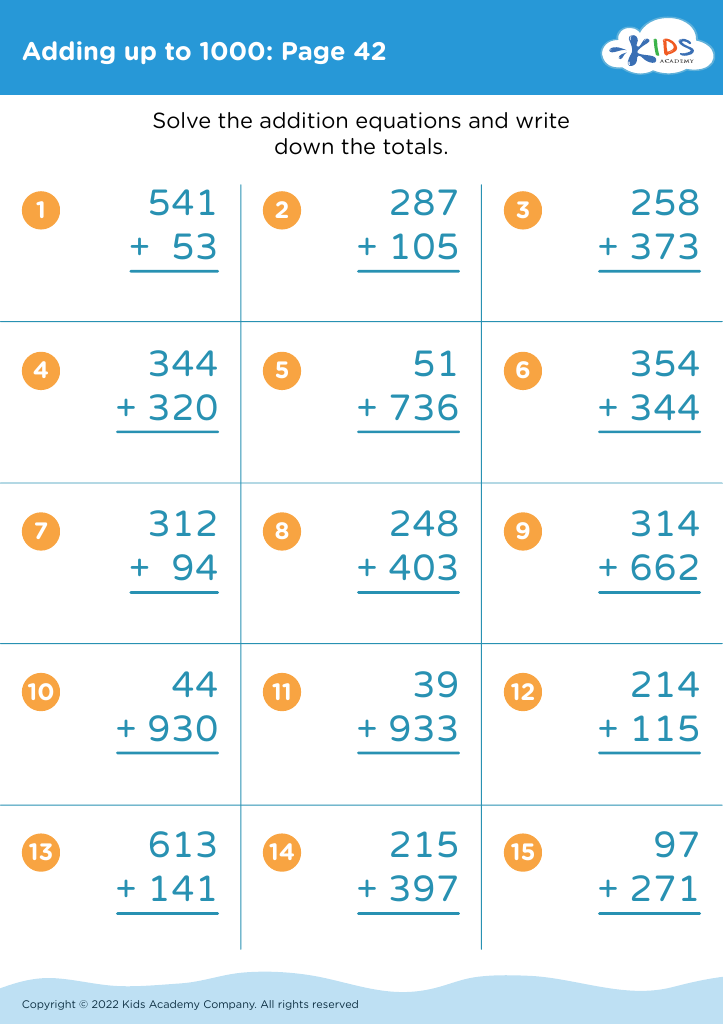
Adding up to 1000: Page 42

Adding up to 1000: Page 42

Adding up to 1000: Page 42
Worksheet
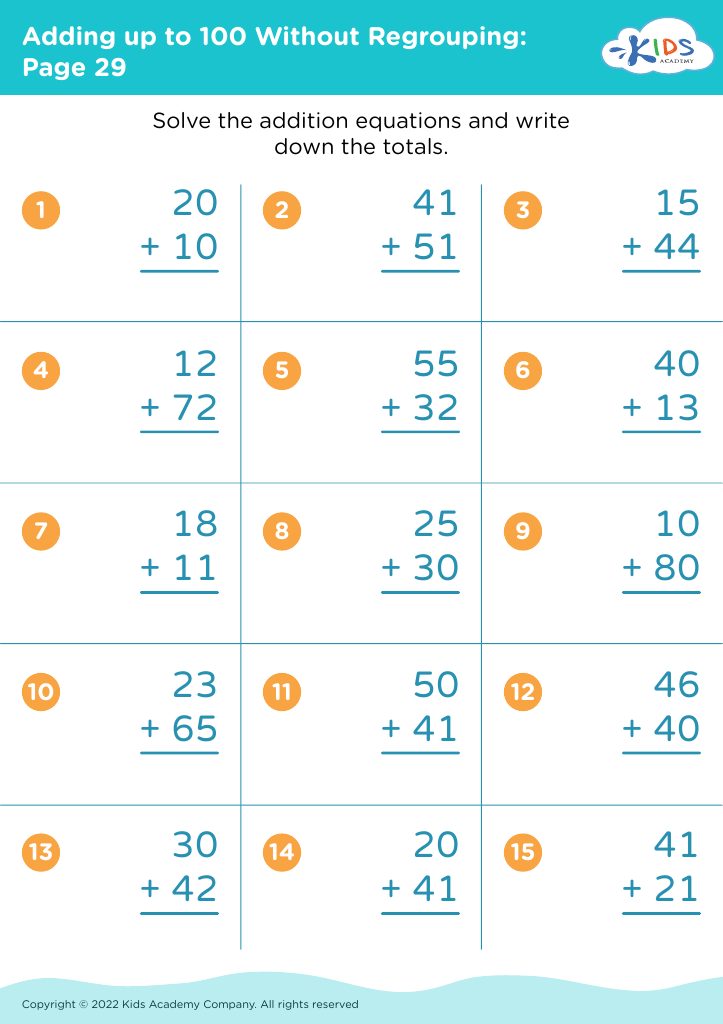
Adding up to 100 Without Regrouping: Page 29
Worksheet
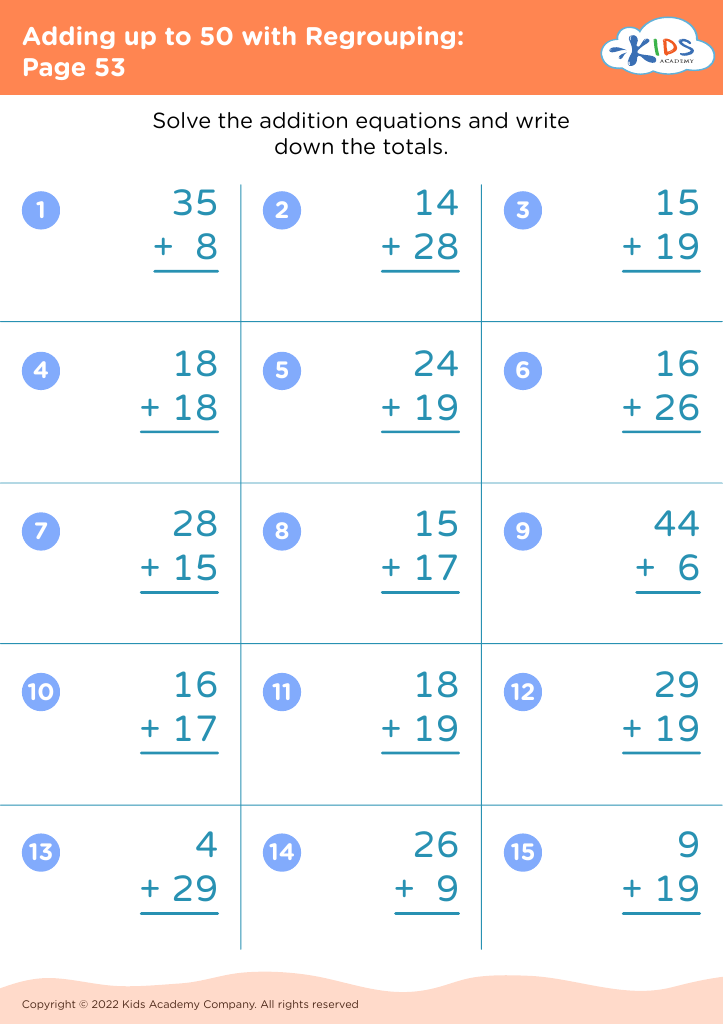
Adding up to 50 with Regrouping: Page 53
Worksheet
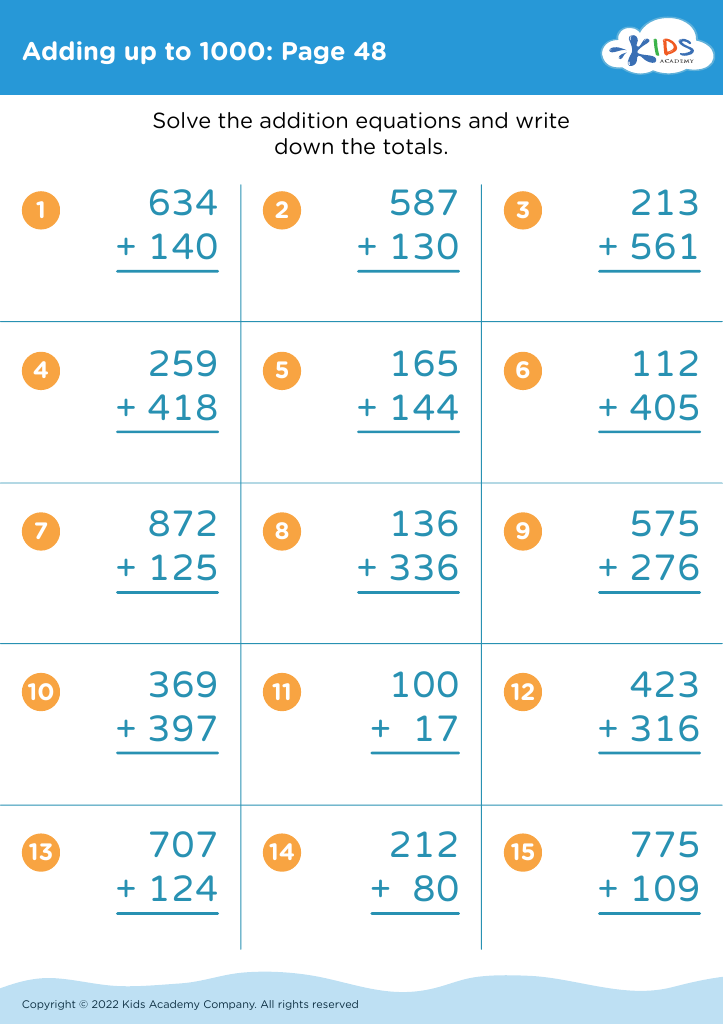
Adding up to 1000: Page 48

Adding up to 1000: Page 48

Adding up to 1000: Page 48
Worksheet
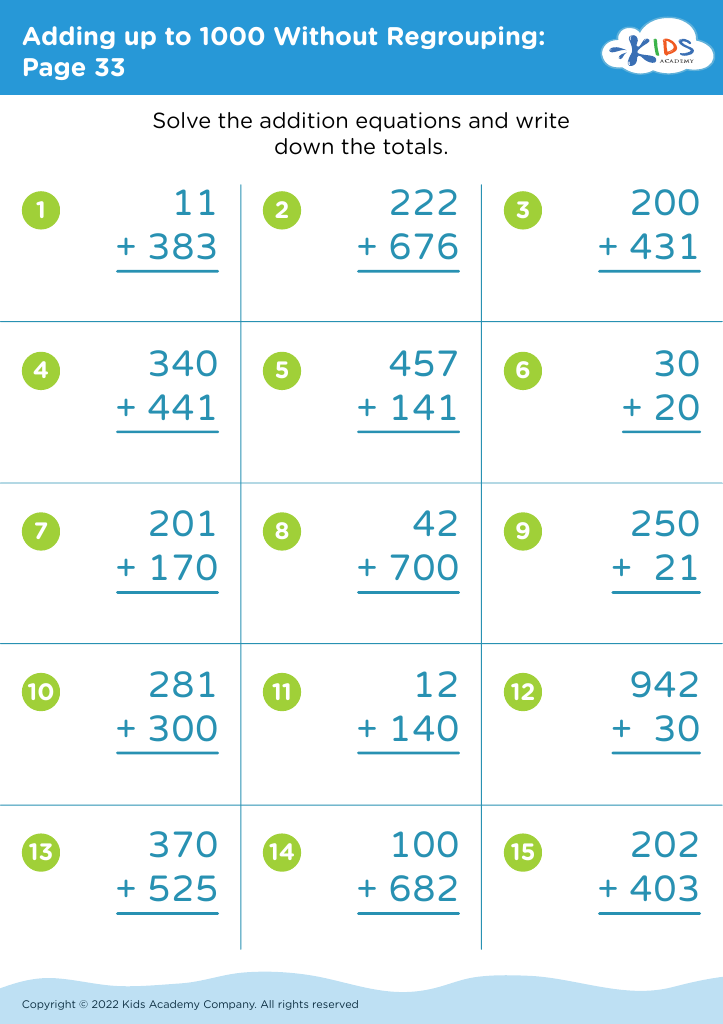
Adding up to 1000 Without Regrouping: Page 33
Worksheet
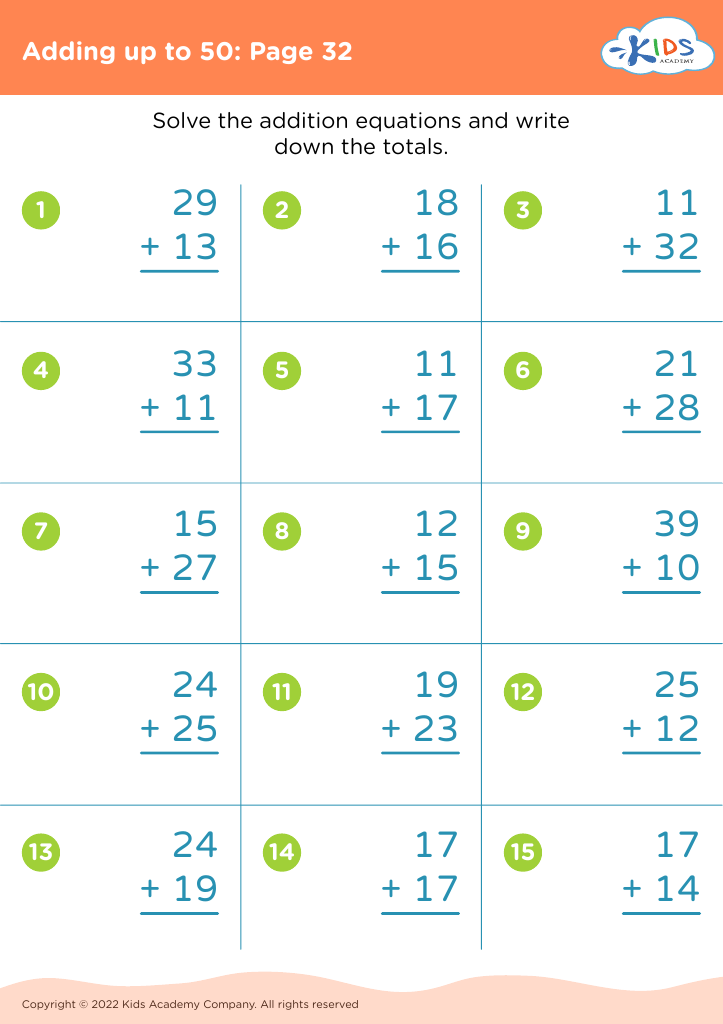
Adding up to 50: Page 32

Adding up to 50: Page 32

Adding up to 50: Page 32
Worksheet


... 6 7

Number recognition and addition are foundational skills that significantly impact a child's mathematical development and overall academic success. By the ages of 6-7, children are transitioning from basic number identification to understanding their relationships and applications in arithmetic. This is a critical developmental phase where they begin to comprehend concepts like quantity, number sequences, and basic arithmetic operations.

Parents and teachers should prioritize number recognition and addition for several reasons. Firstly, these skills foster confidence in young learners, providing a solid foundation upon which more complex mathematical concepts can be built. Early mastery of number recognition aids in developing a mental number line, essential for understanding addition and subsequent operations.

Secondly, strong number sense correlates with better problem-solving skills, contributing not only to math proficiency but also to logical thinking in daily situations. This helps prepare children for more advanced math topics in later grades.

Moreover, nurturing these skills early enhances a child’s enthusiasm for math, promoting a positive attitude toward learning. By engaging in fun and interactive number games, parents and teachers can ignite a love for numbers, ensuring children stay motivated and eager to learn. Ultimately, a solid grasp of number recognition and basic addition will empower children throughout their educational journey.