
Practice division Addition Worksheets for Ages 6-7
3 filtered results
Difficulty Level
Grade
Age
-
From - To
Subject
Activity
Standards
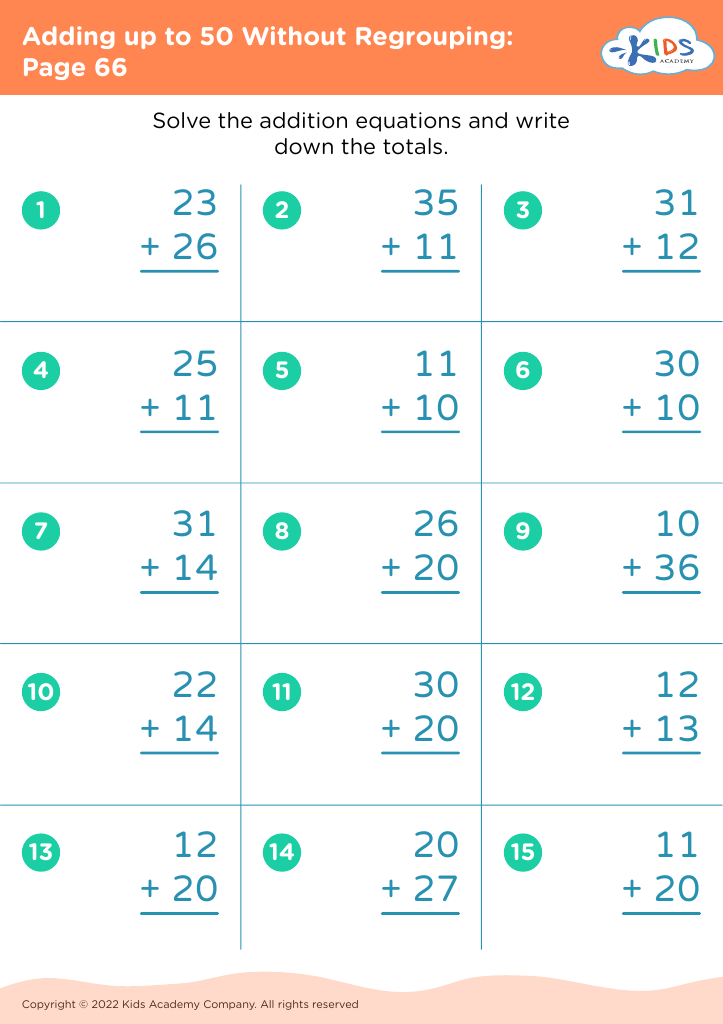
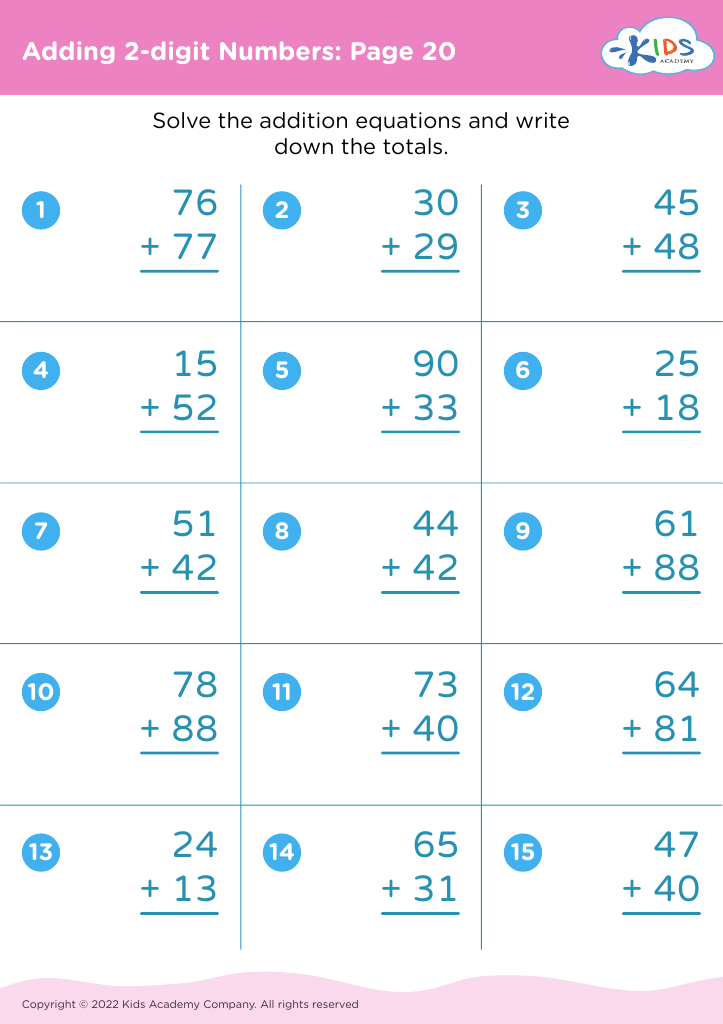
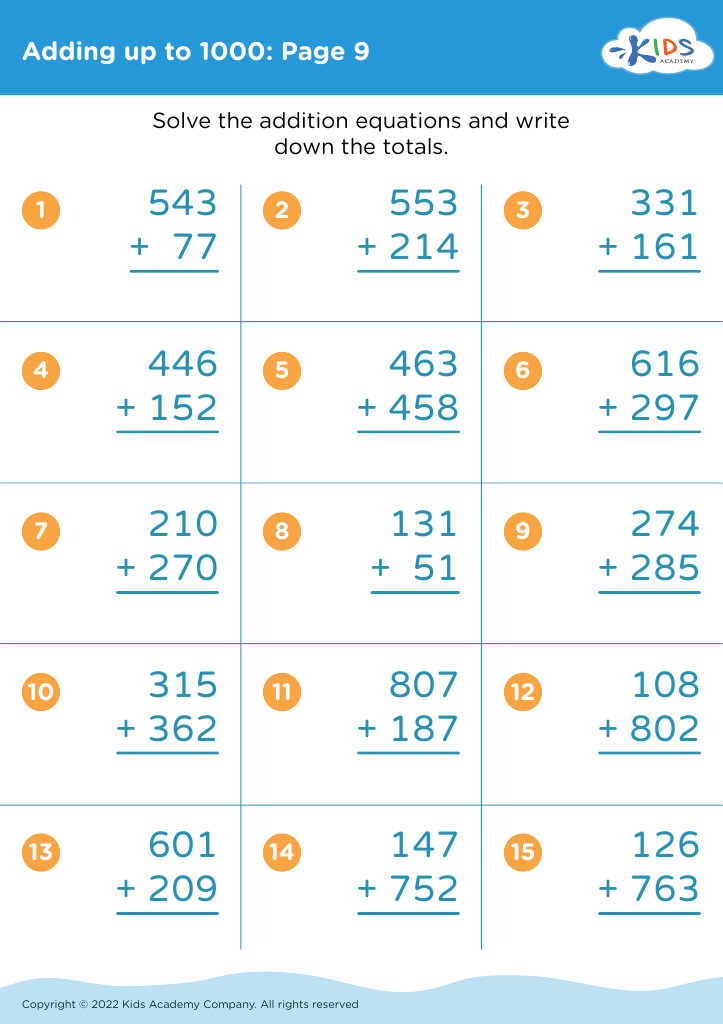
Enhance your child's math skills with our engaging Practice Division Addition Worksheets, designed specifically for ages 6-7. These worksheets encourage young learners to grasp basic division concepts while reinforcing addition techniques in a fun and interactive way. Each worksheet is tailored to develop critical thinking and problem-solving abilities, ensuring students build a strong foundation in mathematics. Featuring colorful illustrations and age-appropriate exercises, our resources make learning enjoyable and effective. Perfect for use at home or in the classroom, these worksheets are an excellent tool for reinforcing essential skills and fostering a love for math. Start your child’s mathematical journey today!
Favorites
With answer key
Interactive
Join Kids Academy for Free
Who is primarily going to use this learning content?


.jpg)

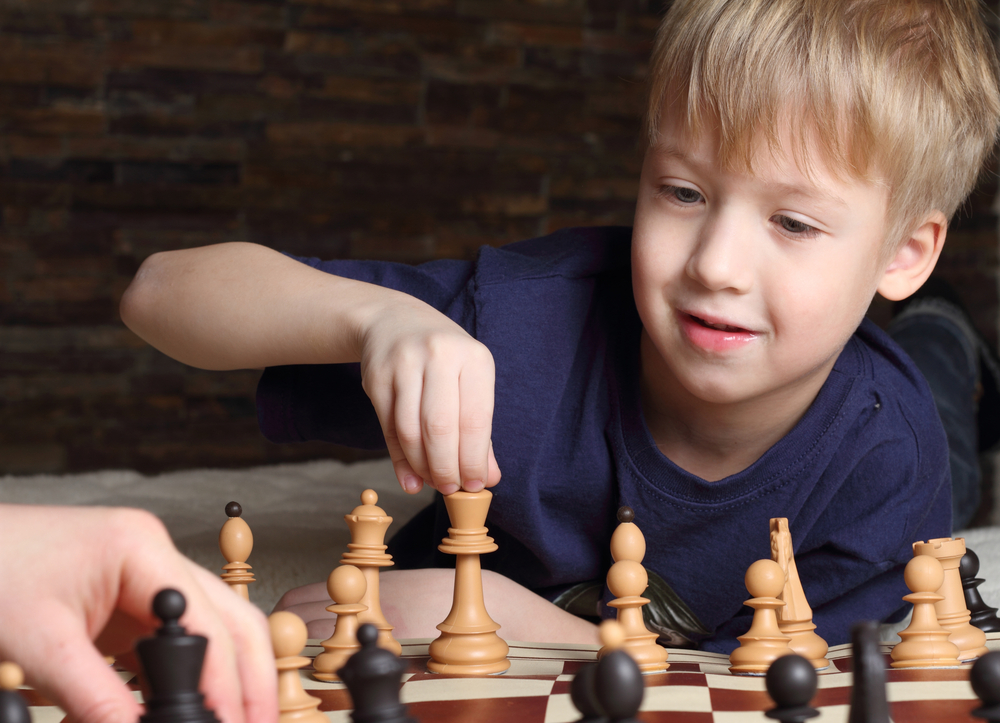



Parents and teachers should prioritize practicing basic division and addition for children aged 6-7 because these foundational skills are essential for early math literacy and cognitive development. At this age, children are developing critical thinking and problem-solving abilities, and mastering addition and division lays the groundwork for more advanced math concepts.
Understanding addition helps young learners grasp how numbers combine, promoting number sense. This skill not only supports future calculations but also correlates with enhanced reasoning abilities, as children learn to make connections and apply logic in various contexts.
Furthermore, integrating division practice teaches kids about sharing and grouping, introducing them to the concept of how numbers can be divided efficiently—an essential aspect of math in everyday life. Mastery of these operations builds confidence, reduces math anxiety, and encourages a positive attitude towards learning.
Involving parents in this process fosters a supportive learning environment, promoting skills through fun activities and games at home. Collaborative practice helps to reinforce what’s taught in school and strengthens the parent-child bond. Thus, focusing on addition and division during this crucial stage sets children on a path toward academic success and cultivates a lifelong love of learning.








