Understand subtraction Addition Worksheets for Ages 6-7
6 filtered results
-
From - To
Welcome to our comprehensive resource for "Understand Subtraction Addition Worksheets" tailored for children ages 6-7! These engaging worksheets are designed to enhance foundational math skills, emphasizing the relationship between addition and subtraction. Through a variety of fun, interactive problems, young learners will develop confidence in solving mathematical challenges. Our carefully crafted activities promote critical thinking and help students understand how subtraction relates to addition in real-life scenarios. Perfect for parents and educators, these worksheets provide convenient practice opportunities that align with early math curricula. Let’s make learning enjoyable as children discover the power of numbers and improve their arithmetic abilities!
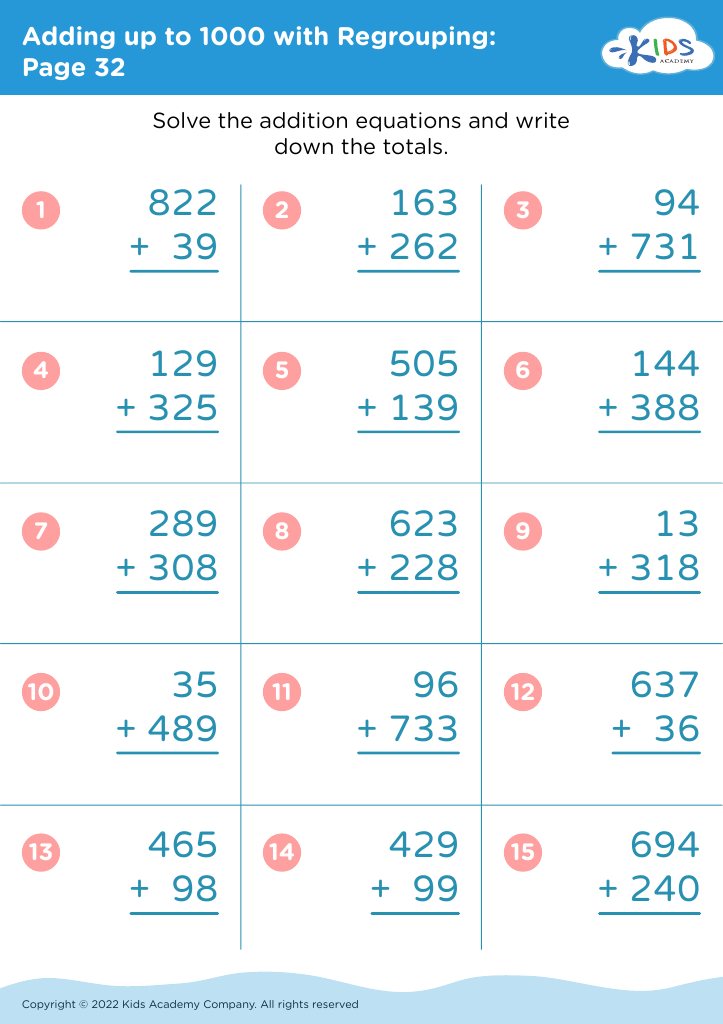
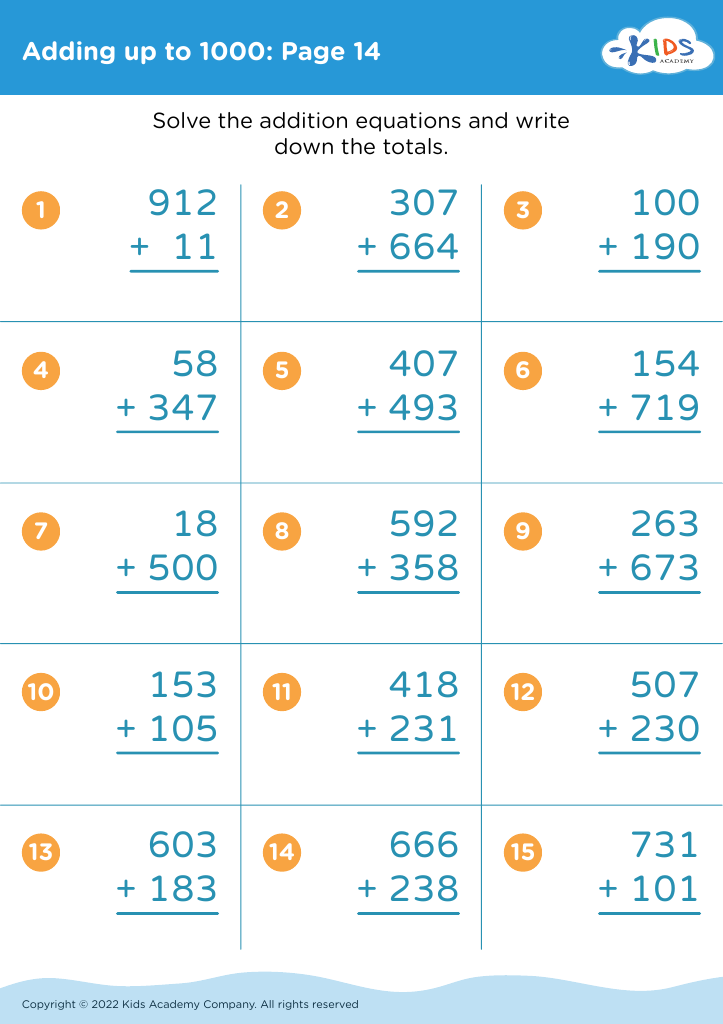








Understanding addition and subtraction is crucial for children aged 6-7 as it lays the foundation for their overall mathematical development. During this stage, children are not just memorizing facts; they are developing critical thinking skills and conceptual awareness.
Firstly, mastering these basic operations enhances cognitive skills, encouraging problem-solving and logical reasoning. Children learn to manipulate numbers and recognize relationships, which fosters a deeper understanding of math that helps in future learning. For example, grasping addition helps children comprehend the concept of sums, while subtraction deepens their understanding of differences.
Moreover, strong foundational skills in addition and subtraction boost confidence. This empowerment encourages children to tackle more complex mathematical problems in later grades, preventing the math anxiety that many face.
Engaging in consistent practice and application during everyday activities reinforces these skills. Parents and teachers can create enriching environments by incorporating playful activities that promote exploration of math in real-life contexts.
Ultimately, a solid grasp of addition and subtraction not only equips children with necessary academic skills but also nurtures resilience, adaptability, and a lifelong love for learning in mathematics. Supporting children in this crucial learning phase is imperative for their success and future endeavors.








