Understanding number sequences Addition Worksheets for Ages 6-7
3 filtered results
-
From - To
Explore our engaging "Understanding Number Sequences Addition Worksheets" designed for children aged 6-7! These worksheets focus on reinforcing early math skills by introducing young learners to number sequences and addition concepts. Each activity encourages critical thinking and helps develop a strong foundation in mathematics. Your child will enjoy solving fun problems that boost their confidence and enhance their understanding of patterns and relationships in numbers. With vibrant visuals and age-appropriate challenges, these worksheets promote a love for learning and math. Ideal for at-home practice or classroom use, they will empower your child to master addition and number sequences while having fun!
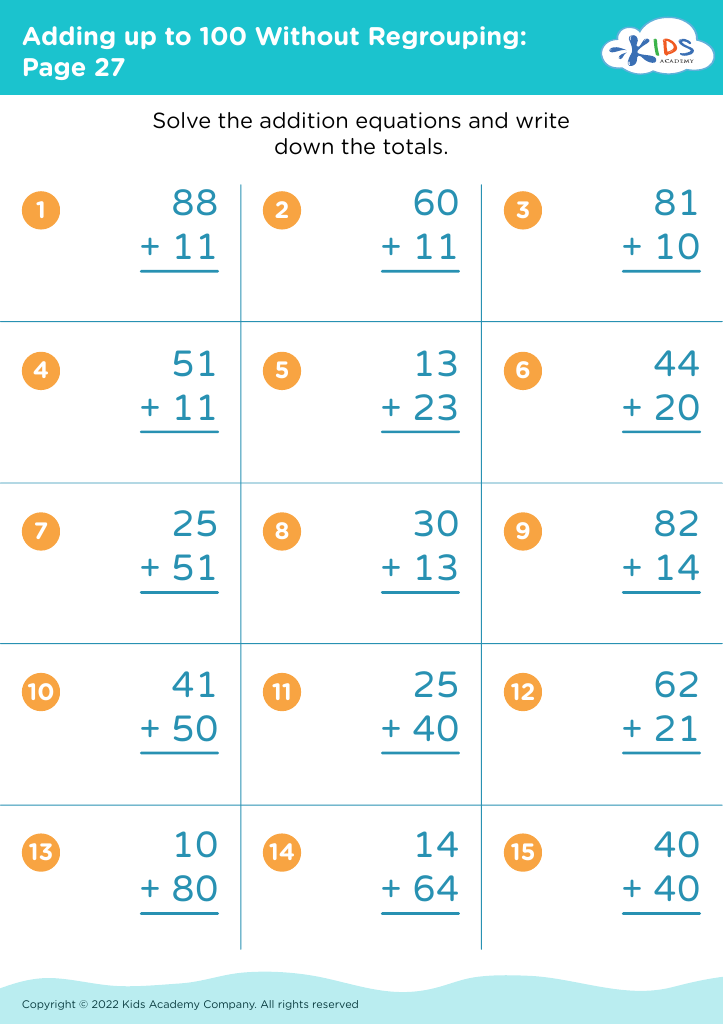
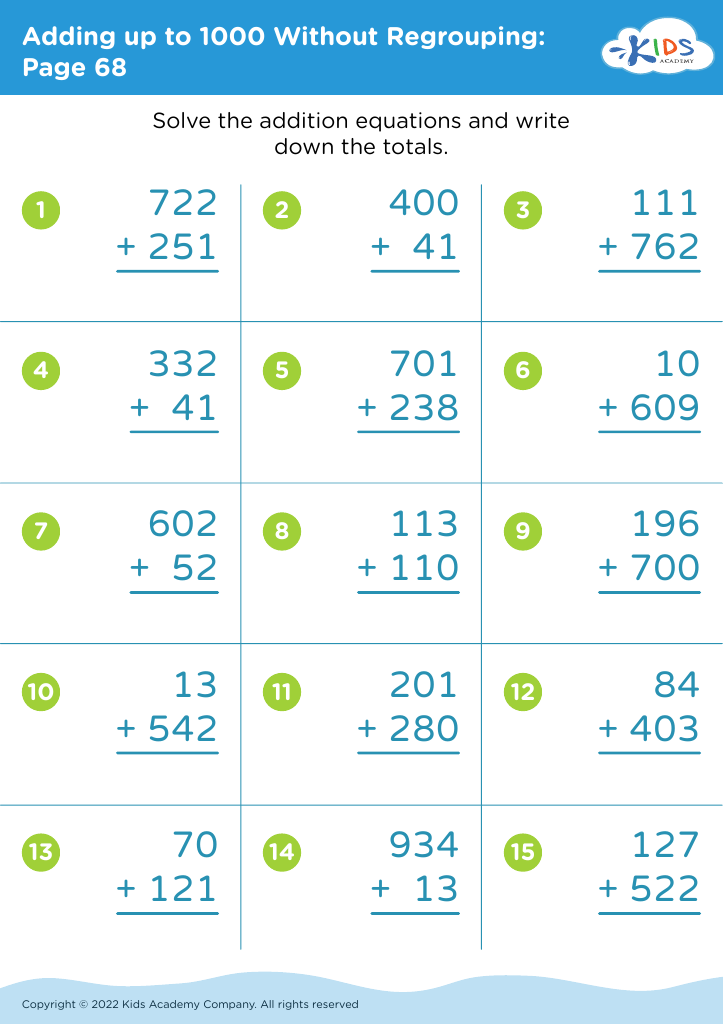
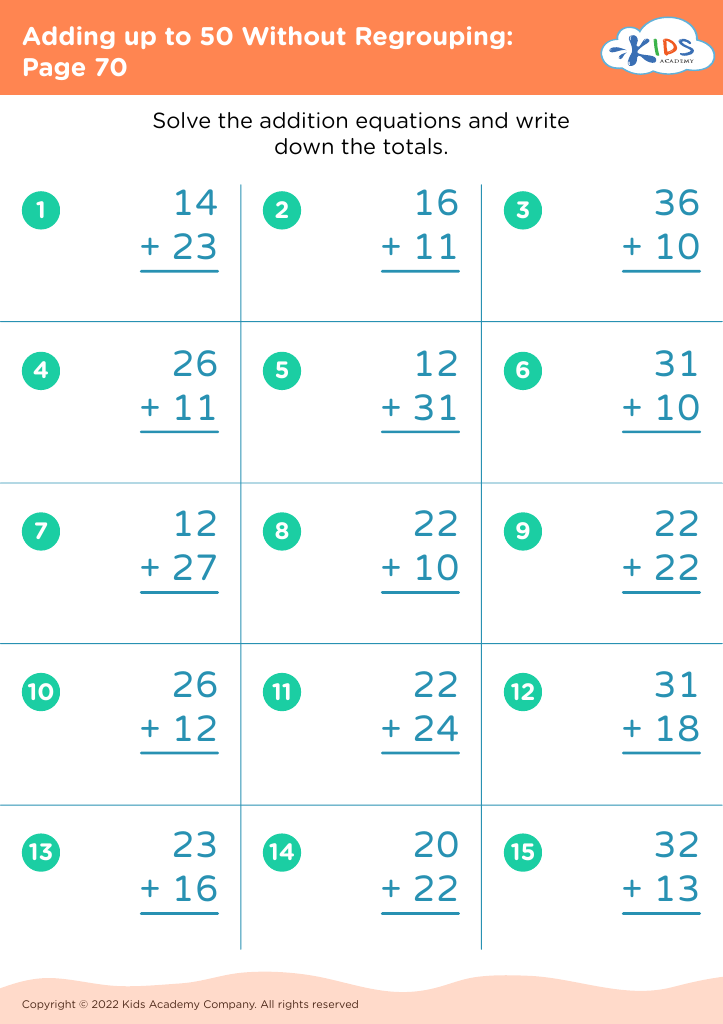








Understanding number sequences and addition is foundational for children aged 6-7, as it lays the groundwork for their mathematical development. At this age, children start transitioning from learning basic concepts to applying them in problem-solving and critical thinking scenarios. Number sequences help children recognize patterns and relationships between numbers, which is essential for their cognitive growth. By understanding how numbers relate to one another, children build their ability to predict outcomes and solve problems effectively.
Moreover, addition is a fundamental skill necessary for everyday life; it forms the basis of further mathematical operations like subtraction, multiplication, and division. Mastery of addition not only enhances a child's confidence but also fosters a positive attitude toward math as they experience success.
Furthermore, when parents or teachers emphasize these concepts, they cultivate a supportive environment that promotes exploration and curiosity in learning. Encouraging children to engage with numbers in various contexts, such as games or practical activities, makes these lessons enjoyable and memorable. By prioritizing understanding of number sequences and addition, caregivers prepare children for future academic success, ensuring they become proficient problem solvers and critical thinkers in mathematics.








