Understanding sequencing Addition Worksheets for Ages 6-7
7 filtered results
-
From - To
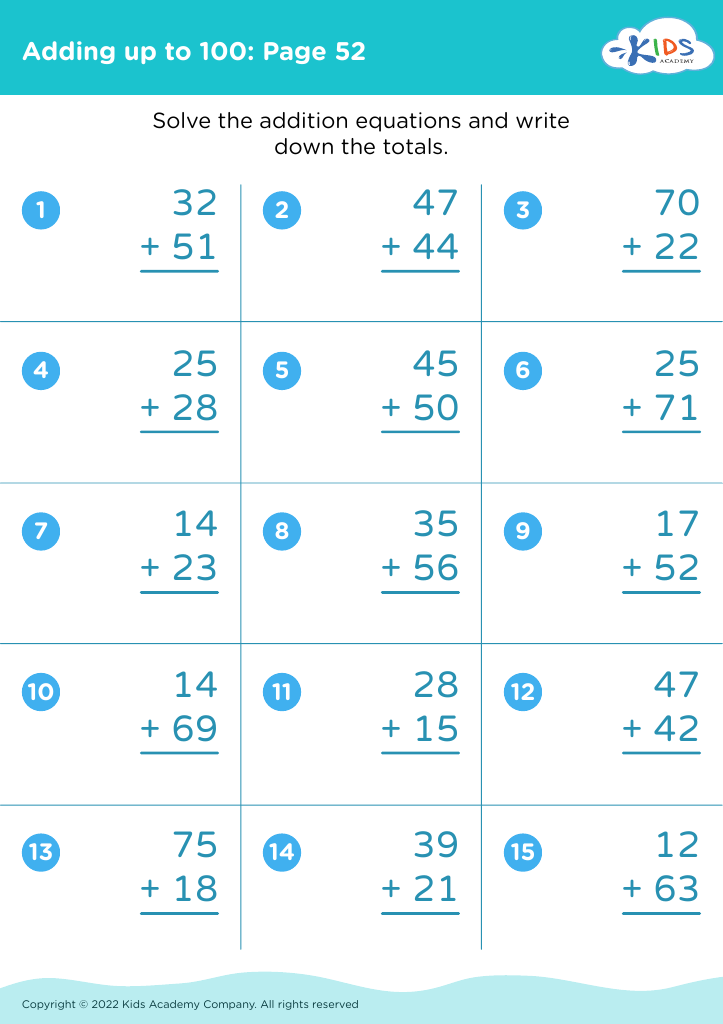
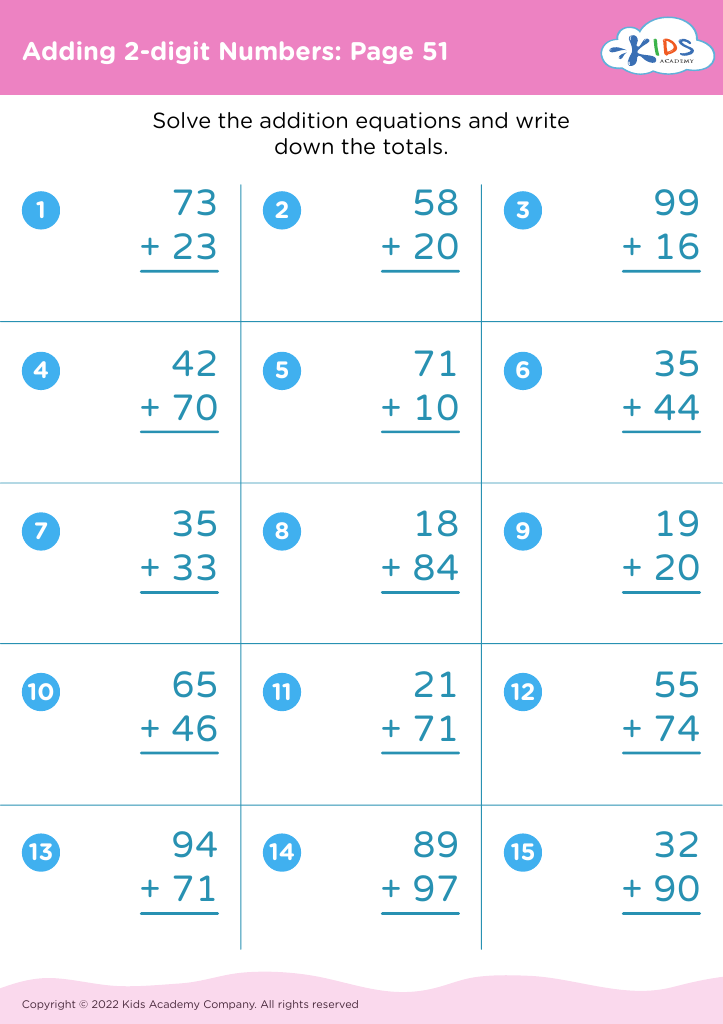
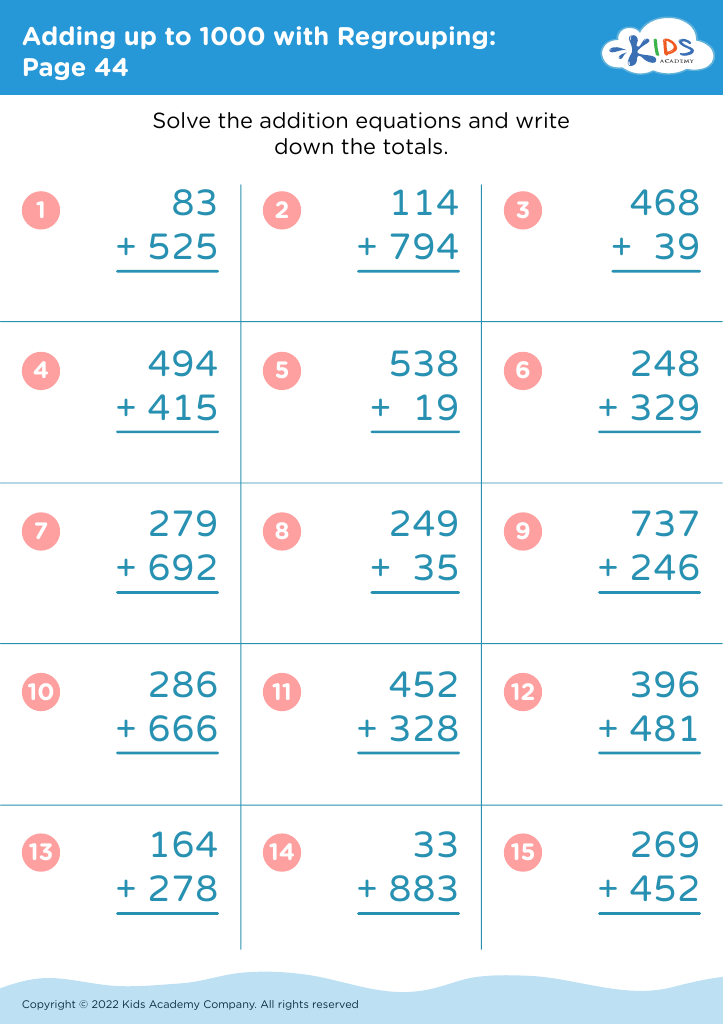
Welcome to our "Understanding Sequencing Addition Worksheets for Ages 6-7"! This resource is designed to enhance young learners' grasp of addition through engaging, age-appropriate activities. Sequencing is an essential math skill that helps children learn the order of operations and the relationship between numbers. Our worksheets offer a variety of exercises that challenge kids to solve addition problems while reinforcing their understanding of sequences. Perfect for at-home practice or classroom settings, these worksheets are crafted to make learning fun and interactive, ensuring that your child develops a solid foundation in math. Start exploring the world of sequencing today!
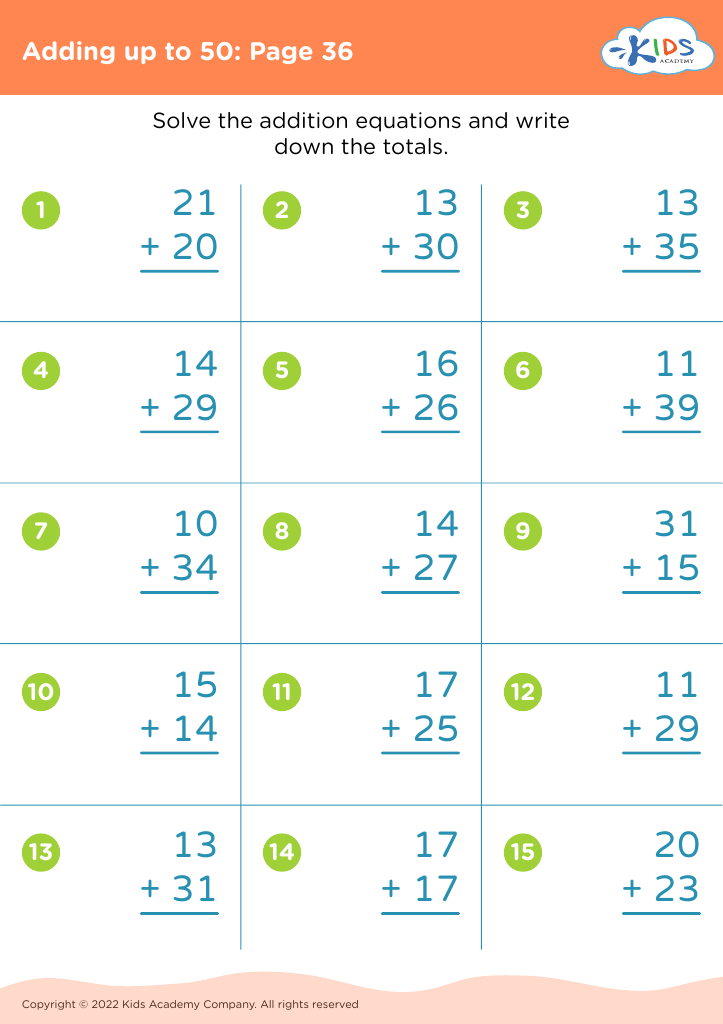
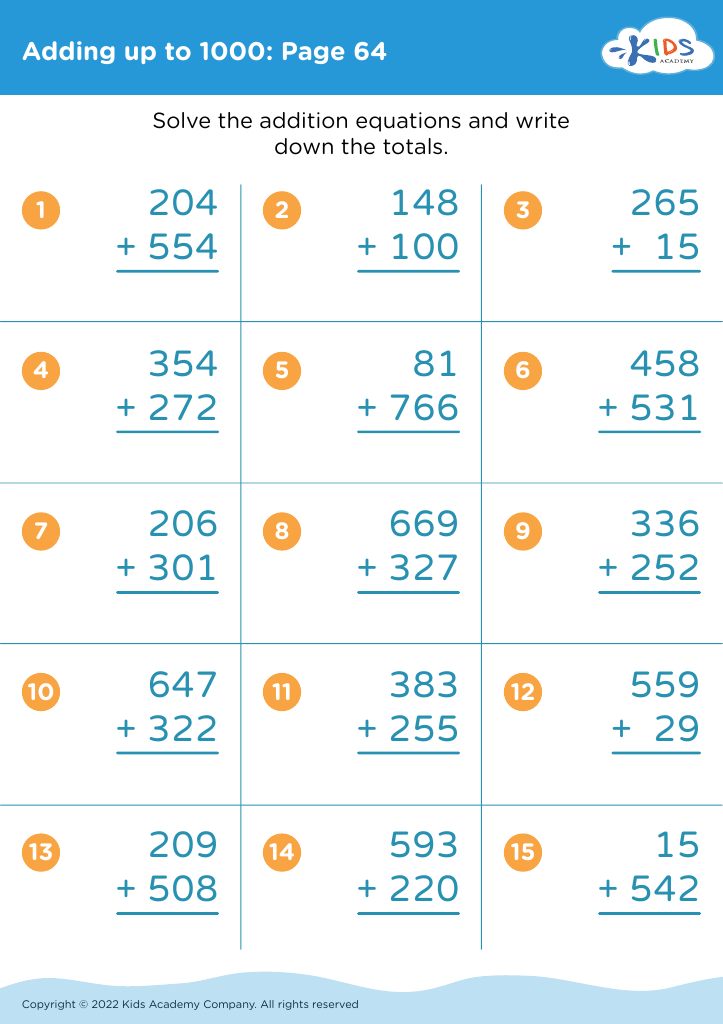
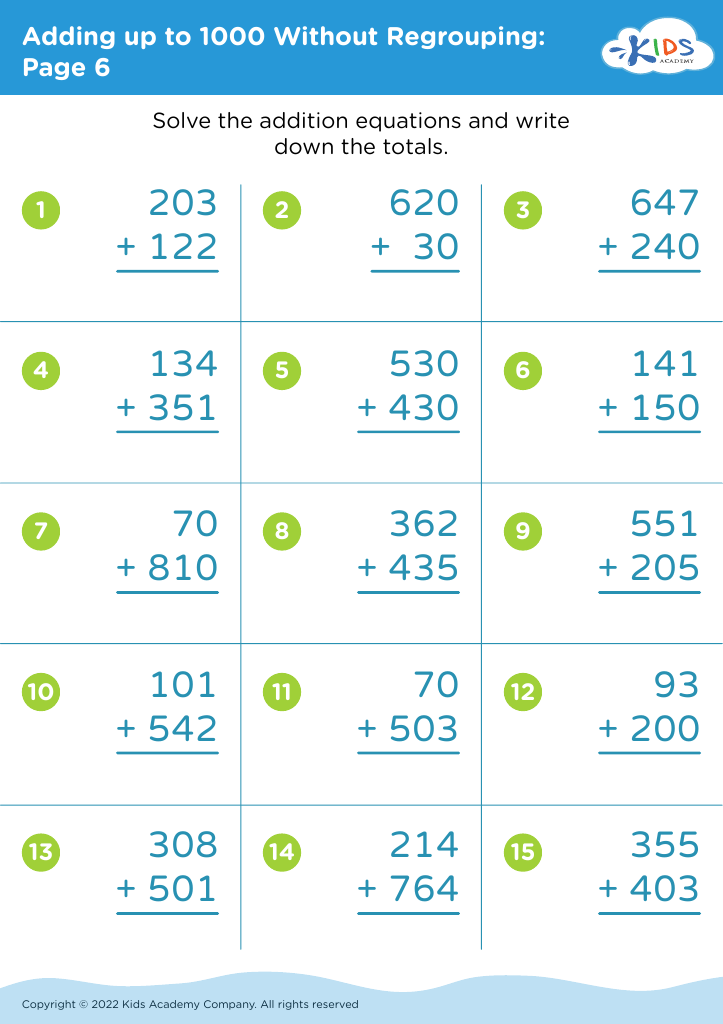
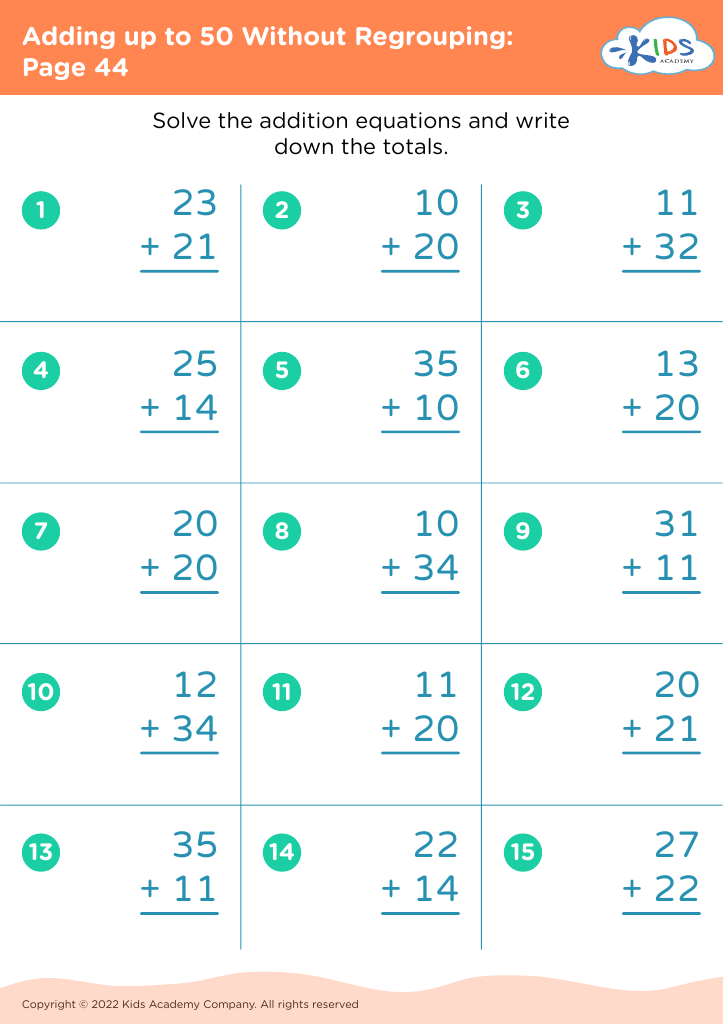








Understanding sequencing in addition is crucial for children aged 6-7 because it lays the foundation for their mathematical development. At this age, children begin to grasp the concept of numbers and basic operations, making it an optimal time to teach them how to sequence addition effectively.
Sequencing helps children recognize the order in which numbers are added, promoting strong problem-solving skills. For instance, when they learn to add numbers in a structured way, they can visualize more complex problems, laying the groundwork for future mathematical concepts, such as subtraction and even multiplication and division.
Moreover, mastering sequencing in addition fosters cognitive development. It nurtures critical thinking, enhances memory skills, and builds confidence in tackling math problems. Children benefit from seeing how changes in the sequence can affect outcomes (e.g., understanding the commutative property), which is essential for algebraic thinking.
For parents and teachers, encouraging this understanding means creating a supportive environment where children feel comfortable exploring numbers, leading to greater engagement and success in math. As math forms a significant part of the curriculum, strong addition sequencing skills ultimately help prepare students for more advanced math and problem-solving tasks in their educational journey.








