Understanding time Addition Worksheets for Ages 6-7
6 filtered results
-
From - To
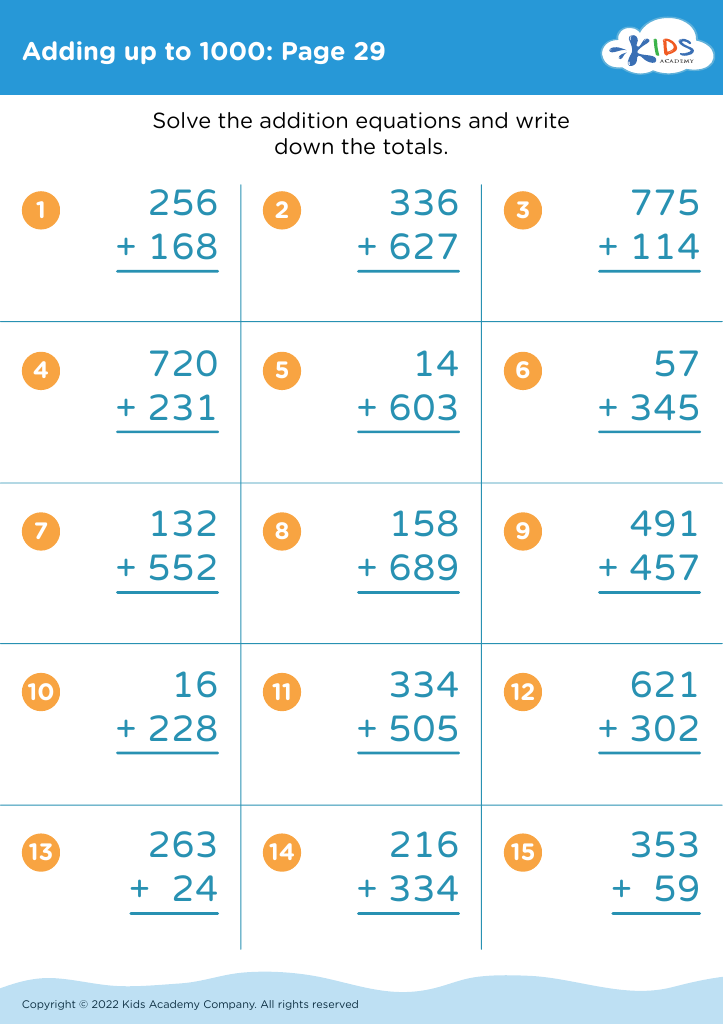
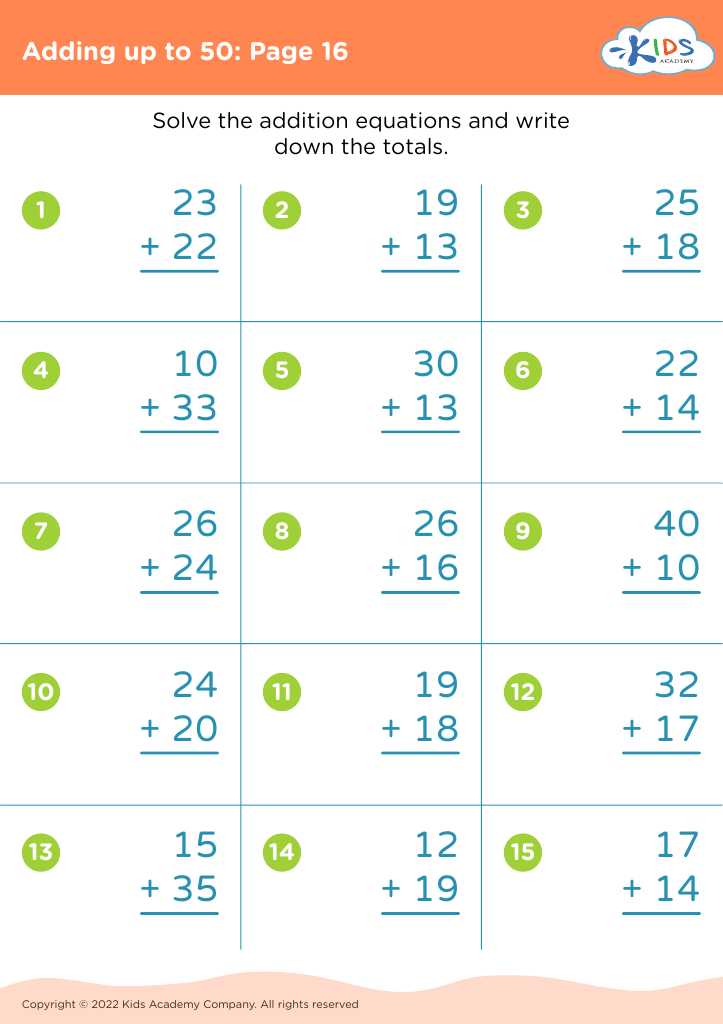
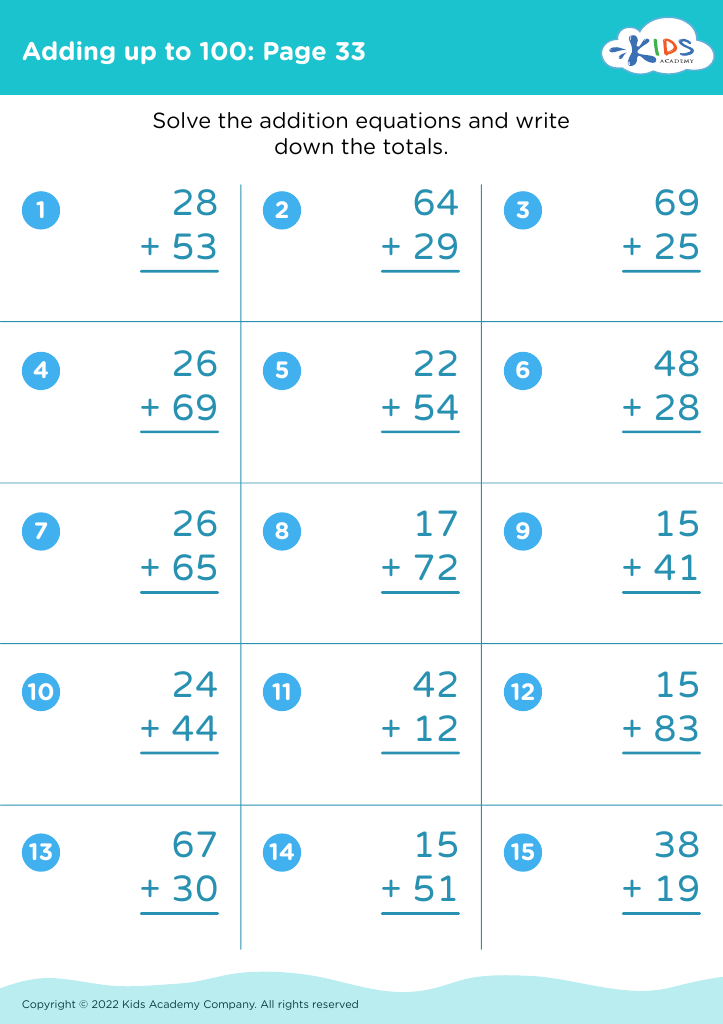
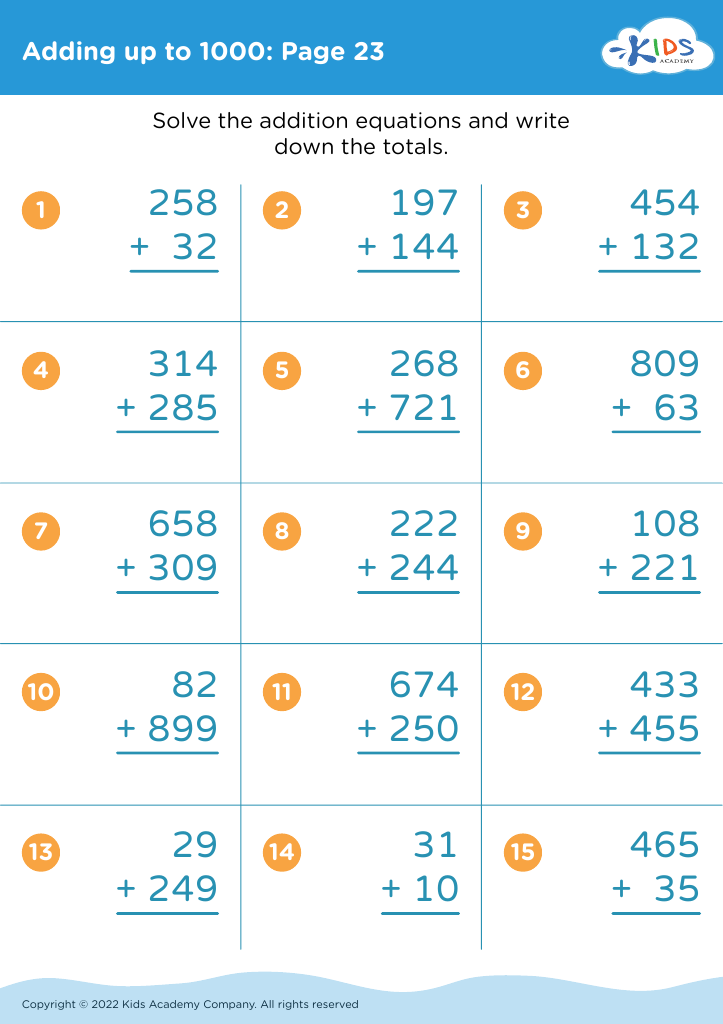
Enhance your child's math skills with our "Understanding Time Addition Worksheets" designed specifically for ages 6-7. These engaging worksheets help young learners grasp the concept of time while practicing addition in a fun and interactive way. Children will solve problems involving clocks, time intervals, and related scenarios, reinforcing their understanding of both time and basic math operations. With vibrant visuals and age-appropriate challenges, these worksheets promote active learning and build a solid foundation in both time-telling and addition. Perfect for classroom use or home learning, our resources make mastering time and math an enjoyable experience for your little ones!
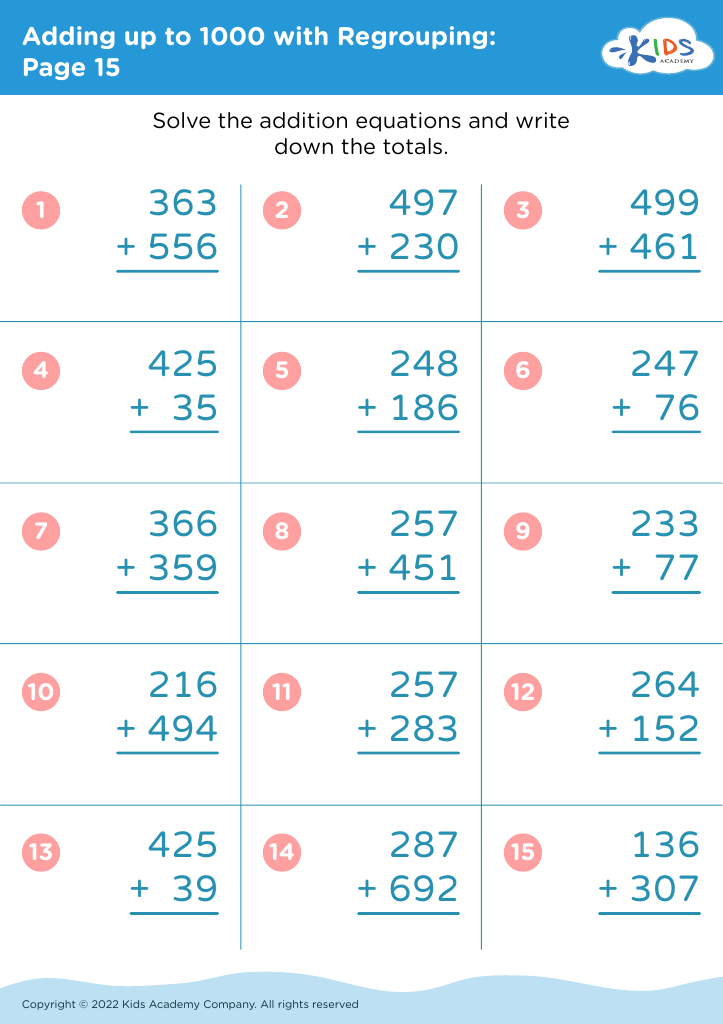
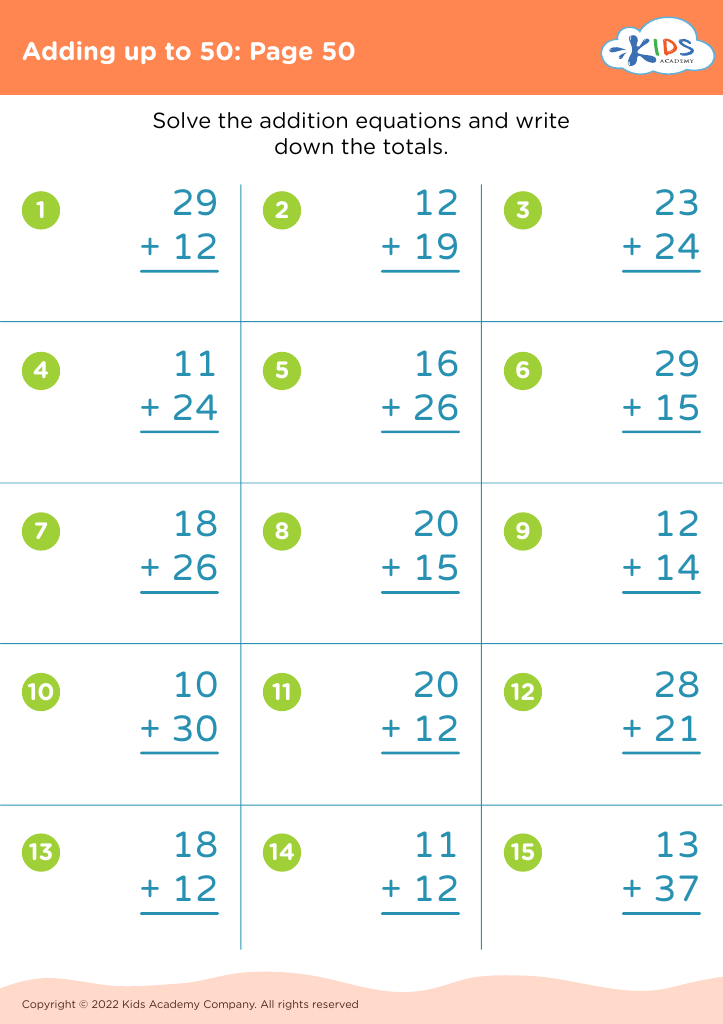








Understanding time addition is crucial for children aged 6-7 as it lays the foundation for essential math skills and daily life management. At this age, children are developing their cognitive abilities and learning to comprehend basic mathematical concepts. Time, as a measurable entity, introduces them to the idea of addition in a practical and relatable context. By learning how to add hours and minutes, children not only enhance their numerical skills but also become more aware of schedules, routines, and time management.
Moreover, mastering time addition helps children boost their problem-solving and critical-thinking abilities. It encourages them to think logically about how time values relate to one another, fostering a deeper understanding of mathematics as a whole. This skill also supports interpersonal development; it helps children coordinate playdates or group activities, thus enhancing social interactions.
For parents and teachers, educating children about time addition equips them with the tools necessary for academic success and life skills. Children who grasp this concept become more independent and capable of managing their daily routines, ultimately fostering a sense of responsibility. Therefore, prioritizing understanding of time addition is beneficial, setting the stage for lifelong learning and positive habits.








