Visual interpretation Addition Worksheets for Ages 6-7
4 filtered results
-
From - To
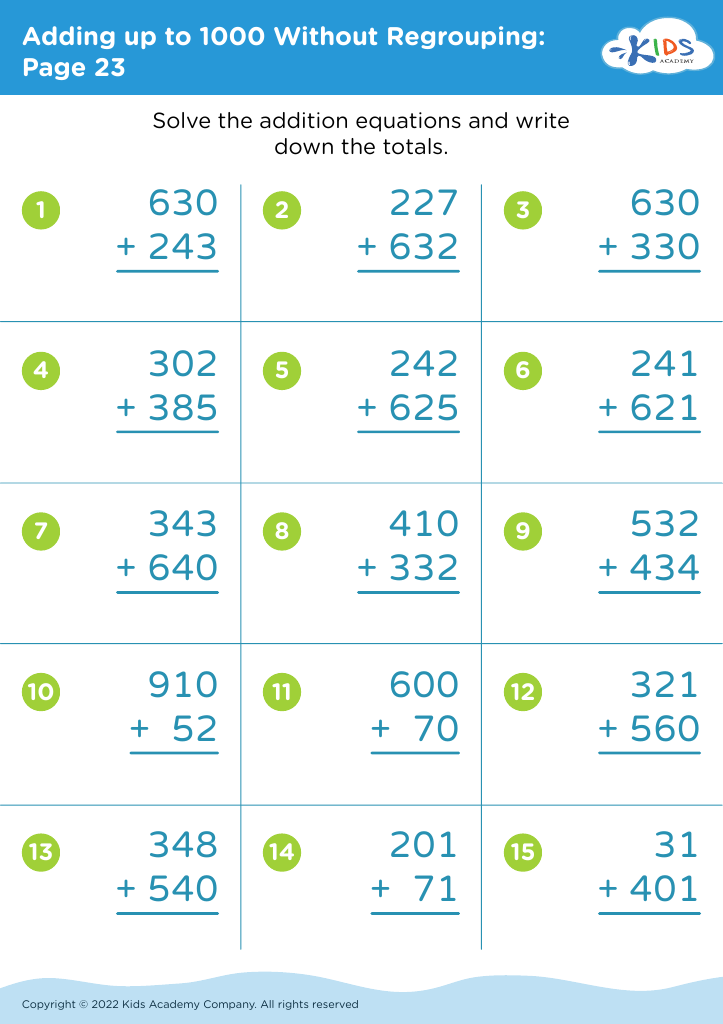
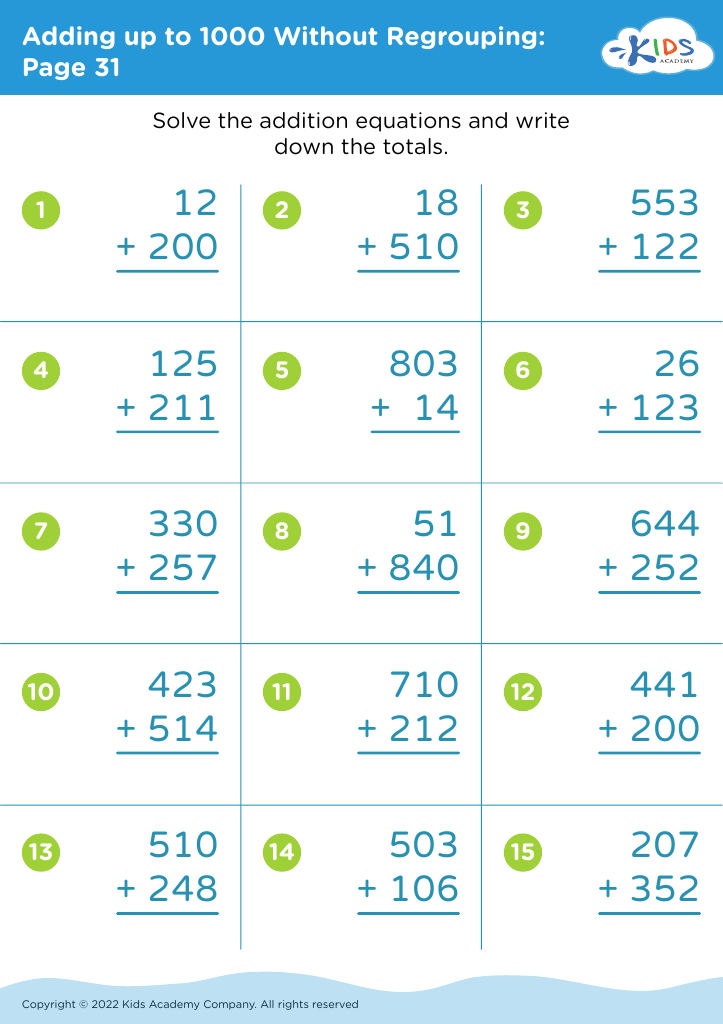
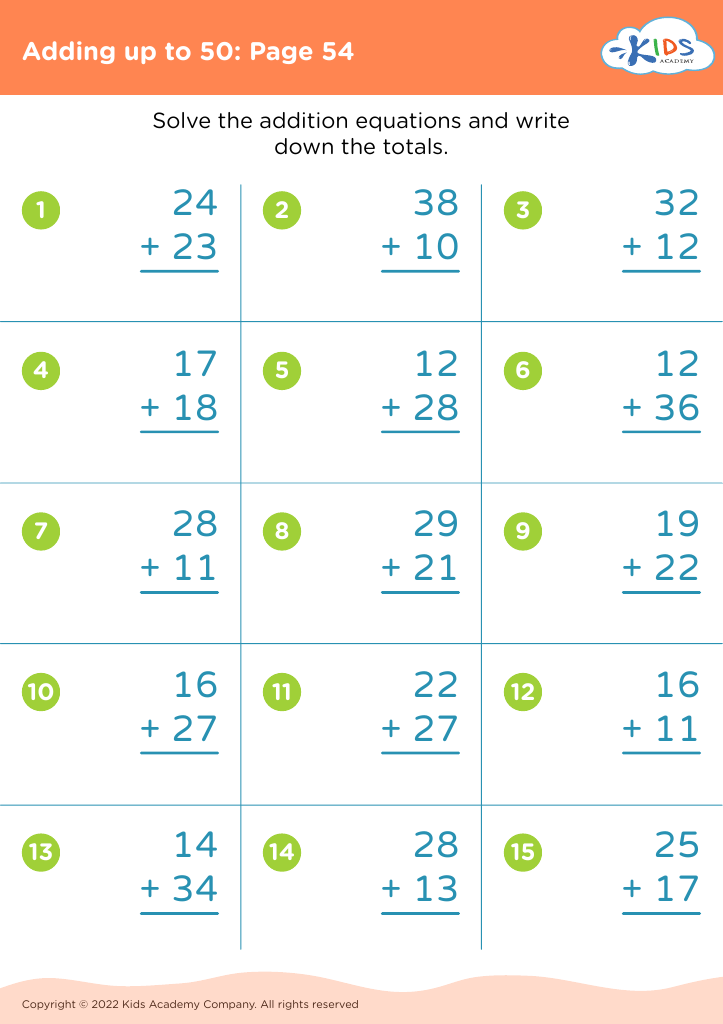
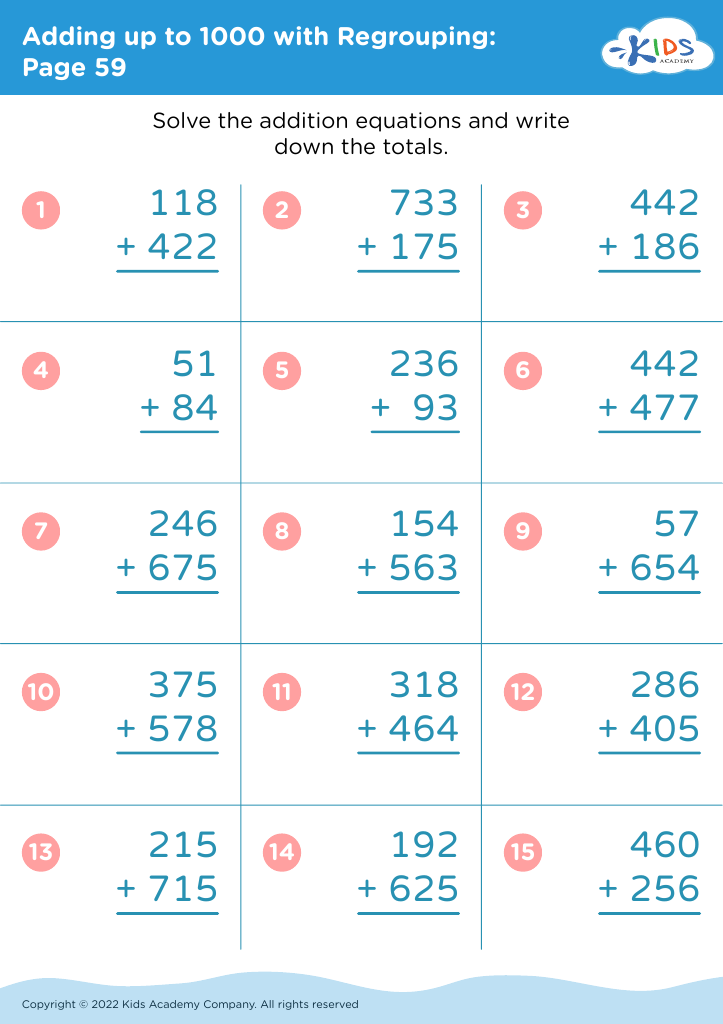
Discover engaging and interactive Visual Interpretation Addition Worksheets for Ages 6-7 at Kids Academy! Perfectly designed to reinforce basic math skills, these vibrant worksheets combine colorful visuals with arithmetic exercises to help young learners grasp addition concepts with ease. Ideal for both classroom and at-home learning, our worksheets make math fun and accessible for first-grade students. Each worksheet encourages critical thinking and problem-solving through pictorial representations and story-based questions, fostering a deeper understanding of addition. Boost your child's confidence and proficiency in math with our expertly crafted resources that increase academic success while keeping learning enjoyable.







.jpg)
Visual interpretation of addition for children aged 6-7 is vital because it lays the foundation for strong mathematical understanding. At this young age, kids are typically concrete thinkers who grasp concepts better through visual representation rather than abstract numbers. Using visual aids such as counters, number lines, or pictorial representations helps them see the relationship between numbers, fostering numerical fluency and sense-making.
When children visualize addition, they gain a better grasp of operations, which promotes confidence and reduces anxiety around math. Visual learning also supports differentiated learning styles, catering to those who are more visually or kinesthetically inclined. It allows children to physically manipulate objects, making abstract ideas concrete and enhancing engagement and retention.
Moreover, these skills are not limited to math alone. Developing the ability to interpret and use visual information is critical in all areas of learning and everyday problem-solving. Resources like ten frames, dot cards, and simple story problems visually connected to addition can also support cognitive development by encouraging logical reasoning and spatial awareness.
Ultimately, by integrating visual interpretation into learning addition, parents and teachers foster a more comprehensive, intuitive, and enjoyable approach to mathematics. This robust early foundation can lead to improved mathematical performance and a more positive attitude towards math as children progress through their educational journey.








