Visual Learning Addition Worksheets for Ages 6-7
3 filtered results
-
From - To
Discover our engaging Visual Learning Addition Worksheets designed for children aged 6-7. These interactive resources are tailored to enhance early math skills by using colorful visuals and enjoyable exercises. Each worksheet helps young learners grasp addition concepts through visual aids, making math both fun and accessible. With a variety of creative problems, children will develop confidence and proficiency in their addition skills. Parents and educators can easily incorporate these worksheets into daily learning routines, promoting a positive academic experience. Begin your child’s math journey today with our visual learning addition worksheets and watch their skills flourish!
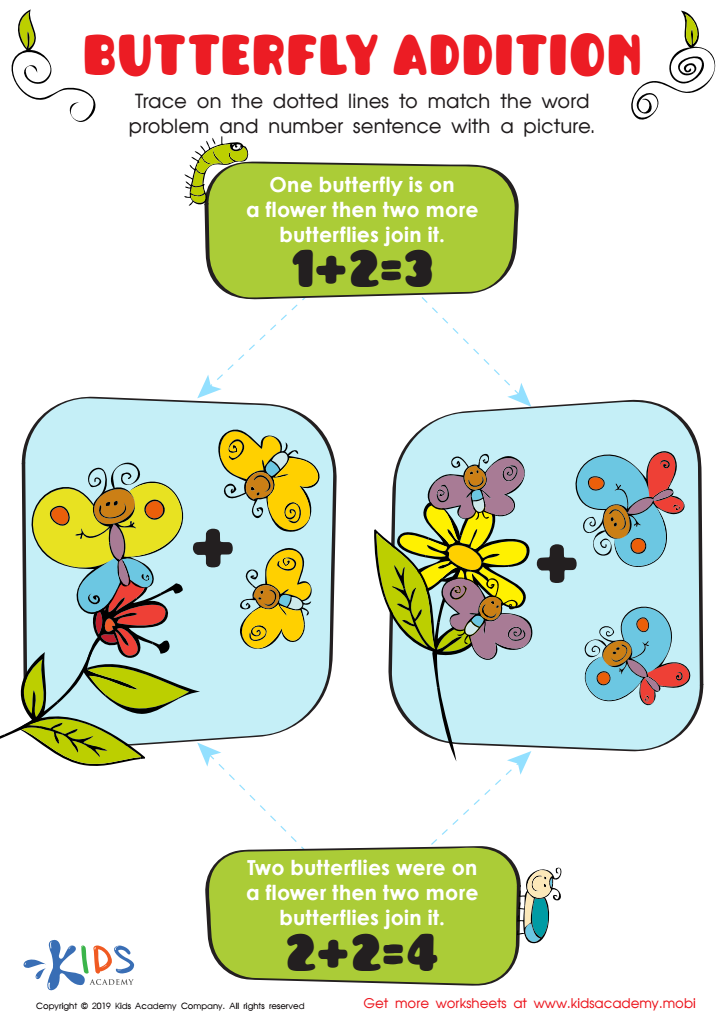
Butterfly Addition Worksheet
 Assign to My Students
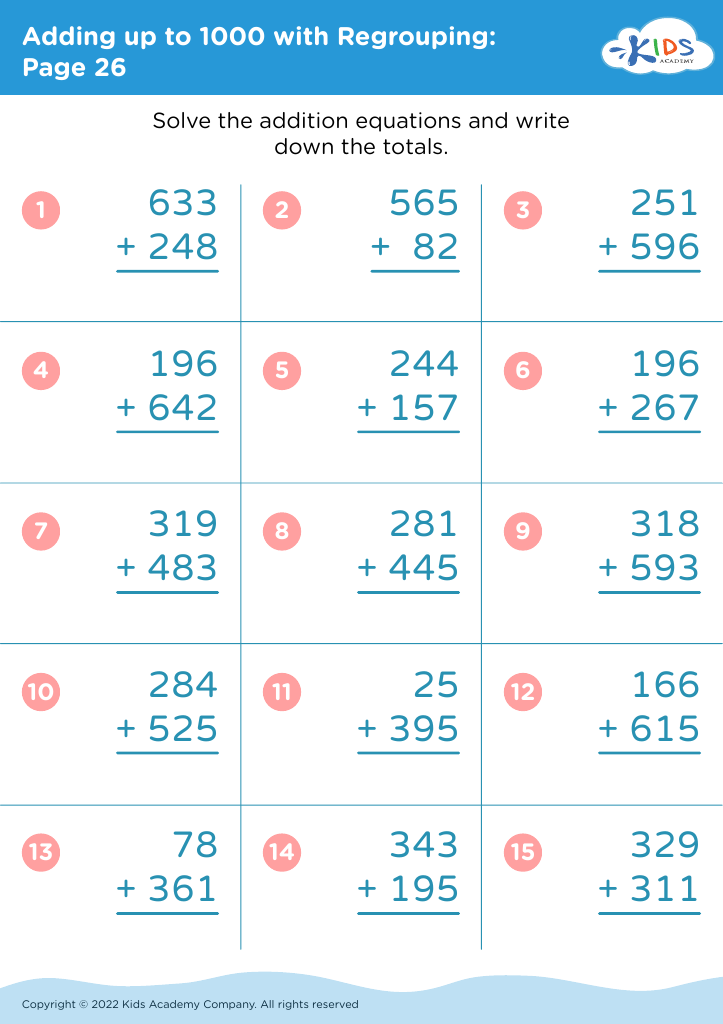
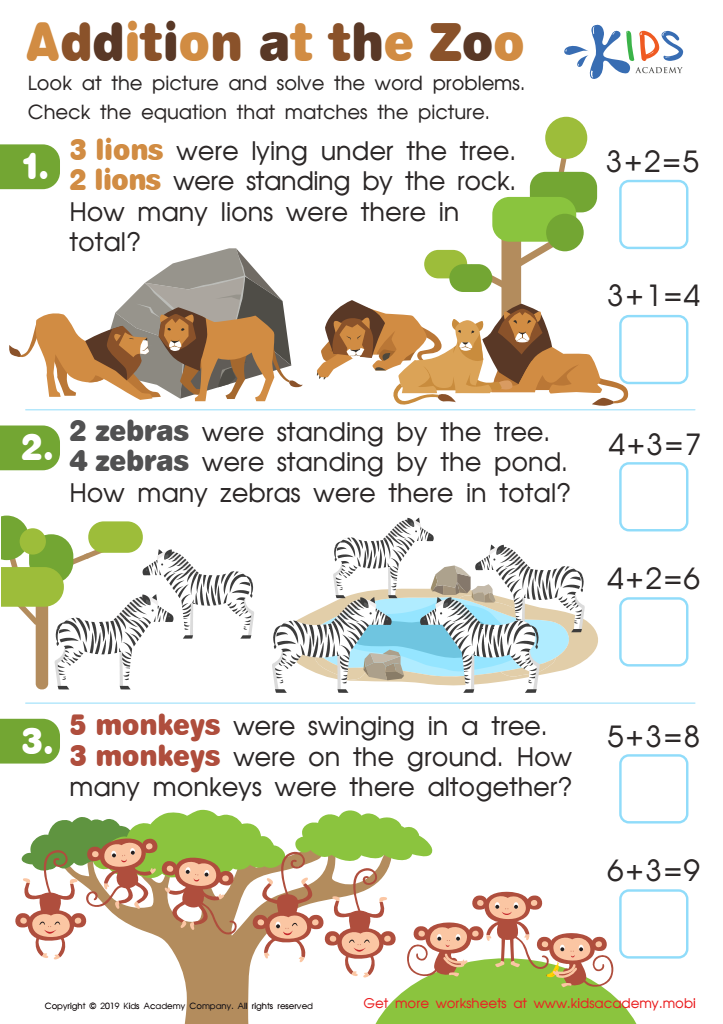
Addition at the Zoo Worksheet




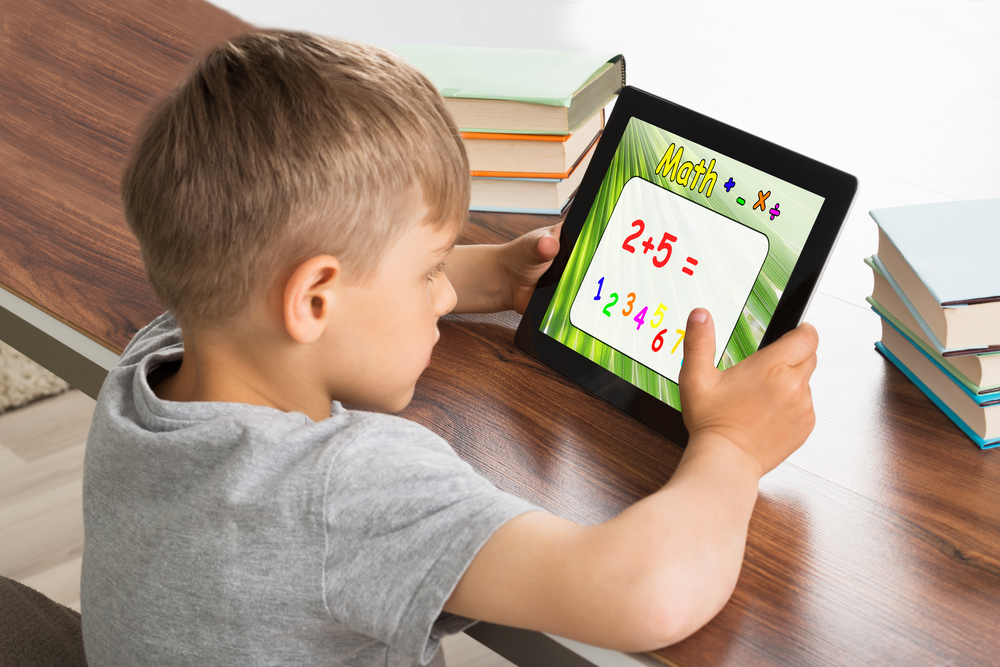



Visual Learning is essential for children aged 6-7, as this stage is crucial for building foundational math skills, particularly in addition. At this age, children often benefit from concrete representations of abstract concepts. Visual learning allows them to engage multiple senses, enhancing their comprehension and retention.
Parents and teachers should care because visual aids—such as manipulatives, diagrams, and illustrations—help make abstract mathematical principles tangible. For instance, using objects like counters or stickers enables children to physically see and manipulate quantities, helping them grasp the concept of addition as combining groups. This hands-on approach can make learning more engaging and enjoyable, fostering a positive attitude toward math.
Moreover, incorporating visual techniques accommodates diverse learning styles, as some children may struggle with traditional instruction. By integrating visual learning, educators can appeal to visual and kinesthetic learners, ensuring that all students have opportunities to succeed. Facilitating a solid understanding of addition through visual learning paves the way for future mathematical concepts, contributing to overall academic success. In essence, investing in visual learning not only enhances immediate understanding but also instills a lifelong love for learning in children.








