Visual representation comprehension Addition Worksheets for Ages 6-7
5 filtered results
-
From - To
Enhance your child's math skills with our Visual Representation Comprehension Addition Worksheets designed specifically for ages 6-7! These engaging, printable worksheets help young learners effortlessly understand addition through colorful and interactive visual aids. Our expertly crafted material supports cognitive development by turning abstract concepts into tangible examples, making addition fun and accessible. Perfect for both classroom use and home practice, these resources foster a deeper understanding of math basics while boosting confidence in problem-solving. Give your child the tools they need to excel in math with our easy-to-use, effective learning aids. Download today and watch their skills soar!
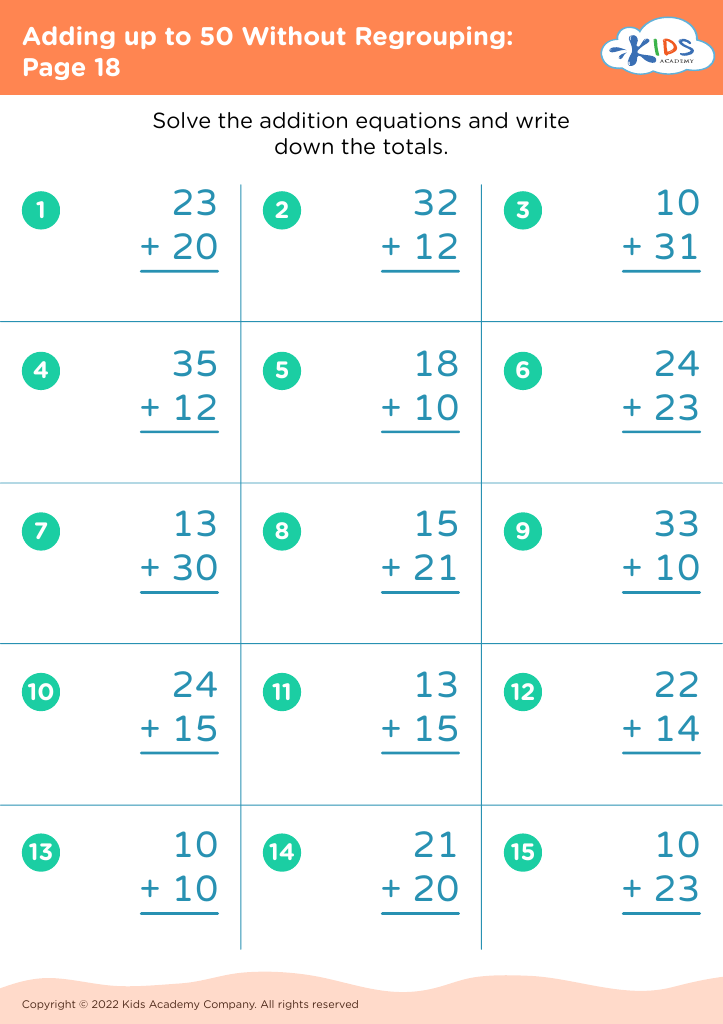
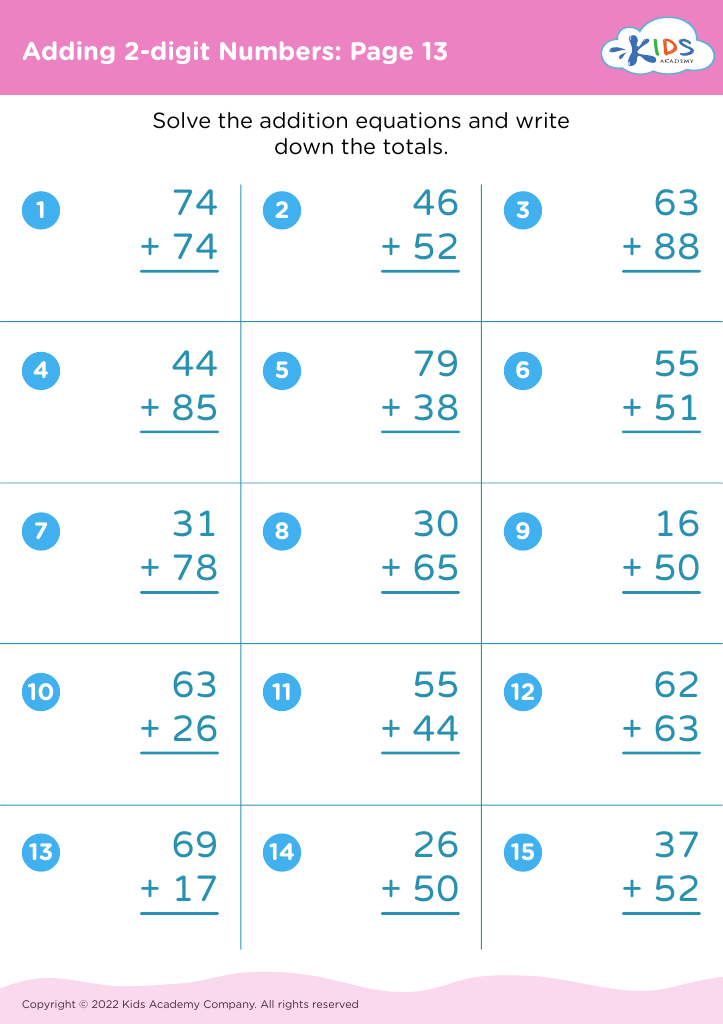
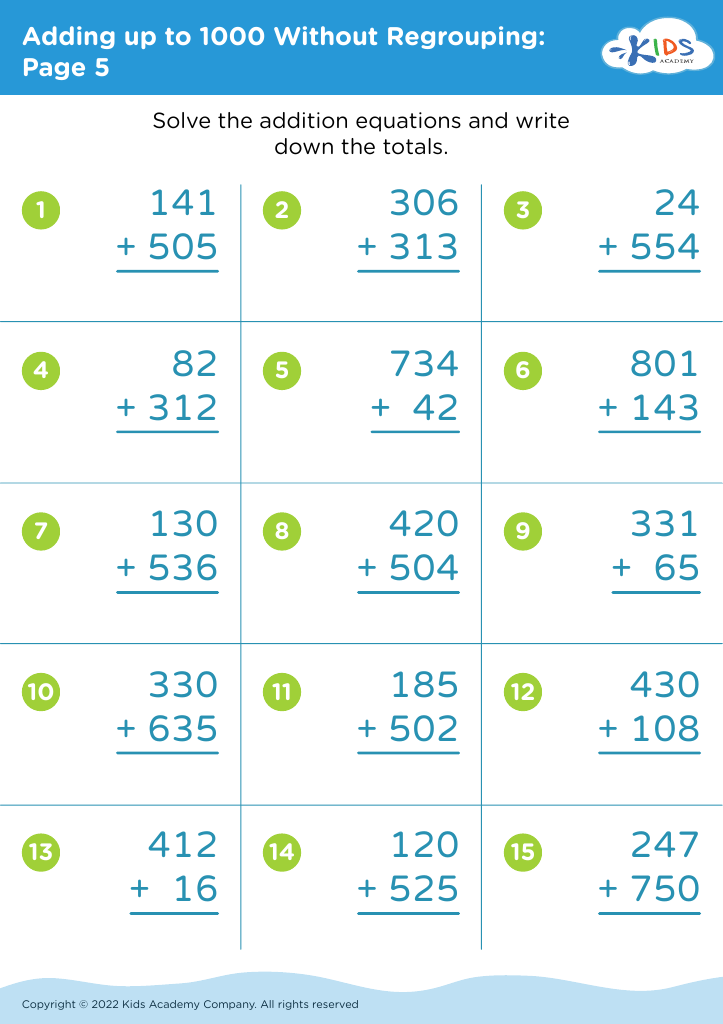
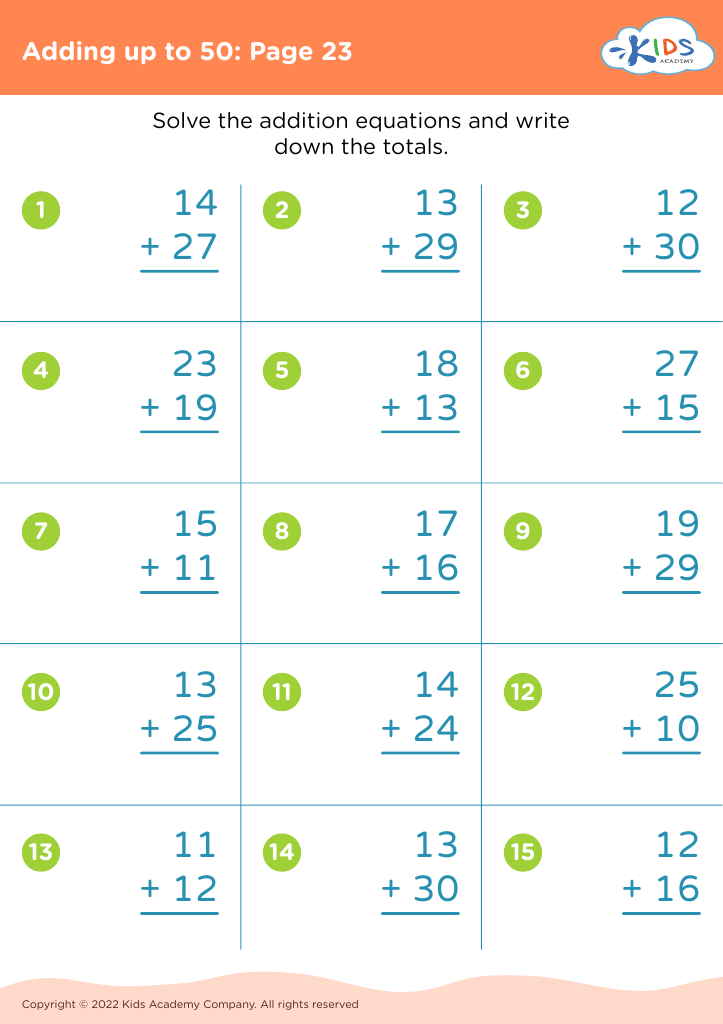
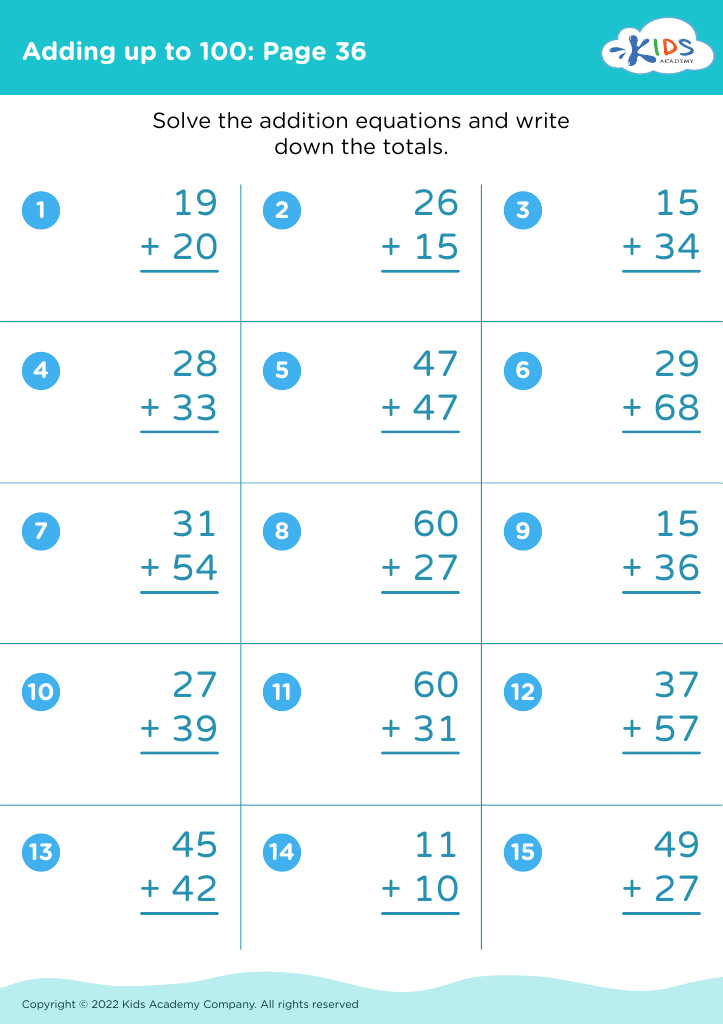








Visual representation comprehension in addition for ages 6-7 is crucial for several reasons. At this developmental stage, many children are visual learners who comprehend concepts better when presented with images, diagrams, or physical objects. Visual tools such as number lines, counting blocks, or picture addition can make abstract mathematical ideas more concrete, tangible, and therefore easier to understand.
By incorporating visual representations, parents and teachers can enhance cognitive engagement and help children grasp the concept of adding numbers by 'seeing' the process. For instance, showing three apples added to two apples can visually illustrate why 3 + 2 equals 5. This paves the way for more complicated mathematical concepts, building a strong foundational understanding that is vital for future learning.
Moreover, visual aids can cater to different learning styles and needs, including those who struggle with traditional numerical approaches or face difficulties like Dyscalculia. These tools can foster inclusivity and lessen math anxiety by providing alternative ways to explore and enjoy math.
Understanding visual representations in addition also supports other core skills such as spatial reasoning, pattern recognition, and logical thinking. Each skill reinforces various academic disciplines, making learning a more holistic experience. Therefore, parents and teachers should prioritize visual aids to make math more accessible, intuitive, and enjoyable for young learners.








