Color recognition Arrays Worksheets for Ages 6-7
3 filtered results
-
From - To
Discover our engaging Color Recognition Arrays Worksheets designed specifically for children aged 6-7! These fun, interactive activities will help young learners identify colors and understand array concepts simultaneously. By using vibrant visuals, our worksheets encourage creativity while enhancing essential cognitive skills. Each worksheet features various exercises that challenge kids to identify, match, and sort colors effectively. These resources not only promote color recognition but also develop fine motor skills through hands-on learning experiences. Perfect for home or classroom settings, our Color Recognition Arrays Worksheets make learning exciting and enjoyable! Empower your child's educational journey today with our captivating worksheets.
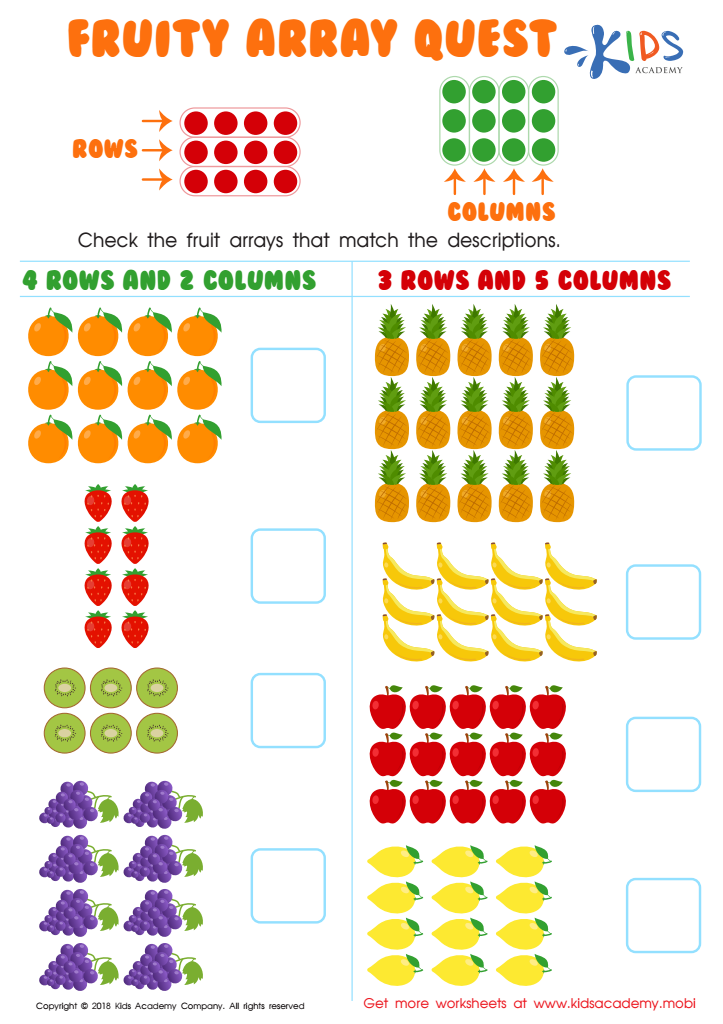
Fruity Array Quest Worksheet
 Assign to My Students
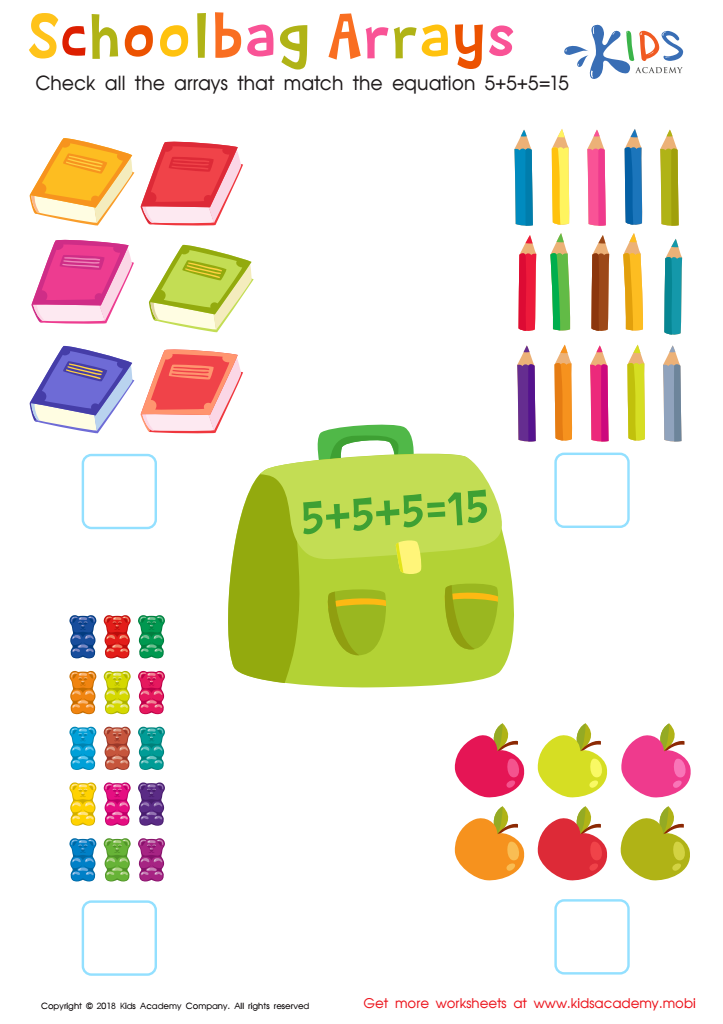
Schoolbag Arrays Worksheet
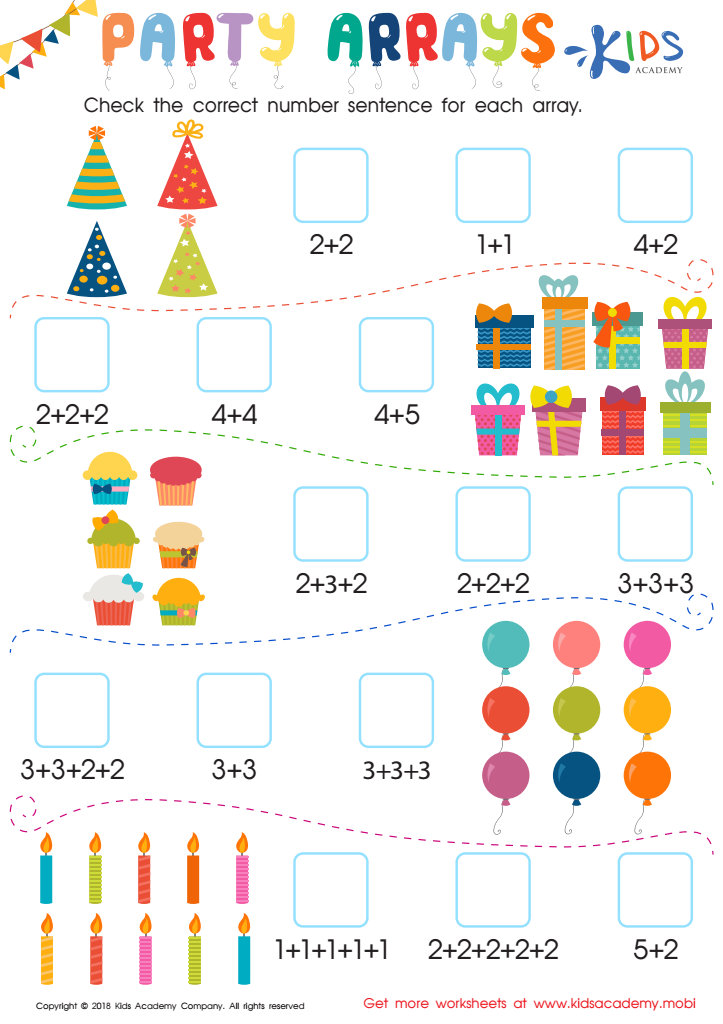
Party Arrays Worksheet








Color recognition is an essential foundational skill for children aged 6-7, influencing various areas of cognitive and social development. At this age, children become adept at categorizing and identifying colors, which aids in their ability to understand patterns and relationships. This skill lays the groundwork for more complex concepts in mathematics and science.
Using Color Recognition Arrays in educational settings captivates children’s attention and promotes engagement through interactive activities. These arrays provide visual stimulation and help enhance memory retention. When integrated into classroom activities or home lessons, they can transform learning into a colorful adventure, encouraging kids to participate actively and develop their observational skills.
Furthermore, recognizing colors is linked to expressive language development. When children learn to identify and verbalize colors, they expand their vocabulary and communication skills. This also fosters social interaction; as children play with others, they connect through discussing colors in games, art, or everyday objects.
Overall, Color Recognition Arrays offer a multi-faceted approach to early learning, appealing to various aspects of child development—cognitive, linguistic, and social. Parents and teachers should take advantage of this tool to cultivate a well-rounded educational experience for children as they prepare for future learning milestones.








