Number Recognition Arrays Worksheets for Ages 6-7
3 filtered results
-
From - To
Welcome to our engaging Number Recognition Arrays Worksheets for ages 6-7! Designed to help children develop early math skills, these worksheets introduce the concept of number recognition through colorful, fun arrays. Young learners will enjoy identifying and counting numbers in various array formats, enhancing their understanding of quantity and basic math concepts. Each worksheet encourages hands-on practice, promoting visual recognition and cognitive development. Perfect for home or classroom use, these resources provide vital support for children as they build confidence in their number skills. Explore our collection today and watch your child flourish in their mathematical journey!
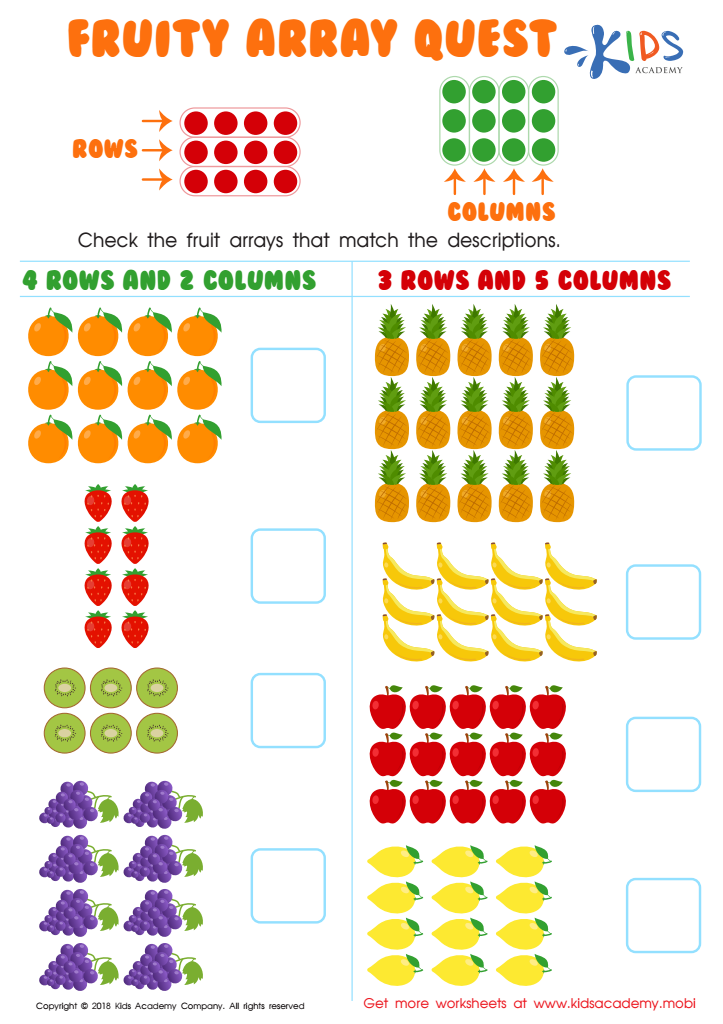
Fruity Array Quest Worksheet
 Assign to My Students
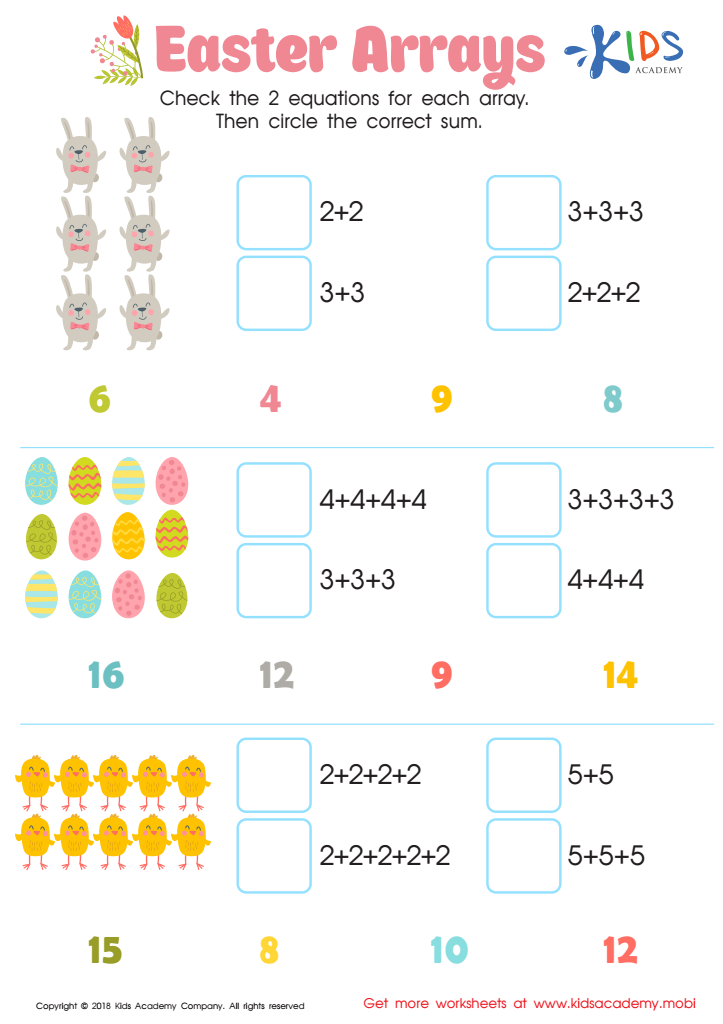
Easter Arrays Worksheet
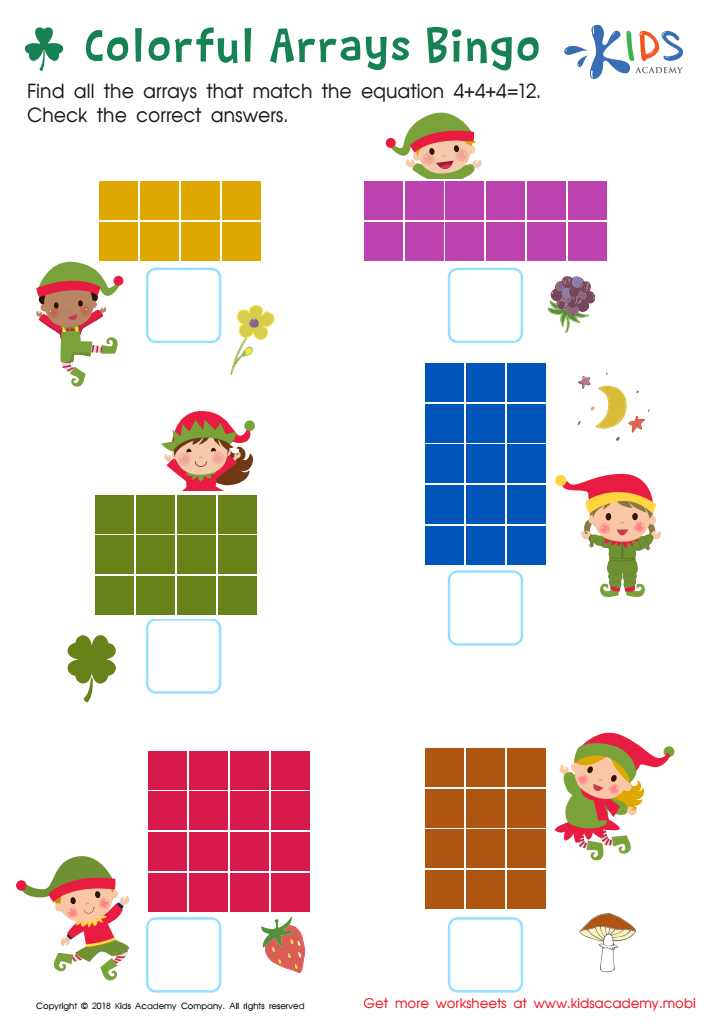
Colorful Arrays Bingo Worksheet



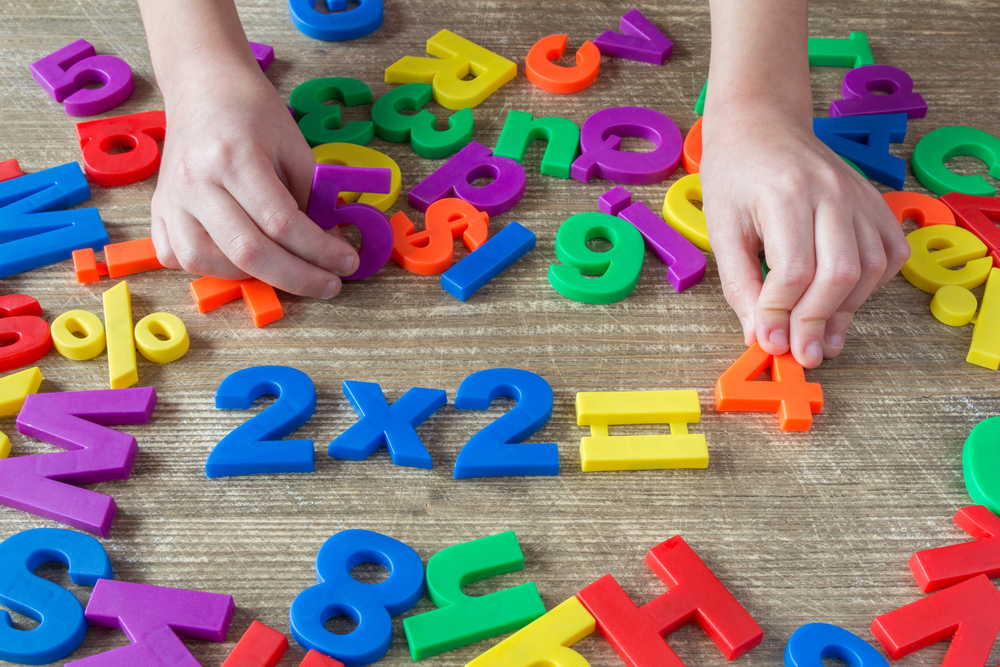




Number recognition arrays are essential tools for teaching students aged 6-7 foundational math skills. These visual representations help children recognize numbers and understand their relationships, laying the groundwork for more complex mathematical concepts. By using arrays, educators can illustrate how numbers can be grouped or arranged in systematic ways, enhancing students’ spatial awareness and visual learning abilities.
Parents and teachers should care about incorporating number recognition arrays into early education because they promote engagement and deeper comprehension. Arrays allow children to see patterns, making it easier to grasp concepts such as addition, subtraction, and multiplication. These skills are vital as they form the basis for more advanced mathematics they will encounter later on.
Moreover, number recognition through arrays bolsters confidence. When children successfully identify numbers and understand how they relate to one another, they develop a sense of achievement that encourages a positive attitude towards math. Engaging with arrays also caters to diverse learning styles; visual learners can thrive while kinesthetic learners can manipulate physical objects to explore numbers.
In summary, number recognition arrays are valuable educational tools that support cognitive development and foster a love for math in young learners, making them indispensable for parents and educators alike.








