
Developing analytical thinking Comparing Numbers Worksheets for Ages 6-7
3 filtered results
Difficulty Level
Grade
Age
-
From - To
Subject
Activity
Standards
Unlock your child's potential with our "Developing Analytical Thinking: Comparing Numbers Worksheets" designed for ages 6-7. These engaging worksheets foster critical thinking by encouraging kids to analyze, compare, and contrast numbers in fun and interactive ways. Tailored to align with developmental milestones, they help young learners grasp core mathematical concepts while enhancing their analytical skills. Each activity promotes logical reasoning, empowering children to make informed comparisons. Perfect for home or classroom use, our resources support an immersive learning experience that makes math enjoyable. Give your child the tools they need for successful problem-solving and numerical fluency today!
Favorites
With answer key
Interactive
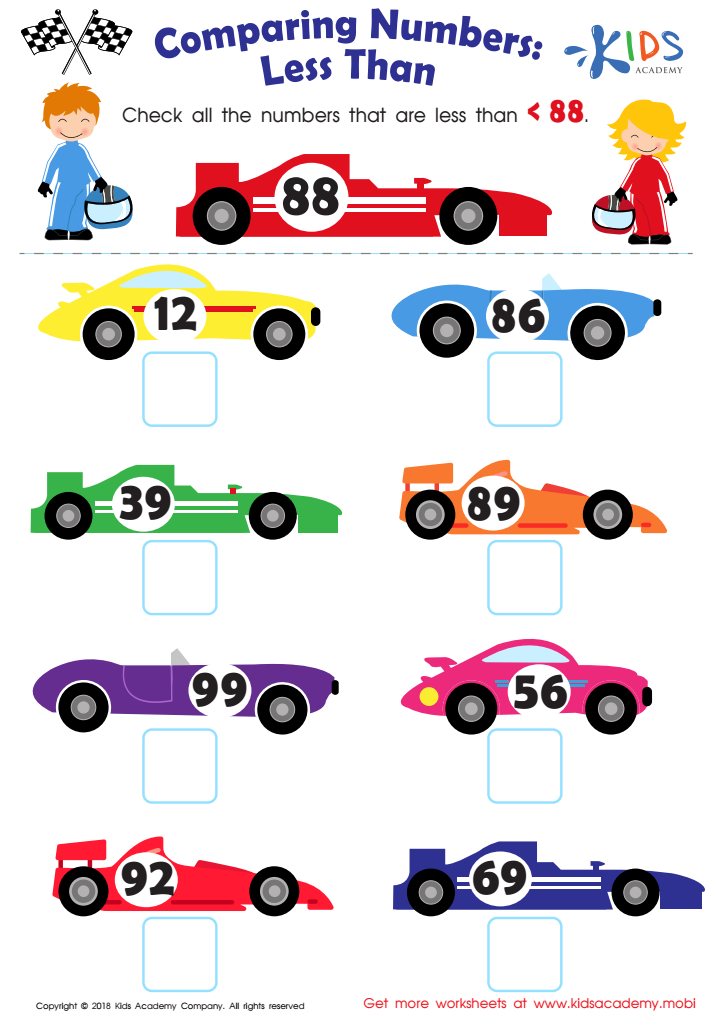
Less Than Worksheet
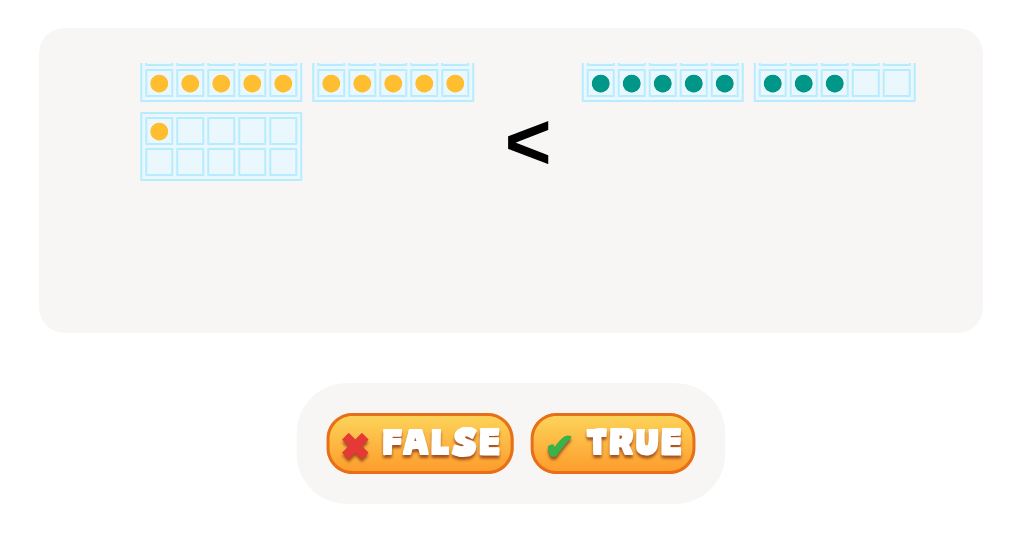
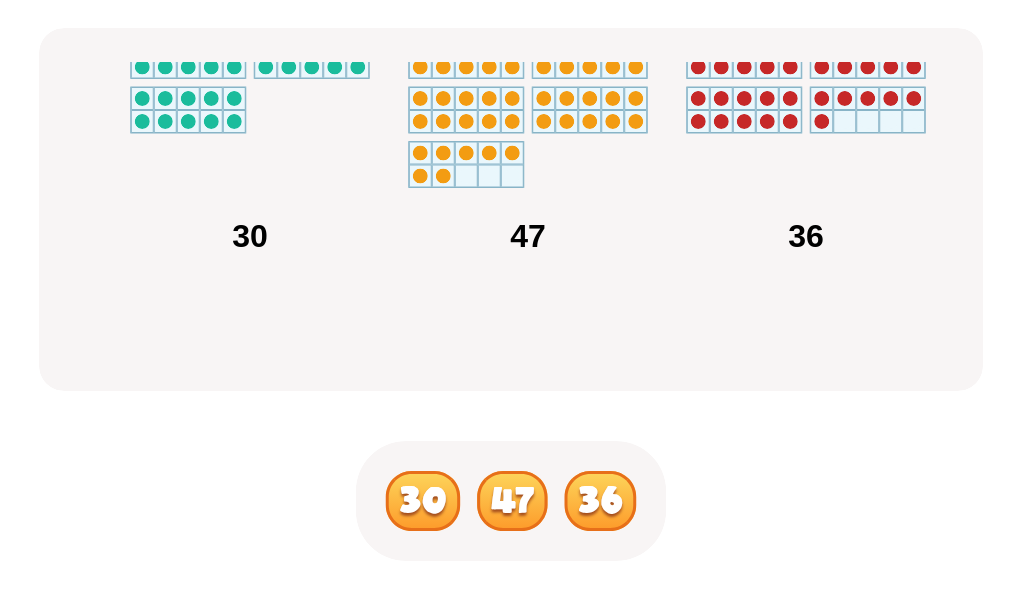
Compare numbers with your child using this fun worksheet! Paintings of sports cars add visuals to the task of counting up to 88. Make learning enjoyable with this colorful activity - your child will stay engaged and eager to learn more.
 Assign to My Students
Less Than Worksheet
Worksheet
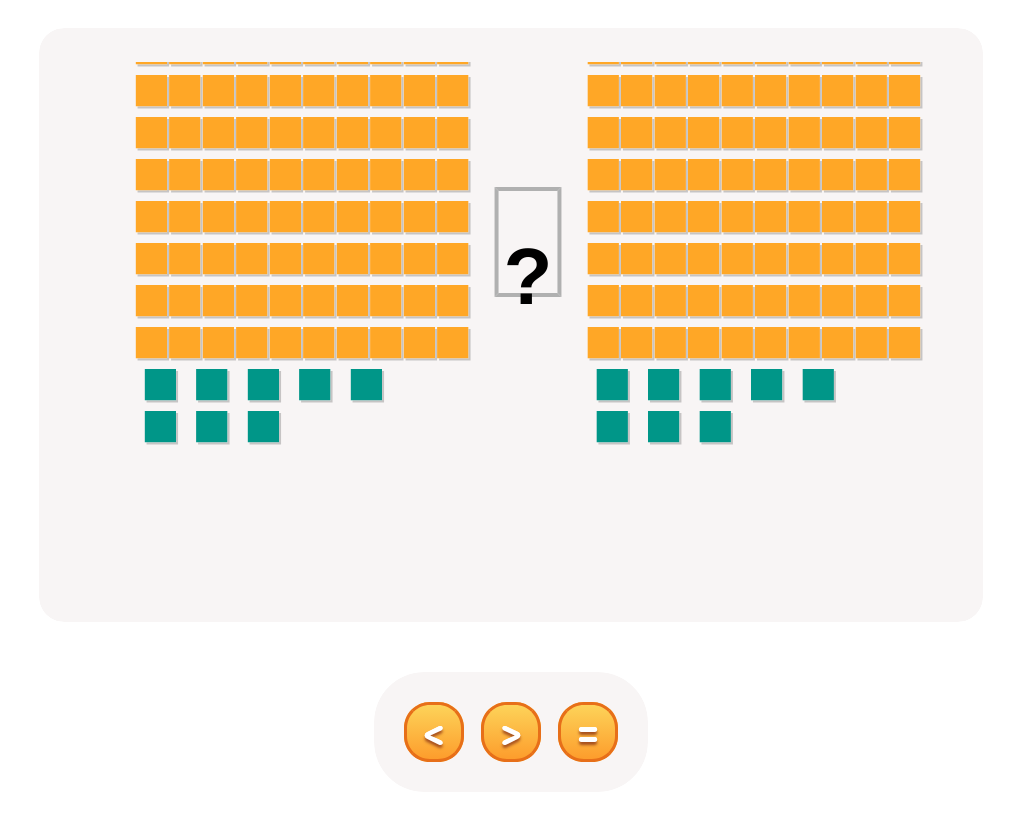

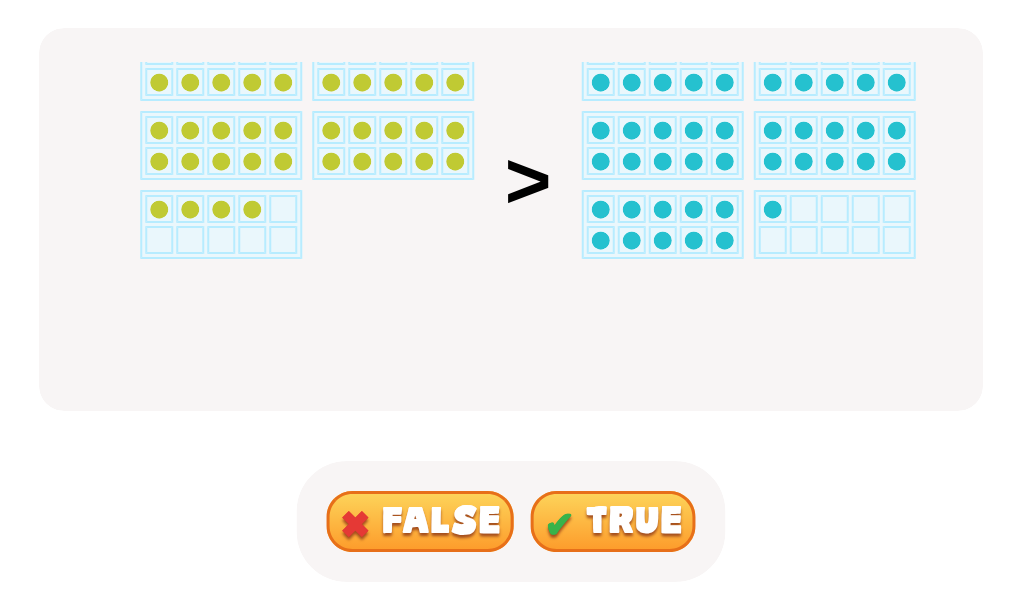
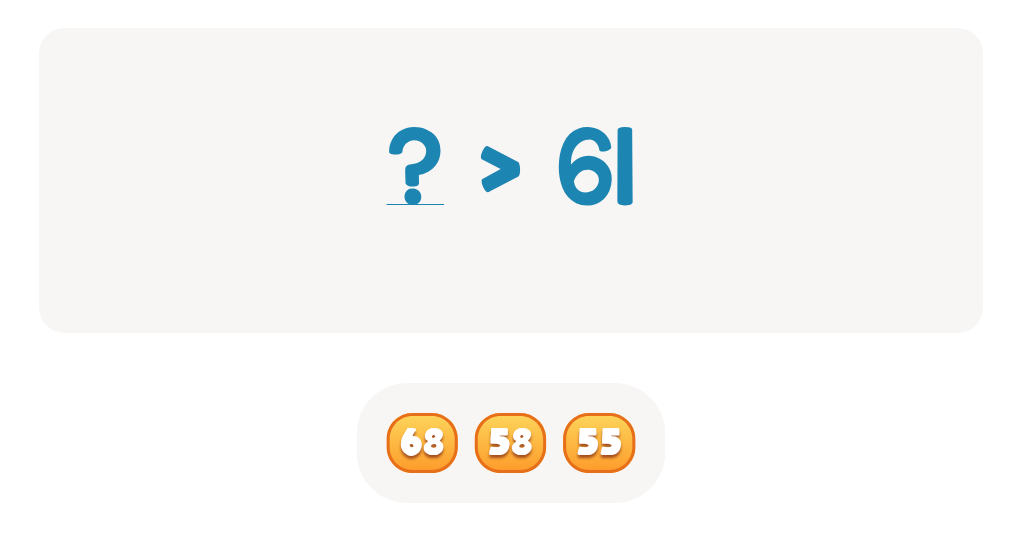
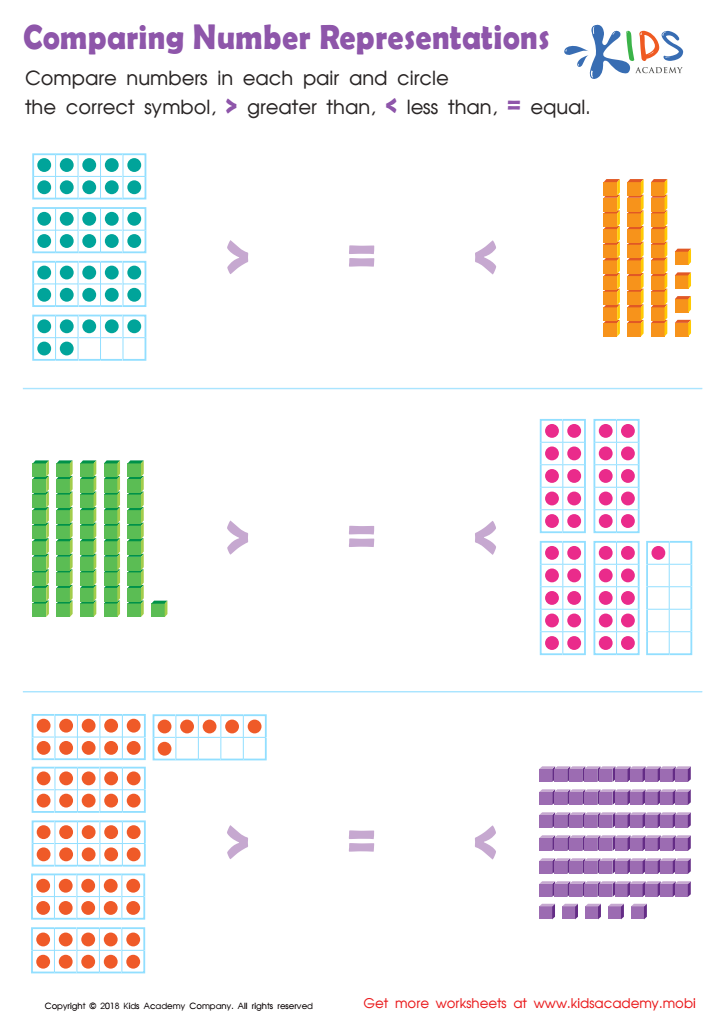
Comparing Number Representations Worksheet
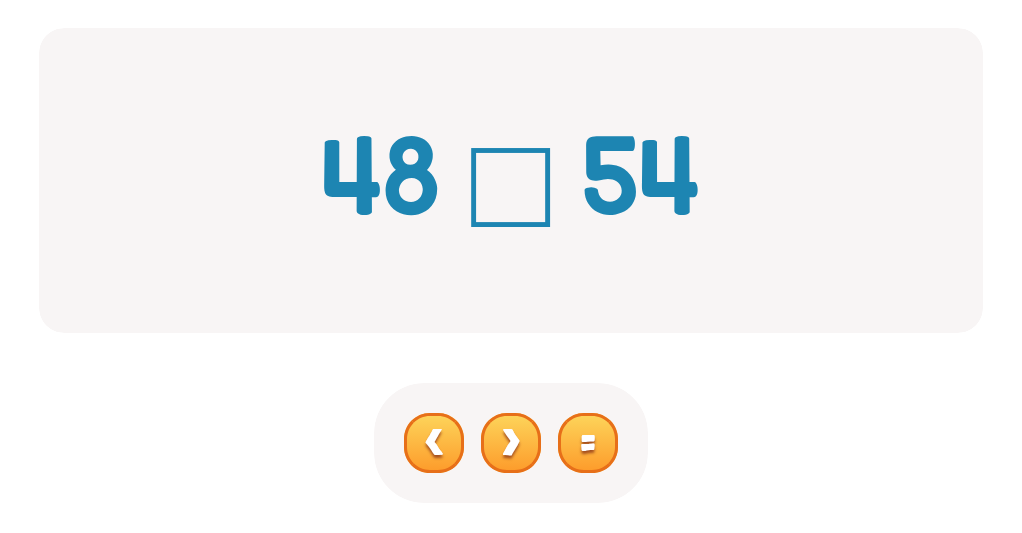
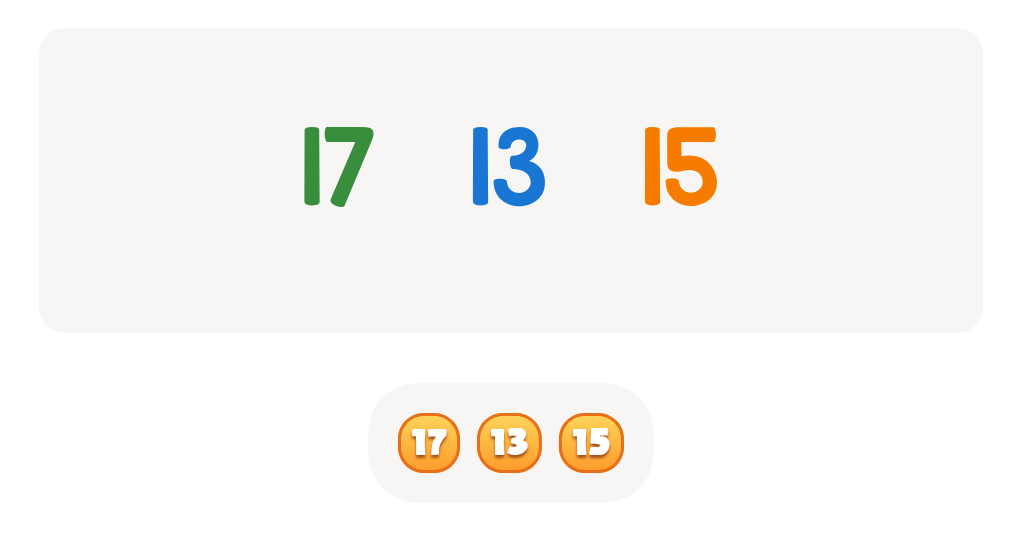
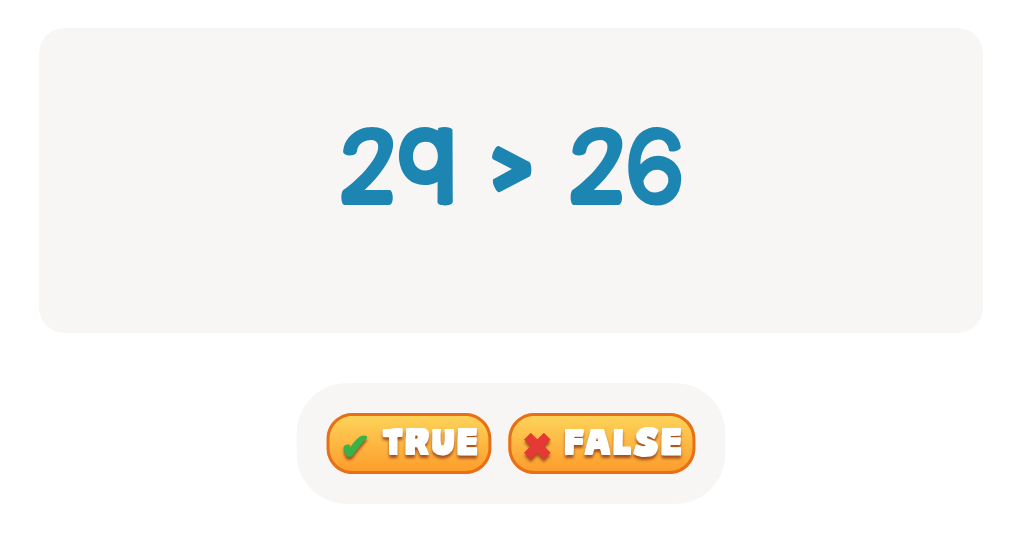
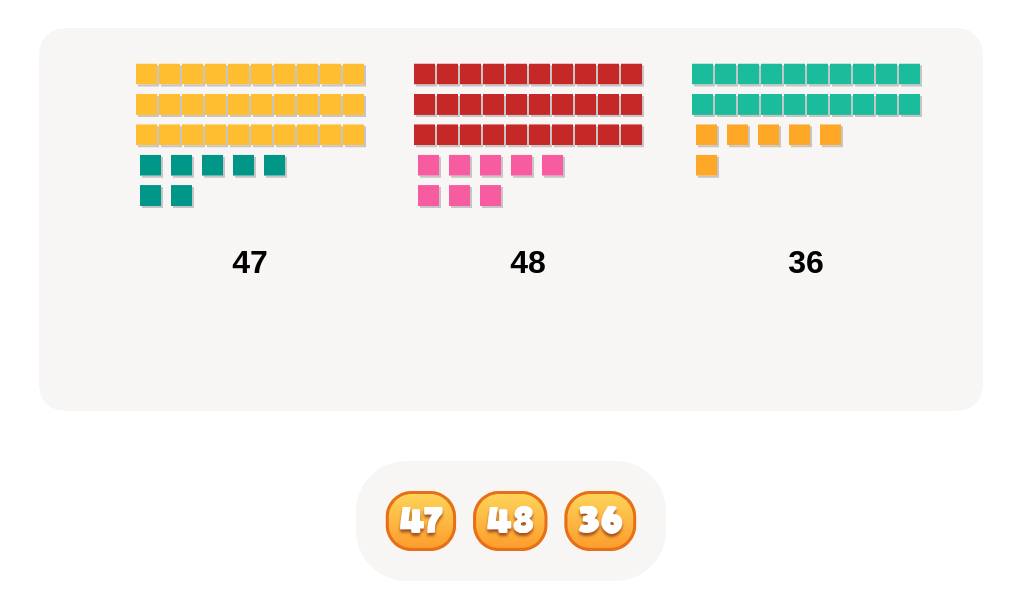
Children need number representation skills to develop efficient computation and number sense. This free worksheet gives them practice with ten frames and place value blocks. They compare numbers and select the right comparative symbol: <, > or =. This helps them build a solid foundation for math.
Comparing Number Representations Worksheet
Worksheet
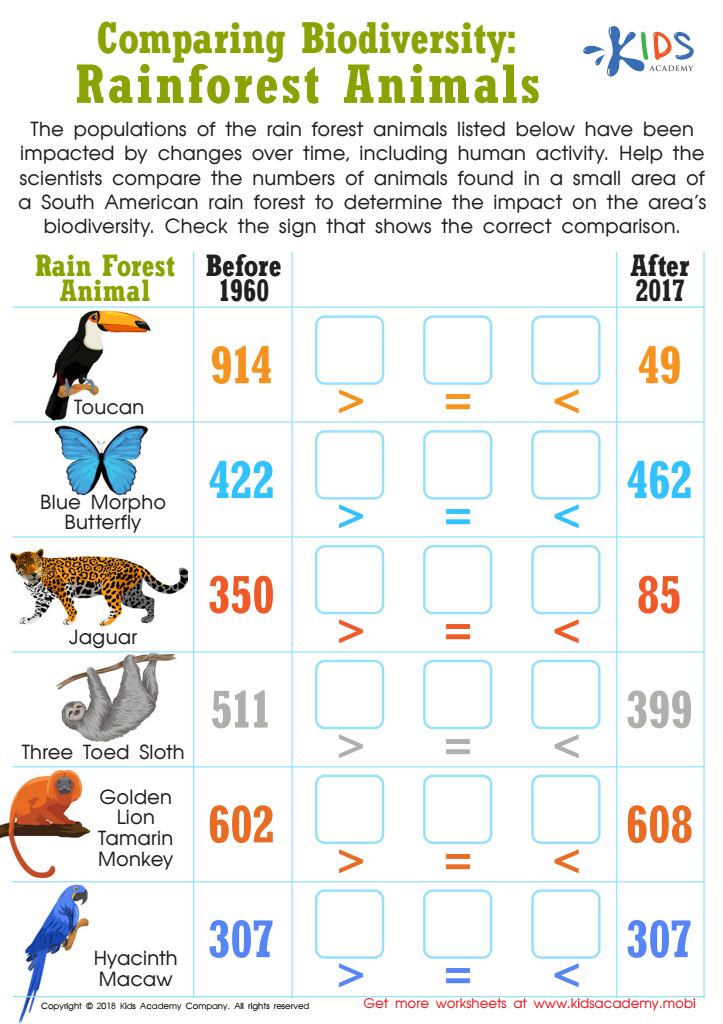
Comparing Biodiversity: Rainforest Animals Worksheet
This dynamic PDF worksheet combines fun and education. Kids will explore rainforest animals and biodiversity, comparing numbers from 1960 to 2017. They'll strengthen number sense and reasoning skills while learning about area biodiversity and its effects. A perfect mix of math and social science!
Comparing Biodiversity: Rainforest Animals Worksheet
Worksheet
Join Kids Academy for Free
Who is primarily going to use this learning content?








Parents and teachers should prioritize developing analytical thinking in children aged 6-7, especially when it comes to comparing numbers, as it lays the foundation for critical cognitive skills essential for academic success and everyday decision-making. At this age, children begin to grasp basic mathematical concepts, and cultivating analytical thinking allows them to understand not just the 'how,' but the 'why' behind numbers.
Comparing numbers helps kids develop reasoning skills. For example, determining which number is larger or smaller fosters logical thought as they analyze different values and understand relationships between them. These skills contribute to problem-solving abilities, aiding in subjects beyond mathematics, such as science and social studies.
Moreover, analytical thinking enhances a child’s confidence. As they become more adept at comparing numbers, their abilities to tackle more complex math problems and real-life situations improve, promoting resilience in the face of challenges.
In our data-driven world, the ability to interpret numerical information is crucial. Teaching children to compare numbers not only prepares them for future academic endeavors but also equips them with valuable life skills, ensuring they grow into confident and competent individuals. Hence, fostering these skills is a vital responsibility for both parents and educators.








