Financial literacy Money Worksheets for Ages 6-7
4 filtered results
-
From - To
Empower young learners with our engaging Financial Literacy Money Worksheets for Ages 6-7! Designed to introduce the basics of money management, these worksheets teach counting money, recognizing coins and notes, and understanding the value of saving. With fun, interactive activities, children will develop essential financial skills while enjoying the learning process. Each worksheet encourages critical thinking and problem-solving, preparing kids for a future of financial responsibility. Ideal for classroom use, homeschooling, or extracurricular learning, these resources foster a positive attitude towards money from an early age. Download and inspire your child's journey to financial literacy today!
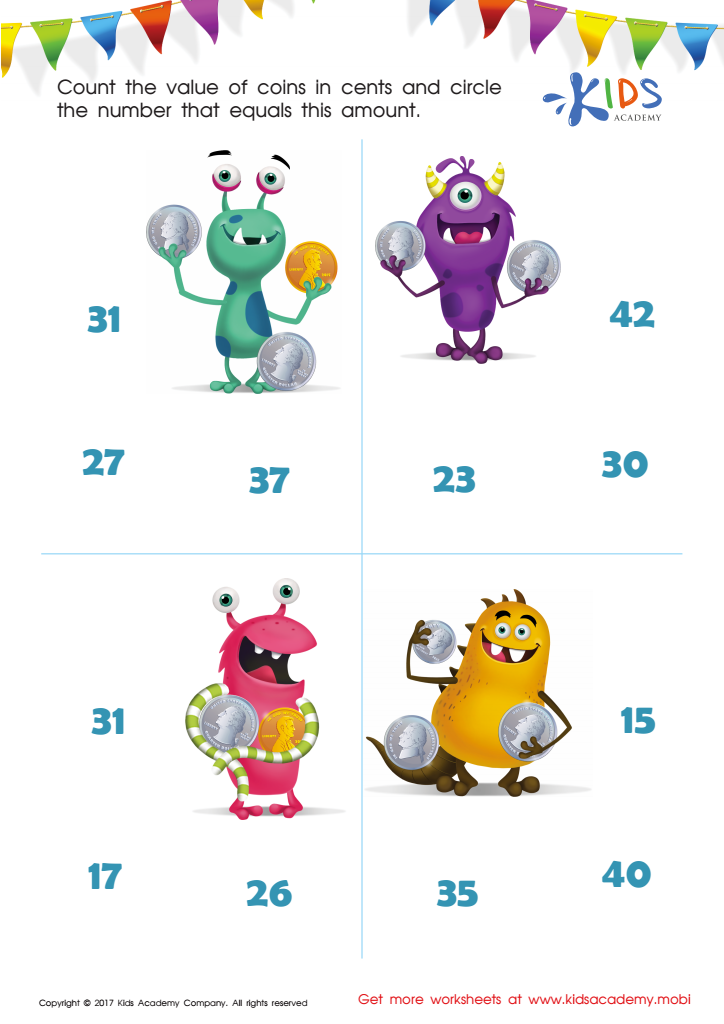
How Many Coins Money Worksheet
 Assign to My Students
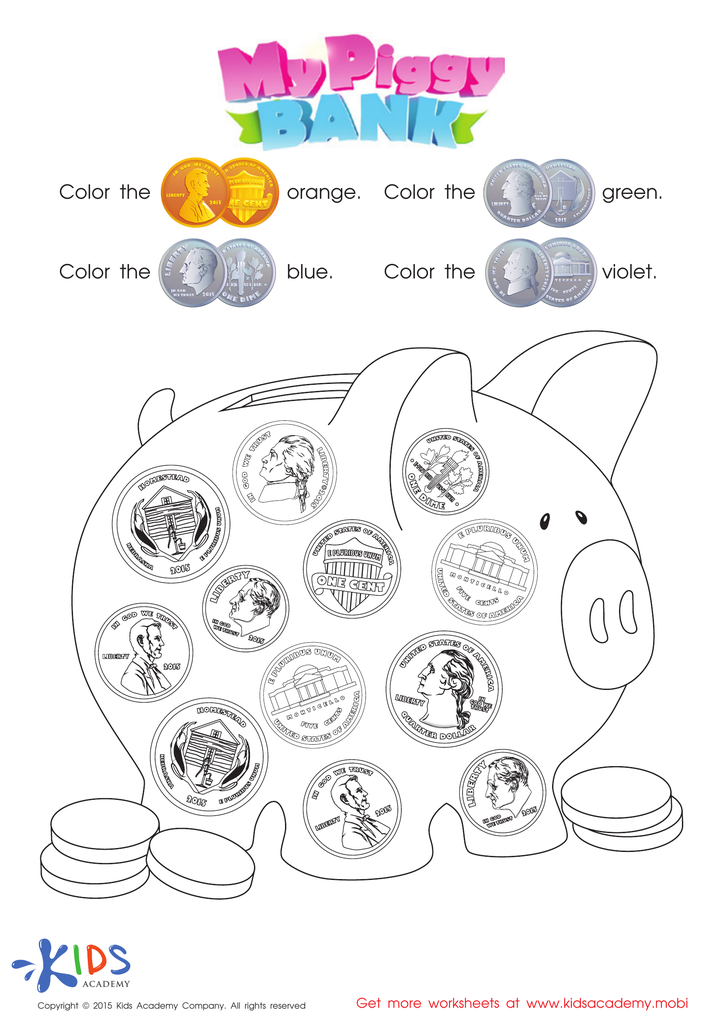
Recognizing Money Money Worksheet
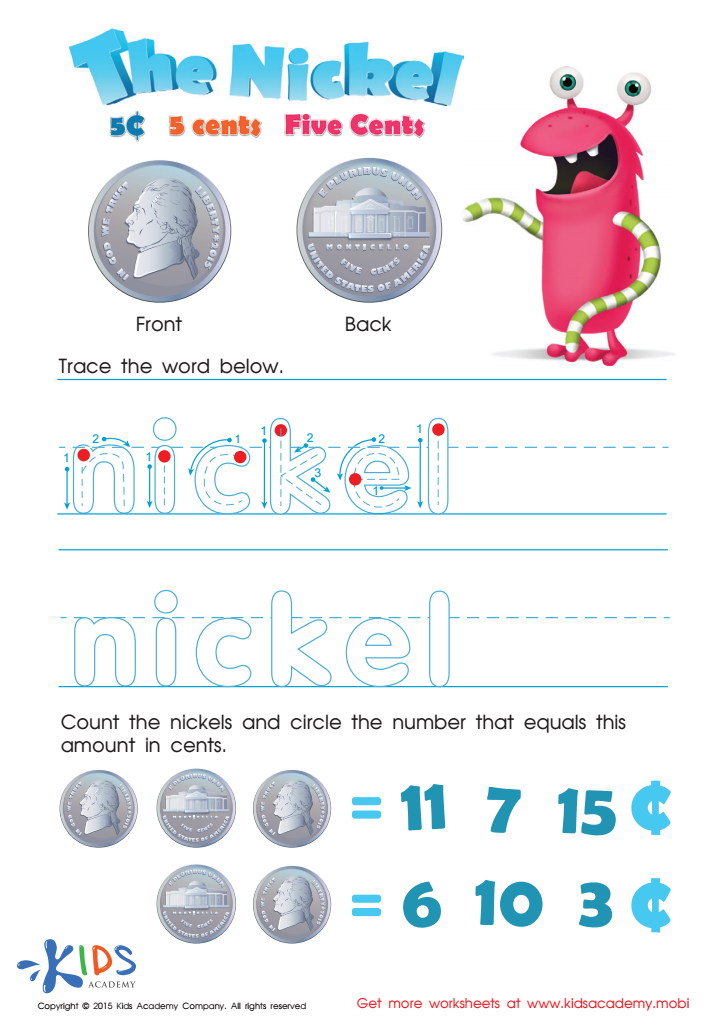
Five Cents or the Nickel Money Worksheet
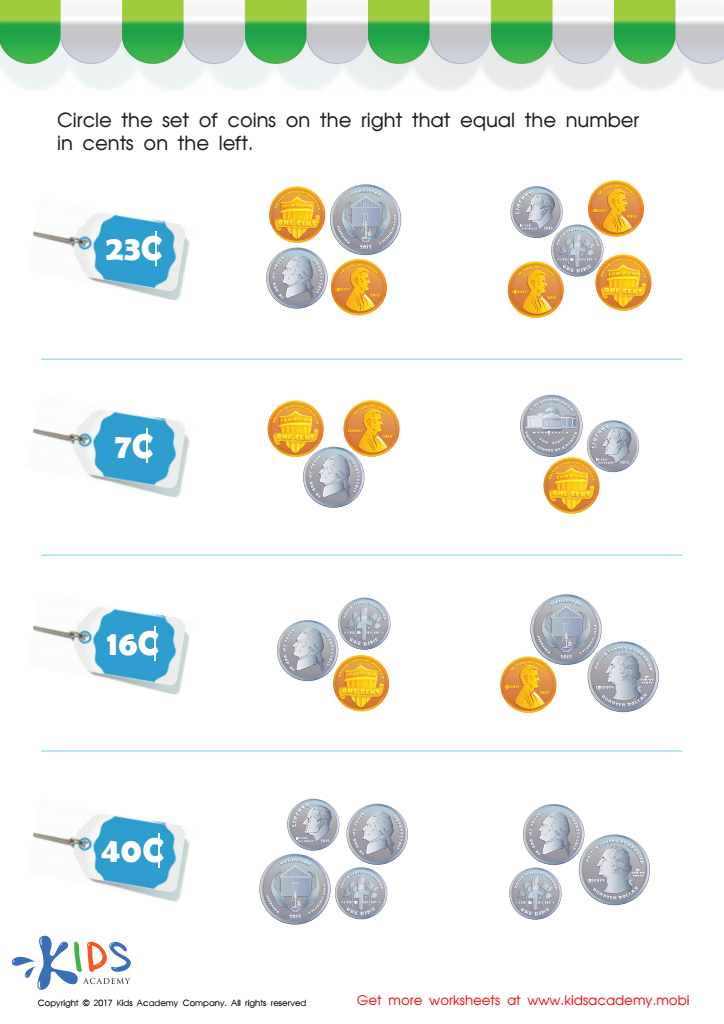
Picking the Coins You Need Money Worksheet








Financial literacy is essential for children aged 6-7, and parents or teachers should care deeply about its incorporation into their education. At this young age, kids begin to develop foundational concepts of money, which significantly shape their attitudes and behaviors towards finance later in life. Teaching children about money through engaging activities fosters an understanding of value, savings, and budgeting.
Learning financial literacy early helps children make informed decisions, laying the groundwork for responsible spending and saving behaviors. It empowers them to grasp concepts like earning, spending wisely, and the importance of setting financial goals. When children learn to understand money management, they are less likely to turn to unhealthy financial habits as they grow older, reducing the risk of issues like debt or financial irresponsibility in adulthood.
Moreover, incorporating financial literacy into their learning enhances critical thinking and problem-solving skills. It encourages discussions about needs vs. wants, enhancing their decision-making abilities. Emphasizing financial literacy in the formative years ultimately prepares young learners for a future where they can navigate economic challenges, helping them to grow into financially savvy and confident adults. Fostering this knowledge is a vital part of their overall education and development.








