Visual representation comprehension Fractions of Shapes Worksheets for Ages 6-7
3 filtered results
-
From - To
Explore our engaging “Visual Representation Comprehension: Fractions of Shapes Worksheets” designed specifically for children aged 6-7. These worksheets enhance young learners' understanding of fractions through vibrant visuals and relatable shapes. By connecting visual representations to fractional concepts, kids will develop essential math skills while having fun. Ideal for classrooms or home learning, these exercises promote critical thinking and problem-solving as students learn to identify, analyze, and represent fractions visually. Watch your child gain confidence in math with our colorful, interactive worksheets that turn learning into an enjoyable experience. Perfect for early grades, they are a stepping stone to further mathematical comprehension!
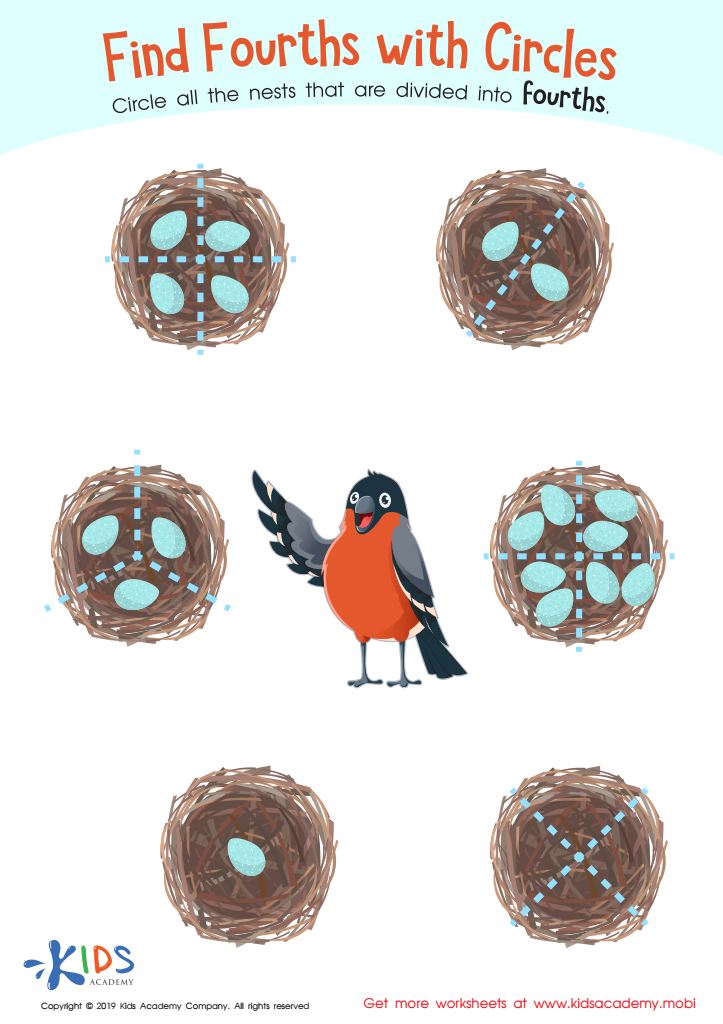
Find Fourths Circles Worksheet
 Assign to My Students
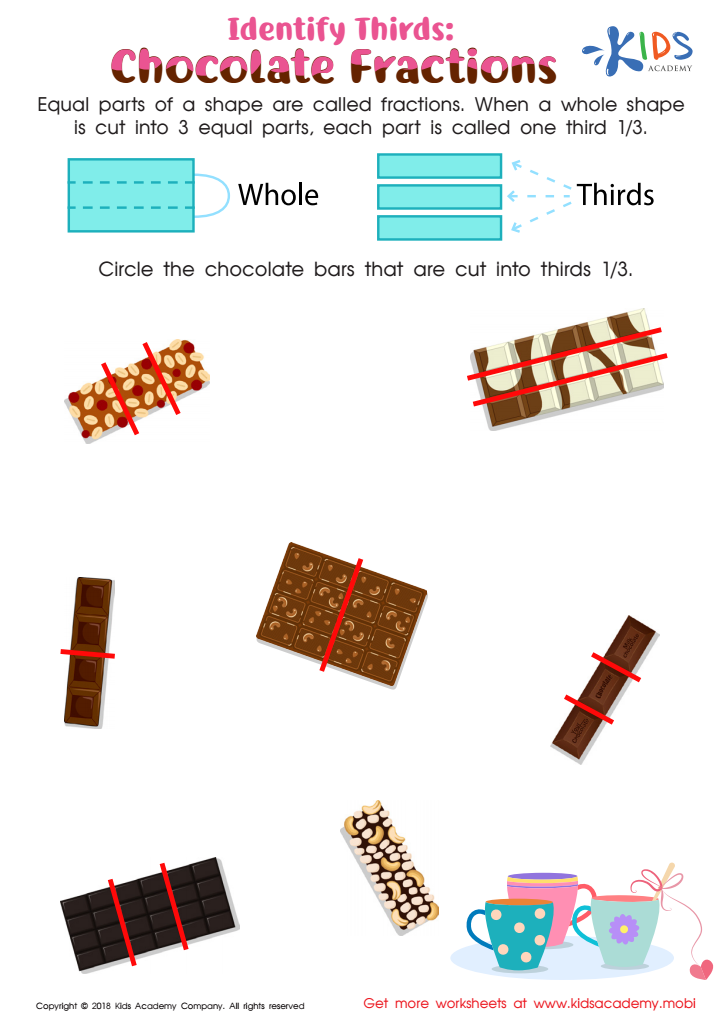
Identify Thirds: Chocolate Fractions Worksheet
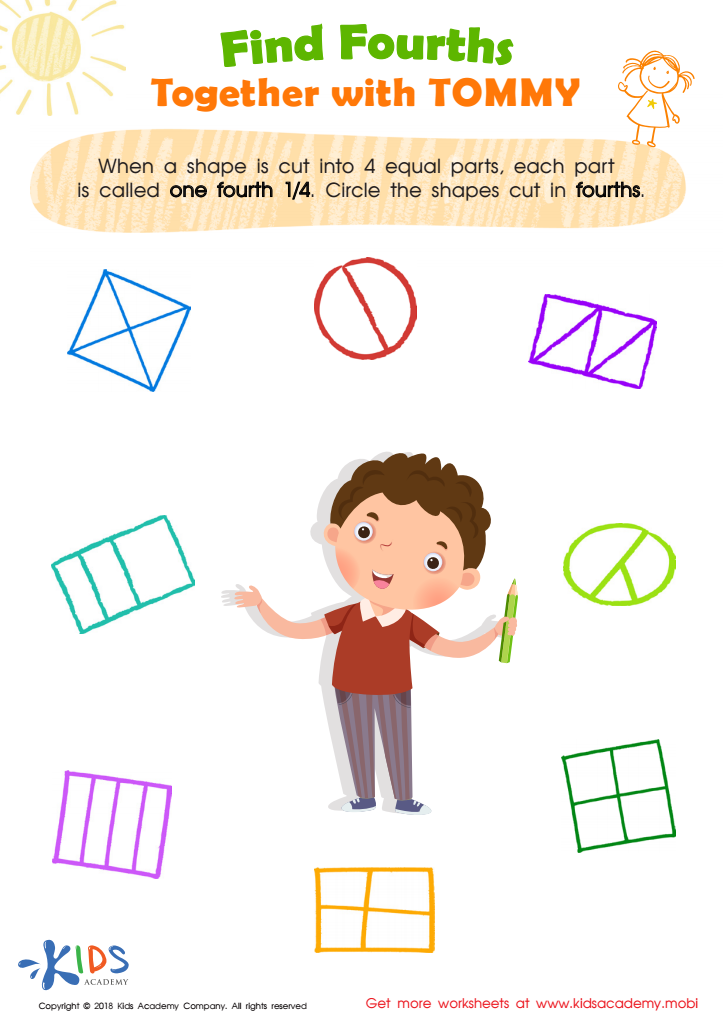
Find Fourths Together with Tommy Worksheet








Visual representation comprehension of fractions is crucial for children aged 6-7 as it lays the foundation for their mathematical understanding. At this developmental stage, children are beginning to grasp abstract concepts, and visual aids help them connect numbers to real-world applications. Understanding fractions through shapes allows children to differentiate parts of a whole, fostering their ability to recognize shared characteristics among different shapes and sizes.
Parents and teachers should care about this aspect of learning because it enhances critical thinking skills and problem-solving abilities. When children can visualize fractions, they develop a stronger number sense, which is essential for future mathematical concepts. Visual representation not only aids retention but also makes learning engaging and interactive, preventing frustration that may arise from abstract interpretations.
Furthermore, grasping these basic concepts in a supportive environment encourages children to develop a positive attitude towards mathematics and helps to reduce math anxiety. By investing time into teaching fractions of shapes, parents and teachers can nurture confidence, ensure mastery of foundational skills, and promote a lifelong love for learning and exploration, all of which are key components for academic success and personal growth.