Spatial reasoning Geometry Worksheets for Ages 6-7
3 filtered results
-
From - To
Unlock your child's potential with our Spatial Reasoning Geometry Worksheets tailored for ages 6-7! Designed to enhance critical thinking and problem-solving skills, these engaging worksheets provide a fun way for young learners to explore shapes, sizes, and spatial relationships. From identifying geometric figures to understanding symmetry, our comprehensive resources aim to build confidence and foster a love for math. With colorful visuals and creative activities, kids will improve their cognitive abilities while enjoying learning. Perfect for classroom use or at-home practice, these worksheets are an essential tool for developing foundational geometry skills. Start your journey to mathematical mastery today!
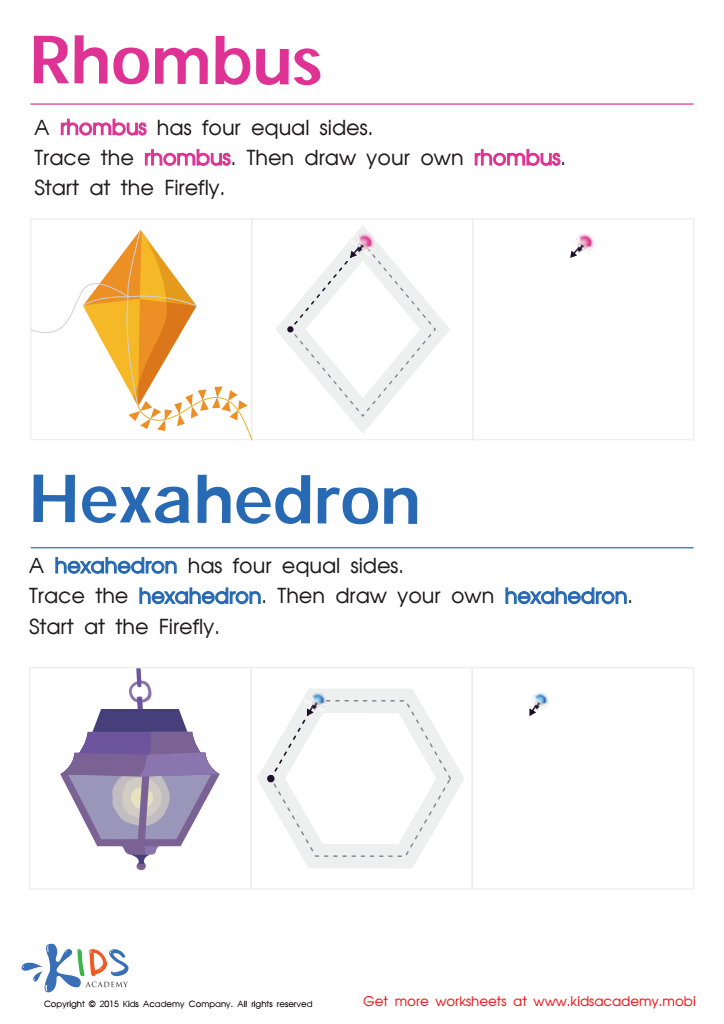
Draw a Rhombus And a Hexahedron Printable
 Assign to My Students











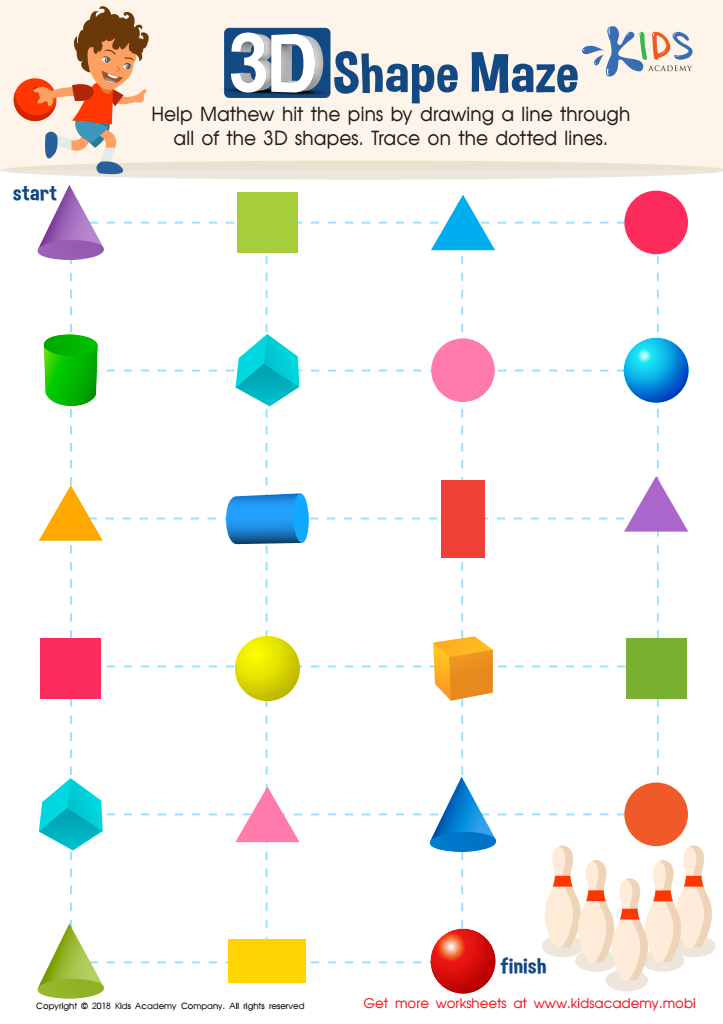
Shapes Maze Geometry Worksheet
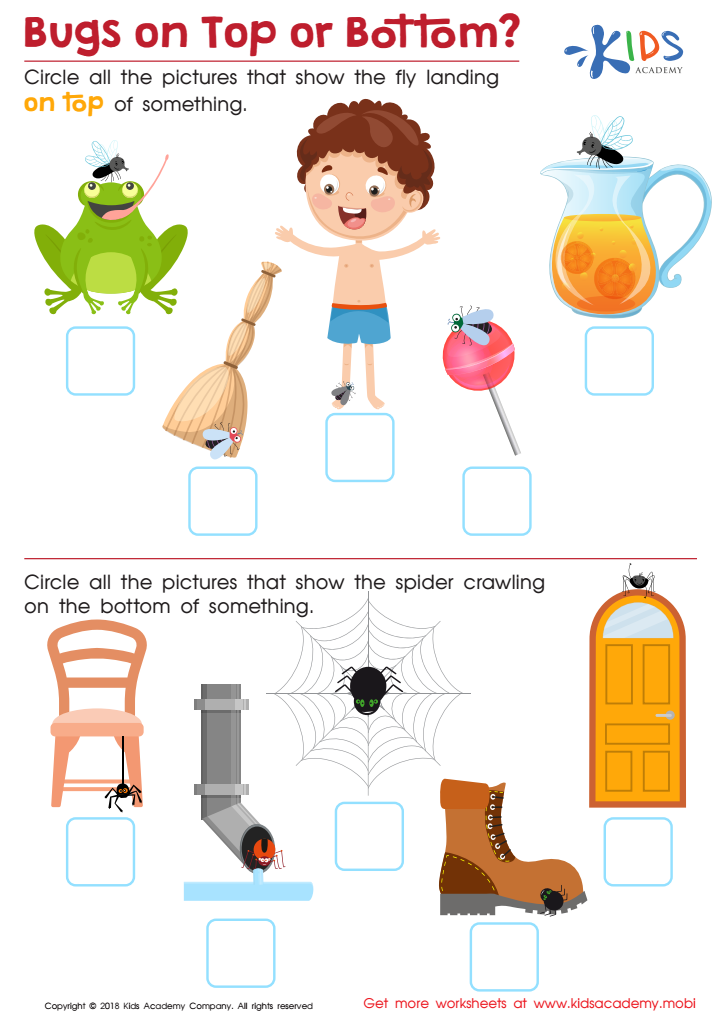
Bugs on Top or Bottom? Worksheet








Spatial reasoning and geometry are crucial developmental skills for children aged 6-7, and parents and teachers should prioritize them for several reasons. First, these skills are foundational for mathematics; understanding shapes, sizes, and spatial relationships helps children grasp more complex mathematical concepts later on. By engaging in activities that promote spatial reasoning, children enhance their problem-solving abilities and critical thinking skills.
Moreover, spatial reasoning is not limited to mathematics alone—it influences other subjects too, including science and art. For example, comprehension of geometric concepts is essential for understanding the physical world, from recognizing patterns in nature to grasping basic physics concepts.
Additionally, these skills are vital for everyday life, supporting children in navigation, organization, and planning. Encouraging play with puzzles, building blocks, and even simple drawing exercises can foster these vital skills in a fun, engaging way.
Research has shown that strong spatial reasoning correlates with success in STEM fields—critical in today's technology-driven world. By nurturing these abilities, parents and teachers empower children to become confident learners, equipped with a toolkit that supports both academic achievement and real-world application. Thus, fostering spatial reasoning in early education is appealing for its foundational importance across multiple disciplines.








