Animal Classification Math Worksheets for Ages 6-7
3 filtered results
-
From - To
Explore our engaging "Animal Classification Math Worksheets" designed for children ages 6-7! These worksheets provide a fun and interactive way for young learners to develop essential math skills while exploring the fascinating world of animals. Kids will enhance their understanding of different animal groups, such as mammals, reptiles, and birds, through enjoyable activities that combine classification tasks with math concepts. With vibrant illustrations and age-appropriate exercises, these worksheets encourage critical thinking and foster a love for both math and the animal kingdom. Perfect for home or classroom use, they make learning an exciting adventure for your little ones!
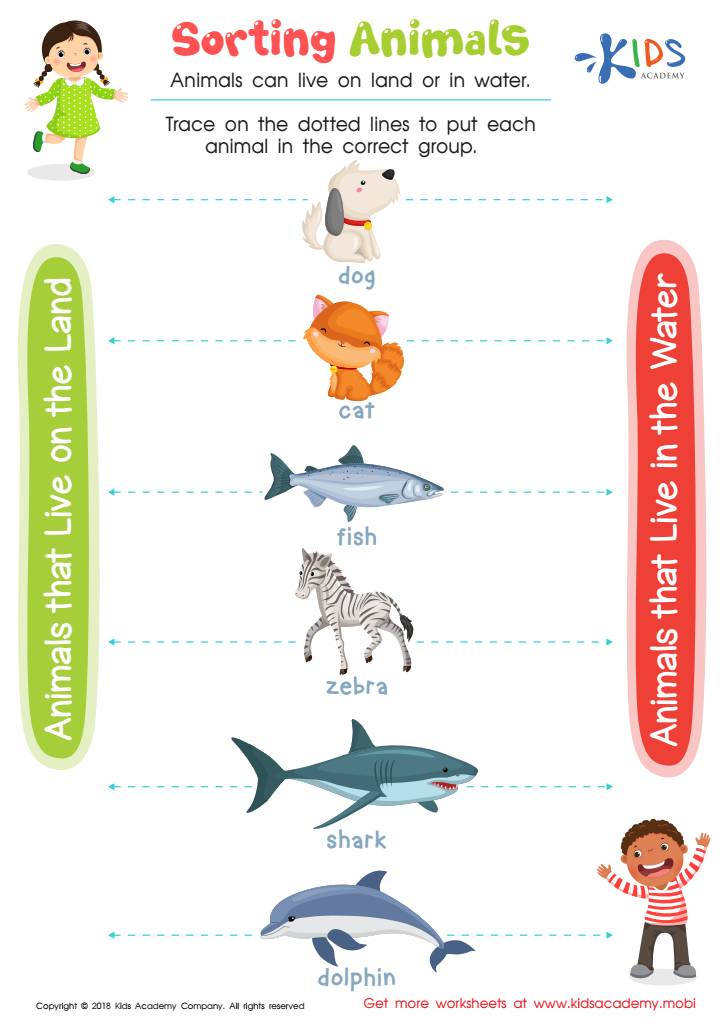
Sorting Animals Worksheet
 Assign to My Students
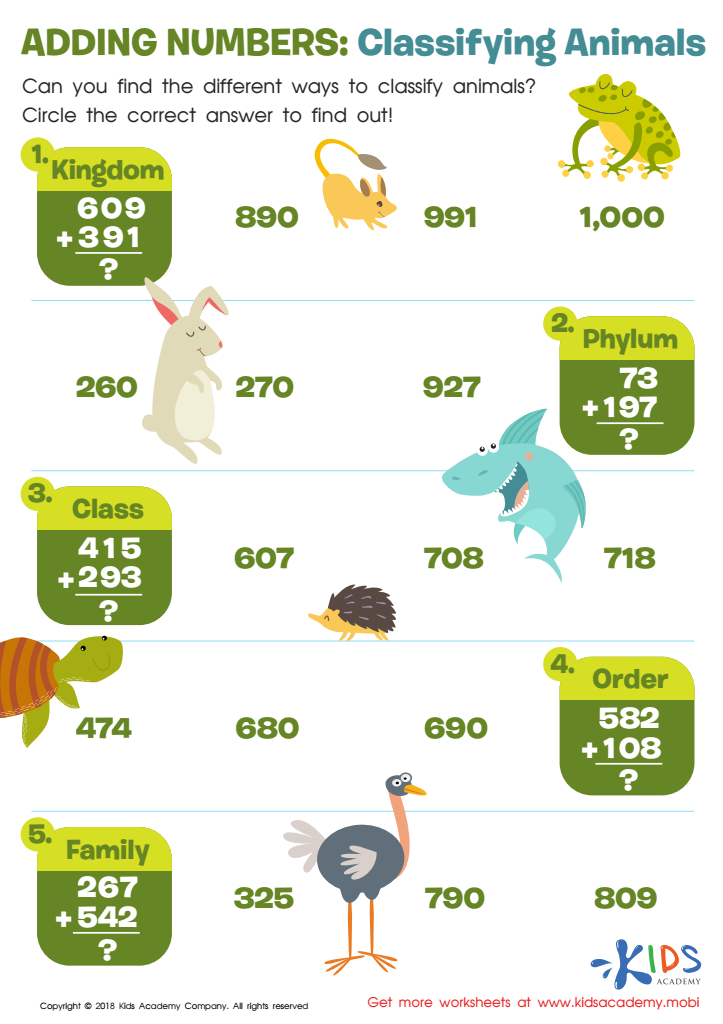
Adding Numbers: Classifying Animals Worksheet
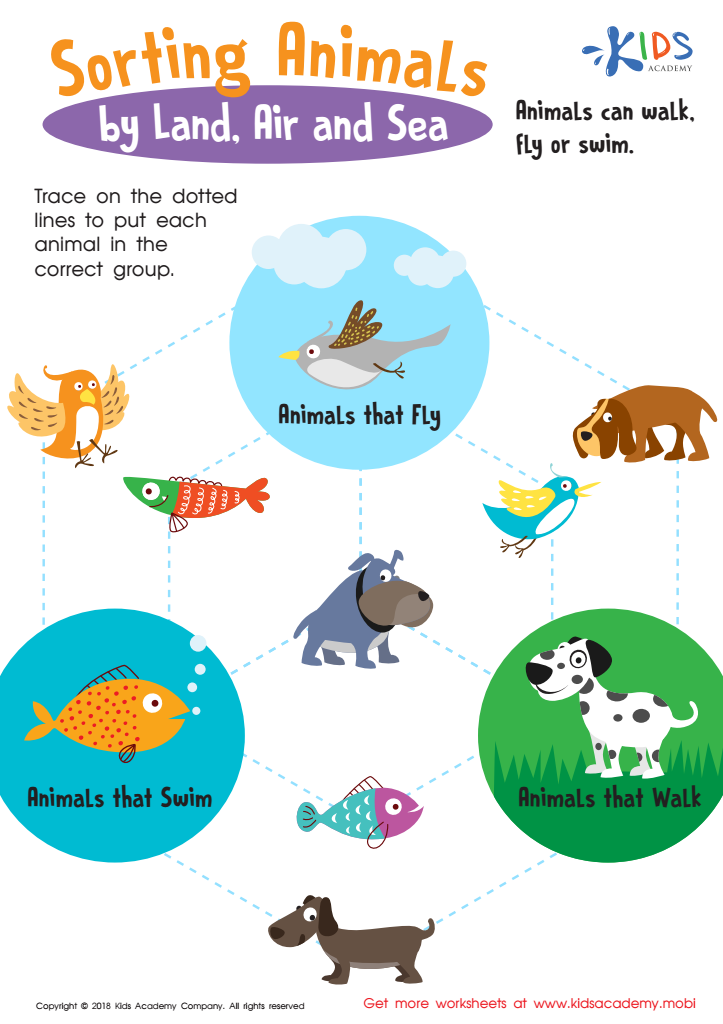
Sorting Animals by Land, Air and Sea Worksheet







Animal Classification Math for ages 6-7 offers an engaging and practical approach to learning that combines two fundamental areas of education: math and science. Understanding animal classification introduces young learners to the amazing diversity of life while also developing critical thinking skills. As students categorize animals into groups such as mammals, reptiles, birds, and amphibians, they are not only learning about characteristics but also enhancing their classification abilities—a key component in scientific reasoning.
Incorporating math into this exploration allows children to apply counting, addition, and even basic data analysis as they measure, compare, and sort animals. This intersection fosters a deeper grasp of mathematical concepts, as children learn to interpret age-appropriate data, such as the number of different species in a classroom-like setting.
Parents and teachers should care about this cross-curricular approach because it sparks curiosity, promotes problem-solving, and makes learning active and fun. It engages children in a relatable context, which results in improved retention of knowledge. By supporting such multidisciplinary activities, parents and teachers nurture not only mathematic competency but also a broader understanding of the natural world, paving the way for passionate and informed future scientists and thinkers.








