
Comparing numbers Math Worksheets for Ages 6-7
8 filtered results
Difficulty Level
Grade
Age
-
From - To
Subject
Activity
Standards
Boost your child’s math skills with our engaging Comparing Numbers Math Worksheets for Ages 6-7. Specifically designed for first graders, these worksheets make learning fun and effective. Children will practice comparing and ordering numbers, understanding greater than, less than, and equal to concepts. Exciting exercises with vibrant visuals help solidify foundational math knowledge. Ideal for classroom use or at-home practice, these worksheets foster critical thinking and numeracy skills. Whether increasing confidence in young learners or providing extra practice, our resources ensure a strong mathematical foundation. Empower your child’s success in math with these dynamic and delightful worksheets.
Favorites
With answer key
Interactive
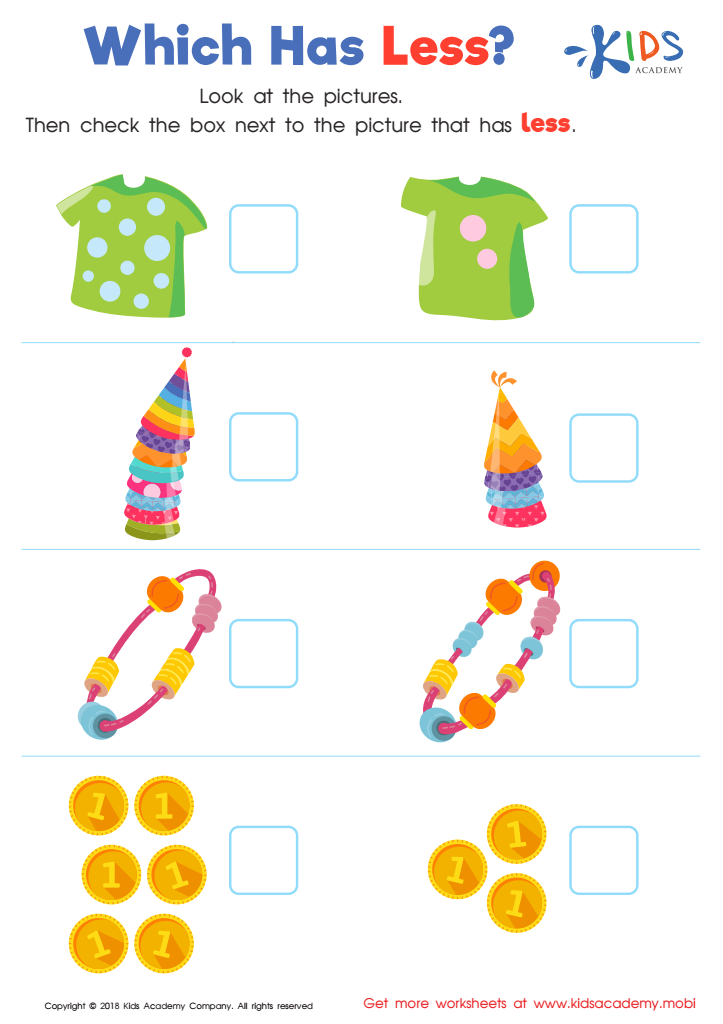
Which Has Less? Worksheet
Kids can develop their number sense by comparing and contrasting objects to identify which has less. This worksheet helps them practice: it's bright and colorful, featuring familiar objects and pictures to count, strengthening basic counting skills. It's the perfect warm-up for comparing and contrasting larger numbers.
 Assign to My Students
Which Has Less? Worksheet
Worksheet
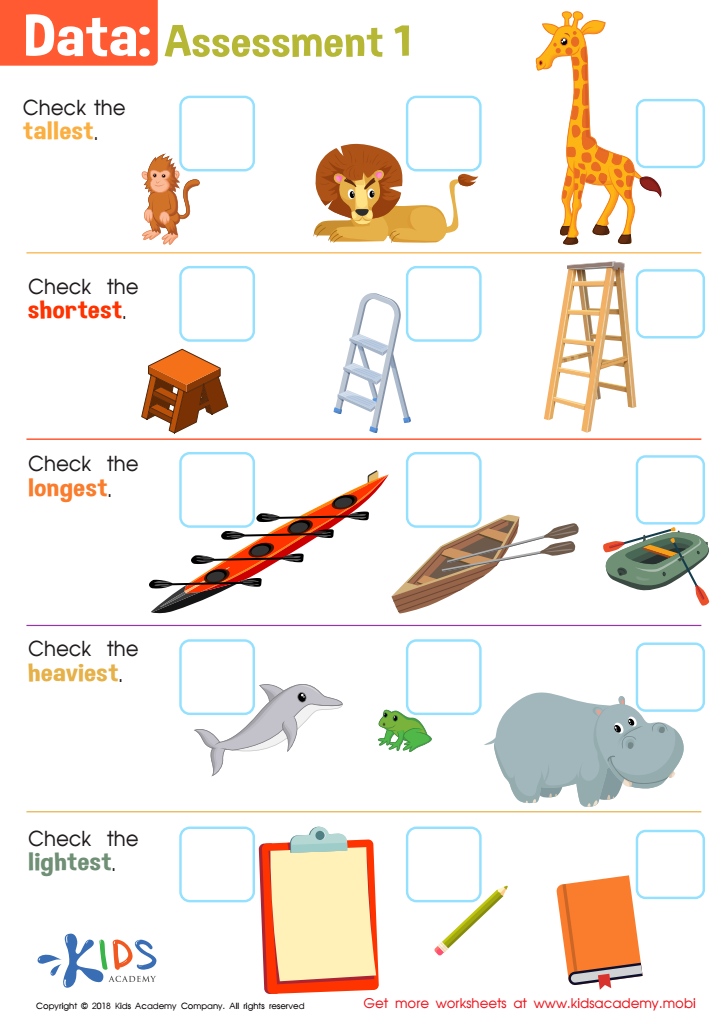
Data: Assessment 1 Worksheet
This free worksheet helps you assess where your young students are with measurement superlatives like tallest, shortest, heaviest, longest and lightest. It features cute, colorful pics of familiar objects so your kids have a reference, and helps you identify areas to work on.
Data: Assessment 1 Worksheet
Worksheet
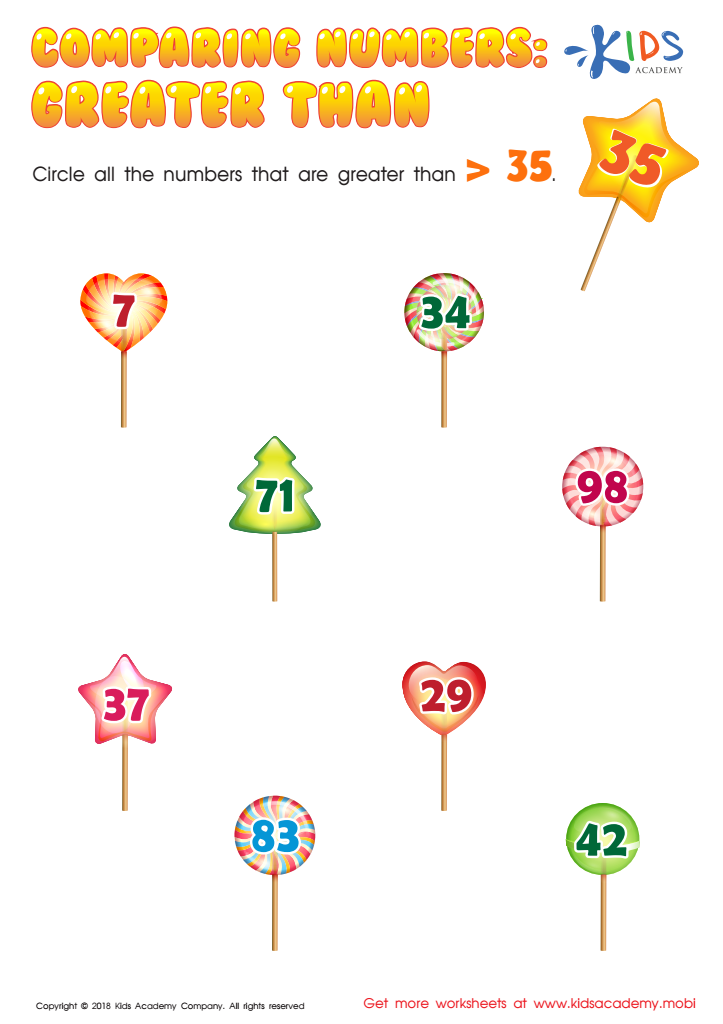
Greater Than Worksheet
Tired of generic maths problems? Try this fun pdf worksheet! With your child or student, carefully look through the numbers in the balloon and circle those greater than 35. Enjoyable and educational!
Greater Than Worksheet
Worksheet
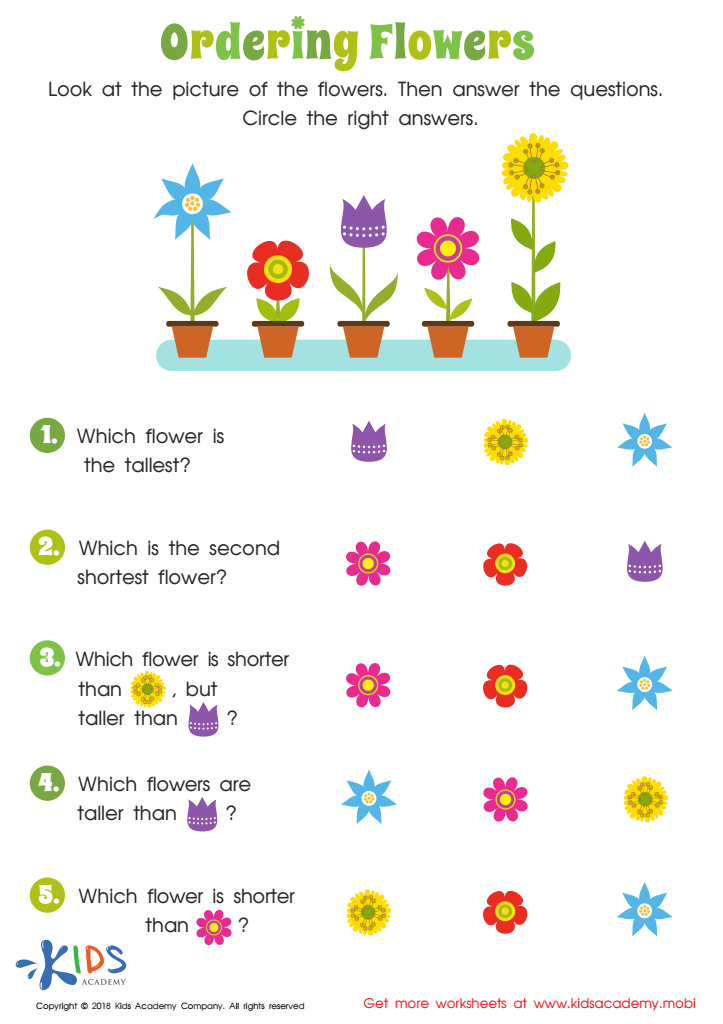
Ordering Flowers Worksheet
Preschoolers can start learning measurement with visuals! This worksheet uses colorful flowers of different heights. Ask your learner to observe the flowers, then help them compare/answer which is taller/shorter. It's an easy way for them to begin learning about measurement.
Ordering Flowers Worksheet
Worksheet
Join Kids Academy for Free
Who is primarily going to use this learning content?




%20(1).jpg)

Parents and teachers should care about teaching children aged 6-7 how to compare numbers because this foundational skill is crucial for their overall mathematical development. At this age, children transition from basic number recognition to understanding number magnitude and relationships, which underpins more advanced math concepts.
Comparing numbers helps young learners develop a strong number sense. This understanding enables them to quickly assess and decide the relative value of numbers, a skill that is critical not only in mathematics but also in real-life situations, such as determining more or less, bigger or smaller quantities, and even in making basic financial decisions.
Moreover, comparing numbers lays the groundwork for other essential mathematical skills, including addition, subtraction, and eventually multiplication and division. This conceptual framework aids in problem-solving and logical thinking.
Engaging children with these concepts at an early age also promotes confidence. When kids can understand and compare numbers, they are more likely to approach math with a positive attitude, reducing anxiety and fostering a long-term interest in the subject. Interactive and fun comparison activities can help sustain their engagement and curiosity.
Ultimately, mastering number comparison in early education equips children with the skills necessary for continued academic success and practical life skills, making it a pivotal part of their early learning journey.








