
Comparing weights Math Worksheets for Ages 6-7
3 filtered results
Difficulty Level
Grade
Age
-
From - To
Subject
Activity
Standards
Introduce young learners aged 6-7 to essential math concepts with our engaging Comparing Weights Math Worksheets. Perfect for first and second graders, these printable worksheets help children develop important mathematical skills by comparing and contrasting different weights. Kids will gain hands-on experience with visual aids and fun exercises that make learning both enjoyable and effective. Our worksheets are designed to strengthen their understanding of heavier and lighter objects, preparing them for more advanced math topics. Equip your child with the tools they need for success with Kids Academy’s expertly crafted math resources!
Favorites
With answer key
Interactive
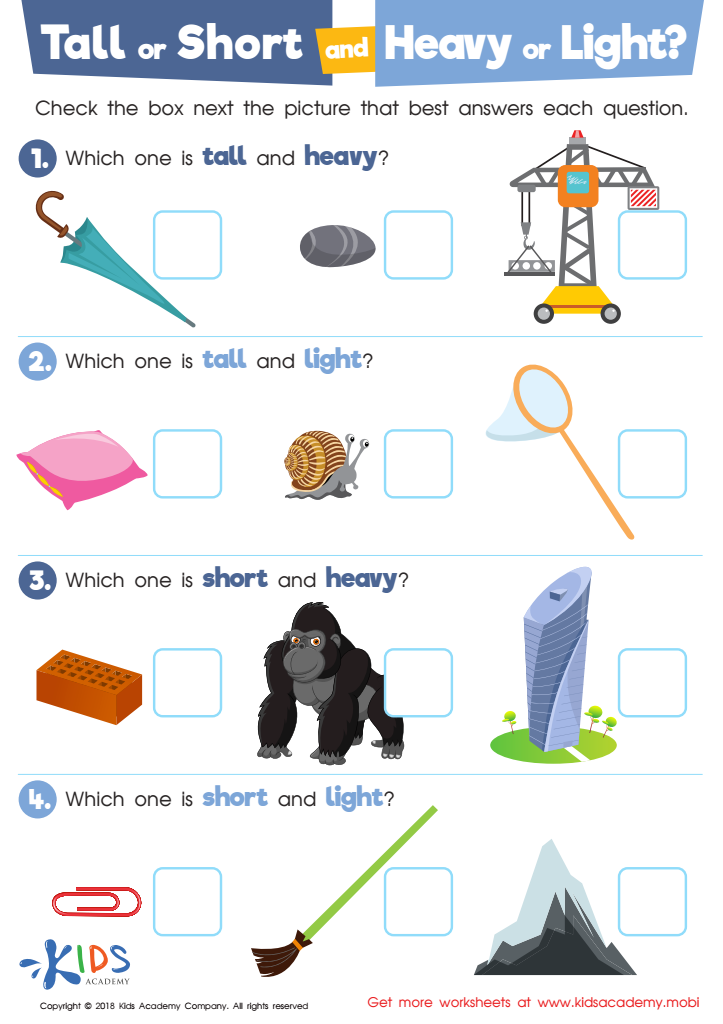
Tall or Short and Heavy or Light? Worksheet
Young children can find basic measurement concepts tricky. This PDF introduces them to the appropriate vocabulary for describing heavy, light, tall and short items, by using familiar pictures. It helps them accurately select which items fit each category.
 Assign to My Students
Tall or Short and Heavy or Light? Worksheet
Worksheet
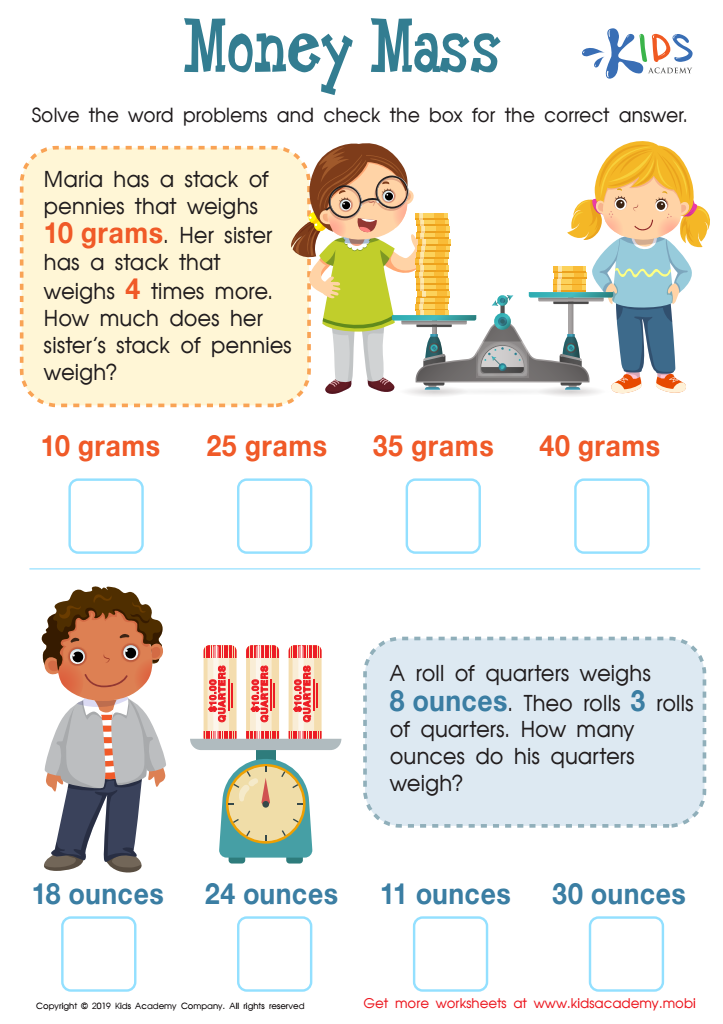
Money Mass Worksheet
By regularly working on math with your kids, they will become more confident. Ensure they understand the word problems in this printout, and help them solve it. Check the box for the correct answer of each to verify their work. With this practice, they will gradually get used to math and make progress.
Money Mass Worksheet
Worksheet
Join Kids Academy for Free
Who is primarily going to use this learning content?







For children aged 6-7, learning to compare weights serves as an essential foundation for critical thinking and problem-solving skills. At this tender age, kids are naturally curious and keen to explore the world around them. When they engage in comparing weights, it introduces them to fundamental concepts of measurement and comparison, crucial components of arithmetic and everyday decision-making.
At this stage, comparing weights using both hands-on and visual methods lays the groundwork for more complex mathematical and scientific undertakings. It helps children grasp essential vocabulary like "heavier," "lighter," "equal," and teaches them how to make logical deductions. These skills transcend math, facilitating improved comprehension skills in other subjects like science and social studies.
Moreover, these activities are often interactive and engaging, making learning fun and boosting cognitive growth through experiential learning. For example, using a simple balance scale to weigh different objects not only piques curiosity but also enhances fine motor skills and eye-hand coordination.
Importantly, mastering such elementary yet foundational concepts boosts confidence and encourages a positive attitude towards learning. Parents and teachers play pivotal roles in nurturing this developmental milestone, as the balanced development of these early math skills can significantly impact a child's future academic trajectory and logical aptitude.








