Develop analytical thinking Math Worksheets for Ages 6-7
3 filtered results
-
From - To
Unlock your child's potential with our engaging analytical thinking math worksheets designed for ages 6-7. These interactive worksheets focus on enhancing problem-solving skills, logical reasoning, and critical thinking through age-appropriate challenges. Perfect for at-home practice or classroom use, our resources include a variety of fun activities that stimulate curiosity and encourage children to think outside the box. Each worksheet is designed to build foundational math skills while promoting cognitive development. Equip your young learner with essential analytical tools that will support their academic journey and foster a lifelong love for learning. Explore our collection and watch them thrive!
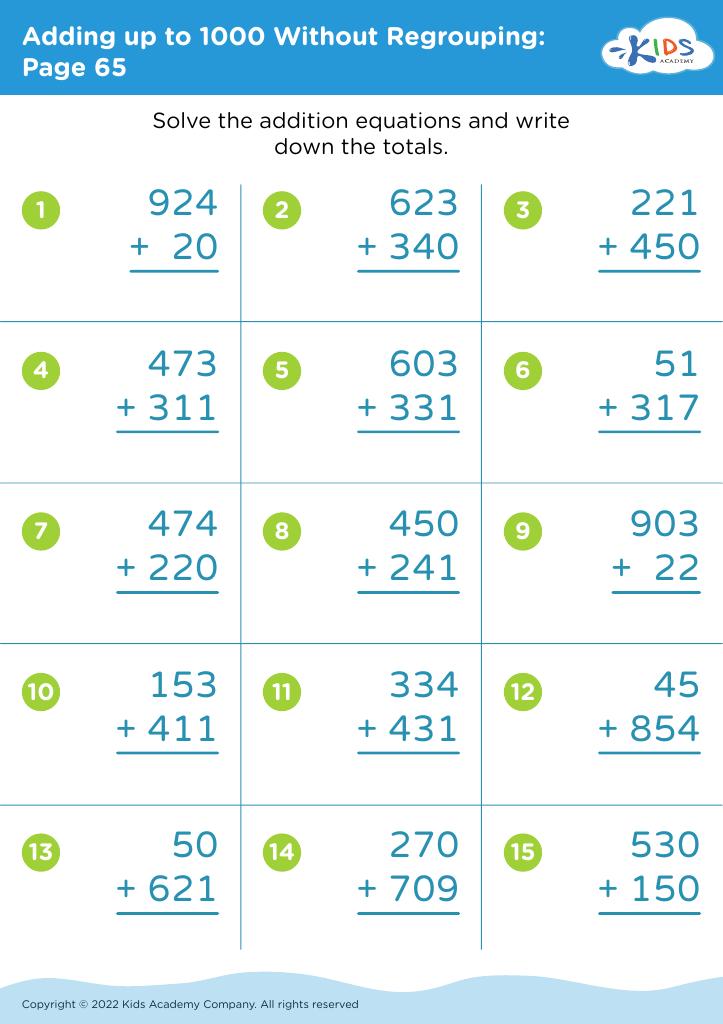
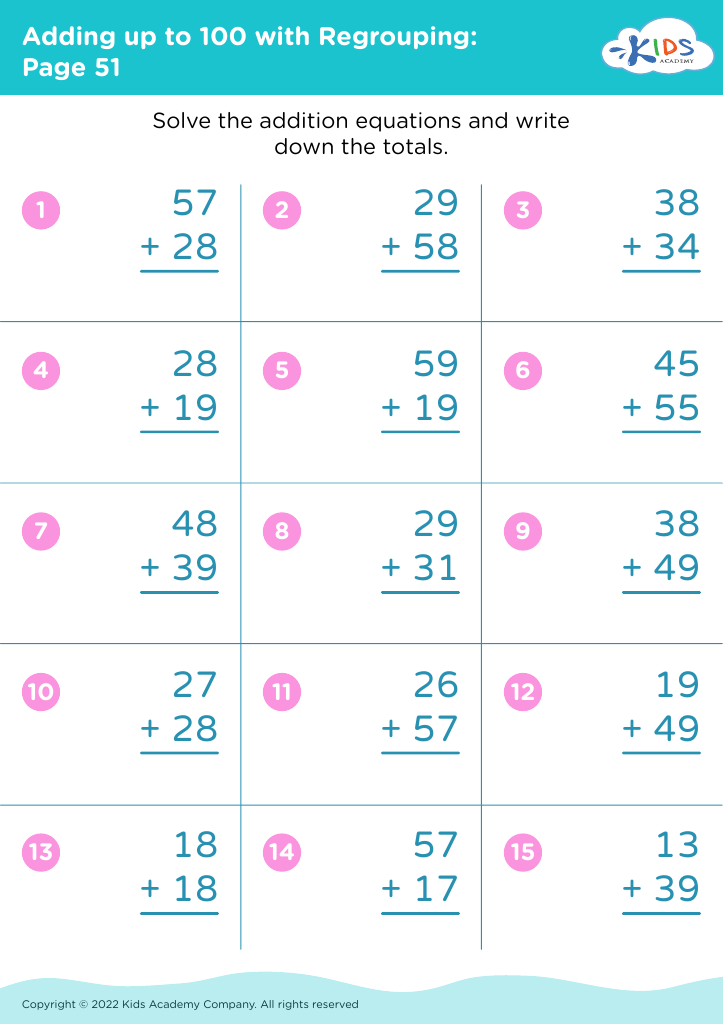
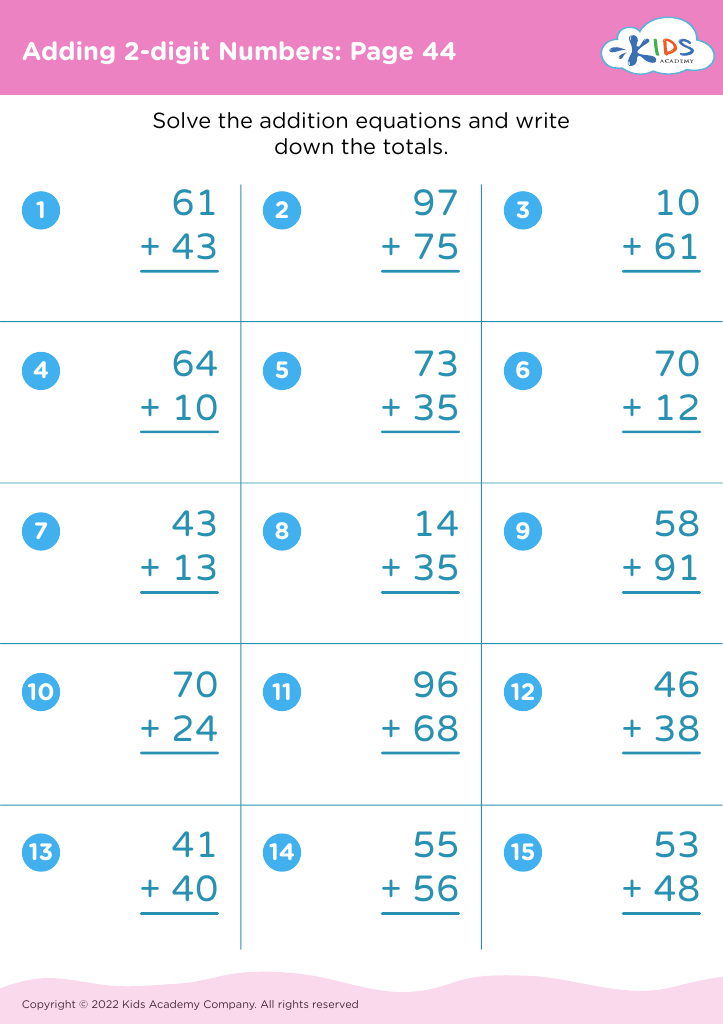







Developing analytical thinking in math for children aged 6-7 is crucial as it lays a strong foundation for future learning. At this age, children are naturally curious and eager to explore concepts, making it an ideal time to encourage critical thinking skills. By introducing them to analytical math, parents and teachers facilitate a deeper understanding of numbers, patterns, and problem-solving techniques.
Analytical thinking helps children break down complex problems into manageable steps, fostering resilience and persistence when faced with challenges. It empowers young learners to approach mathematical concepts logically, enhancing their ability to reason and make connections. This form of engagement not only boosts confidence in their mathematical abilities but also encourages a love for learning.
Moreover, analytical thinking in math is not just about numbers; it cultivates life skills such as decision-making, creativity, and analytical reasoning that are essential in all academic subjects and in everyday life. In a rapidly changing world, these skills are critical for preparing children to navigate future challenges effectively. Ultimately, funding analytical thinking in math helps cultivate inquisitive, independent thinkers capable of tackling problems creatively, equipping them for success beyond the classroom.








