
Enhancing comprehension Math Worksheets for Ages 6-7
3 filtered results
Difficulty Level
Grade
Age
-
From - To
Subject
Activity
Standards
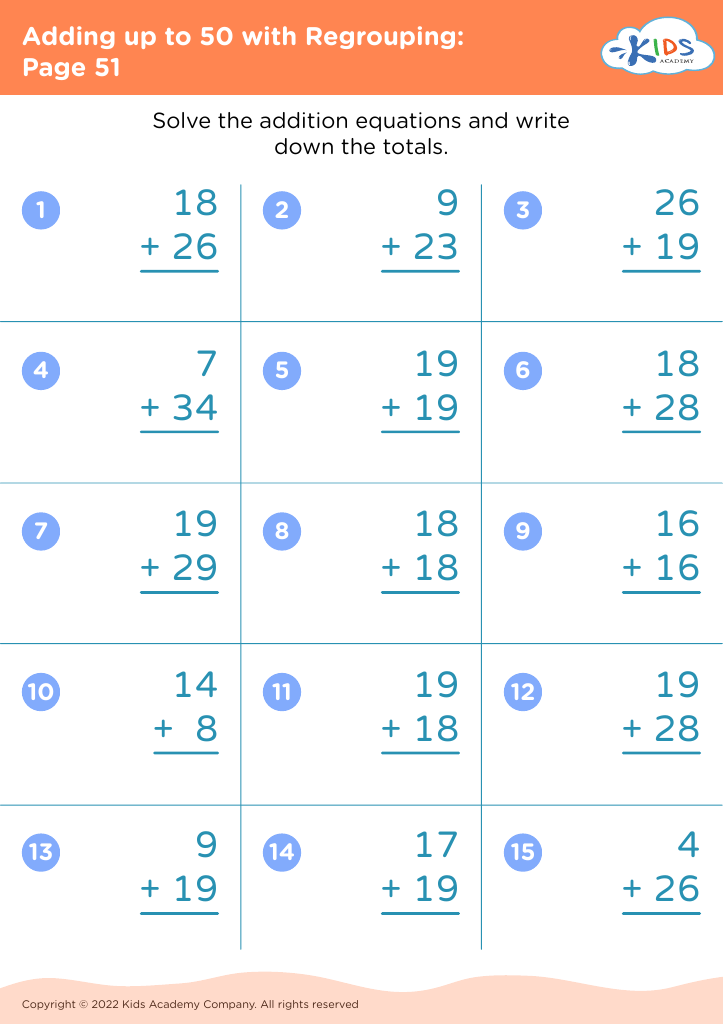
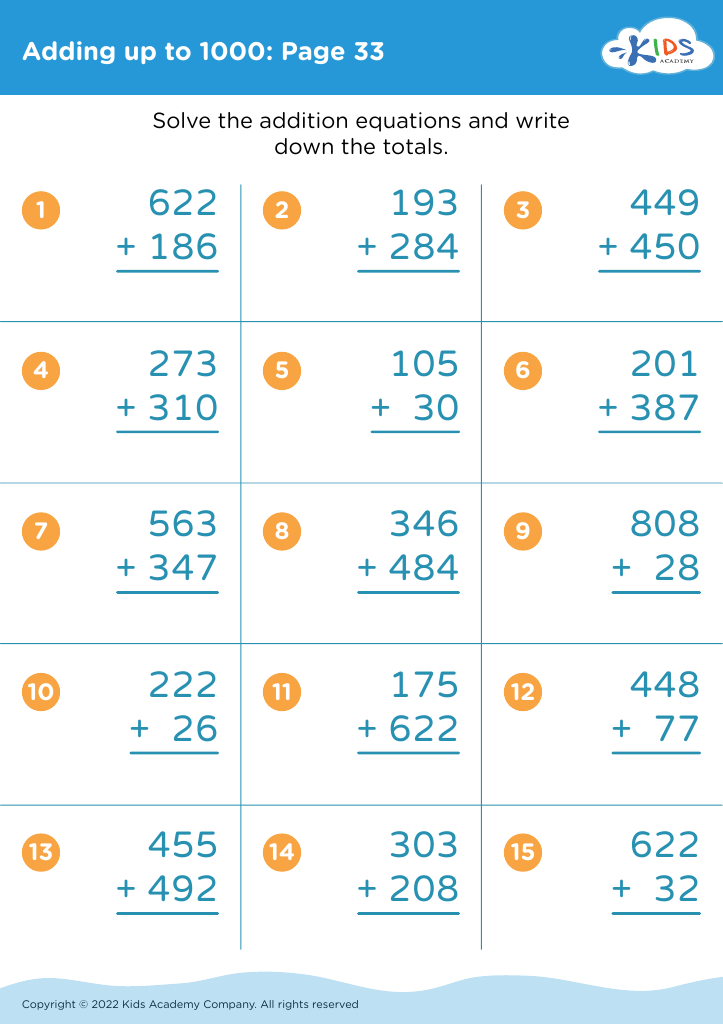
Discover a world of engaging and educational math worksheets designed specifically for children aged 6-7 at Kids Academy! Our "Enhancing Comprehension Math Worksheets" combine fun activities with fundamental math concepts to boost your child's understanding and confidence. From addition and subtraction to geometry and measurement, each worksheet is crafted to support comprehension through interactive tasks and vibrant illustrations. Enhance your child's learning experience with our expertly designed materials, perfect for reinforcing classroom lessons or homeschooling. Unlock your child's mathematical potential with Kids Academy today!
Favorites
With answer key
Interactive
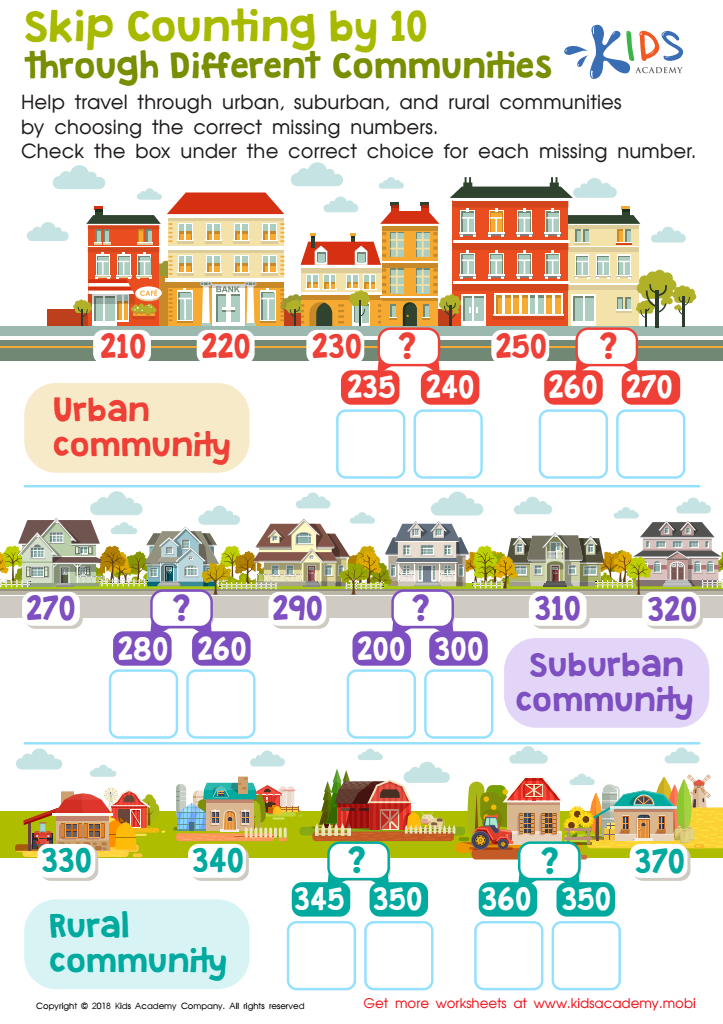
Skip Counting by 10 through Different Communities Worksheet
This free PDF worksheet helps students practice skip counting and 'making a ten', essential for math efficiency and accuracy. Students explore different types of communities (urban, suburban and rural) whilst honing their skills. A great combo of social studies and math!
 Assign to My Students
Skip Counting by 10 through Different Communities Worksheet
Worksheet
Join Kids Academy for Free
Who is primarily going to use this learning content?



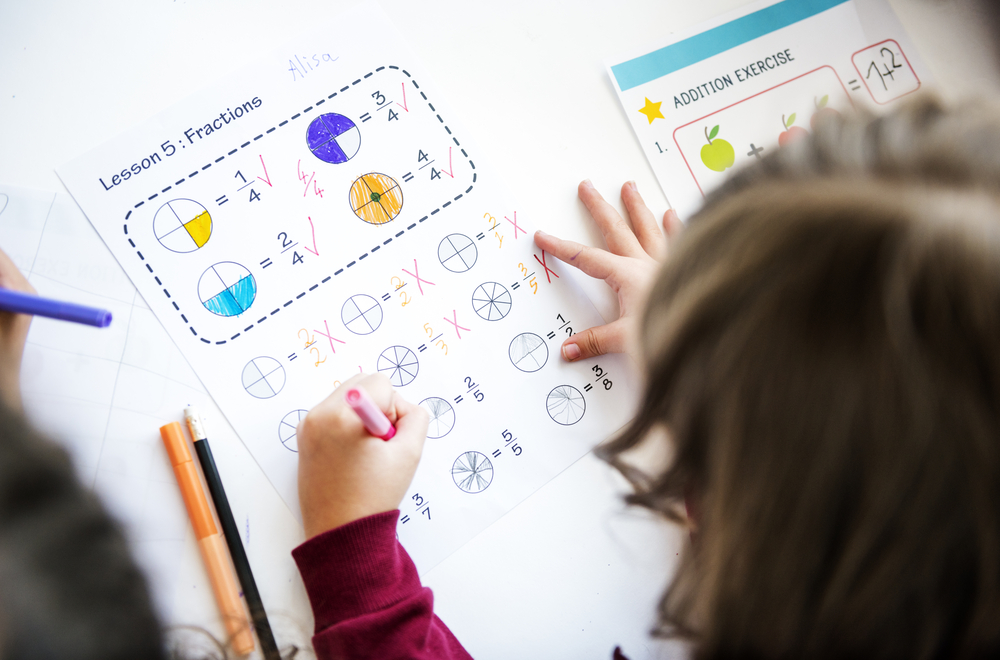




Enhancing math comprehension for children aged 6-7 is critical for several reasons, impacting their academic, cognitive, and personal development. At this age, kids are in a phase where foundational skills in math set the stage for more advanced learning in later years. Strong early grasp of concepts like addition, subtraction, and basic geometry helps build confidence and reduces math anxiety, a common issue that can hinder academic progress.
Children this age are particularly receptive to learning that is interactive and fun. Engaging them with practical, hands-on activities helps develop not just math skills but also critical thinking and problem-solving abilities. For example, using everyday items like toys or food to teach counting and basic arithmetic makes learning more relatable and effective.
Math comprehension at this stage also supports development in other areas such as language and social skills. For instance, when children work on math problems together, they practice communication, cooperation, and even emotional intelligence as they learn to manage challenges and celebrate success. For parents and teachers, fostering a positive, encouraging environment around math learning helps children develop a lifelong appreciation for the subject, contributing to ongoing academic success and everyday life skills, such as money management and logical reasoning.








