Fine motor development Math Worksheets for Ages 6-7
5 filtered results
-
From - To
Discover our Fine Motor Development Math Worksheets for ages 6-7, designed to boost your child's mathematics and fine motor skills simultaneously. Each engaging worksheet provides hands-on activities that are perfect for young learners, helping them improve their number formation, counting, and problem-solving abilities while honing their pencil control and hand-eye coordination. With fun exercises ranging from tracing and coloring to simple arithmetic and pattern recognition, these printables make learning enjoyable and effective. Empower your child’s educational journey with resources that blend essential math concepts with motor skill enhancement, setting the stage for lifelong learning success.
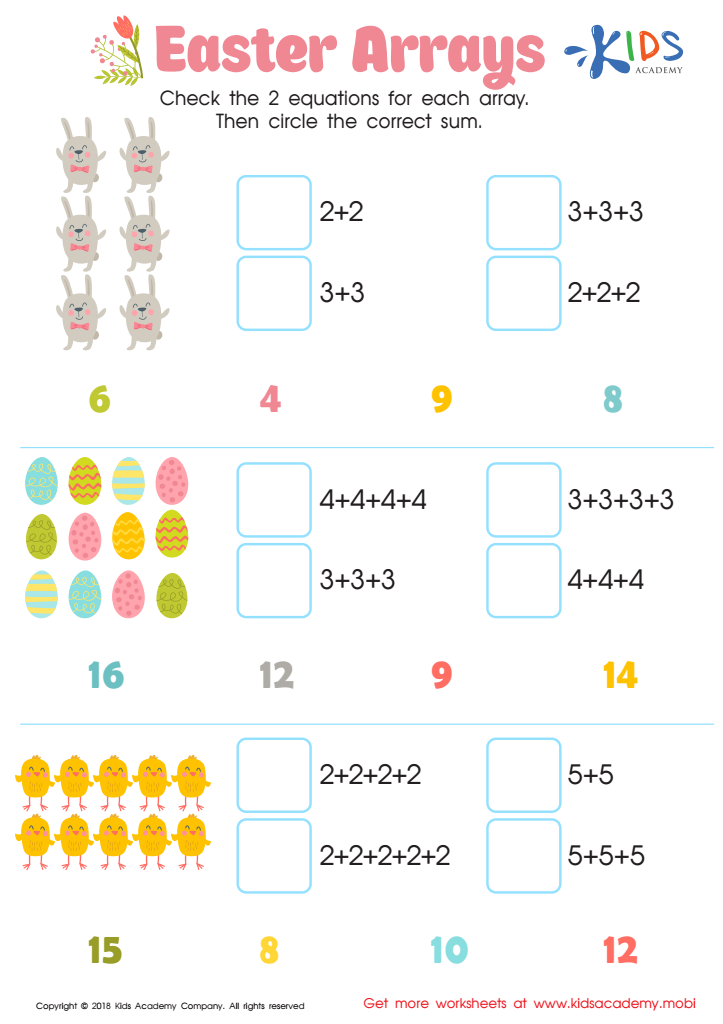
Easter Arrays Worksheet
 Assign to My Students
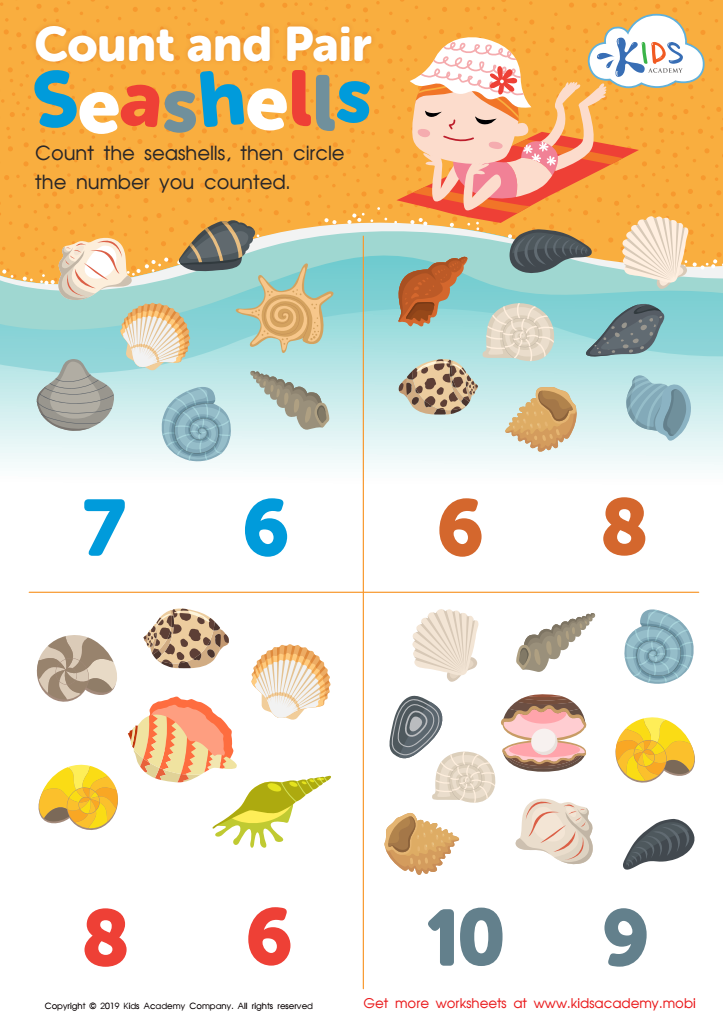
Count and Pair Seashells Worksheet
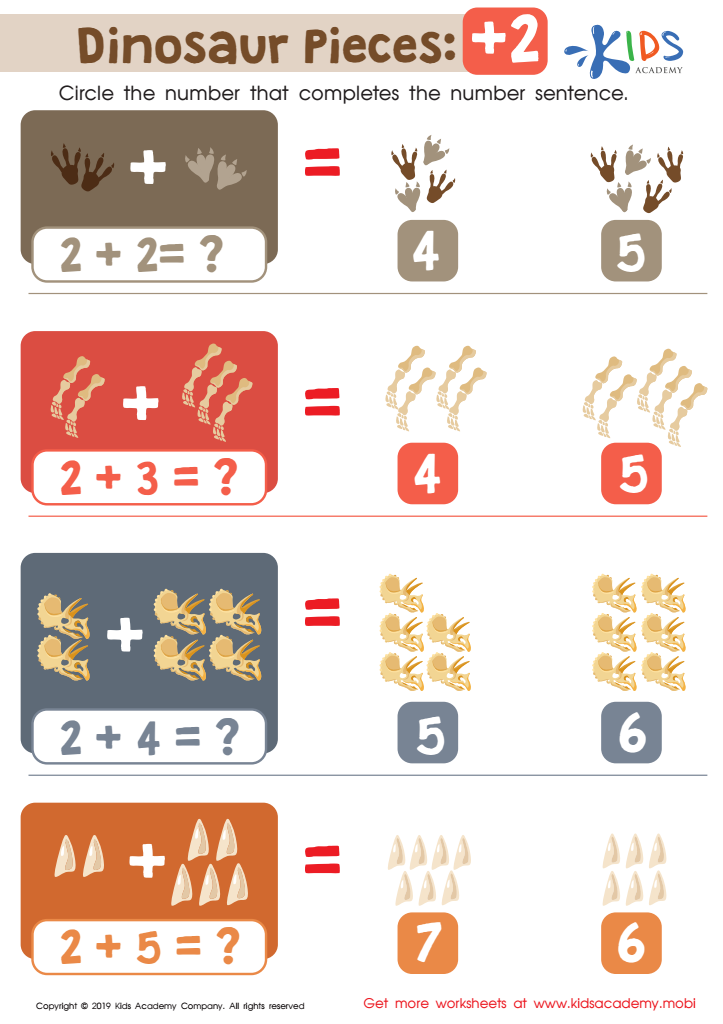
Dinosaur Pieces: +2 Worksheet
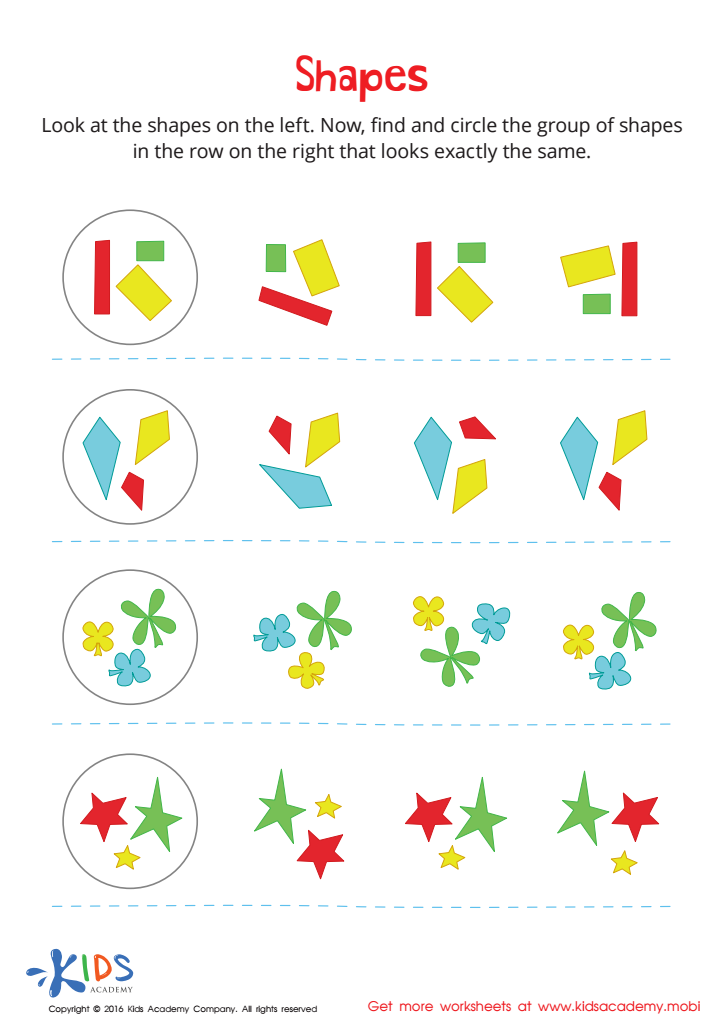
Shapes Worksheet

Kindergarten Number Tracing: Medow Flowers Worksheet








Fine motor development in children ages 6-7 is crucial for multiple aspects of their academic and daily life skills, particularly in relation to math. Fine motor skills - which involve the coordination of small muscles in the hands and fingers - play a significant role in mathematics learning and application. Parents and teachers should care about this development for several reasons.
Firstly, fine motor skills directly impact a child's ability to write numbers legibly and accurately, which is essential when learning basic math operations like addition and subtraction. Poor fine motor skills can make these activities arduous, leading to frustration and hindered mathematical comprehension.
Secondly, manipulation of small objects helps children understand mathematical concepts better. Activities such as sorting, patterning, and counting objects contribute to visual-spatial skills, which are critical for geometric reasoning and understanding numerical patterns.
Moreover, developing fine motor skills strengthens hand-eye coordination and neural connections in the brain that are related to critical thinking and problem-solving. These advanced cognitive skills are foundational for more complex mathematical tasks and reasoning.
By supporting fine motor development, parents and teachers enable children to build a strong foundation for mathematical success. This involvement not only enhances their academic achievements but also fosters confidence and a positive attitude towards math that can last a lifetime.








