
Fine motor skills (writing) Math Worksheets for Ages 6-7
11 filtered results
Difficulty Level
Grade
Age
-
From - To
Subject
Activity
Standards
Boost your child's fine motor skills with our engaging writing math worksheets designed specifically for ages 6-7. These printable resources focus on enhancing hand-eye coordination, grip strength, and pencil control through fun math activities. Each worksheet combines writing practice with foundational math concepts, making learning enjoyable and effective. Your child will develop essential skills while solving colorful exercises that promote fine motor development and boost confidence. Ideal for homeschooling or classroom use, these worksheets provide a valuable addition to your educational toolkit. Explore our collection to support your child's growth in both math and writing skills today!
Favorites
With answer key
Interactive
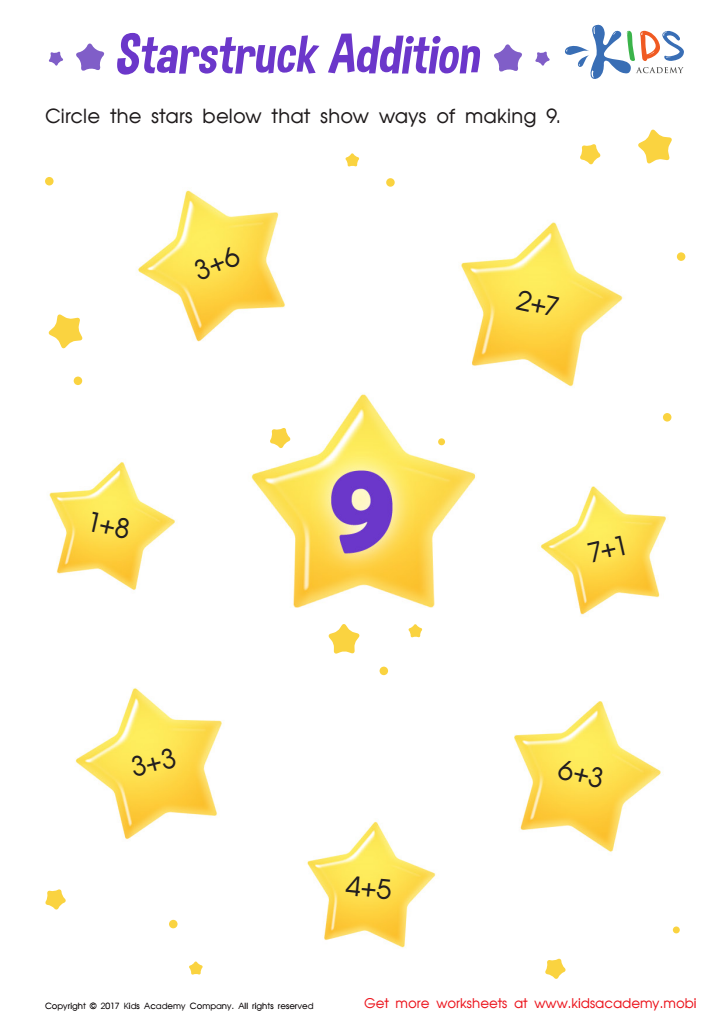
Starstruck Addition Printable
This interactive addition worksheet motivates your preschooler to practice addition and analyze number combinations. Their cognitive and analysis skills will be sharpened as they find the magic number in each problem.
 Assign to My Students
Starstruck Addition Printable
Worksheet
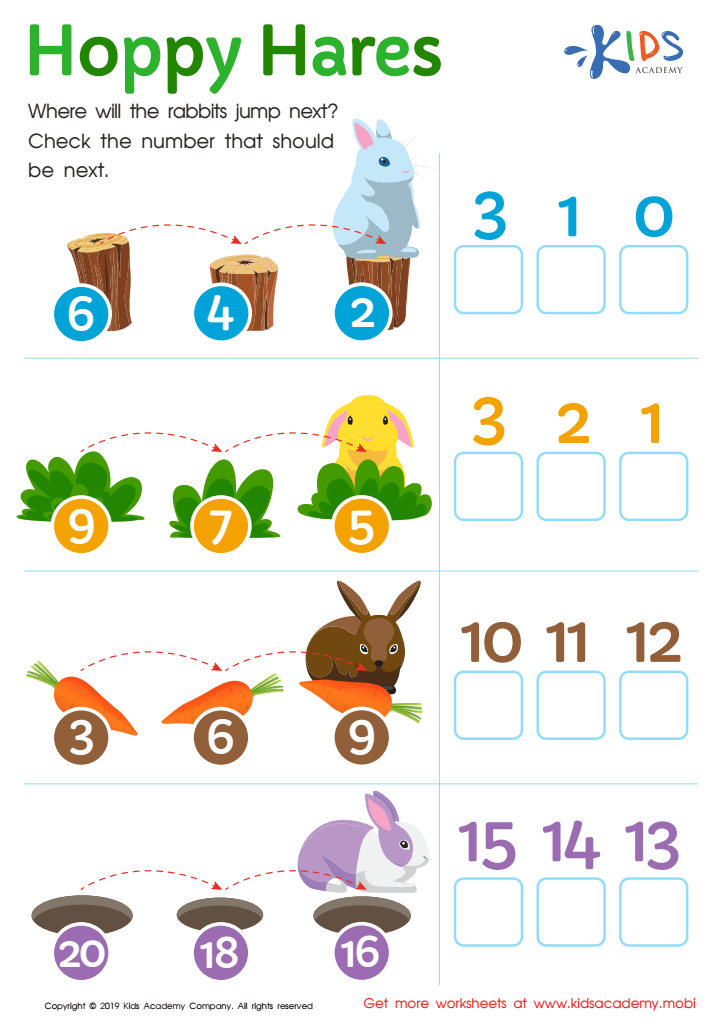
Hoppy Hares Worksheet
Ask your kids if they can identify the rabbits in the picture, then help them solve the math problems. The rabbits need to hop from place to place, so look at the numbers and help your kids figure out the next one. These cute and friendly little animals make great pets. Have fun solving this worksheet together!
Hoppy Hares Worksheet
Worksheet
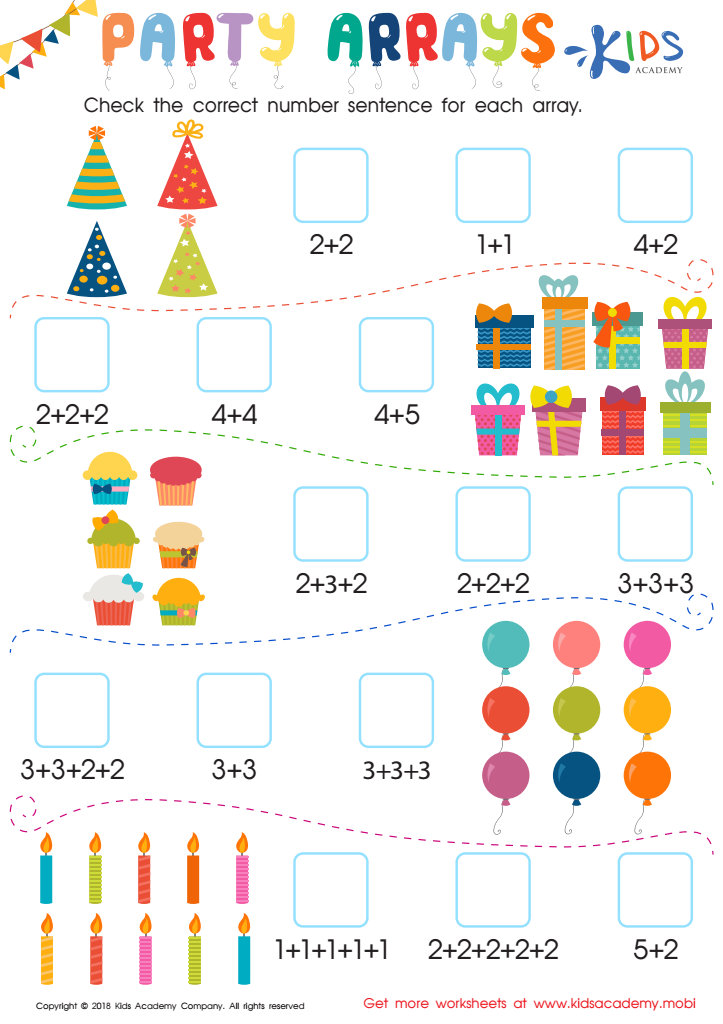
Party Arrays Worksheet
Help your child count the objects in each of the five arrays, then check the correct number sentence for each. This exercise will test their math skills and understanding of number sentences. Guide them to select the appropriate boxes.
Party Arrays Worksheet
Worksheet
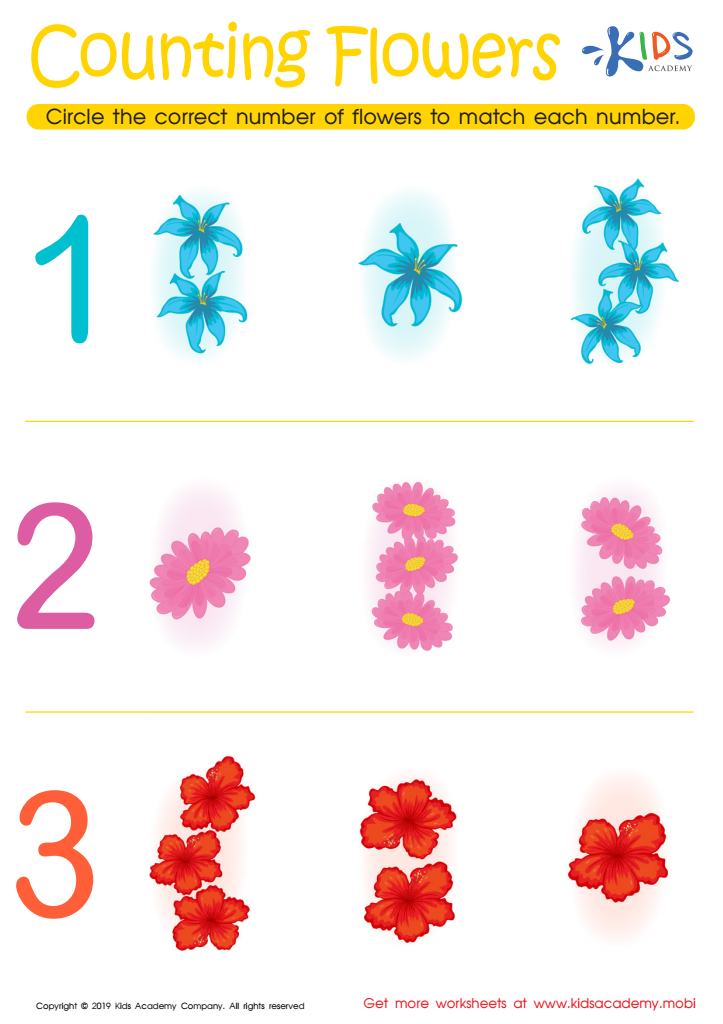
Counting Flowers Worksheet
Kids love Flower Power! This free PDF helps kids practice basic number sense and counting. They match the correct number of colorful flowers to the corresponding numeral. An enjoyable game that improves basic number sense - perfect!
Counting Flowers Worksheet
Worksheet
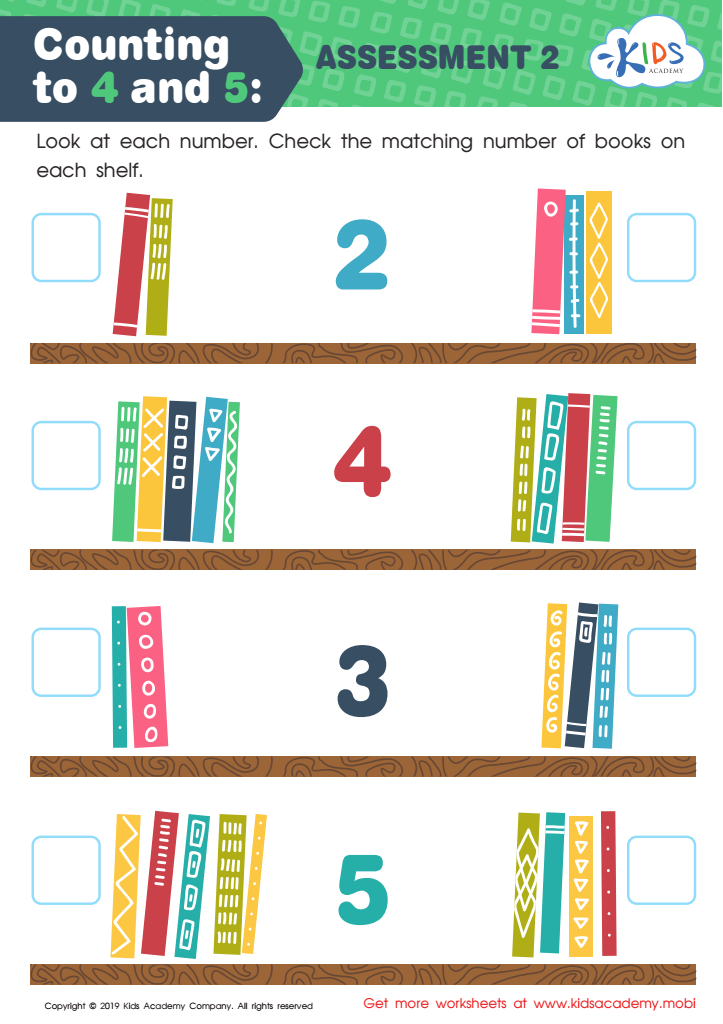
Counting to 4 and 5: Assessment 2 Worksheet
Counting is a key skill for math success. Help your kids get off to a good start by counting the books on each shelf in the pictured printout. Point to each set of books, counting aloud, and then look for the matching number in the centre. With this simple worksheet, your kids can get the practice they need before taking on more advanced math skills.
Counting to 4 and 5: Assessment 2 Worksheet
Worksheet
Join Kids Academy for Free
Who is primarily going to use this learning content?








Fine motor skills and early math development are crucial for children aged 6-7 as they form the foundation for academic success and everyday tasks. Fine motor skills, which involve small muscle movements such as grasping, writing, and cutting, are essential for effective writing. This age is pivotal as children begin to put their thoughts on paper, making legible writing crucial not only for communication but also for building confidence in their abilities. When children can write well, they are more likely to engage with educational activities, leading to better literacy outcomes.
Additionally, this developmental stage is when mathematical concepts start to take shape. Children are introduced to basic arithmetic, shapes, and measurement, helping them quantify and make sense of their world. Good fine motor skills enhance their capability to manipulate tools such as pencils and rulers, allowing them to express mathematical ideas more effectively. Engaging in activities that promote these skills leads to increased attention to detail and problem-solving abilities, essential in both academic and life scenarios. Therefore, it’s vital for parents and teachers to prioritize fine motor skill development alongside math, ensuring children not only grasp straightforward concepts but also develop the confidence and dexterity required for future learning challenges.








