Fractions understanding Math Worksheets for Ages 6-7
3 filtered results
-
From - To
Explore our engaging "Fractions Understanding Math Worksheets" designed specifically for kids ages 6-7. These interactive worksheets make learning fractions fun and approachable, helping young learners grasp essential concepts such as halves, quarters, and thirds. With colorful visuals and age-appropriate exercises, your child will enjoy hands-on practice that reinforces foundational math skills. Each worksheet encourages critical thinking as they complete activities like cutting shapes, filling in blanks, and matching fractions with shapes. Perfect for both parents and teachers, these resources support a playful yet effective approach to mastering fractions, laying the groundwork for future math success. Start building confidence in fractions today!
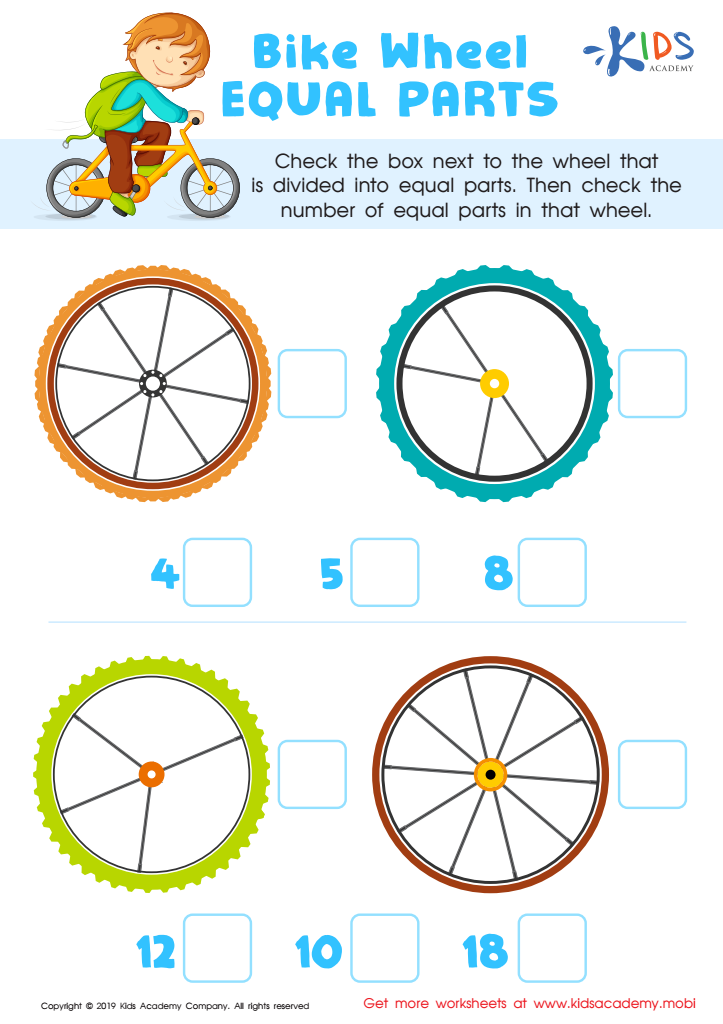
Bike Wheel Equal Parts Worksheet
 Assign to My Students
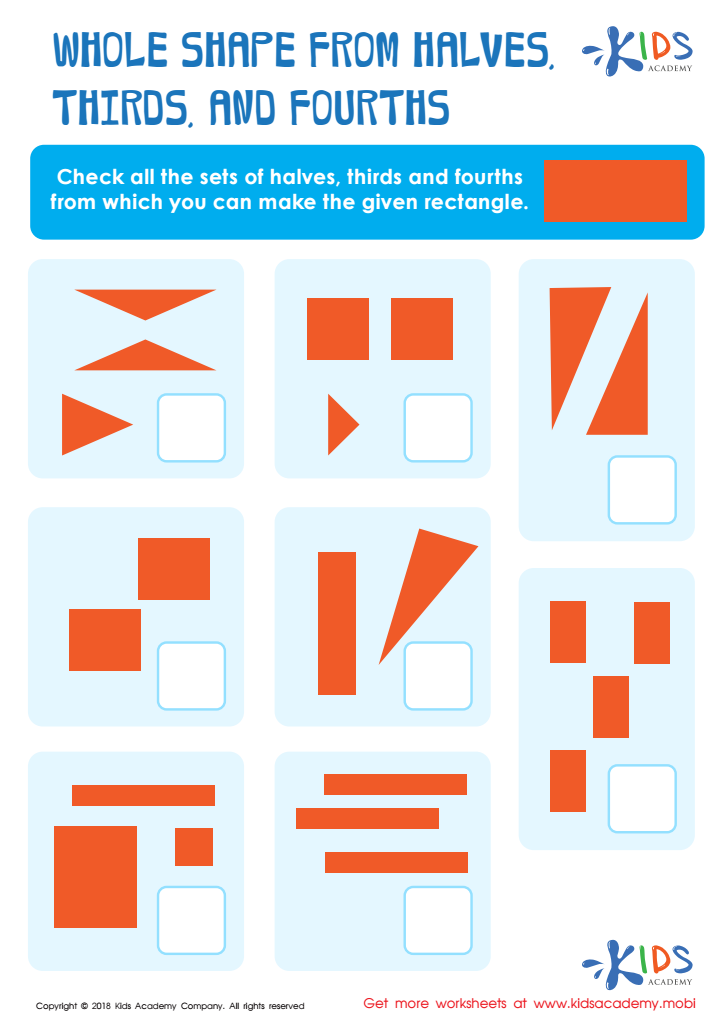
Whole Shape from Halves, Thirds and Fourths Worksheet


.jpg)




Understanding fractions is crucial for children ages 6-7 as it lays the groundwork for their overall mathematical skills and everyday problem-solving abilities. At this developmental stage, children are beginning to grasp abstract concepts, making it an opportune time to introduce fractions, which represent parts of a whole. These foundational concepts foster critical thinking and analytical skills.
Parents and teachers should prioritize fraction understanding for several reasons. Firstly, fractions are everywhere in daily life—during cooking, sharing, and even in financial literacy. Familiarity with fractions enables children to navigate these real-world situations confidently. Secondly, grasping fractions enhances a child's ability to tackle more complex mathematical concepts in the future, such as ratios, proportions, and algebra.
Moreover, studying fractions encourages the use of visual aids and manipulatives, which cater to various learning styles and keep children engaged. An early grasp of fractions can also boost a child's confidence in math, combatting common anxieties surrounding the subject.
By nurturing a solid understanding of fractions at this age, parents and teachers can help children build a strong mathematical foundation that will benefit them in school and beyond, fostering a lifelong love for learning math.








