Grammar practice Math Worksheets for Ages 6-7
3 filtered results
-
From - To
Discover our Grammar Practice Math Worksheets designed specifically for children ages 6-7. These engaging worksheets blend grammar skills with foundational math concepts, making learning fun and effective! Our resources help young learners grasp basic language rules while enhancing their mathematical reasoning. With a variety of activities that challenge and support their development, children will improve their understanding of sentence structure and grammar in a math context. Ideal for classroom use or at-home practice, our worksheets cater to different learning styles, ensuring every child progresses confidently. Explore our printable materials today to spark enthusiasm for both grammar and mathematics in your young learners!
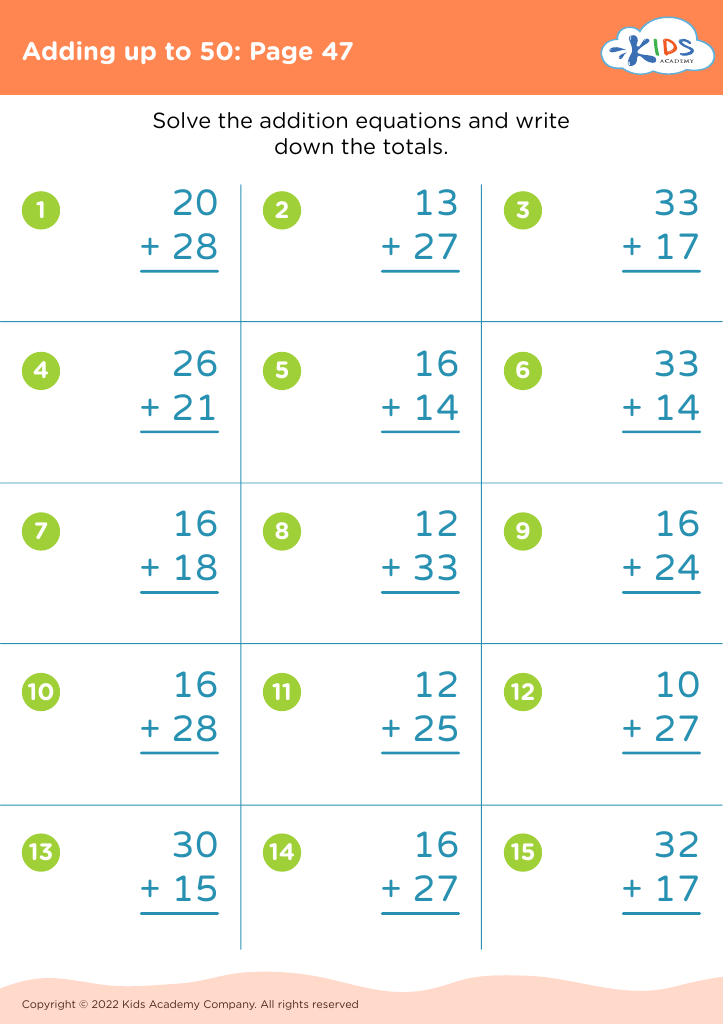
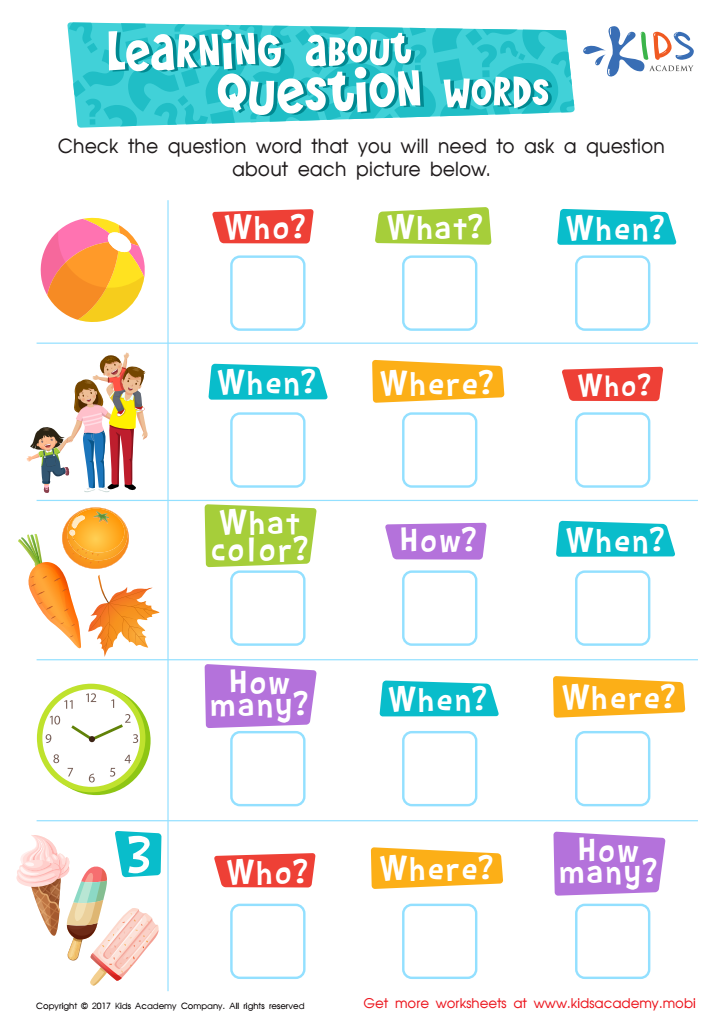
Learning about Question Words Worksheet
 Assign to My Students








Grammar practice in math for children ages 6-7 is essential for several reasons. Firstly, it aids in the development of critical thinking skills. When children learn to interpret math problems involving language, they become adept at analyzing and understanding instructions they encounter. This, in turn, enhances their ability to communicate mathematical concepts effectively.
Secondly, grammar in math fosters comprehensive reading skills. Children at this age are still developing their reading capabilities, and integrating grammar into math helps them make connections between language and numbers. They learn how to read word problems, deciphering the meaning behind the words, which is a critical skill both in mathematics and daily life.
Moreover, practicing grammar within math bolsters confidence. As students become more proficient in interpreting and solving word problems, they feel more empowered to take on more complex challenges. This builds a strong foundation for future learning, combining literacy and numeracy.
Lastly, incorporating grammar into math aligns with interdisciplinary learning approaches that value the connection between subjects. Parents and teachers should recognize that fostering these skills holistically creates well-rounded learners equipped to tackle future academic challenges with confidence and competence.








