Improving mental math Math Worksheets for Ages 6-7
3 filtered results
-
From - To
Discover our engaging and educational "Improving Mental Math Worksheets" designed specifically for children aged 6-7. These worksheets aim to enhance young learners' mathematical fluency and confidence through fun and interactive exercises. By focusing on core skills such as addition, subtraction, and number recognition, these worksheets promote critical thinking and problem-solving abilities. Easily printable and perfect for use at home or in the classroom, each worksheet offers a mix of challenges to keep kids motivated and eager to learn. Encourage your child's love for math while improving their mental calculation skills with our thoughtfully crafted resources!
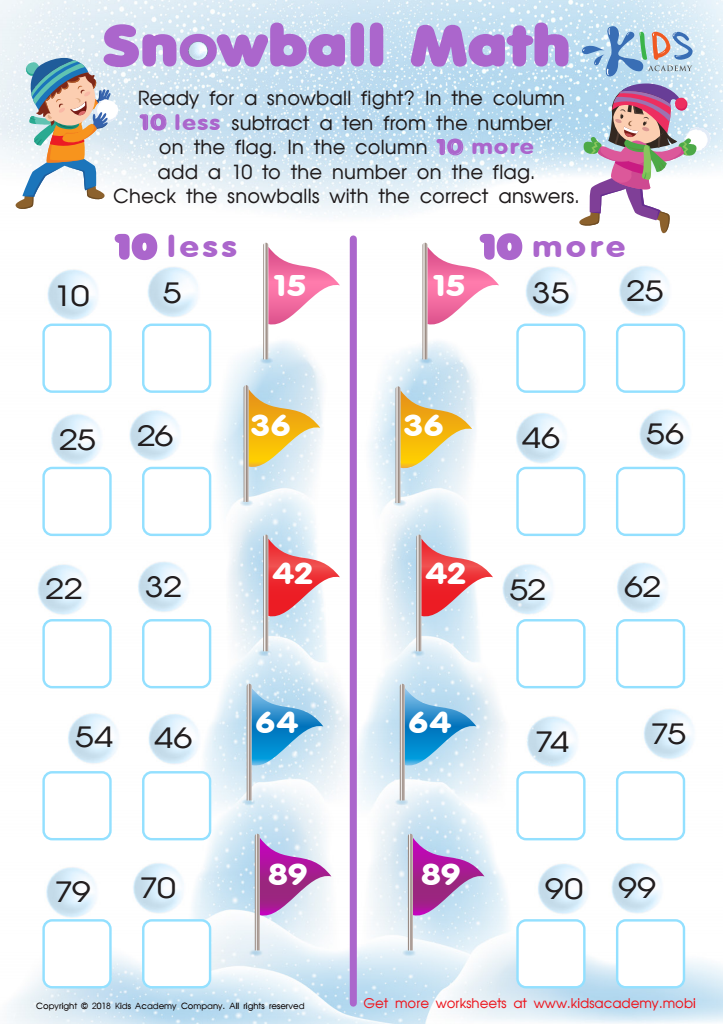
Snowball Math Worksheet
 Assign to My Students
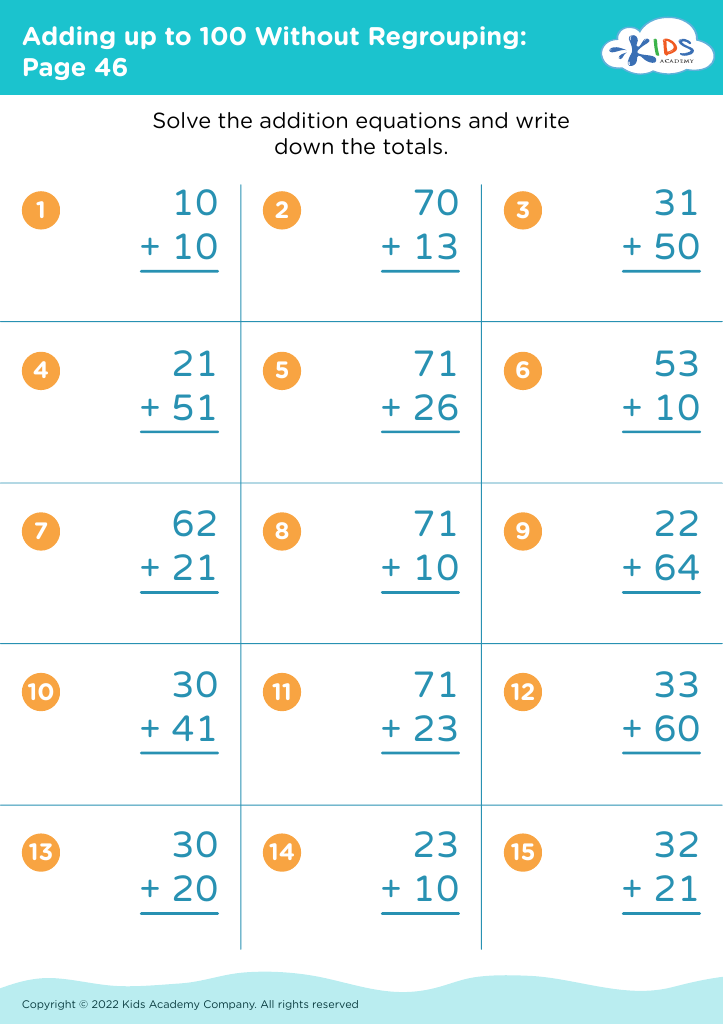
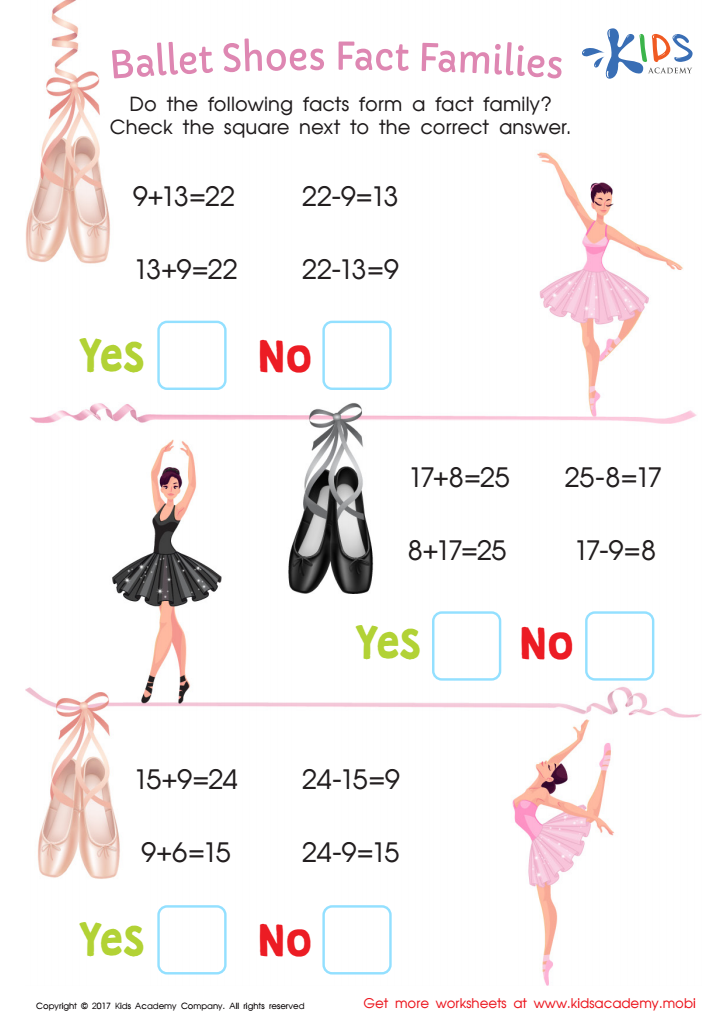
Ballet Shoes Fact Family Printable







Improving mental math skills for children aged 6-7 is crucial for their overall mathematical development. During this early stage, children are forming foundational understandings of numbers and operations. Enhancing their mental math abilities helps foster a strong number sense, which is vital for all future mathematics learning.
First, strong mental math fosters confidence. When children can quickly compute small sums or differences in their heads, they feel a sense of accomplishment, which encourages continued effort and participation in math. Second, mental math strengthens problem-solving skills and critical thinking. It encourages students to recognize patterns and relationships between numbers, which can aid in understanding more complex concepts later on.
Moreover, a focus on mental math prepares students for everyday situations. Quick computation skills prove beneficial in real-world settings, such as budgeting, cooking, and shopping, promoting practical applications of mathematics. Teachers and parents should consider incorporating engaging activities, like games and challenges, that make learning fun and effective. By prioritizing these skills, caregivers help instill a lifelong positive attitude towards math, setting the stage for greater academic success and personal growth as students progress through their education.








