Learn addition Math Worksheets for Ages 6-7
3 filtered results
-
From - To
Discover engaging and educational addition math worksheets designed specifically for children ages 6-7. Our interactive resources provide a fun and effective way for young learners to master basic addition skills through a variety of activities. From simple number sentences to colorful visual aids, each worksheet encourages practice and builds confidence in early math concepts. Tailored to align with educational standards, these worksheets foster critical thinking and help children develop problem-solving strategies. Perfect for both classroom and home use, our addition worksheets aim to make learning math enjoyable and accessible for all young students. Start your child's math journey today!
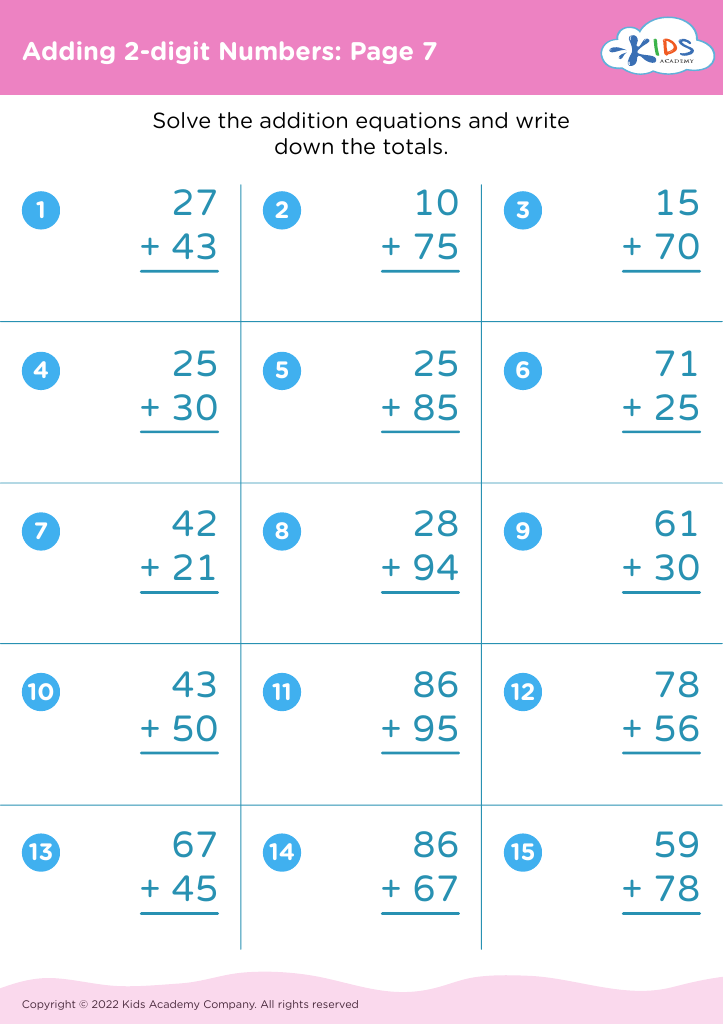
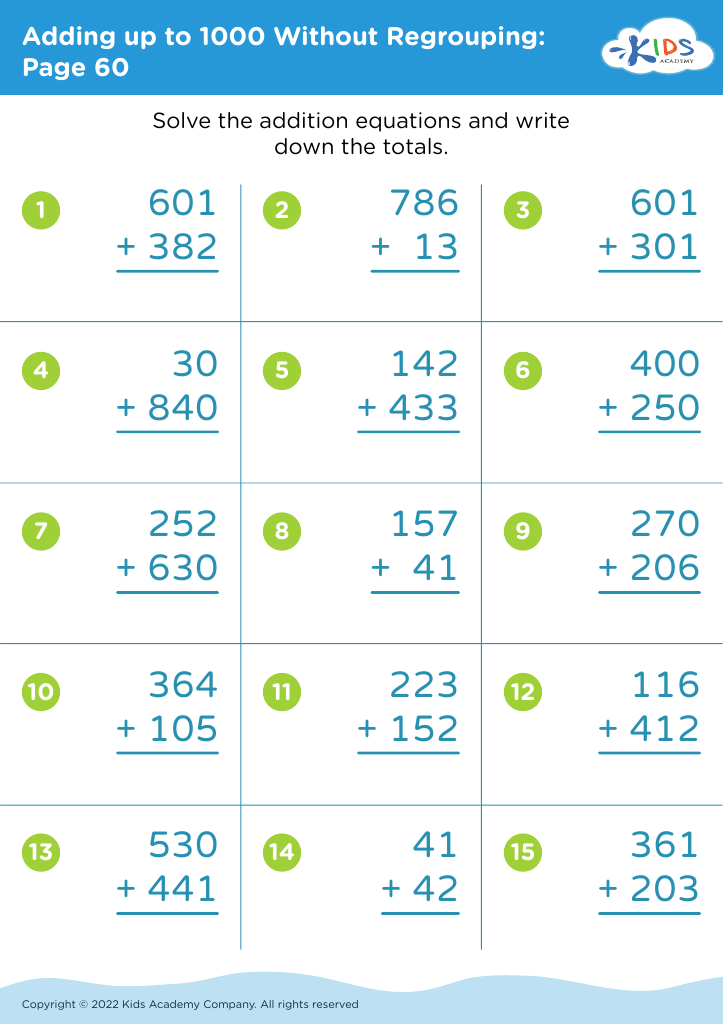
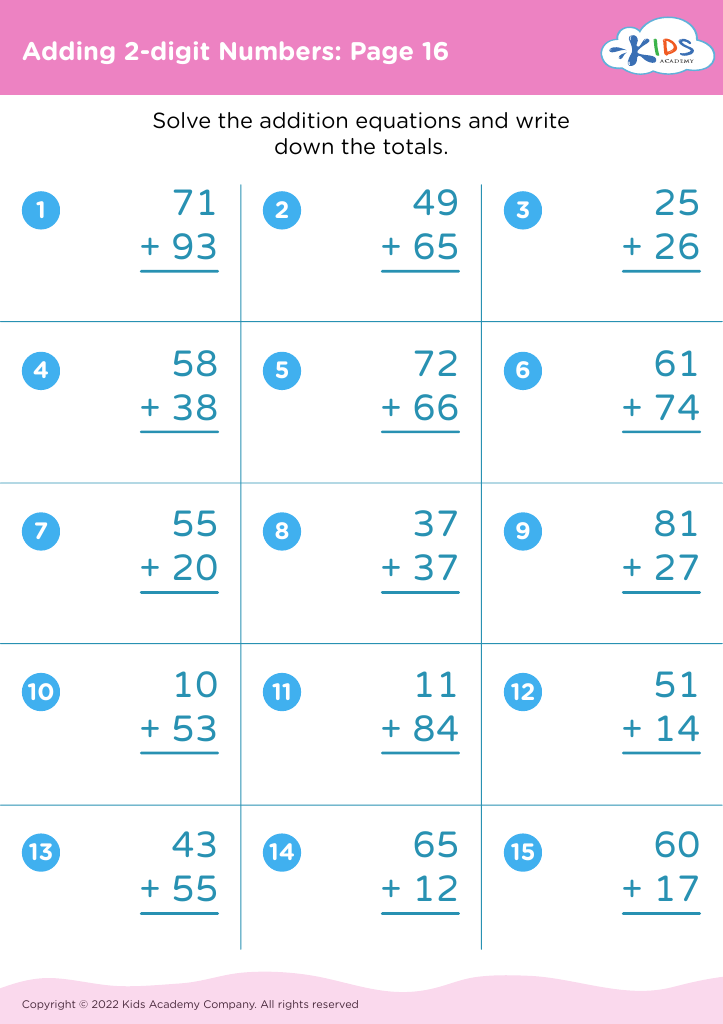




Parents and teachers should prioritize teaching addition math to children aged 6-7, as this foundational skill is crucial for their overall academic development. At this age, children are developing their cognitive abilities, and mastering addition helps strengthen their problem-solving skills, logical reasoning, and critical thinking. Understanding addition is not just about numbers; it enhances their ability to engage with more complex mathematical concepts in the future, such as subtraction, multiplication, and division.
Additionally, learning addition fosters confidence and motivation in young learners. When children grasp basic math concepts, they are more likely to enjoy learning and feel successful in their educational pursuits. This sense of achievement can lead to a positive attitude towards school and learning in general.
Moreover, addition plays a critical role in everyday life. From simple tasks like counting items or handling money to understanding time and quantities, ensuring that children can add effectively equips them with practical skills they will use for a lifetime. By emphasizing the importance of addition, parents and teachers can contribute to a child's well-rounded education and equip them for future challenges, both academically and in real-life situations.








