Money management skills Math Worksheets for Ages 6-7
3 filtered results
-
From - To
Discover essential money management skills for young learners with our engaging math worksheets designed specifically for ages 6-7. These interactive worksheets introduce fundamental concepts of money, including counting coins, handling bills, and making simple transactions. Children will enjoy hands-on activities that promote financial literacy while developing critical math skills in a fun and age-appropriate way. Perfect for classroom use or at-home learning, our printable resources feature colorful illustrations and practical exercises that make learning about money both enjoyable and effective. Give your child the tools they need for smart financial habits with our comprehensive money management math worksheets today!
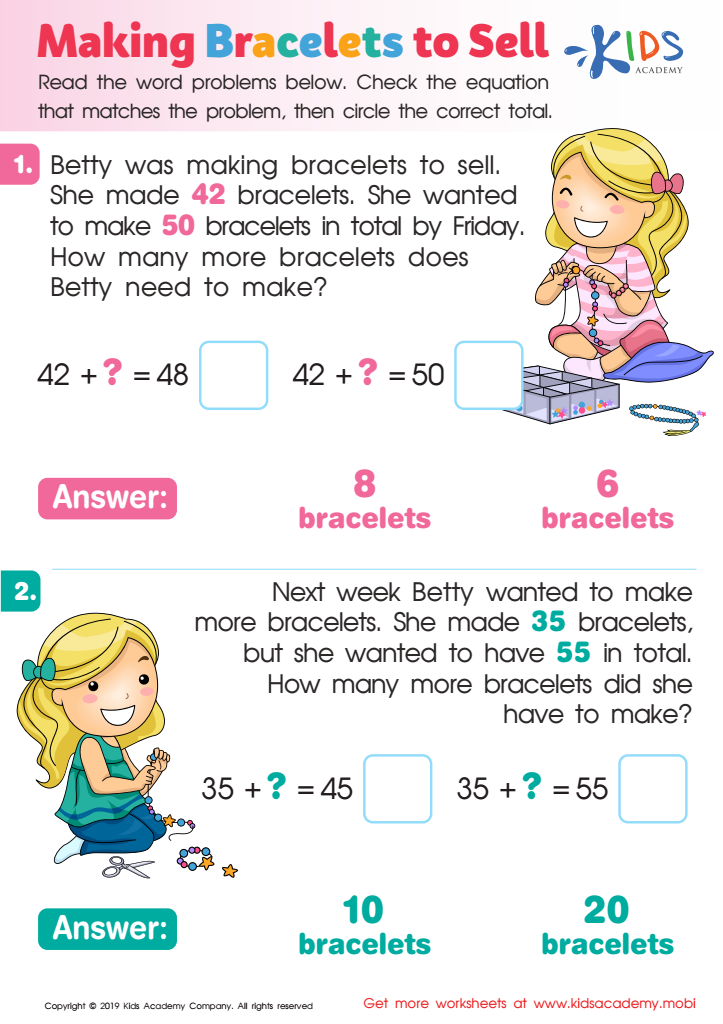
Making Bracelets to Sell Worksheet
 Assign to My Students
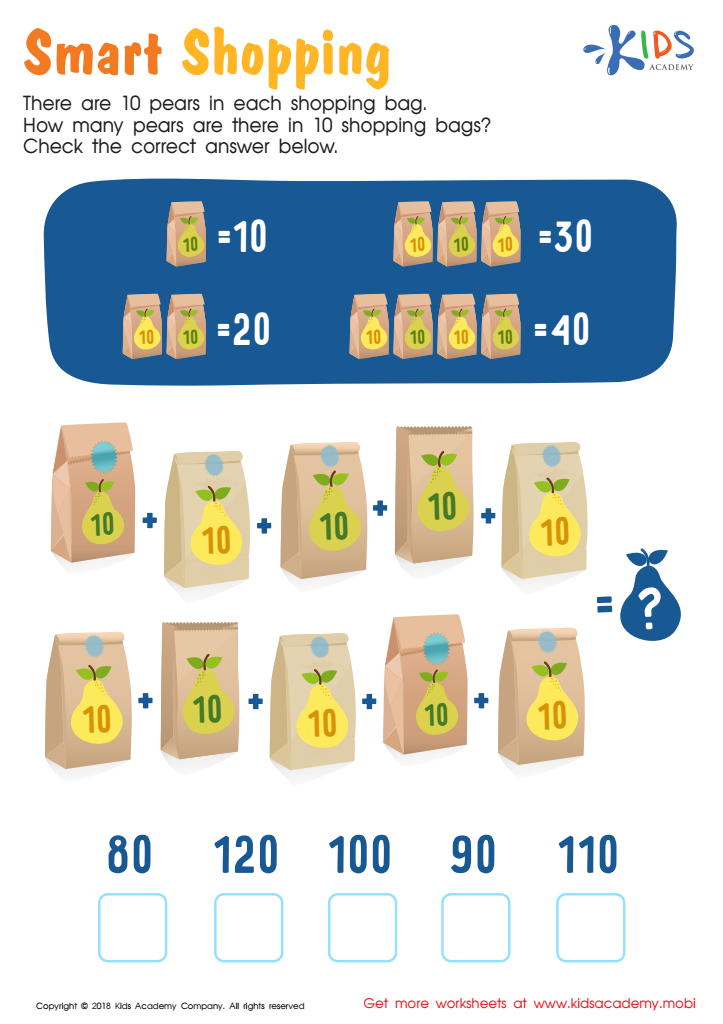
Smart Shopping: Trade Tens for a Hundred Worksheet
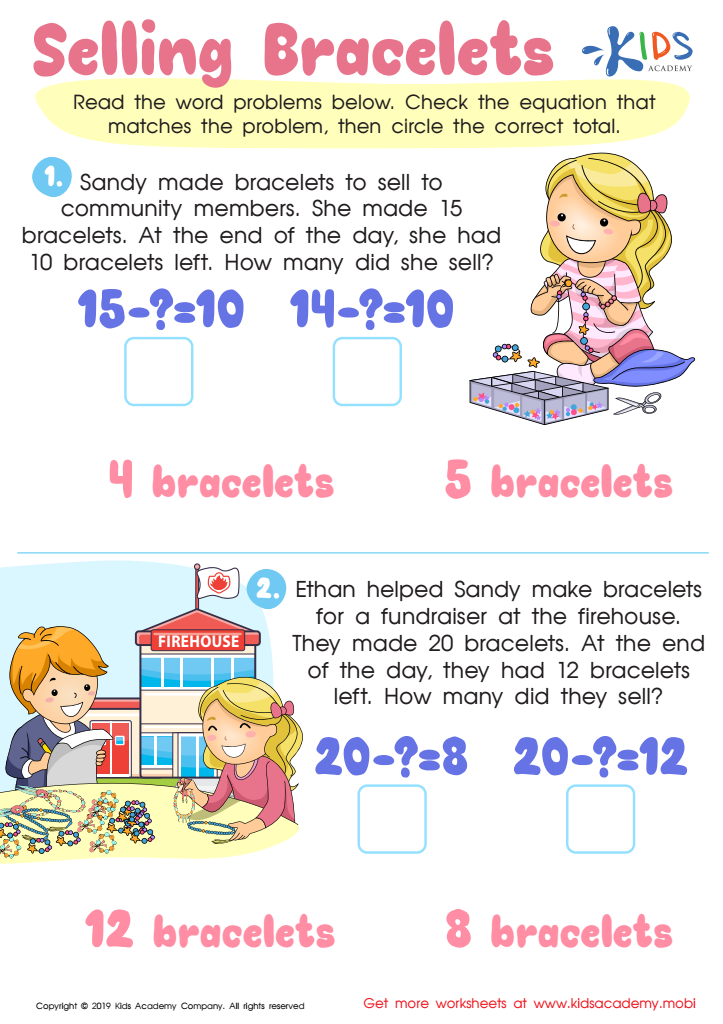
Selling the Bracelets Worksheet








Money management skills are crucial for children ages 6-7 as they lay the foundation for lifelong financial literacy. At this age, children's cognitive and social skills are rapidly developing, making it an ideal time to introduce basic money concepts. Understanding money, including recognizing coins and bills, start to grasping the value of different items, and making simple calculations, empowers them to make informed decisions.
Parents and teachers play a pivotal role in fostering these skills. Teaching children about money promotes responsibility and self-discipline, as they learn to budget and save for things they desire. Additionally, early exposure to money management helps demystify complex financial concepts later in life, paving the way for confident handling of resources.
Engaging children in fun activities like play-shopping simulations or simple savings games reinforces math skills, making learning enjoyable while introducing real-life applications. Ultimately, nurturing money management skills creates a sense of security and independence in children, equipping them with the necessary tools to navigate the financial world as they grow. By prioritizing this learning area, parents and educators contribute significantly to developing responsible and financially-savvy individuals.








