Recognizing Patterns Math Worksheets for Ages 6-7 - Page 2
26 filtered results
-
From - To
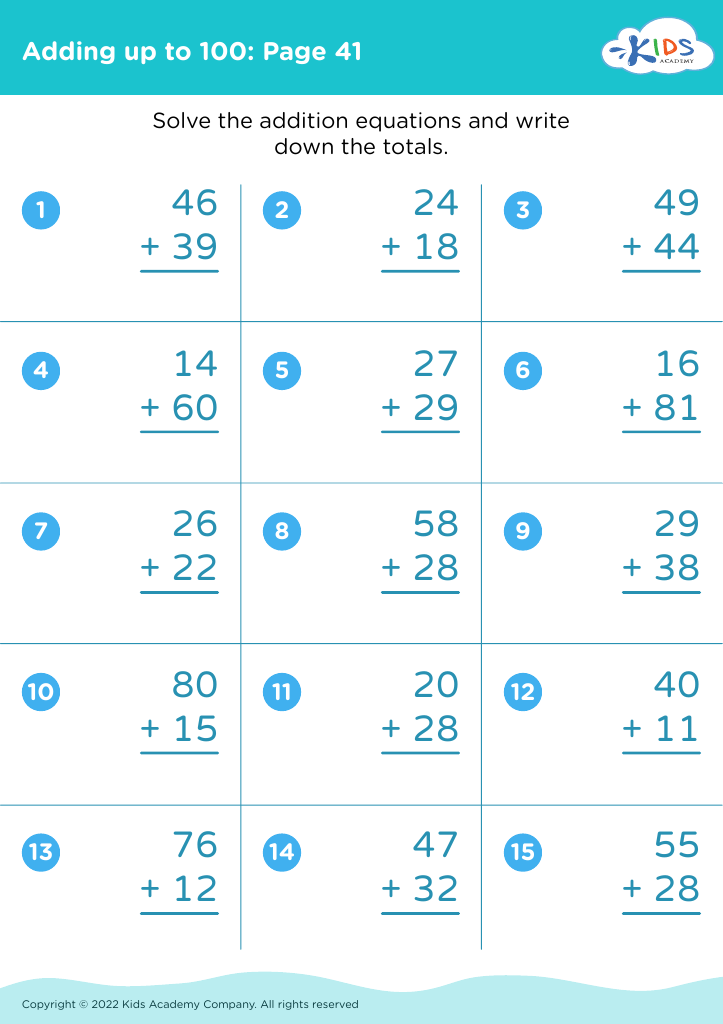
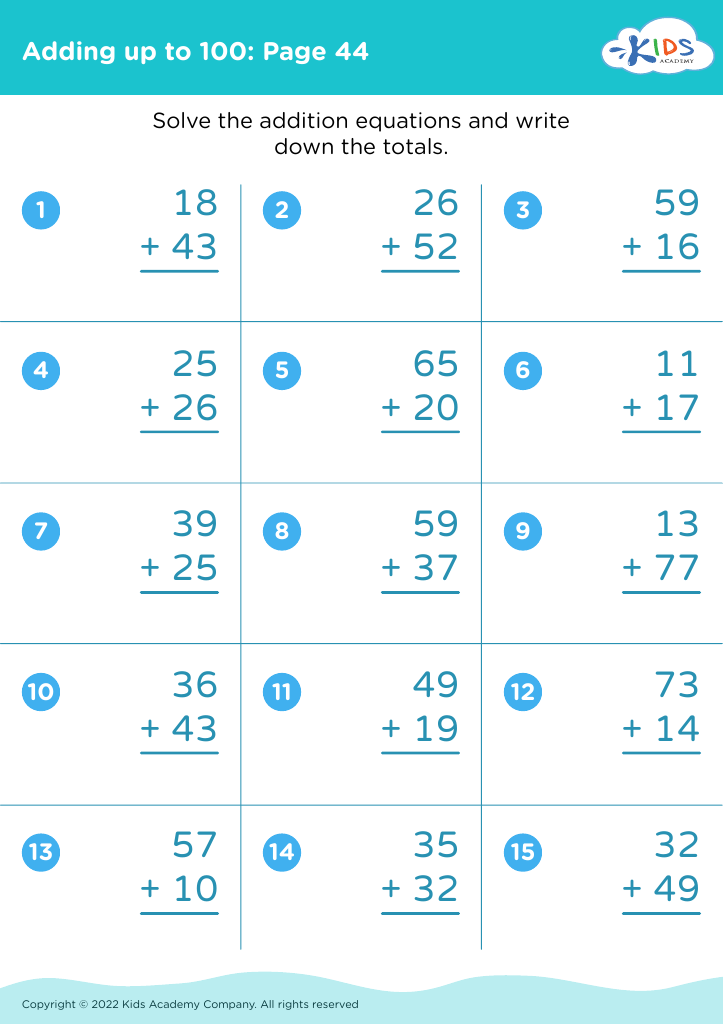







Recognizing patterns in math is a fundamental skill for children aged 6-7 that lays the groundwork for more complex mathematical concepts. Understanding patterns helps young learners develop critical thinking and problem-solving skills, which are essential in both mathematics and everyday life. When children identify patterns in numbers, shapes, and even rhythms, they enhance their ability to make predictions and see relationships between different concepts.
For parents and teachers, fostering pattern recognition can significantly boost a child's confidence in math. As children begin to see the underlying structures in math, their engagement increases, making learning more enjoyable. Furthermore, recognizing patterns aids in understanding operations such as addition and subtraction, leading to improved performance in these areas.
In addition, pattern recognition serves as a bridge to algebraic thinking, which becomes increasingly important as students progress in their education. By cultivating this skill early on, educators and parents can help children develop a strong mathematical foundation, ensuring they are well-prepared for future learning challenges. Ultimately, recognizing patterns contributes to a child’s cognitive development and enhances their overall academic performance, making it a crucial area of focus.








